
Last updated November 17, 2026
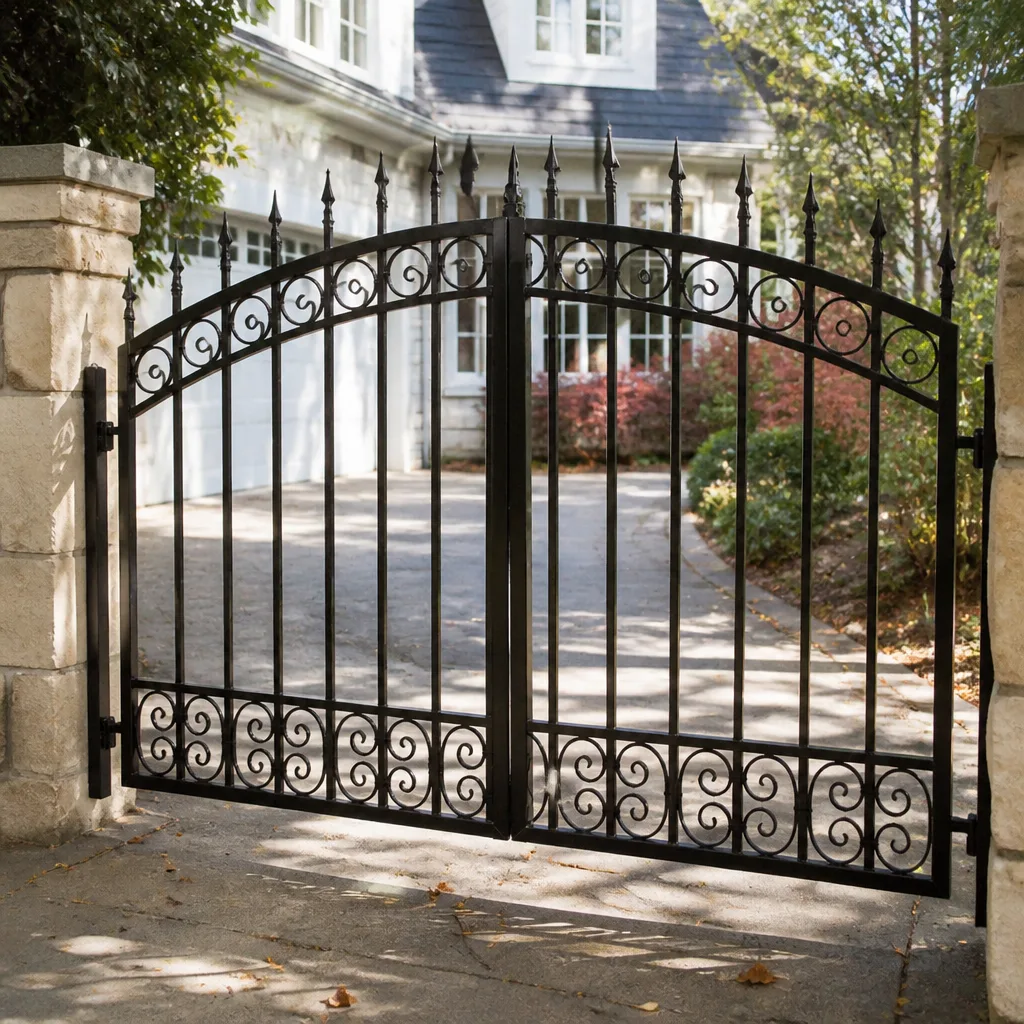 Wrought iron
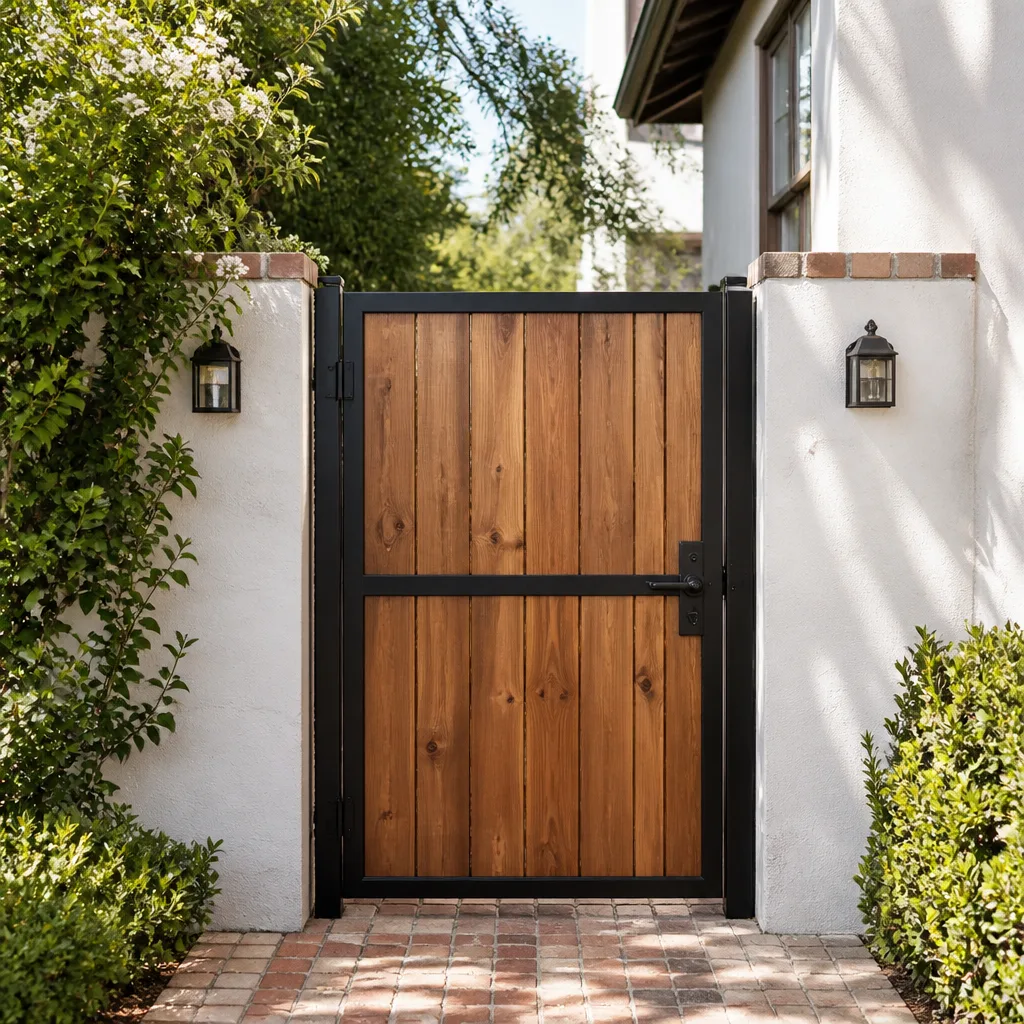 Wood & steel frame
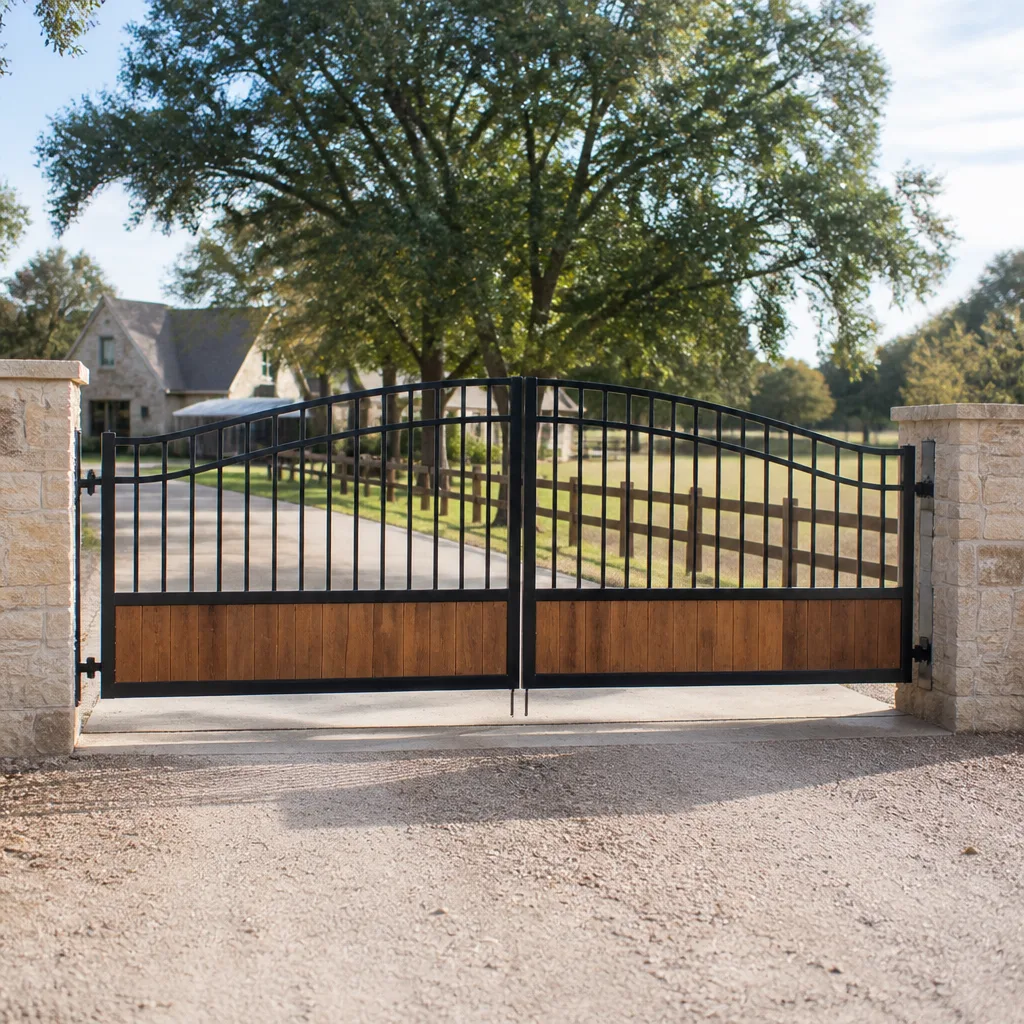 Farm & ranch
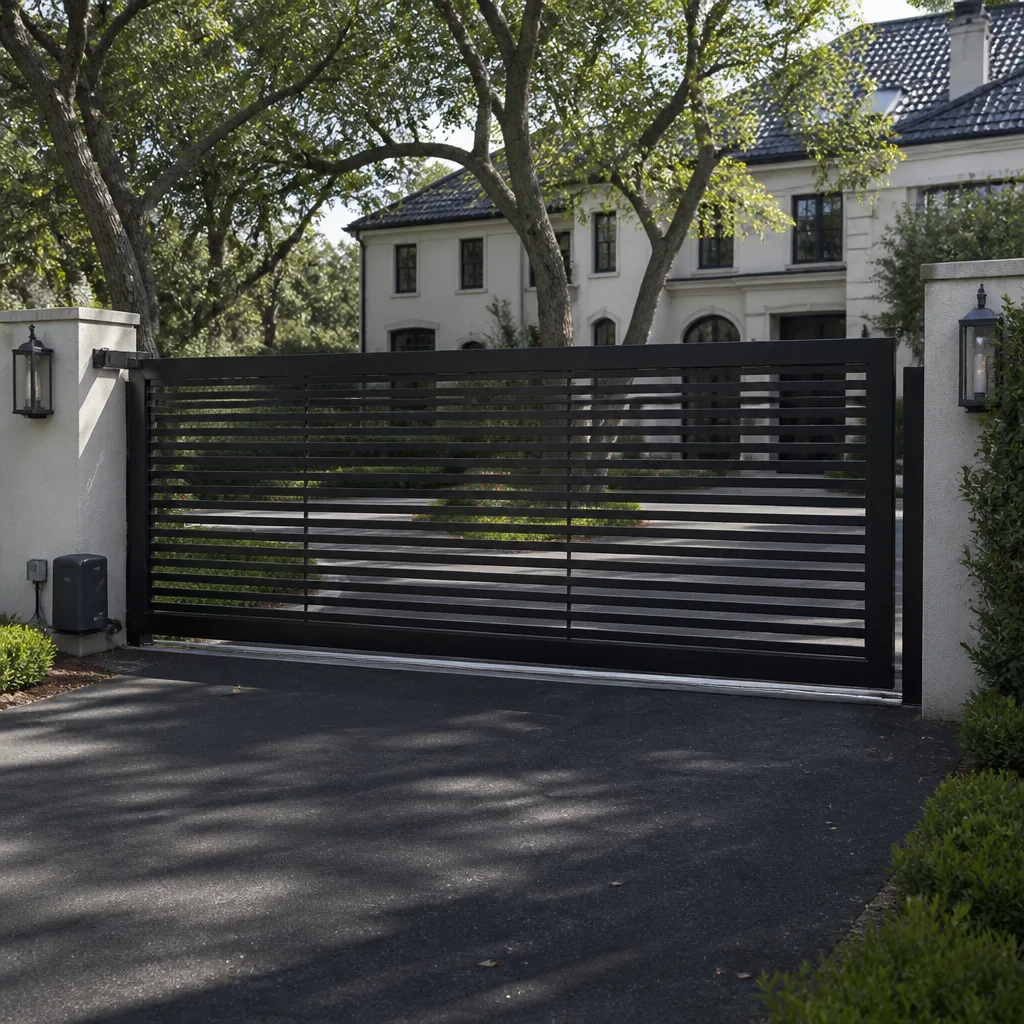 Sliding driveway gates
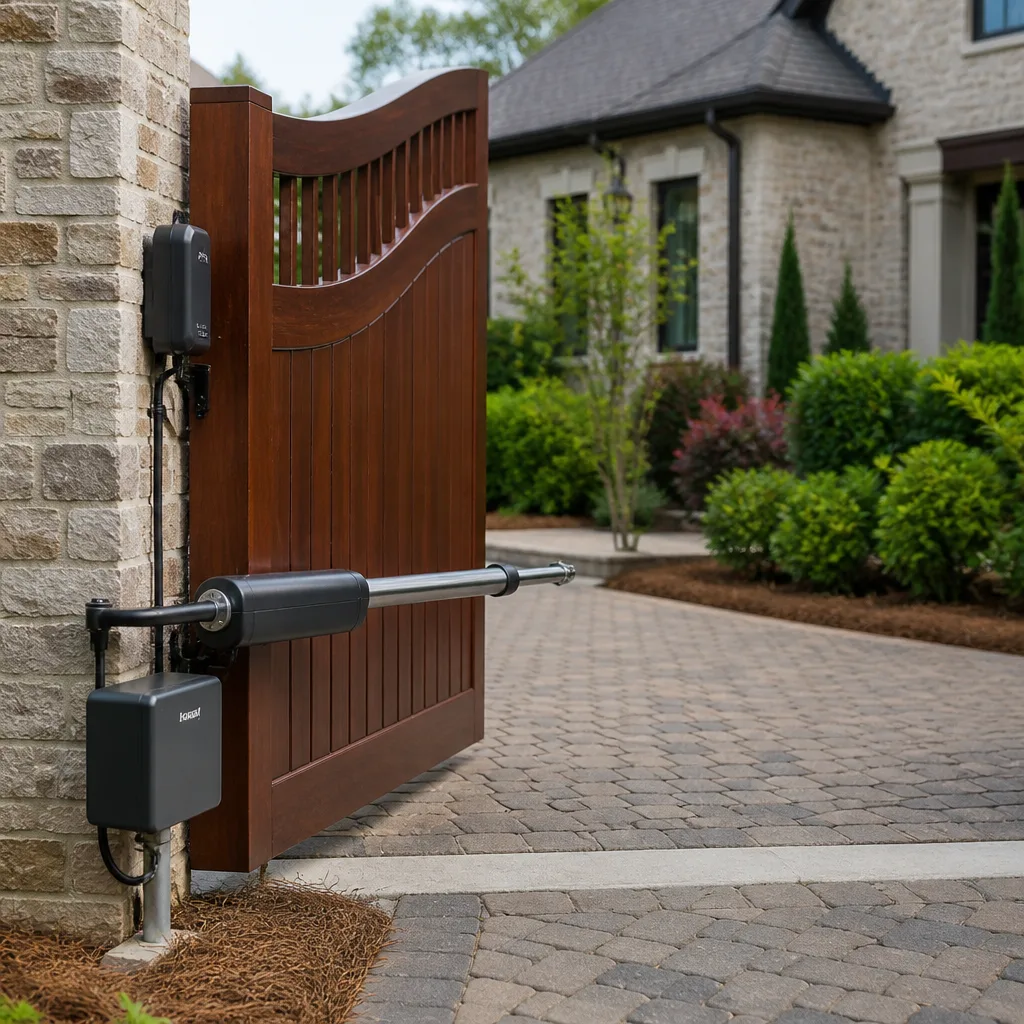 LiftMaster operators
Free on-site gate assessment - hinges, posts, and your LiftMaster or Nice gate operator checked before anything is quoted
The assessment is free and the quote is the invoice.
Get your free estimateDIY vs Professional Gate Parts & Welding: What’s Safe to Do Yourself
A gate hinge held by two bolts is a hardware replacement. A gate hinge welded to the frame is a structural joint. They look like the same problem from the driveway, but they carry completely different consequences if the repair gives out. That single distinction sits at the heart of every safe DIY decision on a gate. In this guide we’ll separate the work you can confidently handle on a Saturday afternoon from the work that needs a welder’s eye and a written guarantee – and we’ll show you the one question that tells you which side of the line you’re standing on. Every gate in Whitney deals with the same desert sun, wind-blown grit, and wide temperature swings, so the answers here are grounded in what actually fails on driveways around here.
Quick Answer
Cleaning, painting, rust touch-ups, lubricating pivot points, and swapping bolt-on parts like drop rods, rollers, and latch keepers are safe for most homeowners to do themselves. Anything that involves welding, grinding, hinge plate replacement, frame cracks, post-to-frame connections, or any gate over 200 pounds is not – those are structural joints where a weak repair can fail under load and send a heavy gate into a person, a car, or a fence. Stick to bolt-on work, and call a gate specialist for the structural repairs.
Styles & brands we work with
- Wrought iron
- Wood & steel frame
- Farm & ranch
- Sliding driveway gates
- LiftMaster operators
Table of Contents
- What you can safely do yourself
- Why structural welds are not a DIY job
- The test: “If this fails, what does it hit?”
- The liability reality of a gate that fails
- How to read a weld repair quote
- What Whitney conditions do to gate hardware
- Common mistakes to avoid
- When to call a professional
What You Can Safely Do Yourself
There’s real work a homeowner can handle on a gate without touching a welder. The safe zone is anything bolted on, painted on, or wiped clean. That covers a surprising amount of the routine upkeep that keeps a gate swinging smoothly, and doing it yourself saves real money over a season.
The tasks that fall in the safe category:
- Replacing bolt-on drop rods and latch keepers. If the part attaches with through-bolts or machine screws, it’s a hardware swap. Match the old part’s dimensions and thread, and use the same bolt grade.
- Rust-inhibiting touch-up paint. Wire-brush the surface rust off with a hand brush, wipe with a clean rag, and apply a direct-to-metal rust-inhibiting primer followed by the finish coat. On Whitney gates, the sun-facing panels and the bottom rails near the gravel are where rust starts first.
- Lubricating pivot points. A dry lubricant on hinge pins, roller tracks, and pivot bearings keeps the gate from binding. Wipe off grit first so you’re not grinding paste into the joint.
- Cleaning debris from tracks and rails. In the desert, blown sand and dry grass collect in the roller track and under the gate leaf. Clearing it prevents the drag that wears out the opener.
- Tightening accessible nuts and bolts. A loose bracket or sagging wheel is often just a fastener that worked loose over a hot summer.
None of this changes the load path of the gate. Bolt-on parts sit on the surface; the frame carries the weight. As long as you stay on the surface, you’re on safe ground. When you’re ready to look at the heavier repairs, our Gate Repair in Whitney page lays out what a full diagnosis involves.
Why Structural Welds Are Not a DIY Job
A gate is a moving structure, and the welds are its skeleton. Grinding out a hinge plate weld and laying a fresh bead with a hobby welder is one of the most common mistakes we see in Whitney. It looks solid from a few feet away. What you can’t see from the driveway is penetration – how deep the weld actually fused into the parent metal. A cold, shallow bead can hold a gate’s weight while it’s parked and still fail the moment a heavy leaf swings into it or the wind pushes it against a stop.
These are the repairs where welding expertise is non-negotiable:
- Frame cracks at corners, rails, or the mid-span of a wide gate leaf.
- Hinge plate welds, including anything that has cracked, torn the parent metal, or shown a fresh paint ring around the joint.
- Post-to-frame connections on swing gates, where the post carries the full load of the leaf.
- Any repair on a gate over 200 pounds. Linear, BFT, and Viking drives on wide driveway gates move a lot of mass. The structural joints have to match that load, and a two-hundred-pound gate falling is a serious hazard.
A proper structural weld requires the right filler, the right heat, and prep that gets down to clean metal – all the way around the joint. That’s craft work. It’s also why our team keeps the gate service split clean: the surface work is yours if you want it, and the structural work is ours. For installation and rebuilds, see Gate Installation in Whitney.
The Test: “If This Fails, What Does It Hit?”
Before you pick up a tool on any gate repair, run this one question: If this fails, what does it hit? The answer decides whether the task stays on your list or moves to a professional.
- If it fails and hits nothing – a cosmetic trim piece, a decorative cap, a paint touch-up – you’re in safe territory. Do it yourself.
- If it fails and hits the ground – a drop rod, a latch keeper that only holds the gate shut – you’re still mostly safe, as long as the gate is not on a slope or a slope is not involved in the failure.
- If it fails and hits a car, a person, a child, or a pet – stop. That’s a structural joint or a load-bearing part, and it needs a trained gate specialist.
We use this test on our own trucks in Whitney before deciding whether a job is a hardware swap or a weld repair. It’s simple, and it’s honest. Most homeowners already know the answer before they ask; the question just makes the decision clear. When the answer is “it hits something,” the right call is to have a professional look at it before you touch it.
The Liability Reality of a Gate That Fails
A gate is a moving structure, and the law treats it like one. If a DIY weld repair fails and a heavy leaf swings into a delivery driver, a neighbor walking a dog, or a car pulling out of the driveway, the homeowner is exposed. Most homeowner insurance policies exclude faulty workmanship you did yourself, and a claim that starts with “I welded it” becomes complicated fast – coverage decisions, liability questions, and a gate that still needs fixing. A professional installation or repair comes with the contractor’s liability coverage behind it, which is a much steadier place to stand.
This isn’t a scare tactic. It’s the practical difference between a repair that’s backed and a repair that’s on you. In Whitney, we’ve seen gates held together by household U-bolts and self-tapping screws that looked fine for months and then shifted on a windy afternoon. When a gate is secure, the homeowner sleeps well. When a DIY structural repair fails, the consequences reach beyond the gate. That’s a risk worth paying to avoid, and it’s why our work is backed with a written 90-Day Done Right Promise – if something isn’t right, we come back and make it right.
How to Read a Weld Repair Quote
A skilled weld repair quote reads differently from a low-ball one. The good quote names the joint, explains the prep, says what filler and process will be used, and includes a final fit-and-swing check. The cheap quote says “weld hinge, $85” and leaves the rest to chance.
Here’s what a real bid includes, in the order you’ll see it on paper:
- Inspection first. A proper technician will look at the joint, the parent metal, and the rest of the frame before quoting. Cracks spread; a good quote reflects what’s actually there, not just the visible spot.
- Prep stated in writing. Grinding out the old weld, beveling the joint, and cleaning to bare metal are all part of the cost. A quote that skips prep is a quote that skips the penetration.
- Filler and process named. MIG for gate frames, stick for heavier post work or field repairs – a professional will tell you which and why.
- Fit and swing check. The finished repair must leave the gate level, square, and swinging true. A quote without a final alignment check is a repair only half-done.
- A written guarantee. Not a verbal promise. A written one with a specific term behind it, like our 90-Day Done Right Promise.
If a bid is half the others and doesn’t mention prep or a guarantee, ask why. The savings usually live in the parts of the job you can’t see. When the gate motor is part of the picture, our Gate Motor & Opener in Whitney page covers what certified service on Ghost Controls, Linear, and Viking systems includes.
What Whitney Conditions Do to Gate Hardware
Whitney’s climate is hard on a gate in specific ways, and understanding them helps you pick the right DIY task. The sun on a west-facing gate bakes the paint film until it chalks and cracks, which lets moisture sit against bare metal. The wide swing between hot afternoons and cool nights works fasteners loose over a season. Blowing sand and dry grit find their way into roller tracks and hinge pins, and the resulting drag is what quietly wears an opener out.
The parts that go first around here are the same ones we get called about most:
- Bottom rails and the lower hinge plates rust first because sprinkler overspray and morning dew collect low on the gate.
- Roller tracks on sliding gates clog with grit during the dusty spring and need clearing more often than the label suggests.
- Latch keepers and drop rods loosen as the fasteners work in the heat and cool.
- Hinge plate welds take the weight and the wind load, so a cracked weld on a wide Whitney driveway gate is a repair we take seriously every time.
Knowing which parts wear first lets you schedule the safe upkeep on a calm weekend and save the structural calls for a specialist. Rubbing a drop rod or clearing a track is a fine Saturday task. Chasing down a crack in a weld plate is not.
Common Mistakes to Avoid
- Welding a hinge plate with a hobby welder and calling it done. Without proper penetration the bead can look solid and fail under load. If a hinge plate weld has cracked, it’s a professional repair, every time.
- Ignoring a fresh paint ring around a joint. That thin line around a weld is usually a sign the joint is flexing. It’s an early warning, not a cosmetic problem.
- Overtightening bolts on rusted hardware. In Whitney, rusted fasteners snap before they tighten. If a bolt won’t move with steady pressure, stop and let a technician look at it rather than shearing it off.
- Skipping the rust-inhibiting primer. Paint alone over bare metal traps moisture and speeds up the rust you’re trying to stop. Use a direct-to-metal primer under the finish coat.
- Running the opener on a gate that’s dragging. When grit or a sagging hinge makes the gate hard to move, the motor works harder and wears faster. Clear the track and lubricate the pivots before you blame the opener.
- Treating a 300-pound gate like a 60-pound garden gate. Load matters. A big driveway leaf has more energy behind it if a weld gives, and that changes the repair threshold.
- Taking a low bid without a written guarantee. A verbal promise is not coverage. Ask for the guarantee on paper before the work starts.
When to Call a Professional
Call a professional the moment a structural joint is in question. That means a cracked frame, a weld that’s torn the parent metal, a hinge plate that’s separated from the gate, a post-to-frame connection that’s failed, or any damage on a gate over 200 pounds. It also means any repair where the answer to “if this fails, what does it hit?” is a person, a car, or a child. And it means any time a weld repair is on the menu at all, because grinding and re-welding carries the kind of risk that isn’t worth learning on your own gate.
Ironworks Gate Co. Whitney offers free estimates in Whitney – call (855) 928-1304. We quote the price upfront and settle it with you before a single bolt is turned, and every job is protected by our written 90-Day Done Right Promise. A live person answers the phone 24 hours a day, seven days a week, so help is available whenever a gate problem shows up.
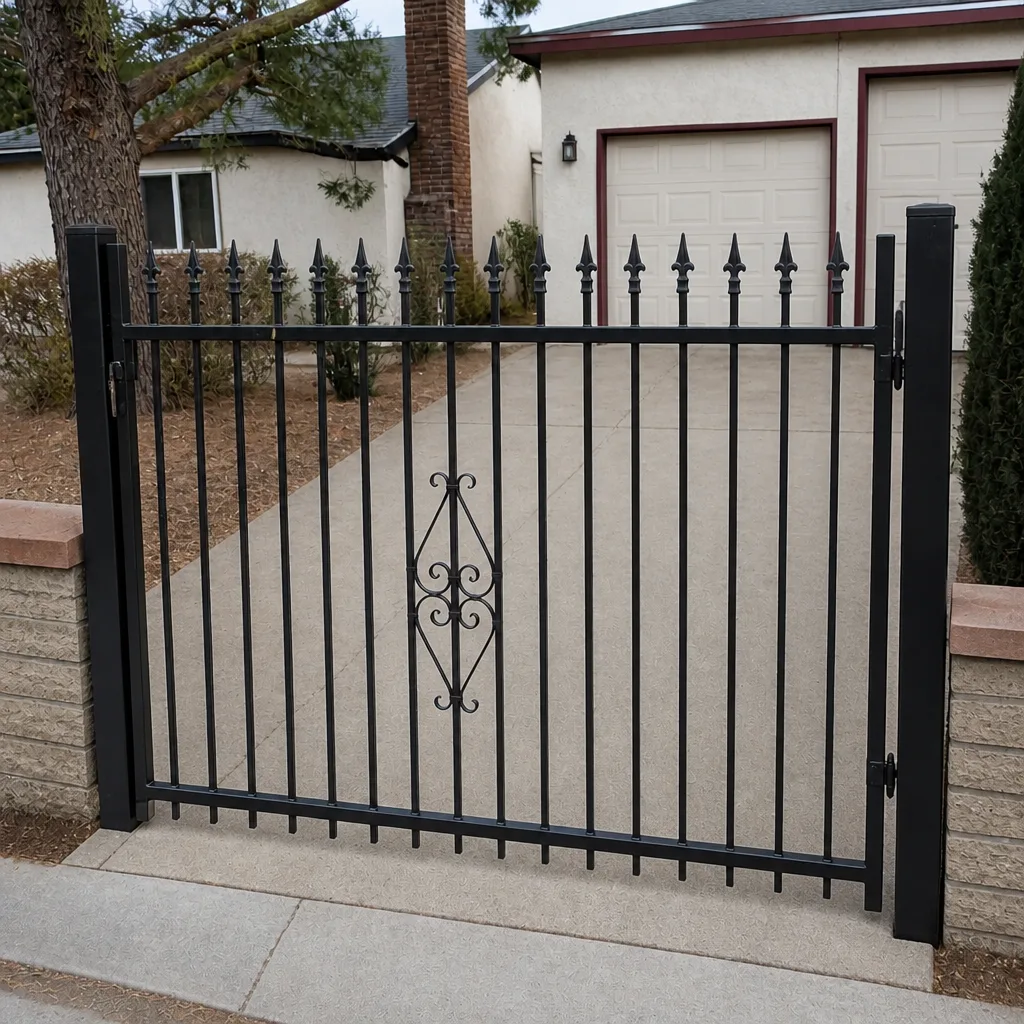
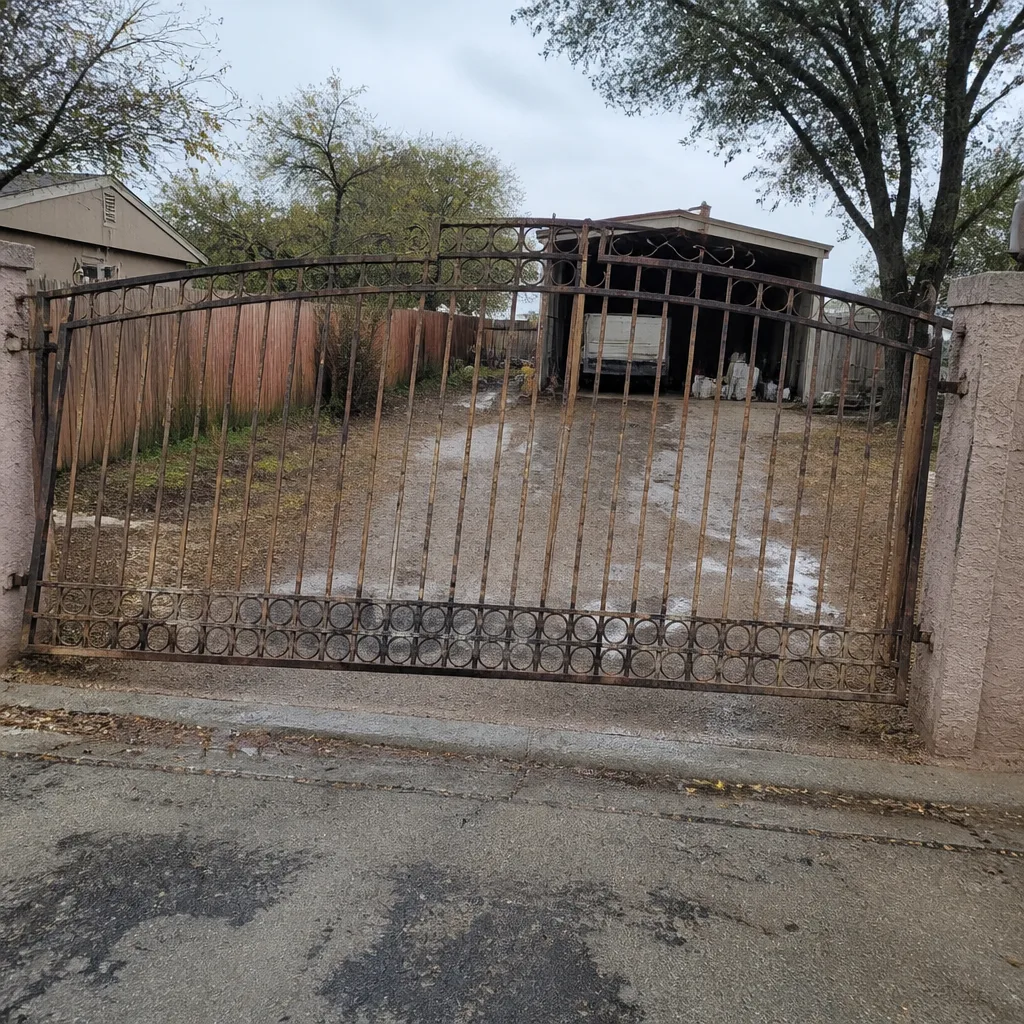
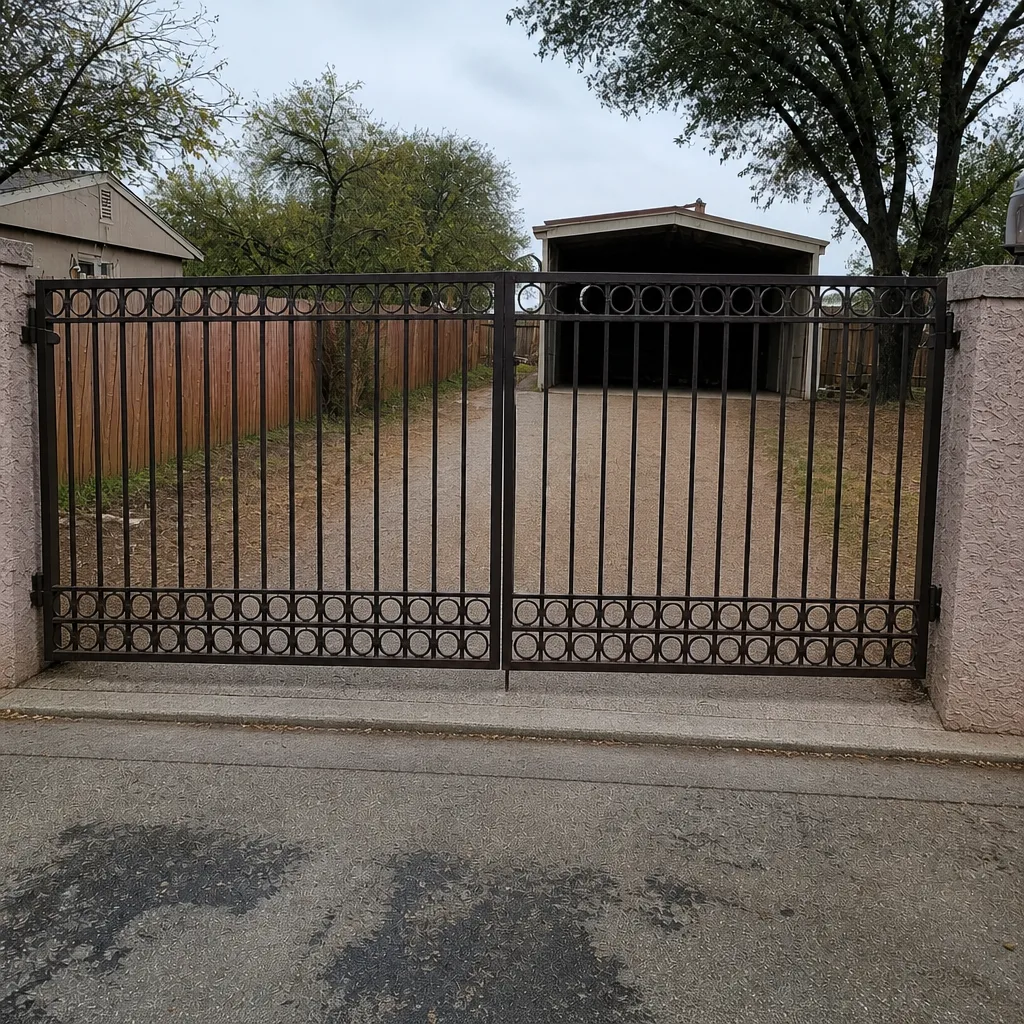
See the difference
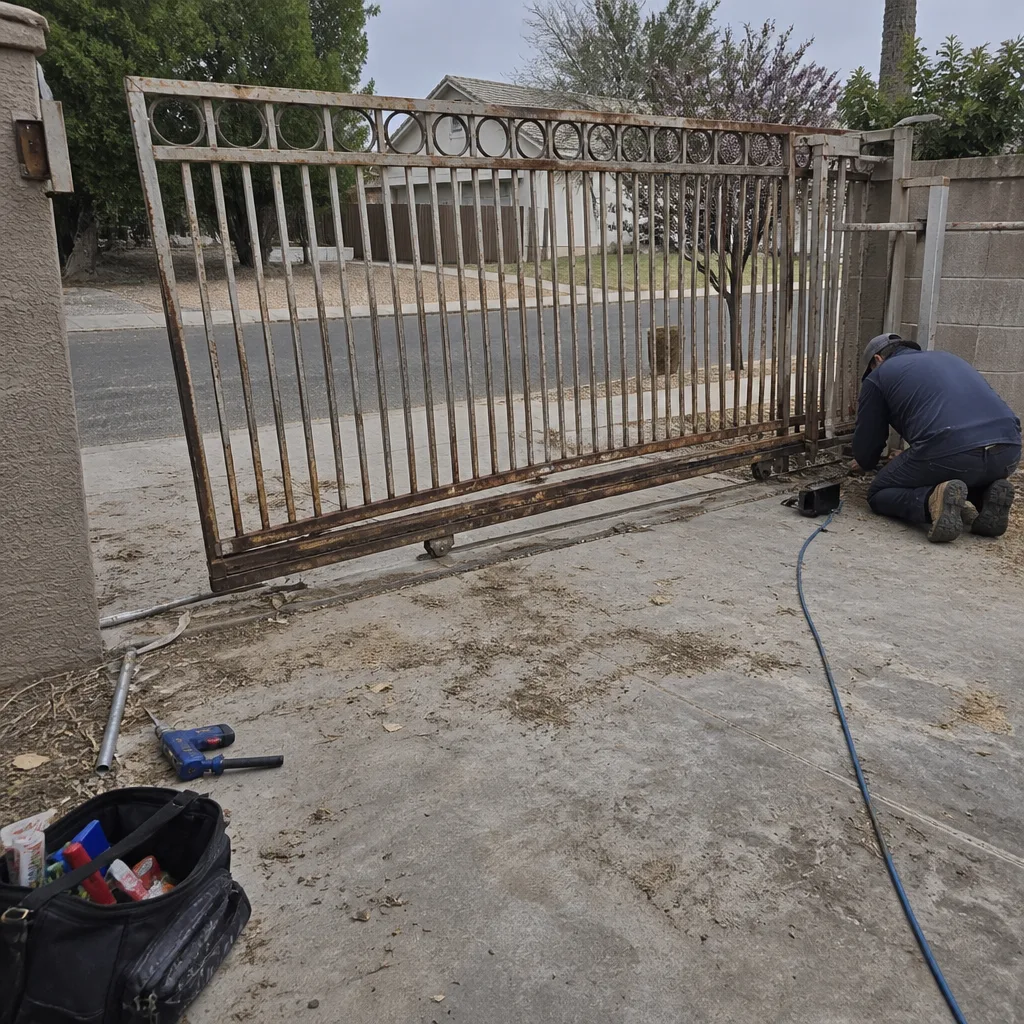 Before
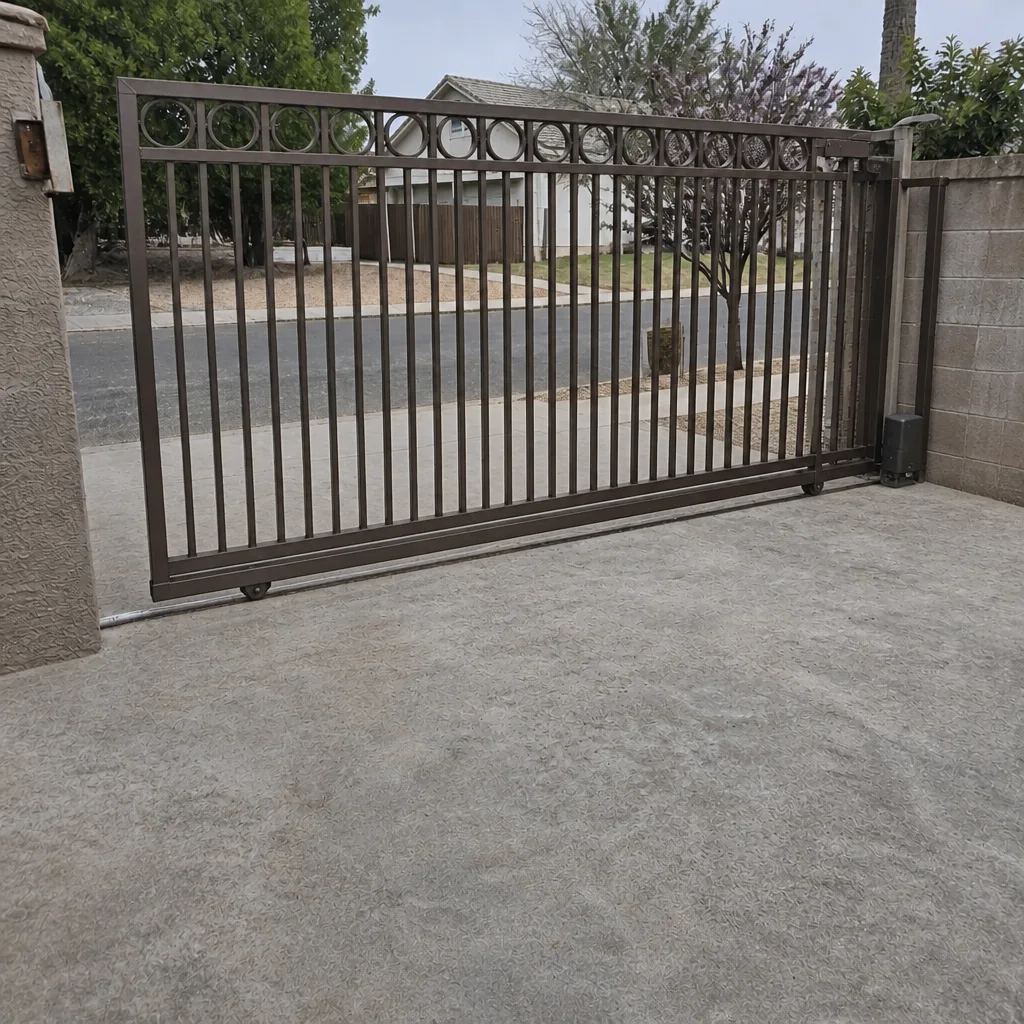 After
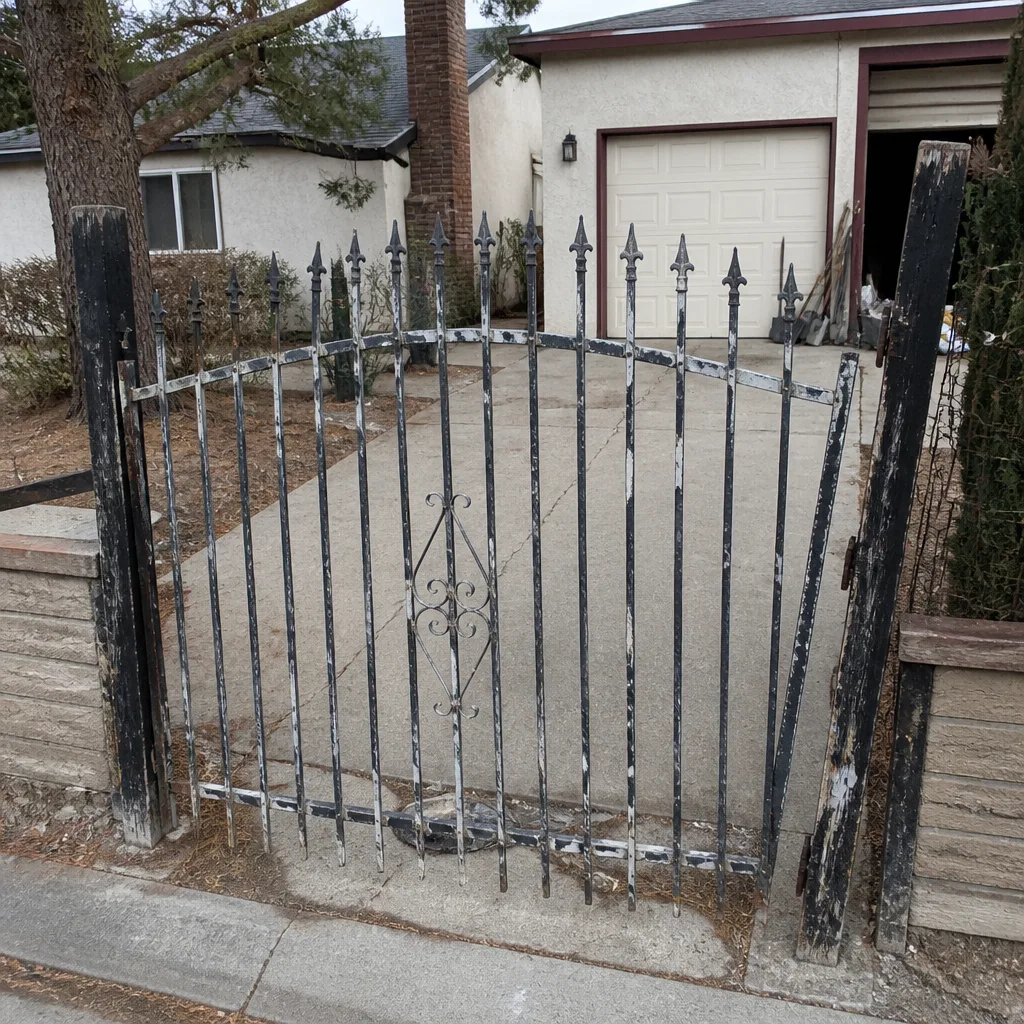 Before
 After
 Before
 After
Frequently Asked Questions
It depends on how the hinge is attached. A bolt-on hinge with through-bolts or machine screws is a hardware swap most homeowners can handle. A hinge plate that’s welded to the frame is a structural joint and needs a professional welder, because a weak repair can fail under load and send the gate swinging into something.
Bolt-on parts like drop rods, latch keepers, rollers, and surface-mounted brackets are safe DIY replacements. Rust touch-up paint and pivot lubrication are also safe. Anything welded, ground into the frame, or carrying the weight of the gate is not a DIY repair – that’s where you want a trained gate specialist.
Because the risk is invisible. A weld can look solid on the surface while lacking proper penetration into the parent metal, and that shallow joint can hold a gate’s weight while parked but fail the first time the leaf takes a hard impact or a wind gust. The failure happens suddenly, with a heavy gate moving into whatever is in its path.
Usually not for faulty workmanship you did yourself. Most homeowner policies exclude damage caused by your own faulty repairs, and a claim that begins with a DIY weld becomes complicated quickly. A professional installation or repair carries the contractor’s liability coverage behind it, which is a far steadier position if something goes wrong in Whitney.
The price depends on the joint, the condition of the parent metal, and whether a frame crack has to be chased. What we can tell you is that the written estimate names the prep, the filler, the process, and the final alignment check, and the price is agreed before any work starts – no surprises on the bill. Call (855) 928-1304 for an exact quote – estimates are free.
Because of the sun and the wind. Wide temperature swings work the fasteners loose, and the wind load on a driveway leaf is heavy afternoon after afternoon. When the paint film chalks and lets moisture reach the metal, the joint starts to flex and the weld eventually cracks. Keeping up with the safe maintenance – paint, lubrication, debris clearing – slows that down. When a crack shows up, call us rather than welding it yourself.
The Bottom Line
A gate has two kinds of problems: the ones on the surface and the ones that carry the load. Surface work – cleaning, painting, lubricating, and swapping bolt-on parts like drop rods and latch keepers – is yours to do, and doing it well saves real money. Load-bearing work – welds, cracks, hinge plates, post connections, and anything on a gate over 200 pounds – belongs with a trained specialist who can work with proper penetration and back the repair in writing. Apply the test before you start: if it fails, what does it hit? That answer keeps your gate safe. For the heavy work, call the gate specialists at Ironworks Gate Co. Whitney.
Get a Free Estimate on Whitney Gate Repair
If a structural repair is on your gate, don’t guess at it. Call (855) 928-1304 for a free estimate. We’ll look at the joint, quote the price upfront, and settle it with you before the work begins – then back it with our written 90-Day Done Right Promise. A live person answers the phone 24 hours a day, seven days a week. Visit the Ironworks Gate Co. Whitney home page to see the full range of gate services we offer, or call today for a second opinion on any written estimate you’ve already received.
Written by the team at Ironworks Gate Co. Whitney.