
Last updated November 17, 2026
 Wrought iron
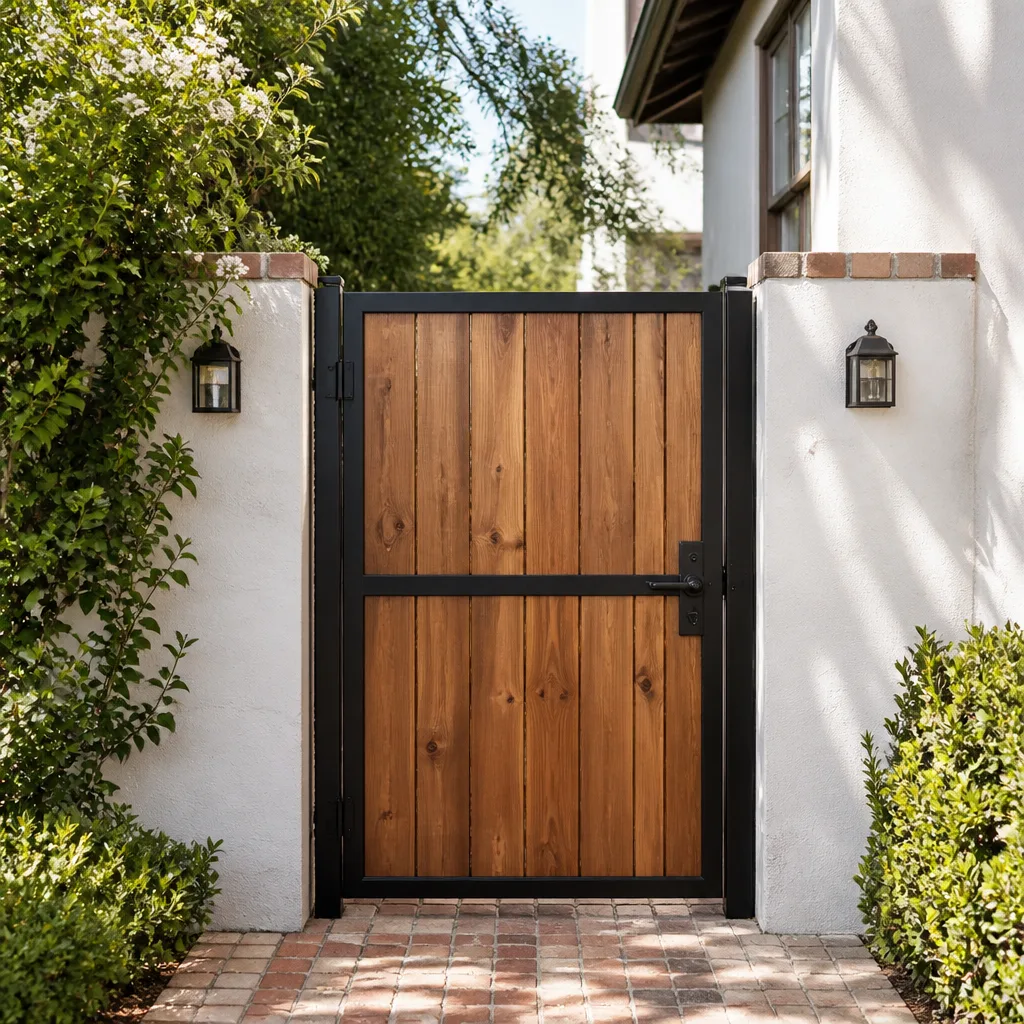 Wood & steel frame
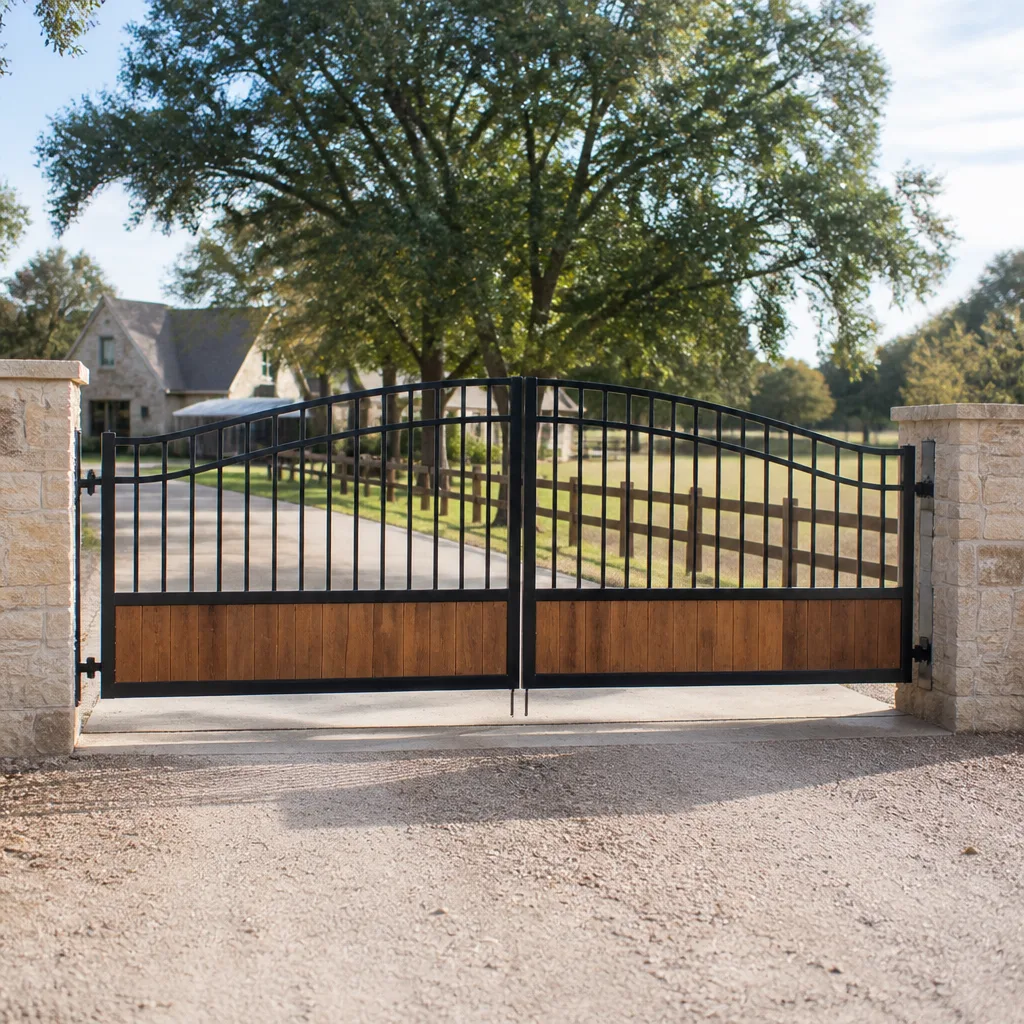 Farm & ranch
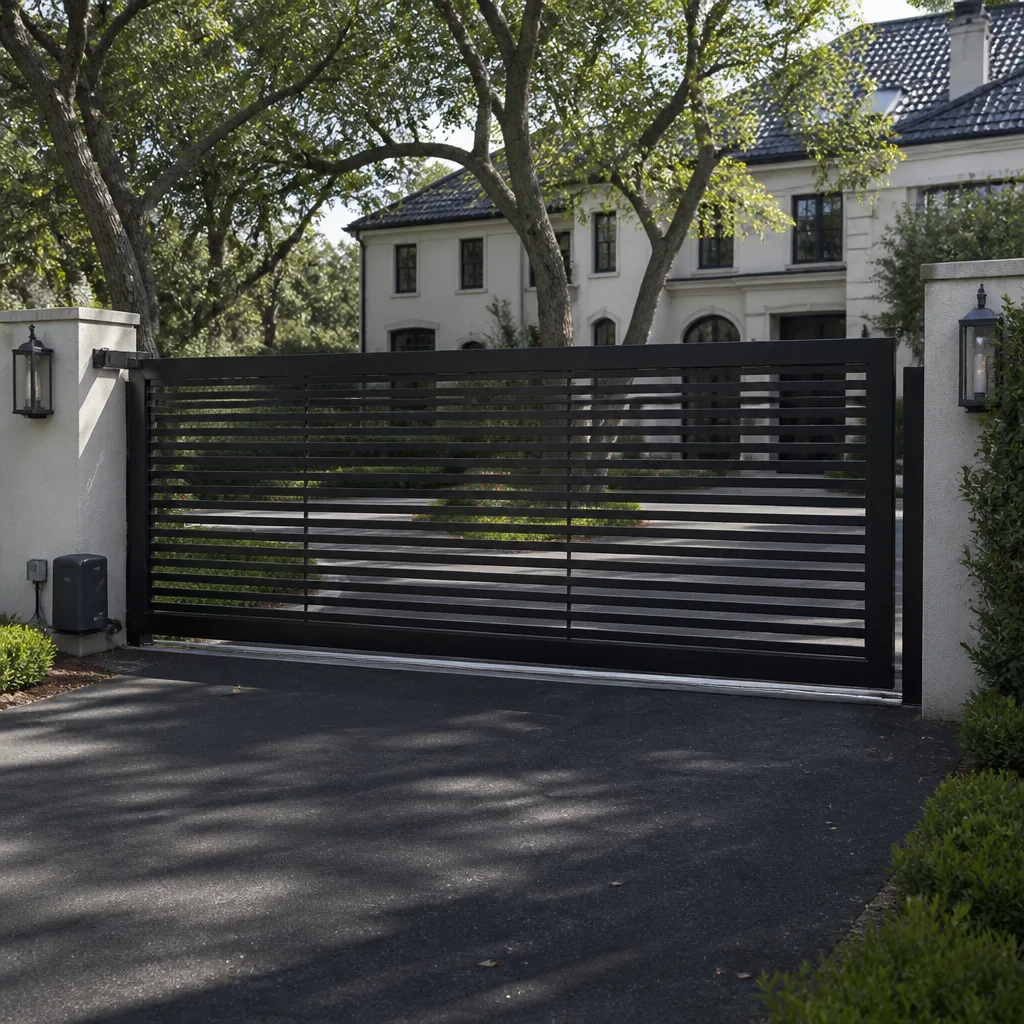 Sliding driveway gates
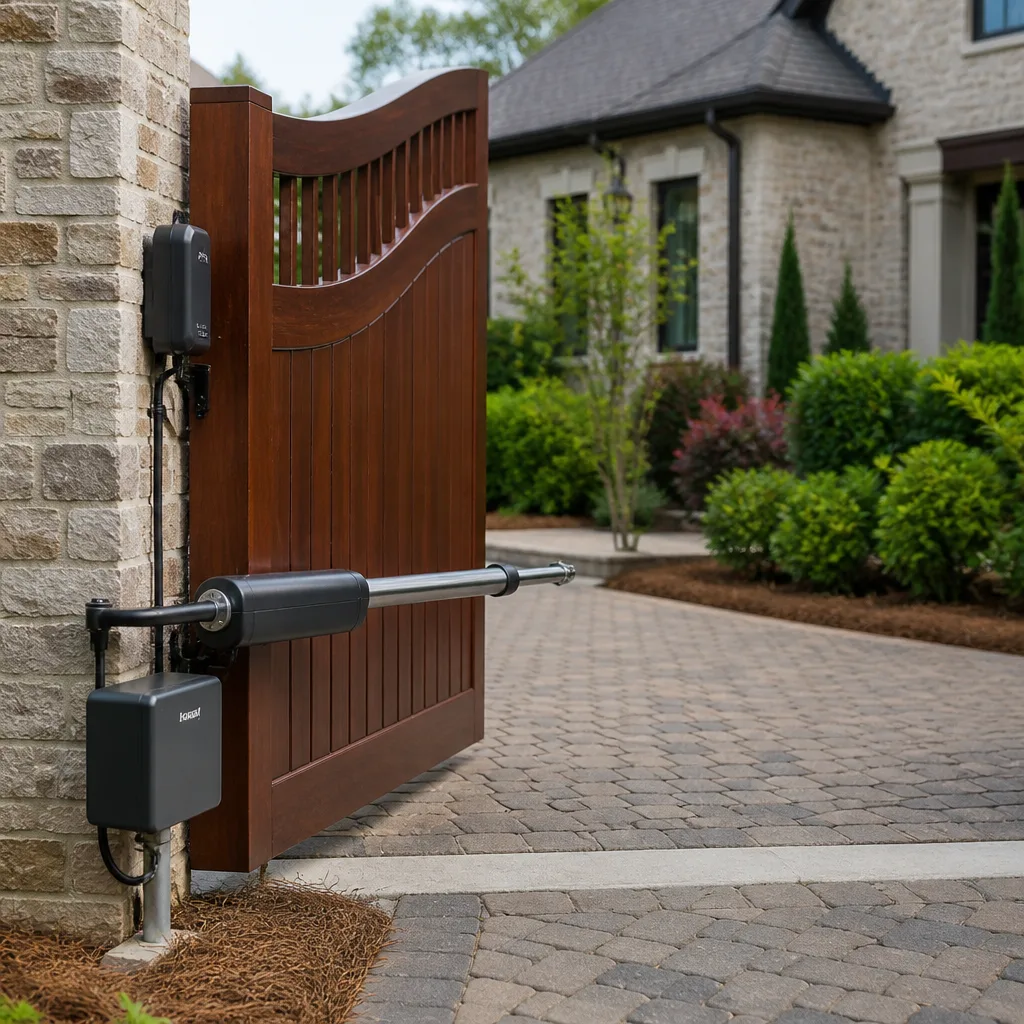 LiftMaster operators
Free on-site gate assessment - hinges, posts, and your LiftMaster or Nice gate operator checked before anything is quoted
The assessment is free and the quote is the invoice.
Get your free estimateDIY vs Professional Gate Repair: The Whitney Homeowner’s Decision Guide
Replacing a gate hinge yourself is a reasonable afternoon project. Adjusting the force settings on an automated gate operator yourself is how a 400-pound gate becomes a liability your homeowner’s insurance won’t cover. The line between those two jobs is what this guide is about. We’ve seen plenty of Whitney homeowners attempt the first kind of repair and succeed – and we’ve seen the second kind end with a bent gate, a burnt-out motor, or a contractor’s bill three times what the original repair would have cost. What follows is an honest map of which repairs sit inside the safe zone and which don’t, with the specific reasons for each, so you can decide with your eyes open.
Quick Answer
Some gate repairs are genuinely safe for a capable homeowner to handle: replacing a worn hinge, clearing debris from a track, tightening a loose latch, or replacing a battery in a remote. Automated gate operator work – force settings, limit switches, photo-eye alignment, and anything involving the motor or its wiring – belongs to a trained professional, because UL 325 safety standards and Clark County code make those adjustments a legal and insurance question, not just a skill question. If you’re unsure which category your repair falls into, a free second opinion on a written estimate is the fastest way to find out.
Styles & brands we work with
- Wrought iron
- Wood & steel frame
- Farm & ranch
- Sliding driveway gates
- LiftMaster operators
Table of Contents
- The DIY Decision Matrix: Safe, Risky, and Professional-Only
- UL 325, Clark County Code, and Why the Stakes Are Higher Than You Think
- What You Actually Need to DIY the Safe Repairs
- Three DIY Repairs That Look Simple and Cause Cascading Damage
- Whitney Conditions That Change the Calculus
- How to Talk to a Professional After You’ve Already Tried It Yourself
The DIY Decision Matrix: Safe, Risky, and Professional-Only
Every gate repair falls into one of three buckets. The bucket depends on what fails, what happens if it fails again, and whether the repair touches the automated system. Here’s how we sort them when a Whitney homeowner calls us and asks whether it’s something they can handle.
DIY-safe
- Replacing a hinge pin or worn hinge on a swing gate, provided the gate is unhooked from the operator and propped securely.
- Tightening or replacing a latch on a manual gate.
- Clearing debris from a sliding gate track.
- Replacing the battery in a remote or keypad, or re-pairing a remote to a homeowner-accessible receiver.
- Touch-up painting or lubrication of hinges and rollers, which keeps small corrosion from turning into a bigger repair.
DIY-risky (possible, but know the downside)
- Replacing a gate wheel or roller on a sliding gate. Doable, but the gate has to be supported correctly or it can drop and pinch.
- Replacing a photo-eye or safety edge that’s already wired. The part swap is simple; the alignment and wiring check afterward isn’t.
- Adjusting the gate’s physical travel by moving the operator arm mount. Small measurement errors compound fast.
Professional-only
- Adjusting force, speed, or obstruction-sensing settings on any automated operator. This is the safety-critical core of the machine.
- Limit switch adjustment on a sliding or swing operator.
- Any electrical work, including power runs, low-voltage wiring, and control board replacement.
- Welding or structural repair of a gate frame, post, or hinge mount that has pulled away from the masonry.
- Replacing or servicing the operator itself – on a LiftMaster, DoorKing, Elite, or any other brand.
If your repair lives in that last category, our Gate Repair in Whitney page walks through how we approach it, and you can always call (855) 928-1304 for a straight answer on whether it’s a one-visit fix.
UL 325, Clark County Code, and Why the Stakes Are Higher Than You Think
UL 325 is the safety standard that governs every automated vehicular gate sold and installed in the United States. It exists because automatic gates can and do injure people – most often children, who are small enough to slip under a closing gate and light enough that the operator’s force setting won’t register them as an obstruction. When a trained technician sets up an operator, they’re calibrating the force limits, the obstruction sensing, and the safety devices (photo eyes, safety edges, or loops) to a specific standard. When a homeowner nudges the force setting up because the gate was sticking, they’ve just undone that calibration. If someone is hurt afterward, the question your insurer will ask is not “did it work?” It’s “who adjusted the safety settings, and were they qualified?”
Clark County adds its own layer. Automated gate systems in residential properties are subject to electrical permitting and inspection requirements for the power supply and low-voltage wiring. Doing electrical work without a permit can complicate a future sale, and it can void coverage if something goes wrong. That’s not a scare tactic – it’s the reality of building code in Southern Nevada. The practical upshot: even if you’re comfortable with tools, the automated portion of your gate is a different category of work with a different set of rules. If you want a professional’s read on the operator, Gate Motor & Opener in Whitney covers the service side of it in detail.
What You Actually Need to DIY the Safe Repairs
No gatekeeping here. Here’s what a homeowner needs to do the DIY-safe repairs competently, and what baseline knowledge goes with each. If you have most of this, you’re in good shape for the safe category.
- Basic tools: an adjustable wrench, a socket set, screwdrivers (Phillips and flathead), a rubber mallet, and a pair of locking pliers.
- A hand level and a tape measure: most hinge and latch problems are really alignment problems, and you can’t diagnose those without measuring.
- A prop or support: any time you’ll be taking load off a hinge, a properly sized block or a second person matters.
- Penetrating lubricant: not WD-40 as a long-term lubricant (it’s a solvent), but a proper lithium or silicone grease for hinges, rollers, and latches.
- The gate manual: for any automated gate, keep the operator manual and the original install paperwork. You’ll need it for warranty claims and for any future technician.
- Common sense about access: never work on a gate that could be operated by someone else while you’re in the way. Disconnect the operator or lock out the power first.
What you don’t need: specialized welding gear, an electrician’s license, or a torque wrench. If the job needs any of those, it’s not a DIY repair – it’s a call.
Three DIY Repairs That Look Simple and Cause Cascading Damage
These are the ones we get called for after the fact. Each starts as a 20-minute job and ends as a bigger repair, because the underlying cause wasn’t what the homeowner thought it was.
- Turning up the operator’s force setting to stop the gate from stalling. A gate that stalls is usually telling you the hinges are worn, the track is dirty, or the gate has sagged. Cranking the force up masks the symptom and overloads the motor, gearbox, and control board. We’ve replaced more motors in Whitney because of this one mistake than any other cause.
- Replacing a photo-eye without realigning it. Photo eyes are the safety device that stops the gate from closing on a person or a car. Swapping the unit is easy; aligning it to the correct beam path and confirming it trips the gate at the right point is not. A misaligned eye either leaves the gate permanently open (annoying) or fails to stop it when it should (dangerous).
- Re-welding or re-bolting a sagging hinge without checking the post. A hinge that’s pulling away from the frame usually means the post has shifted. Welding the hinge back in place fixes the look and leaves the real problem to fail again within a season. Our Gate Installation in Whitney team sees this often on older gates where the original footings weren’t deep enough for the soil.
Whitney Conditions That Change the Calculus
Whitney sits in a pocket of the Las Vegas Valley where the specifics matter. Summer surface temperatures on exposed metal gates routinely push past 140 degrees, and the winter swing between a warm afternoon and a near-freezing morning works every weld and hinge on the property. Dust carried on the spring winds finds its way into roller tracks and operator gearboxes, and monsoon-season downpours in July and August can undermine a post footing that was fine in June. The upshot for DIY: lubrication and debris clearing are more important here than in a mild climate, and they’re also the repairs most likely to be safe for a homeowner to do. Track and hinge maintenance every few months is the single best thing a Whitney homeowner can do to avoid the bigger repairs. Where it goes wrong is structural: a hinge pulled loose in a post that has shifted from monsoon runoff is not a DIY fix, and treating it as one is how a small problem becomes a gate replacement.
How to Talk to a Professional After You’ve Already Tried It Yourself
There’s no judgment here, and there’s no lecture. What there is, is a better repair. When you call us after a DIY attempt, tell us three things and the technician’s diagnosis will be faster and more accurate.
- What you changed and why. “I turned the force dial up because the gate was stalling” tells us to check the hinges and track first, not the motor. That single sentence can save a diagnostic visit.
- What the symptoms were before you touched it. Stalling, reversing mid-travel, or stopping halfway are different problems with different causes, and we need to know which you had.
- What happened after. Did the gate get better for a week and then worse? Did a new symptom appear? That pattern is diagnostic.
We’re trained and equipped on nine major gate-automation brands – LiftMaster, FAAC, BFT, Linear, Viking, Ghost Controls, DoorKing, Elite, and Mighty Mule – so if your operator is one of those, we’ll recognize the symptoms. If you’ve kept the manual and any original paperwork, bring it out. We appreciate the honesty and will always tell you plainly what we see. You can reach us through Ironworks Gate Co. Whitney home or by phone at (855) 928-1304.
Common Mistakes to Avoid
- Adjusting safety settings to fix a symptom. Force and speed dials exist to protect people, not to compensate for a sticky gate. Find and fix the underlying mechanical problem instead.
- Working on a gate without disconnecting the operator. A remote in another hand or a child with a keypad code can activate the gate while you’re in the path.
- Ignoring the post. A sagging gate almost always points to the post, not the hinge. Welding or bolting without checking the foundation just delays the failure.
- Replacing a motor before diagnosing the gate. We’ve seen Whitney homeowners buy a new operator when the real problem was a $12 roller. Diagnose first.
- Doing electrical work without a permit. In Clark County, the low-voltage wiring for an automated gate falls under permitting rules. Skipping that step is a problem at sale time.
- Skipping lubrication because the gate “seems fine.” In Whitney’s dust and heat, a gate that feels smooth in April can seize by July. A few minutes every season prevents most of the expensive repairs we see.
See the difference
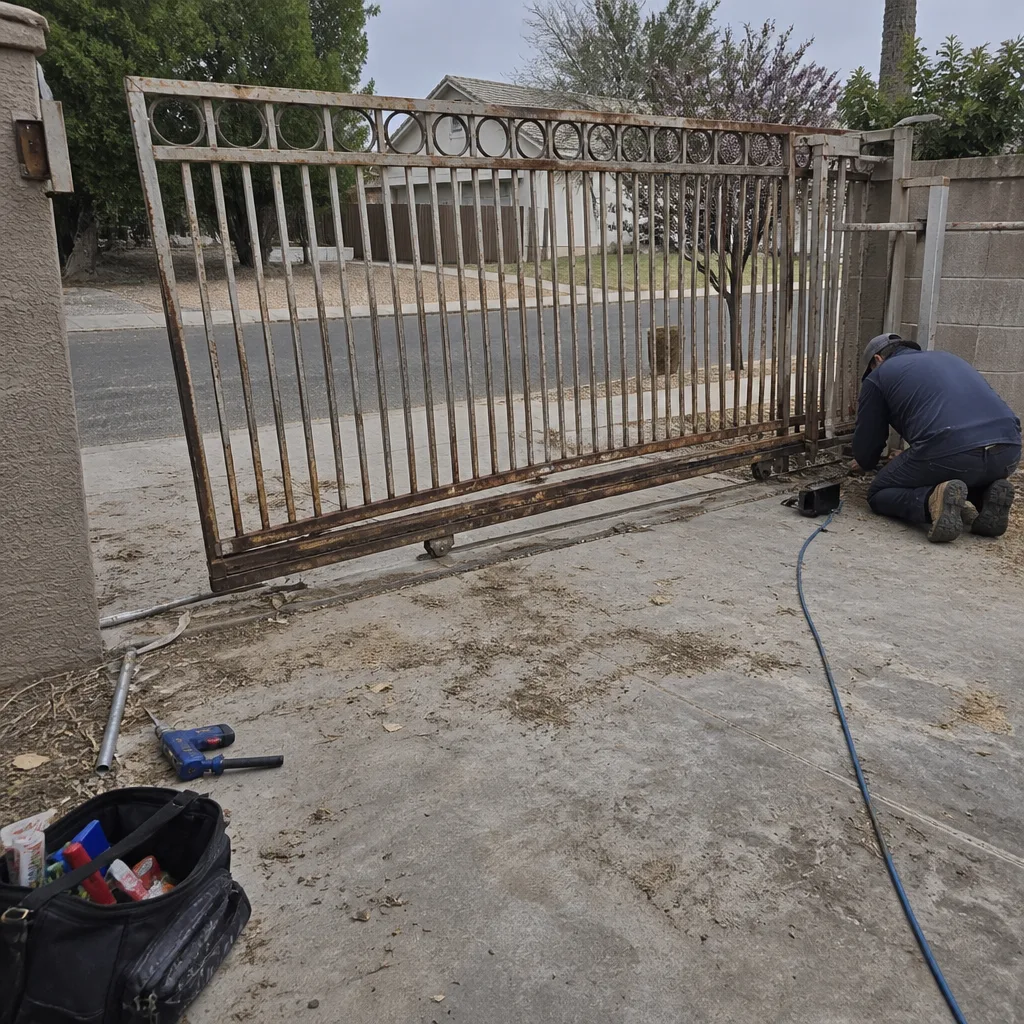 Before
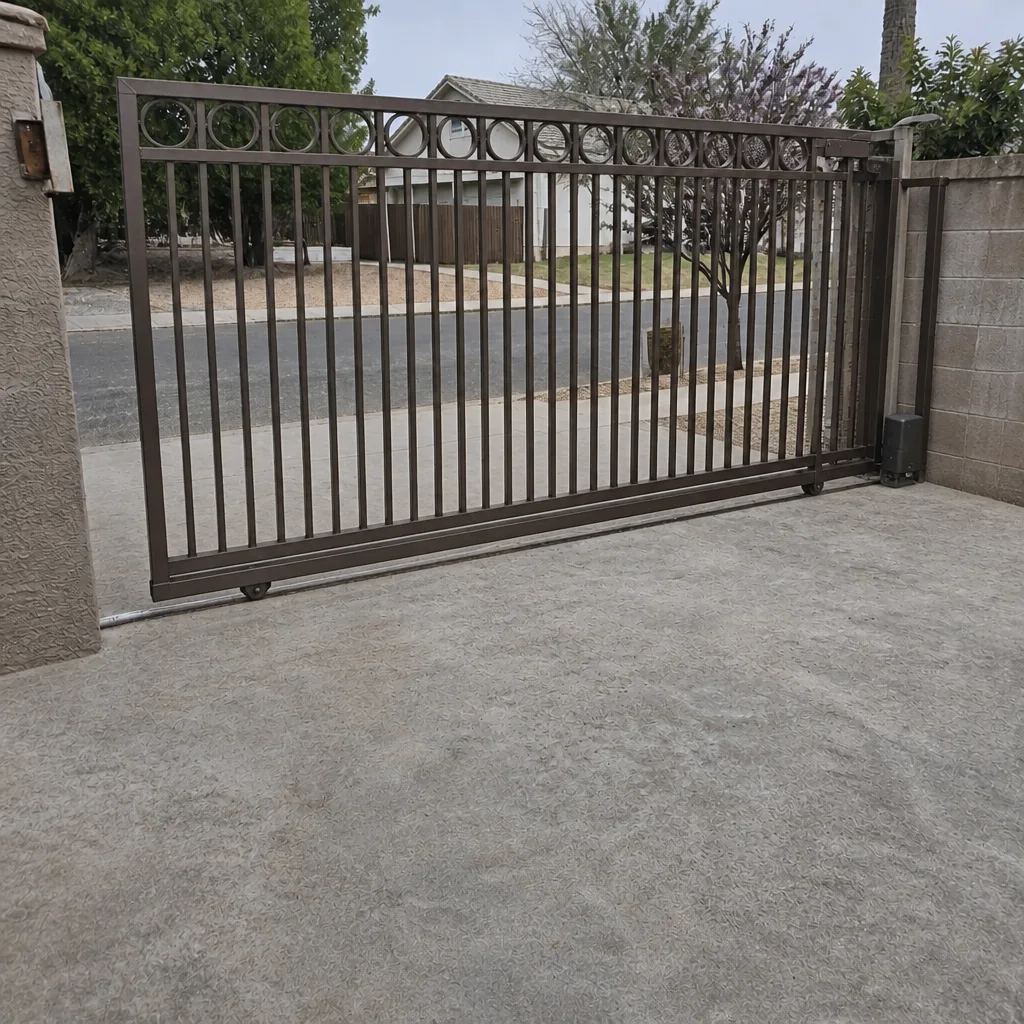 After
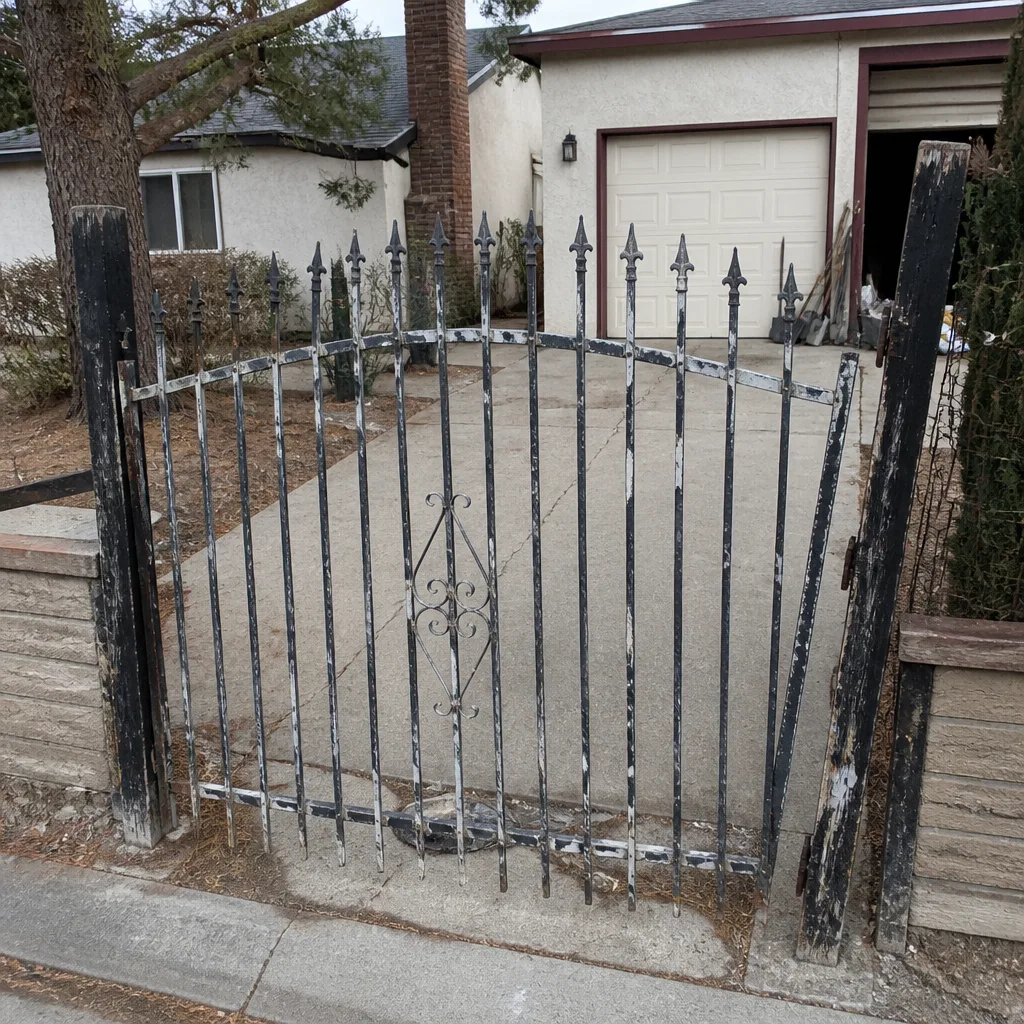 Before
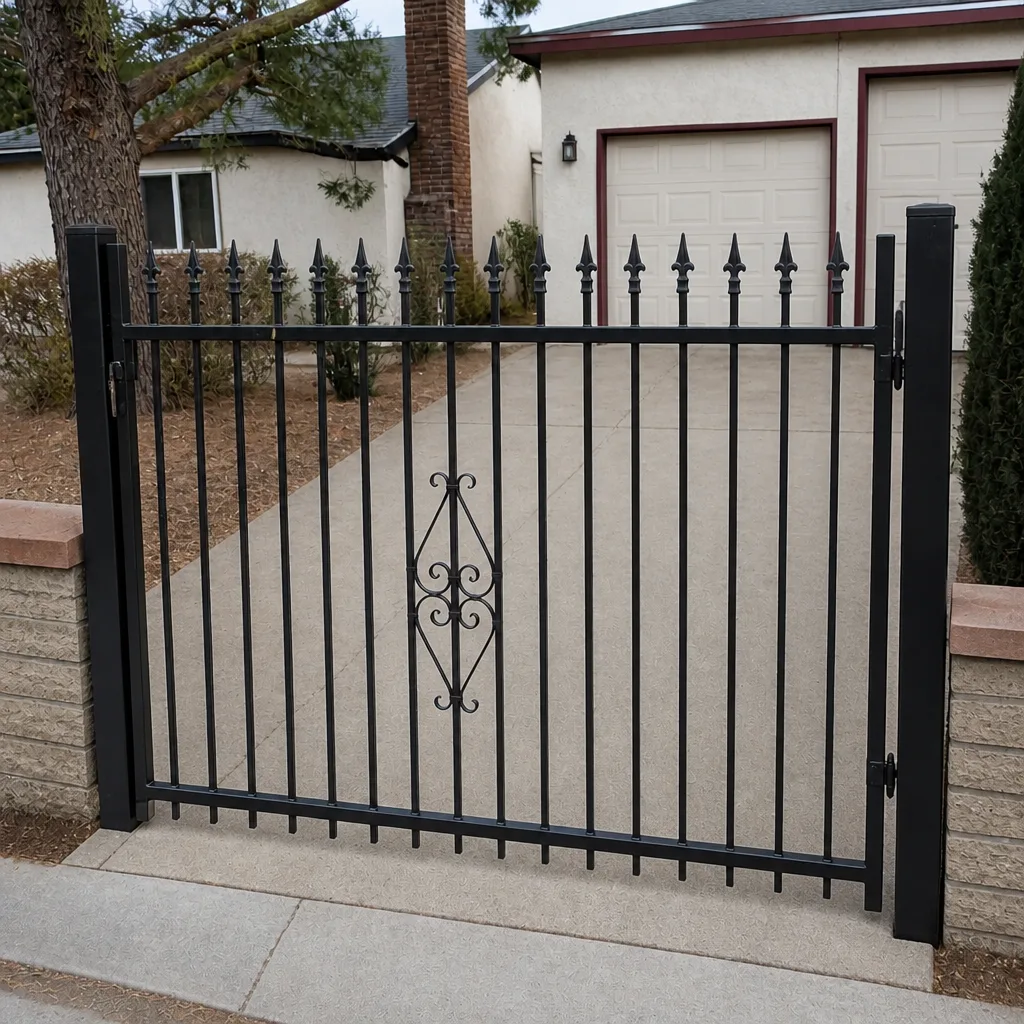 After
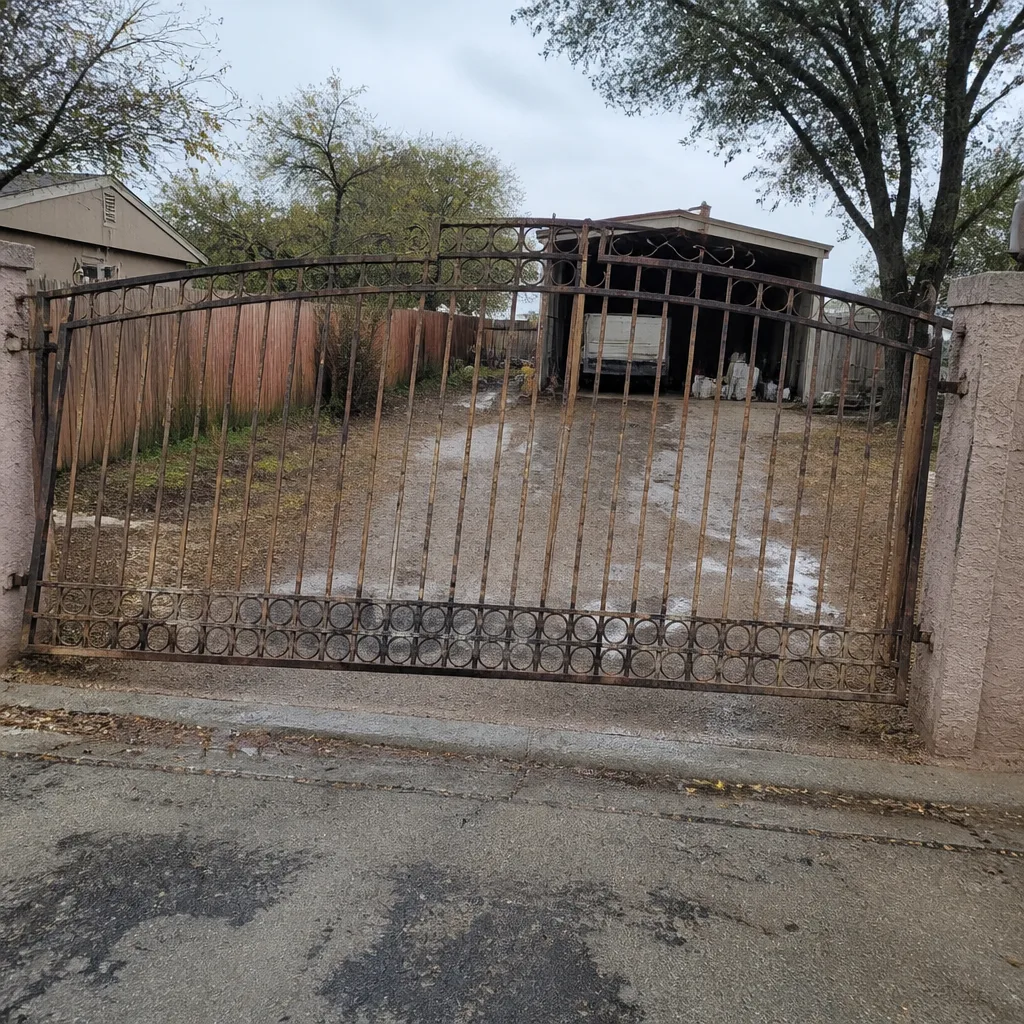 Before
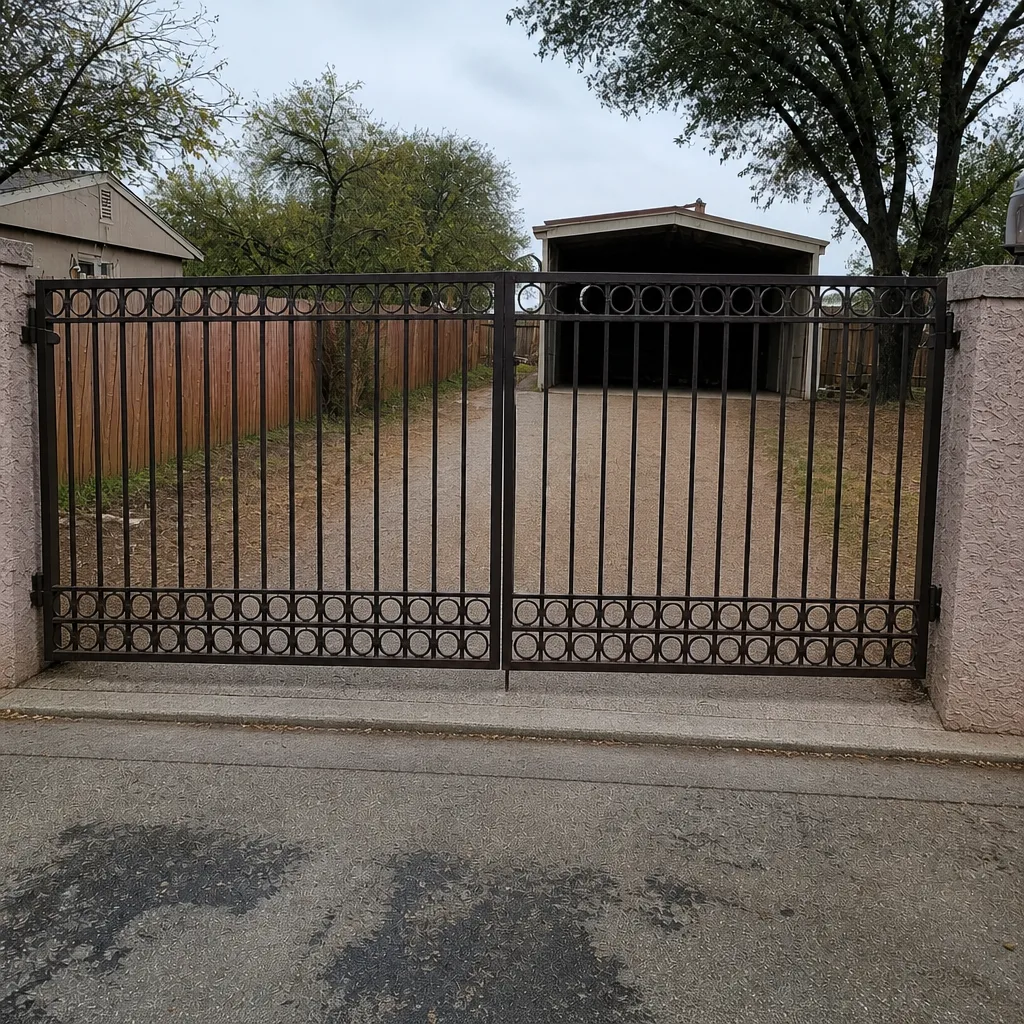 After
When to Call a Professional
Call us when the repair touches the operator, the electrical supply, or the structural frame of the gate; when a hinge or mount has pulled away from a post; when the gate has sagged or dropped; or when the symptom you’re chasing (stalling, reversing, failing to close) has come back after a DIY fix. Also call if you’re simply not sure which category your repair sits in – a quick phone conversation usually answers it. Ironworks Gate Co. Whitney offers free estimates in Whitney – call (855) 928-1304. Every job is backed by our written 90-Day Done Right Promise, so if the repair isn’t right, we come back and make it right, no arguing.
Frequently Asked Questions
You can physically swap the part, but we don’t recommend it. Photo eyes are the primary safety device on an automated gate, and getting the alignment and the obstruction trip-point correct requires the specific operator’s setup procedure. If you replace them, have a technician verify the alignment and function afterward – that’s the part that actually matters.
Adjusting them yourself isn’t illegal in the sense of a traffic ticket, but it does impact the UL 325 compliance of the installation and can affect your homeowner’s insurance coverage if an injury occurs and the settings were altered by an unqualified person. It’s a liability question more than a criminal one, and the safest answer is yes, it matters – have a trained technician handle it.
Hinge pin replacement on a manual swing gate, latch tightening, track debris clearing, remote battery replacement, and standard lubrication are all reasonable DIY repairs for a capable homeowner. Anything involving the operator, the wiring, or the gate’s structural frame is not. If in doubt, call (855) 928-1304 and ask – we’ll give you a straight answer.
The hinge will hold for a season or two, and then the underlying post movement will pull it loose again. A sagging hinge is almost always a post or footing problem underneath. Welding the hinge treats the symptom and hides the real issue, and the next failure is usually more expensive.
Electrical work on the gate’s power supply and low-voltage wiring generally requires permitting and inspection in Clark County. Mechanical repairs like hinge replacement and latch adjustment typically don’t. When in doubt, call the county or ask us – it’s a quick conversation that can save a headache later.
In most cases, yes. Our technicians are trained on nine major brands – LiftMaster, FAAC, BFT, Linear, Viking, Ghost Controls, DoorKing, Elite, and Mighty Mule – and we can usually identify an unknown operator from a photo or a serial plate. Call (855) 928-1304 and we’ll sort it out.
The Bottom Line
The question isn’t whether you’re handy enough to work on your gate – it’s whether the specific repair you’re facing sits inside the safe zone or outside it. Hinges, latches, tracks, batteries, and lubrication are fair game for a capable homeowner, and doing them regularly in Whitney’s heat and dust prevents bigger repairs. Force settings, limit switches, photo-eye alignment, electrical work, and structural welding belong to a trained professional, because UL 325 and Clark County code make them a liability question as much as a skill question. When in doubt, get a free second opinion on a written estimate before you reach for the wrench. Call (855) 928-1304 for a free estimate in Whitney – upfront pricing, settled before a single bolt is turned, and backed in writing.
Written by the team at Ironworks Gate Co. Whitney.