
Last updated November 17, 2026
 Wrought iron
 Wood & steel frame
 Farm & ranch
 Sliding driveway gates
 LiftMaster operators
Free on-site gate assessment - hinges, posts, and your LiftMaster or Nice gate operator checked before anything is quoted
The assessment is free and the quote is the invoice.
Get your free estimateGate Access Control Maintenance Schedule: What to Do and When
Alkaline dust and triple-digit summer heat are the two forces that kill gate access control components fastest around Whitney, yet almost every maintenance schedule a homeowner finds online was written for a mild coastal climate and ignores both. A keypad that shrugs off a damp Seattle spring can corrode at the contacts here inside two summers. A backup battery that tested fine in October may not survive a Whitney July. This guide lays out a maintenance calendar built for this valley: what to inspect in spring before heat season, in fall before cold nights, and after any major dust event, plus the notebook method that makes a technician’s diagnosis faster and the warranty rules that separate safe homeowner maintenance from a repair bill. Ironworks Gate Co. specializes exclusively in driveway and estate gates – from hinges and welds to keypads and automation – and we wrote this for the homeowner who wants the gate to work quietly for the next twenty years.
Quick Answer
A working gate access control schedule in Whitney runs on four touchpoints: a deep inspection in early spring before heat season, a check in mid-fall before cold nights, a quick clean-and-inspect pass after any major dust event, and a battery backup test every six months. Clean keypad contacts and inspect conduit seals quarterly, since alkaline soil and blowing grit attack both. Log every task in a simple notebook so any technician can read the gate’s history at a glance.
Styles & brands we work with
- Wrought iron
- Wood & steel frame
- Farm & ranch
- Sliding driveway gates
- LiftMaster operators
Table of Contents
- Why Whitney Gates Age Differently
- Spring Checklist: Before Heat Season
- Fall Checklist: Before Cold Nights
- What to Do After a Major Dust Event
- The Components Whitney Wears Out First
- Battery Backup Testing Intervals
- The Notebook Method for Maintenance Logging
- Warranty Rules: What Preserves It and What Voids It
Why Whitney Gates Age Differently
Whitney sits in a pocket of the valley where two things happen at once. The soil runs alkaline, and summer afternoons regularly push past 100 degrees for weeks at a stretch. That combination is hard on any outdoor electrical system. Alkaline dust settles on keypad faces, creeps into conduit joints, and combines with morning condensation to form a mildly corrosive film on metal contacts. Then the heat bakes it on.
In our experience servicing gate motors and openers across Whitney, the failures we see most often aren’t dramatic. They’re slow. A keypad button that takes two presses instead of one by August. A loop detector that goes spotty after a windy March. A backup battery that carries the gate through an October outage but drops it the following July. Each of these started as a maintenance item someone skipped, usually because the schedule they were following came from a brochure with no idea what a Whitney summer looks like.
The good news: gates don’t fail on a random timetable. They follow a decay pattern, and a schedule matched to that pattern prevents most of it. That’s the whole idea behind this calendar. It’s the same approach our technicians apply on every service call, and it’s why most jobs we handle finish in a single visit with the price settled upfront before a bolt is turned.
Spring Checklist: Before Heat Season
Early spring is the most important touchpoint of the year in Whitney, because everything you do now either protects the system through July and August or leaves it exposed. Think of it as getting the gate ready for the worst four months of its year. Do this in March or early April, before the first stretch of real heat.
- Clean every keypad and card reader face. Wipe with a damp cloth, dry fully, and check that each button or sensor registers on the first press. Alkaline dust that sat through winter hardens fast once the heat arrives.
- Inspect conduit seals at the ground. Look where the wiring conduit meets soil or pavement. Cracks or worn gaskets let grit and moisture into the run, and that’s how wiring problems start.
- Test loop detectors with a vehicle, not by hand. Drive slowly over each loop and confirm the gate responds cleanly, with no double-triggers or missed reads.
- Check hinges, rollers, and the gate’s swing or slide path. Debris from winter storms collects at the base. A gate that drags puts extra strain on the operator all summer.
- Confirm the emergency release works. You should be able to free the gate by hand in a power outage. This is a safety check, not an optional one.
- Run a full open-close cycle several times and listen. Any new grinding, clicking, or hesitation is easier to fix in April than in a 108-degree August.
If your gate is older or has been serviced irregularly, spring is also the right moment to schedule a seasonal tune-up. An $89 Seasonal Tune-Up covers the inspection points above and catches the small issues before they become the kind of failure that strands a car in the driveway. For anything that turns up structural – a sagging gate, a bad weld, a worn track – our Gate Repair in Whitney team handles it, and the price is quoted and agreed before any work starts.
Fall Checklist: Before Cold Nights
Whitney winters aren’t brutal, but the cold nights matter to access control equipment. Temperature swings pull at seals, stiffen lubricants, and stress the electronics that ran hot all summer. Fall is when you close out the year’s wear before it becomes a winter problem, and it’s the second half of a schedule that works.
- Re-inspect conduit seals. This time look for the damage heat and sun did over summer – cracked gaskets, sun-bleached fittings, exposed wire at a joint.
- Clean and re-lubricate the gate’s moving parts. Use the lubricant specified for your operator, not whatever’s in the garage. Worn lubricant stiffens in cold, which drags on the motor every cycle.
- Test the battery backup under load. More on this below, but fall is a mandatory test point. A battery that tested fine in spring may be weaker than it looks.
- Check the keypad and reader for water intrusion. Cold-night condensation finds every gap. Dry and reseal anything that looks wet inside.
- Verify all safety edges and photo-eyes. These are the components that stop a gate on an obstruction. Test them deliberately with a person clear of the path and the gate’s own test procedure.
- Look at the gate hardware for rust and loosening. A hinge bolt that worked loose over summer becomes a wobble in fall and a sag by next spring.
Keep a note of anything that doesn’t feel right after the fall pass. A gate that runs differently in November is telling you something about its condition, and a technician can act on it while the problem is still small.
What to Do After a Major Dust Event
Whitney gets dust events – wind that carries grit off the desert and coats everything outdoors in a fine layer. These aren’t part of a seasonal calendar, but they’re a trigger you should act on, and most homeowners don’t. Grit in the wrong places accelerates the wear we described earlier, so treat a major dust event as a mini-maintenance point.
- Blow or wipe grit off keypad faces and card readers. Don’t press the buttons to “clear” the dust; that drives grit into the contacts.
- Check the track or swing path for accumulated grit. Sweep the gate’s path clean so the operator doesn’t grind the debris through every cycle.
- Look at the conduit entry points. Dust blows into any gap. Confirm the seals are still holding after a big event.
- Test one full cycle and listen for new noise. A clean gate sounds different from one that’s picked up grit in a bearing or hinge.
One dust event is minor. A season of them, unattended, is how a keypad that worked for years starts missing reads. Add a quick dust pass to your routine whenever the wind has been up, and you’ll stay ahead of it. This is also exactly the kind of wear-and-tear item our seasonal tune-up is built around, and it’s covered under our Gate Motor & Opener in Whitney service for any motor or opener adjustment that turns up during the check.
The Components Whitney Wears Out First
If you only inspect a few things, make them these. In our experience across Whitney, three areas account for the majority of access control failures we’re called out to, and each one is directly tied to local conditions.
Keypad contacts. The face of a keypad is where alkaline dust lands first, and the contacts beneath it are where the corrosion shows up. A keypad that needs a hard press, or that works intermittently, is usually a contact problem – not a dead unit. Cleaning and inspection keeps it working; ignoring it leads to a failed access point.
Loop detectors. Vehicle loops rely on a magnetic field that grit and ground movement can disrupt. In Whitney, dust in the pavement seam around a loop and the year’s temperature swings both take a toll. Spotty detection – the gate that opens for every car but one – is the first symptom. Test them on a schedule, drive over them deliberately, and note any irregularity.
Wiring conduit seals. This is the component most homeowners never look at, and it’s the one that matters most in alkaline soil. Every place wiring enters the ground is a potential entry point for grit and moisture. A cracked seal doesn’t fail on day one. It fails over a season or two as the wiring inside slowly degrades. Inspect the seals in spring and fall, and treat a crack as a repair to schedule rather than a cosmetic issue.
Worn hardware rounds out the list. Hinges, rollers, and the gate’s moving joints all take extra load when the system is fighting debris and heat. A quick look at these on every inspection catches most of the rest.
Battery Backup Testing Intervals
Test your gate’s backup battery every six months – once in spring, once in fall – and test it under load, not just by checking a light. A battery that “passed” last year can fail this summer, and the reason is simple: heat is hard on batteries. Whitney’s summer temperatures shorten a backup battery’s life, and a unit that held up through mild months can lose capacity faster once it’s baked for a season. That’s why a six-month interval matters here more than it would in a cooler climate.
Here’s how to think about it:
- Test under load. A no-load voltage check tells you almost nothing about whether the battery will actually move the gate. Have the gate’s backup run the operator through a cycle while you observe.
- Write down the result and the date. This is where the notebook pays off – you’ll see the battery weakening over months instead of being surprised by a failure.
- Replace on age, not just on failure. Backup batteries don’t last forever. If yours is showing signs of age or a slower cycle, replace it before it fails during the one outage you actually need it.
Don’t ignore a battery warning. A backup that dies quietly is discovered at the worst moment – during an outage, with the gate stuck and a car on the wrong side. Testing on schedule is how you avoid that call. If a backup test turns up a weak battery or a larger issue, our team handles it, and every completed job is protected by our written 90-Day Done Right Promise.
The Notebook Method for Maintenance Logging
The single most useful maintenance tool for a Whitney gate isn’t a gadget. It’s a notebook. Keep a simple log with the gate, and any technician who arrives can read its history in a minute – which means a faster diagnosis and a smaller repair. This is the method we encourage every homeowner we work with to use, and it’s part of why we can often solve a problem on the first visit.
- Start with the basics. Write down the gate’s make and model, the operator brand (whether it’s LiftMaster, FAAC, Elite, or another), and the install date if you have it.
- Date every maintenance task. Each spring pass, fall pass, dust-event clean, and battery test gets a line with the date and what was done.
- Note anything odd, in plain words. “Gate hesitated on the way open, once, morning of the 14th.” Specifics are gold to a technician; “it’s been acting up” is not.
- Record battery test results and replacements. Age and performance over time tell you exactly when a replacement is due.
- Keep the log with the gate’s other paperwork, and note service visits. When a technician arrives, hand over the notebook. It shortens the visit and often reveals the pattern behind a recurring issue.
The log isn’t bureaucracy. It’s the difference between “the gate’s been fine” and a record that shows a keypad cleaning that skipped a season, or a battery test that’s overdue. That record is what makes repair faster and, often, cheaper. For homeowners who want a clean installation or a full automation refresh, the same record-keeping pays off, and our Gate Installation in Whitney team builds the schedule into every new system so it’s easy to follow from day one.
Warranty Rules: What Preserves It and What Voids It
Here’s where maintenance and warranty meet, and it’s the part most homeowners get wrong. Some of the tasks in this guide protect your 90-Day Done Right Promise and your manufacturer coverage. Others can undo it if done wrong. Knowing which is which saves you from costly mistakes.
Tasks that preserve and reset the warranty window: routine cleaning and inspection, battery tests and replacements, lubricant maintenance, and scheduled professional service. Keeping the notebook log current also helps establish that the gate was maintained, which supports any warranty claim you make. A written guarantee like our 90-Day Done Right Promise works best when the record shows the job was cared for.
Tasks that can void coverage if done wrong: opening the operator housing to work on internal electronics, rewiring or splicing conduit runs, and any adjustment to the safety edges or photo-eyes done without the test procedure. These aren’t just warranty issues – they’re the tasks that can cause a gate to fail or, worse, fail to stop. That’s why we recommend a trained professional for anything inside the operator or the wiring, and why we only service systems we’re equipped to handle correctly.
The safest way to keep both your promise and your coverage intact: do the inspections and cleaning yourself, log everything, and call a professional for anything that involves opening a housing, touching a wire, or adjusting a safety component. When in doubt, ask for a second opinion before you act. Get an Ironworks Gate Co. gate repair in Whitney on the phone and we’ll tell you whether a task is homeowner-safe or a job for us.
Common Mistakes to Avoid
- Following a coastal-climate schedule. If the maintenance guide you’re using doesn’t mention heat and dust, it wasn’t written for Whitney, and it skips the two things that wear our gates out fastest. Use a calendar that assumes both.
- Skipping the post-dust pass. A single dust event is minor. A season of them, unattended, is how grit ends up in keypad contacts and conduit. Clean after the wind has been up, not just on schedule.
- Testing the battery only when the power fails. A backup that passes a light test can fail under load. Test every six months, and test it by moving the gate.
- Pressing a dirty keypad to “clear” the dust. That drives grit into the contacts. Wipe it off; don’t press it clean.
- Ignoring a cracked conduit seal. It looks cosmetic and isn’t. Alkaline soil plus moisture plus a cracked seal is a wiring repair waiting to happen. Get it resealed in the fall.
- Opening the operator housing to “fix it yourself.” This is the fastest way to void your coverage and the surest way to create a safety problem. Leave the internal electronics and the safety edges to a trained technician.
- Skipping the notebook. Every visit without a log is a technician starting from zero, which means a longer diagnosis and a bigger bill. Write it down.
See the difference
 Before
 After
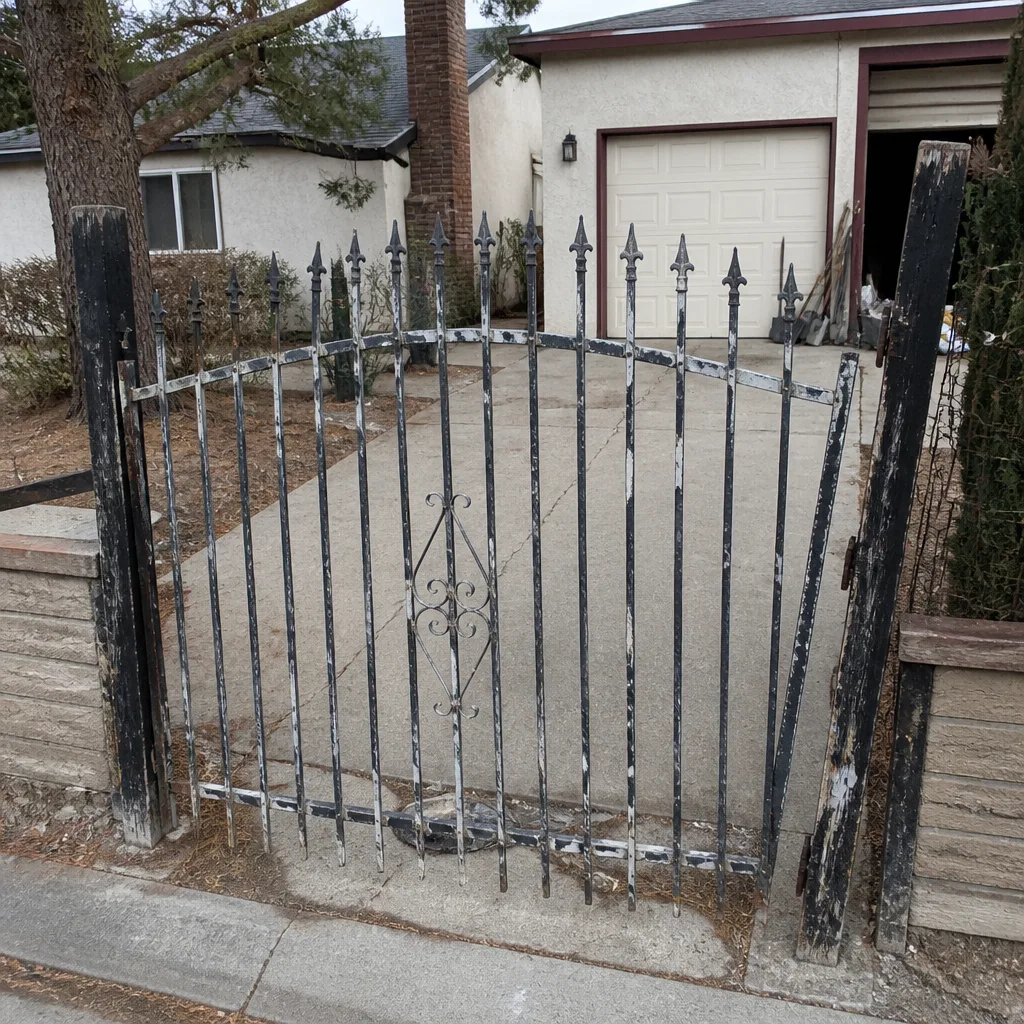 Before
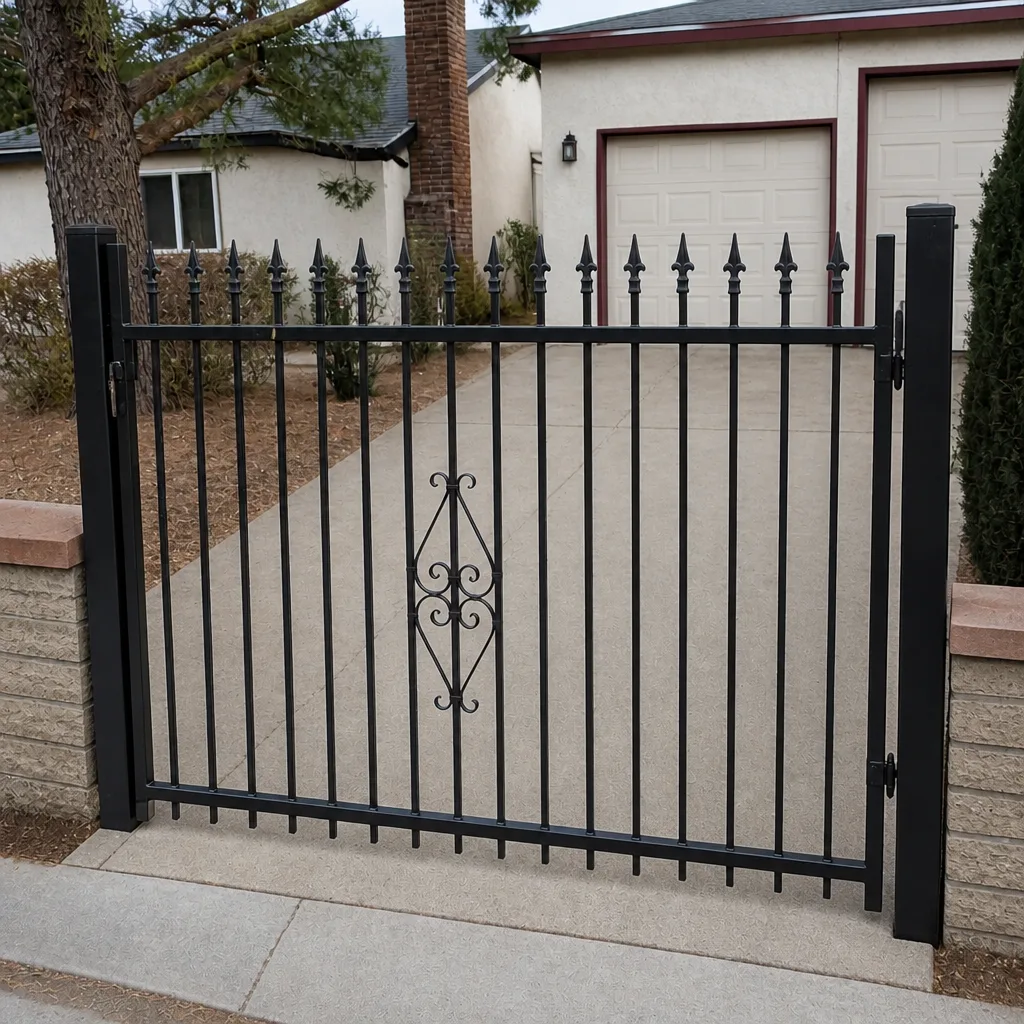 After
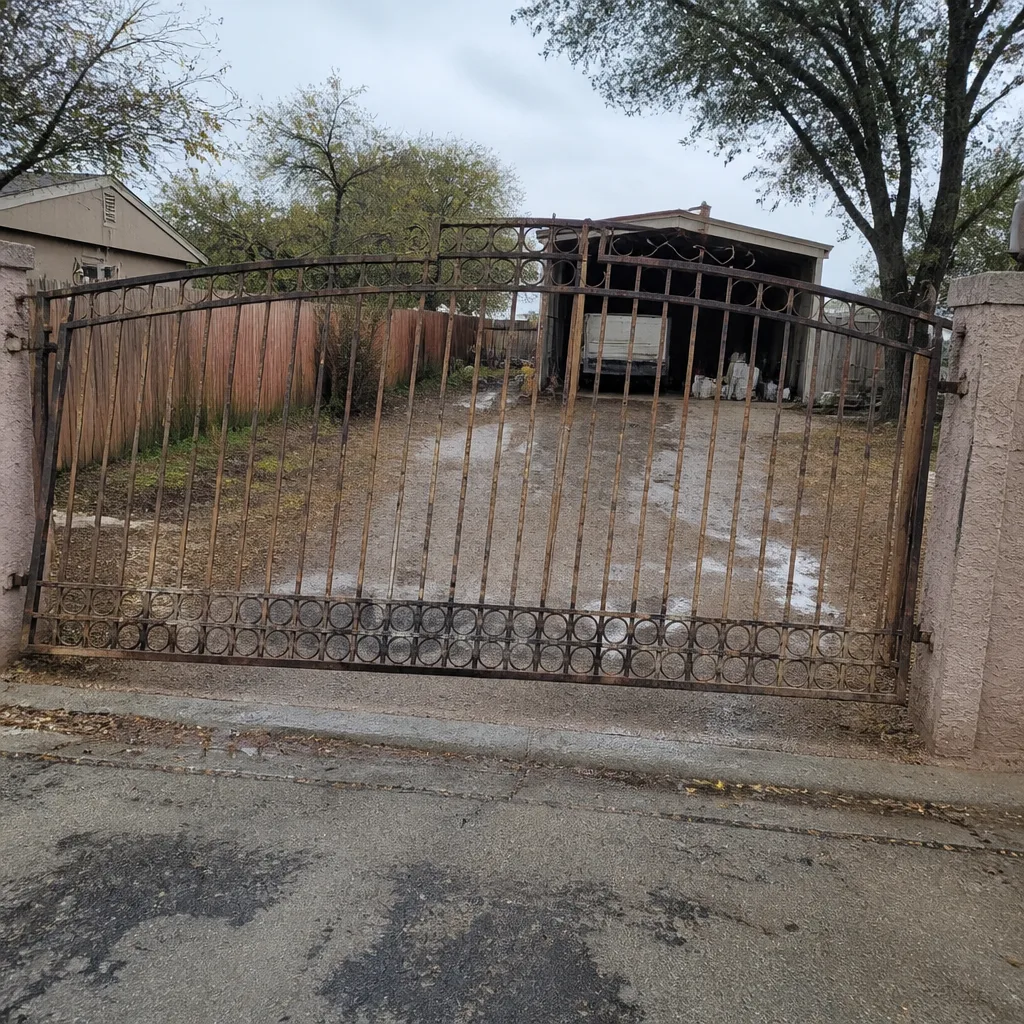 Before
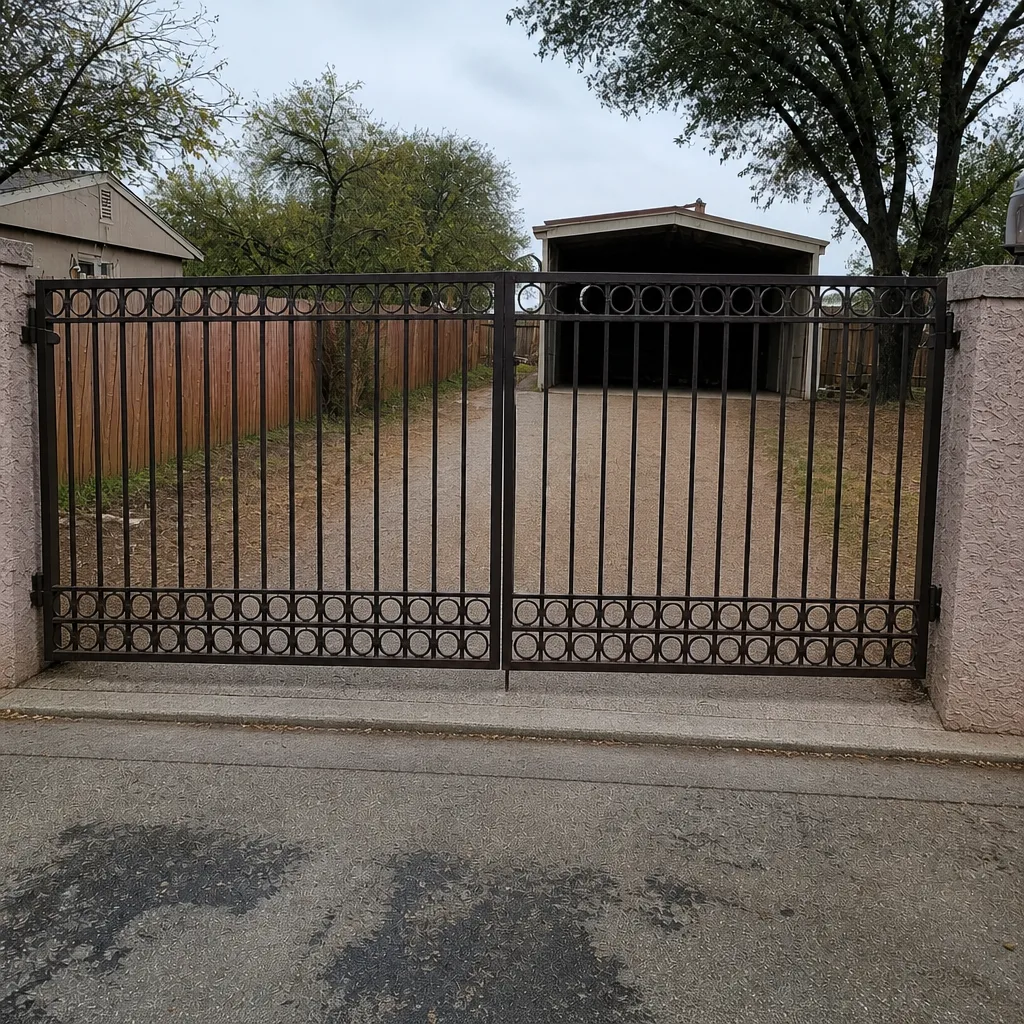 After
When to Call a Professional
Call a professional if the gate hesitates or reverses without an obstruction, if a keypad or reader stops registering altogether, if you see exposed wire at a conduit joint, or if the emergency release won’t free the gate. Call before the gate fails in a way that traps a car in Whitney. Anything involving the operator housing, wiring, or the safety edges belongs with a trained technician – the risk isn’t worth the savings. Ironworks Gate Co. offers free estimates in Whitney, and we’re trained and equipped on nine leading gate-automation brands, from LiftMaster and Elite to Mighty Mule, so the correct fix happens on the first visit. Call (855) 928-1304 – a live person answers, day or night, and the price is quoted and agreed before a single bolt is turned.
Frequently Asked Questions
Two full inspections a year – one in spring before heat season and one in fall before cold nights – plus a quick clean-and-inspect pass after any major dust event. Clean keypad contacts and inspect conduit seals quarterly, and test the battery backup every six months. This schedule is built for Whitney’s alkaline soil and summer heat, which is harder on the equipment than a milder climate.
You can safely wipe keypad and reader faces, sweep the gate path, and test loop detectors and the emergency release. Anything inside the operator housing, in the wiring conduit, or on the safety edges is a job for a trained professional. Call (855) 928-1304 for an exact quote; estimates are free.
Intermittent keypad performance in Whitney is usually alkaline dust on the contacts, sometimes with condensation that forms a mildly corrosive film. Wipe the face, dry it fully, and test each button. If a button still needs a hard press, the contacts may need a proper cleaning and inspection. Call our team for a free estimate if it doesn’t clear.
We’re trained and equipped on nine gate-automation brands, including LiftMaster, FAAC, Elite, and Mighty Mule – so most systems in Whitney are covered. Call (855) 928-1304 with your operator’s brand and model number and we’ll confirm before your visit.
Yes – routine cleaning, inspection, and battery tests preserve both manufacturer coverage and our written 90-Day Done Right Promise. Opening the operator housing, splicing wiring, or adjusting the safety edges without the proper procedure can void it, so keep those tasks with a professional.
We handle gate repair calls in Whitney with same-day and emergency availability where scheduling allows, and a live person answers 24 hours a day, seven days a week – not a voicemail. For repair and emergencies, call (855) 928-1304 for the fastest response. Ongoing upkeep is the cheapest way to avoid that call in the first place.
The Bottom Line
Access control failures on a Whitney gate follow a predictable pattern, and a schedule built for this valley prevents most of them. Two full inspections a year, quarterly keypad and conduit checks, six-month battery tests, and a quick pass after every dust event cover the components Whitney wears out fastest. Log everything in a notebook so any technician can read the gate’s history. Know which tasks you can safely do yourself and which belong with a professional, and you keep both your equipment and your warranty in good standing. That’s the whole of it – a calendar you can actually follow, matched to a climate that ignores coastal climate schedules.
If a maintenance pass turns up something you’d rather not guess at, start with the Ironworks Gate Co. Whitney home and call (855) 928-1304. We’ve done this work for a long time, we stand behind every job in writing, and we’ll be here to keep your gate working quietly for the next twenty years. Ask about our $89 Seasonal Tune-Up, $50 Off Any Repair Over $250, a Free Second Opinion on Any Written Estimate, and our permanent 5% Senior and Veteran discount.
Written by the team at Ironworks Gate Co. Whitney.