
Last updated November 17, 2026
 Wrought iron
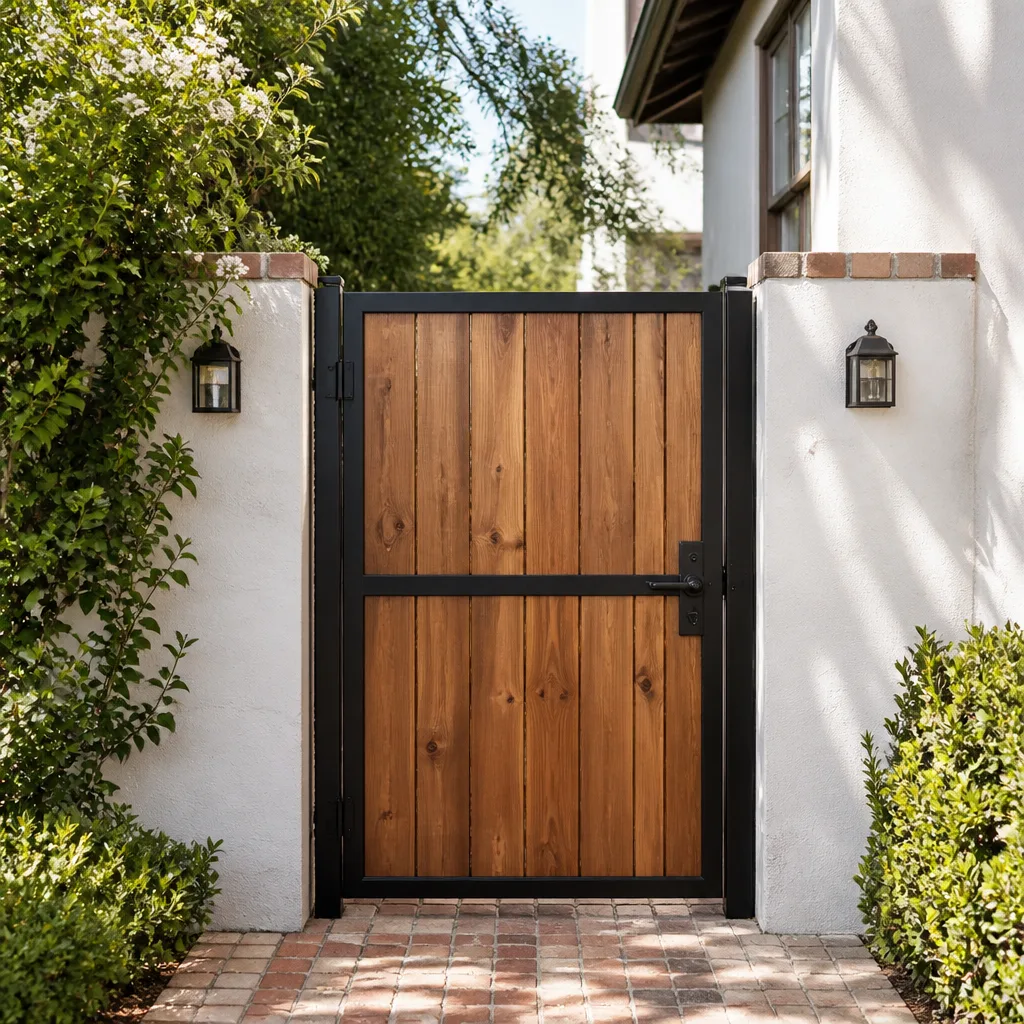 Wood & steel frame
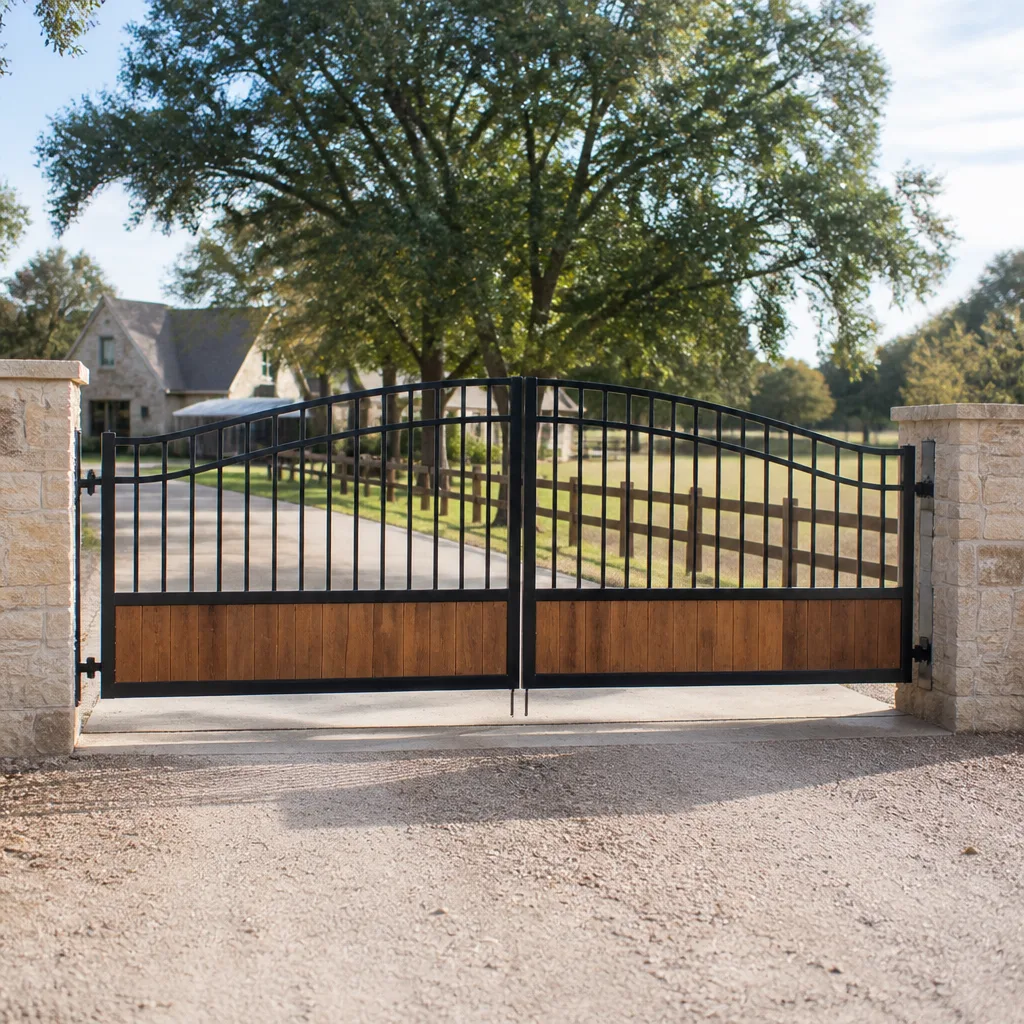 Farm & ranch
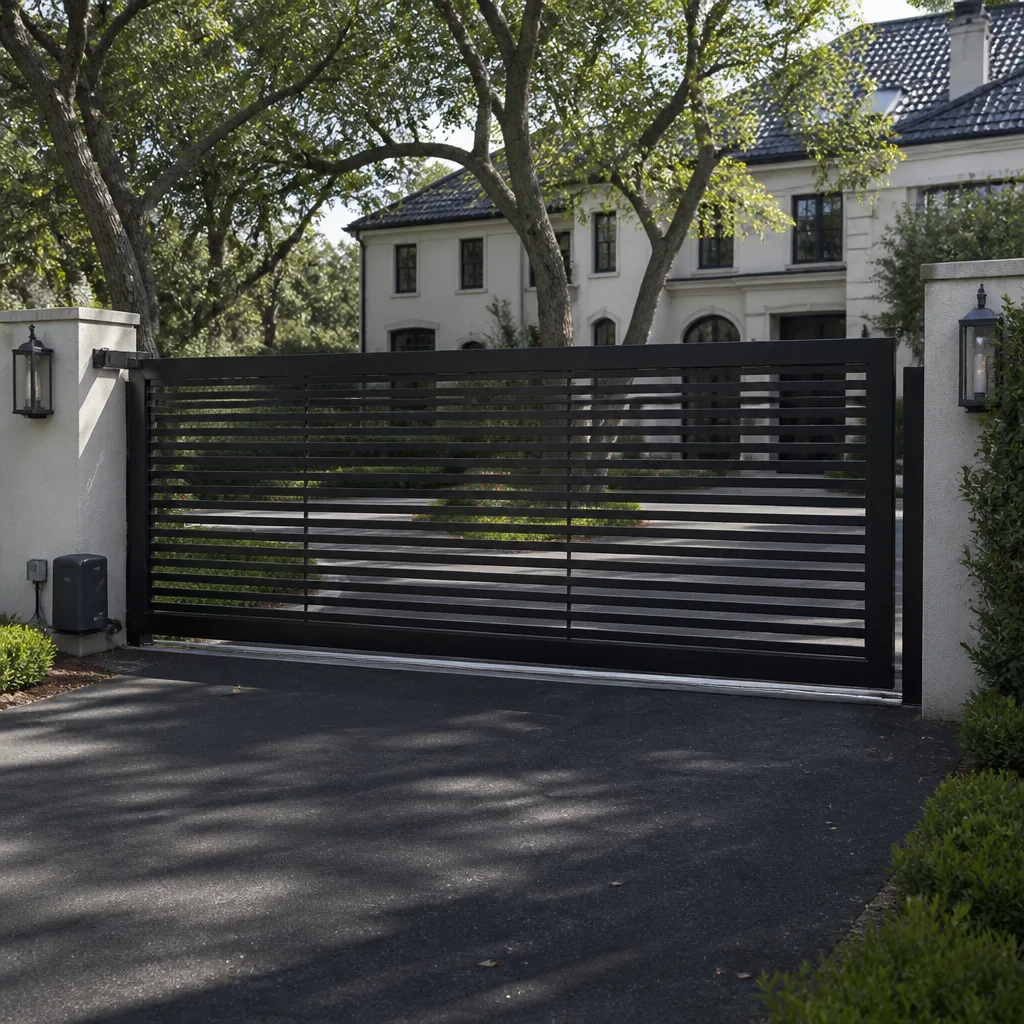 Sliding driveway gates
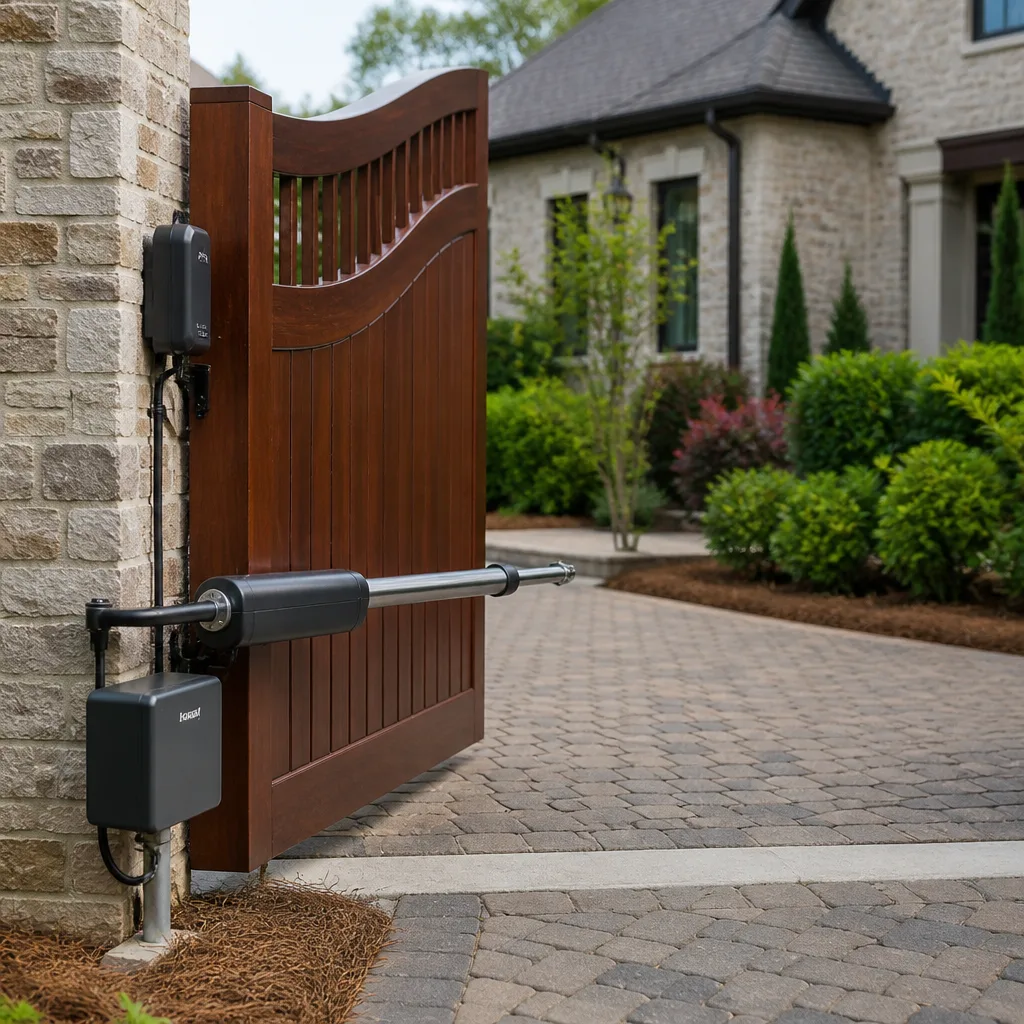 LiftMaster operators
Free on-site gate assessment - hinges, posts, and your LiftMaster or Nice gate operator checked before anything is quoted
The assessment is free and the quote is the invoice.
Get your free estimateDIY vs Professional Gate Repair: What’s Safe to Do Yourself
Tightening a loose hinge bolt is a five-minute job with a wrench and a bit of patience. Reaching into a misaligned limit switch feels like the same kind of job, and that’s the trap. One mistake announces itself immediately; the other can quietly burn out a motor over the next three weeks while the gate keeps opening and closing. The difference between those two repairs isn’t your skill level. It’s consequence. In this guide, we’ll sort gate repairs by what a wrong fix actually costs you, flag the components where amateur adjustment wipes out a manufacturer’s warranty, and show you where a Whitney homeowner should draw the line.
Quick Answer
Safe DIY gate repairs are limited to tightening bolts, clearing track debris, lubricating hinges, and visual inspections. Anything involving springs, motors, wiring, or entrapment safety devices should be handled by a trained gate technician. A general handyman is not a substitute for automation work; the wrong adjustment can void a motor warranty and create a genuine safety hazard.
Styles & brands we work with
- Wrought iron
- Wood & steel frame
- Farm & ranch
- Sliding driveway gates
- LiftMaster operators
Table of Contents
- The Real Way to Sort DIY vs Professional Gate Repair
- What’s Safe to Do Yourself: The Short List
- Where a First Attempt Gets Expensive: Springs, Motors, and Wiring
- Warranty Voiding: The Mistakes You Won’t See for Weeks
- Why Automation Work Carries Liability Beyond Property Damage
- The Honest DIY Cost Comparison
- How to Tell a Qualified Gate Specialist from a Handyman
- Common Mistakes to Avoid
- When to Call a Professional
The Real Way to Sort DIY vs Professional Gate Repair
Most advice online sorts gate repairs by difficulty. That’s the wrong axis. Difficulty tells you whether you can physically do the task; consequence tells you what happens if you get it slightly wrong. A gate is a machine that operates under load, with a motor, a control board, and safety sensors all talking to each other. Some of those conversations are forgiving. Others aren’t.
Think of every repair on a scale from “a mistake costs you ten minutes” to “a mistake costs you a $600 motor or a serious injury.” When a homeowner in Whitney asks whether a task is DIY-friendly, we answer based on where it sits on that scale, not on how intimidating it looks.
Here’s the framework we use:
- Recoverable mistakes: A wrong fix costs nothing but time. Loose bolts, squeaky hinges, debris from desert wind. DIY is fine.
- Deferred mistakes: A wrong fix seems to work, then damages the gate weeks later, usually after a warranty claim window has closed. Limit switches, roller alignment, sensor positioning.
- Immediate-danger mistakes: A wrong fix can hurt someone today. Torsion springs, high-voltage wiring, safety edges.
When you frame repairs this way, the honest answer to “Can I fix this myself?” becomes a matter of which category the task falls into. A component that’s forgiving of a first attempt is fair game for a careful homeowner. A component that punishes mistakes silently, or with a snap of stored tension, is not.
What’s Safe to Do Yourself: The Short List
These are the tasks we’d tell almost any homeowner they can handle with a socket set, a wire brush, and a few minutes. They’re recoverable: if you get one wrong, nothing expensive happens.
- Tighten loose hinge and bracket bolts. A gate that sags on one edge is often just loose hardware. Snug the bolts with a wrench, check the gate swings freely, done.
- Clear debris from the gate path. After a windy week in Whitney, gravel, blown landscaping, and small rocks are the most common reason a gate stops reversing cleanly. Sweep the track area and test the swing.
- Lubricate hinges and rollers. A few drops of a general-purpose lubricant on the hinge points, twice a year, cuts down on strain on the motor. Wipe off the excess so it doesn’t collect grit.
- Remove visible cobwebs and clear the photo-eye lens. A dusty safety beam lens on one side of a driveway gate can trigger false stops. Wipe the lens with a soft cloth. You’re cleaning, not adjusting.
- Do a visual inspection. Look for cracks at weld joints, bent brackets, worn rollers, and rust bloom. You’re not fixing at this stage – you’re noting what needs a professional eye.
- Reset a tripped breaker or a dead remote battery. Chances are a “gate won’t open” call is really a dead keypad battery or a tripped breaker in the control box. Check the obvious before assuming the motor failed.
Notice what’s missing: no adjustments to limit switches, no spring work, no wiring. That’s deliberate. The safe list is everything that doesn’t touch the parts that matter.
One note specific to our climate: Whitney’s heat and occasional wind bring grit onto gate hardware fast. A monthly sweep of the track and a light lube job keeps a gate running smoothly for years and prevents the kind of climb that wears out a motor prematurely. That maintenance is fully within reach for a homeowner.
Where a First Attempt Gets Expensive: Springs, Motors, and Wiring
This is the section we wish every homeowner read before searching for how-to videos. The gate components below are not forgiving of a first attempt. Some of them fail silently; others fail violently.
Torsion springs and heavy counterbalance springs
A torsion spring on a heavy driveway gate stores enough energy to lift hundreds of pounds. That energy doesn’t care about your intentions. Spring work is the single most dangerous DIY gate repair, and our technicians use specialized winding bars and a great deal of caution. We will not give step-by-step spring instructions, and no reputable company should. Springs and their hardware are a trained-technician job, full stop.
Gate motors and opener controllers
Modern openers on brands like BFT, Linear, and Ghost Controls have control boards, travel limits, force settings, and safety reverse features all calibrated together. Adjusting one setting by feel can work for a few days and then burn a motor or cause the gate to stop reversing when it should. On a Whitney gate, we’ve seen enough of these jobs to know the difference between a failed limit switch and a controller that’s been adjusted past its intended range is not something a homeowner can diagnose from the driveway.
Electrical wiring and main power
Gate power runs are high-voltage and often buried. Touching a live run, or a control box with no lockout, is how people get hurt. Any wiring work belongs to a licensed technician. We wire gate systems every week, and even then safety protocol is what makes it routine rather than risky.
If your gate involves any of these three – springs, motor controllers, or electrical – that’s a call-a-professional situation. Our gate repair in Whitney team handles those jobs in a single visit and settles the price before any work begins.
Warranty Voiding: The Mistakes You Won’t See for Weeks
What makes automation work so easy to get wrong is the delay. You adjust a limit switch, the gate closes, and everything looks fine. Three weeks later, the motor is grinding, the controller has logged fault after fault, and the gate is closing unevenly. By then, it doesn’t feel like a repair you did; it feels like a motor that suddenly failed.
The warranty issue is the part most homeowners never hear about. Gate automation manufacturers write their warranties around professional installation and adjustment. When a controller has been adjusted outside its intended parameters, or a motor has been run out of spec, that warranty can be voided. And the brands Ironworks services – BFT, Linear, Viking, Ghost Controls, Mighty Mule, and others – all have their own tolerances that a generalist handyman won’t know.
This is where the “first visit” advantage matters. Our technicians are trained on nine gate automation brands. That means the correct adjustment gets made on the first visit, on the brand actually on your driveway, with the manufacturer’s specs in hand. If a controller has been mis-tuned, we can usually tell you exactly how and why, because we’ve seen it before. See gate motor and opener service in Whitney for how that work is handled.
A warranty isn’t abstract. It’s the difference between a $150 adjustment and a $600 motor replacement. The few dollars you save by DIY-adjusting a limit switch aren’t worth it if the motor fails three weeks later.
Why Automation Work Carries Liability Beyond Property Damage
Gate entrapment isn’t a hypothetical. Automatic gates can pinch, crush, or trap someone in the path of the gate, and the safety codes around gate automation exist to prevent exactly that. A gate that closes on a child, a pet, or a visitor is a legal and moral problem, not just an expensive one.
This is why an automation controller has redundant safety features: photo-eye sensors, safety edges, and in some cases monitored reversing. Every one of these features has to be positioned and calibrated correctly. A sensor that’s a half-inch off its beam axis can miss a person entirely. A force setting dialed up to make a sticky gate close can override the reverse function.
For a homeowner, that means automation work carries exposure far beyond a damaged motor. If an improperly adjusted gate injures someone on your property, you’re the one who owns the gate, and the liability is yours. That’s true whether the adjustment was made by you or by a handyman who didn’t know the difference between a travel limit and a force control.
This is why we don’t treat entrapment-safety adjustments as a minor repair. When we finish a job, the gate is tested to reverse on obstruction and the safety edges are verified. That’s part of what the 90-Day Done Right Promise covers: if it isn’t right, we come back and make it right. No arguing. No paperwork. It’s a written guarantee that rides along with every gate job.
The Honest DIY Cost Comparison
There’s a version of DIY that saves real money, and there’s a version that delays the diagnosis and doubles the final bill. The trick is knowing which one you’re looking at. Here’s the concrete comparison.
- Loose hinge, tight bolt: DIY cost, about zero. Professional call, maybe a minimum service charge. DIY wins cleanly here.
- Debris in track, dirty lens: DIY cost, about zero. A service call for the same issue is a wasted trip. DIY wins.
- Dead remote or keypad battery: DIY cost, a few dollars at the hardware store. A service call for the same problem is overkill. DIY wins – but check the keypad before assuming the motor is dead.
- Misaligned limit switch: DIY adjustment may “work” for a few days. Professional adjustment is a small, defined cost. If the adjustment causes a motor failure, that’s a motor replacement – several times the cost of a technician visit. Professional wins.
- Spring repair or motor failure: Pro is the only option. A DIY spring attempt is genuinely dangerous, and a DIY motor diagnosis wastes time and often compounds the damage. Professional wins.
- Wiring, entrapment sensors, controller replacement: Pro only. No safe DIY path exists. Professional wins.
The pattern is not subtle. The more a repair touches load, power, or electronic calibration, the less the DIY option saves you. When you factor in a delayed diagnosis, the average DIY attempt on automation can cost more than the original repair. And that’s before we count the warranty void.
If you’d like a free second opinion on any written estimate you’ve received – ours or someone else’s – we’ll review it at no cost. It’s the easiest way to know whether the diagnosis is right before you commit to a repair. Active this month for Whitney homeowners: $50 off any repair over $250, plus an $89 seasonal tune-up, which is a good way to catch a problem before it becomes a bigger one. We also offer free estimates on every job, settled before a single bolt is turned.
How to Tell a Qualified Gate Specialist from a Handyman
If you’re going to hand over access to your property, you should know who you’re handing it to. The gate world has a lot of contractors who handle gates as a side job. That’s not a knock on them; it’s a warning about how gates actually work.
Here’s what to check before you book:
- Do they service specific gate automation brands? A specialist can name the brands they’re trained on. Ironworks is trained on nine – LiftMaster, FAAC, BFT, Linear, Viking, Ghost Controls, DoorKing, Elite, and Mighty Mule. If a contractor hesitates when you name the brand on your gate, that’s a sign.
- Do they do both welding and automation? Gate work spans fabricating and repairing metal frames, and the electronic side of motors and controllers. A company that only does one or the other is likely to hand off the other part.
- Will they give a written estimate before work starts? A square deal means an upfront price, in writing, that doesn’t change after the work is done. If you’re unsure, ask for a second opinion on any existing estimate.
- Do they explain what they’d check and why? A qualified specialist can tell you in plain language where a problem is likely to sit before they open the gate. Vague talk and pressure pricing are red flags.
- Are they background-checked and uniformed? Anyone working access control on a residential property should be vetted and identifiable. We only send background-checked, uniformed technicians – the same crew you’d trust with your gate, your keypad, and your property.
- Do they have a written guarantee? A real gate company stands behind the work in writing. Ours is the 90-Day Done Right Promise, applied to every job. The 400th job gets the same care as the first.
One last one: ask whether they’ll handle access control. If your gate includes a keypad, an intercom, or a remote entry system, that’s a specialty that not every gate repair company covers. You can see how we handle it at our Ironworks Gate Co. Whitney home.
Common Mistakes to Avoid
- Adjusting the force setting to fix a sticky gate. Turning up the force can hide a mechanical problem while disabling the reverse safety feature. The gate should reverse on an obstruction no matter what.
- Winding a torsion spring yourself. Springs store enormous energy. This is the most dangerous repair on a gate and one where the wrong move can seriously hurt someone.
- Wiring a control box without locking out power. A live control box is a genuine shock hazard. Wiring belongs in the hands of a licensed technician, full stop.
- Assuming the motor is dead when the problem is a dead battery. A surprising number of “motor failure” calls are really keypad batteries, a tripped breaker, or a dirty photo-eye lens. Check the simple things first.
- Clearing debris once and never looking again. Whitney’s wind and heat move grit onto gate tracks quickly. A monthly sweep-and-check prevents wear that a repair bill would notice.
- Hiring a handyman for automation work and assuming it’s covered. It isn’t. Automation calibration voids manufacturer warranties when done outside spec, and the brand on your gate matters here.
- Putting off a spring or motor warning sign for weeks. A gate that’s grinding, sagging, or slowing down is telling you something. Early attention is almost always cheaper than waiting for a failure.
When to Call a Professional
Call us when the repair touches springs, motors, control boards, wiring, or entrapment safety devices – those are the components where a first attempt is not worth the risk. Call us when the gate has stopped reversing, when the motor is grinding or slow, when the gate sags at a corner you can’t tighten back to square, or when a controller has been adjusted by someone else and the gate still isn’t right. Call us when you’re not sure whether a repair is DIY-safe and want a straight answer.
Ironworks Gate Co. Whitney offers free estimates across Whitney, and every job is backed by the 90-Day Done Right Promise, with a live person answering the phone 24 hours a day, 7 days a week – call (855) 928-1304 to schedule. If your project is a new installation rather than a repair, our gate installation in Whitney team can measure, quote, and schedule. Every estimate is settled in writing before work starts.
See the difference
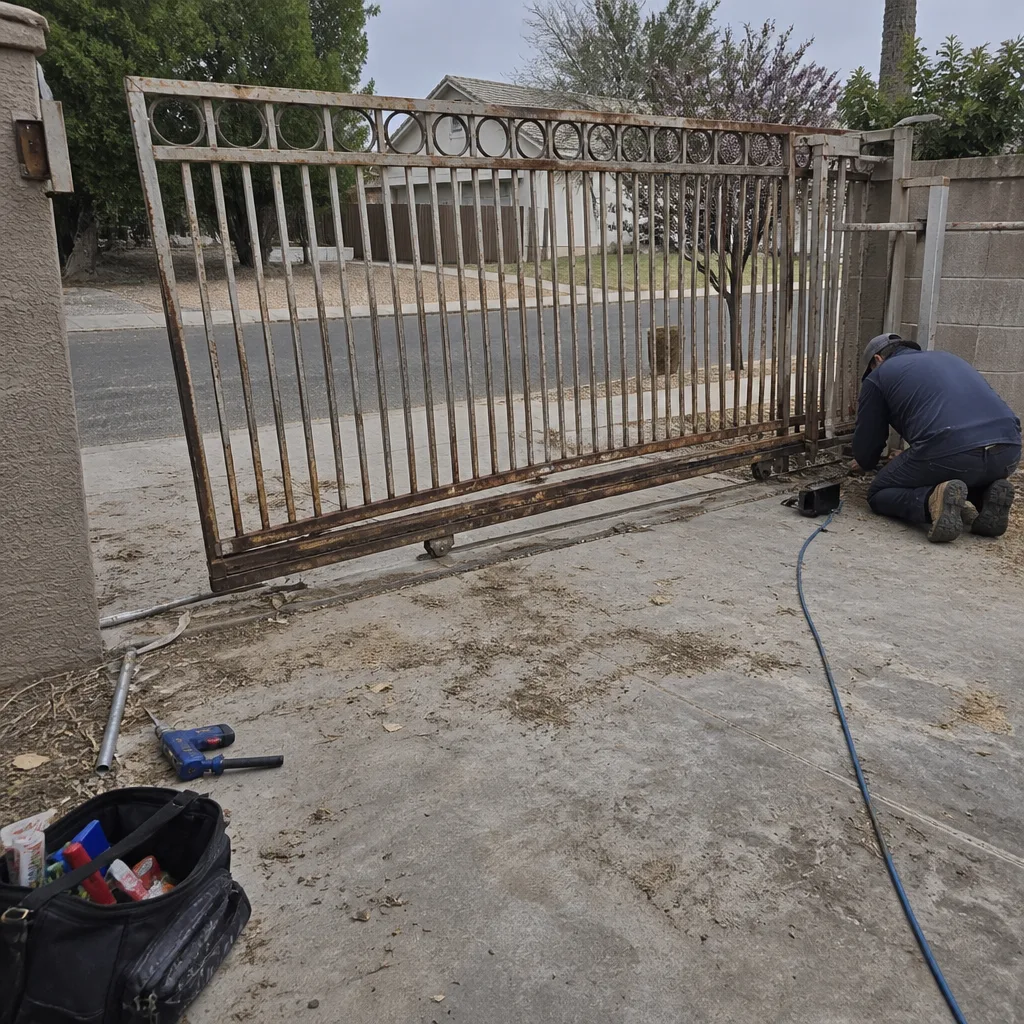 Before
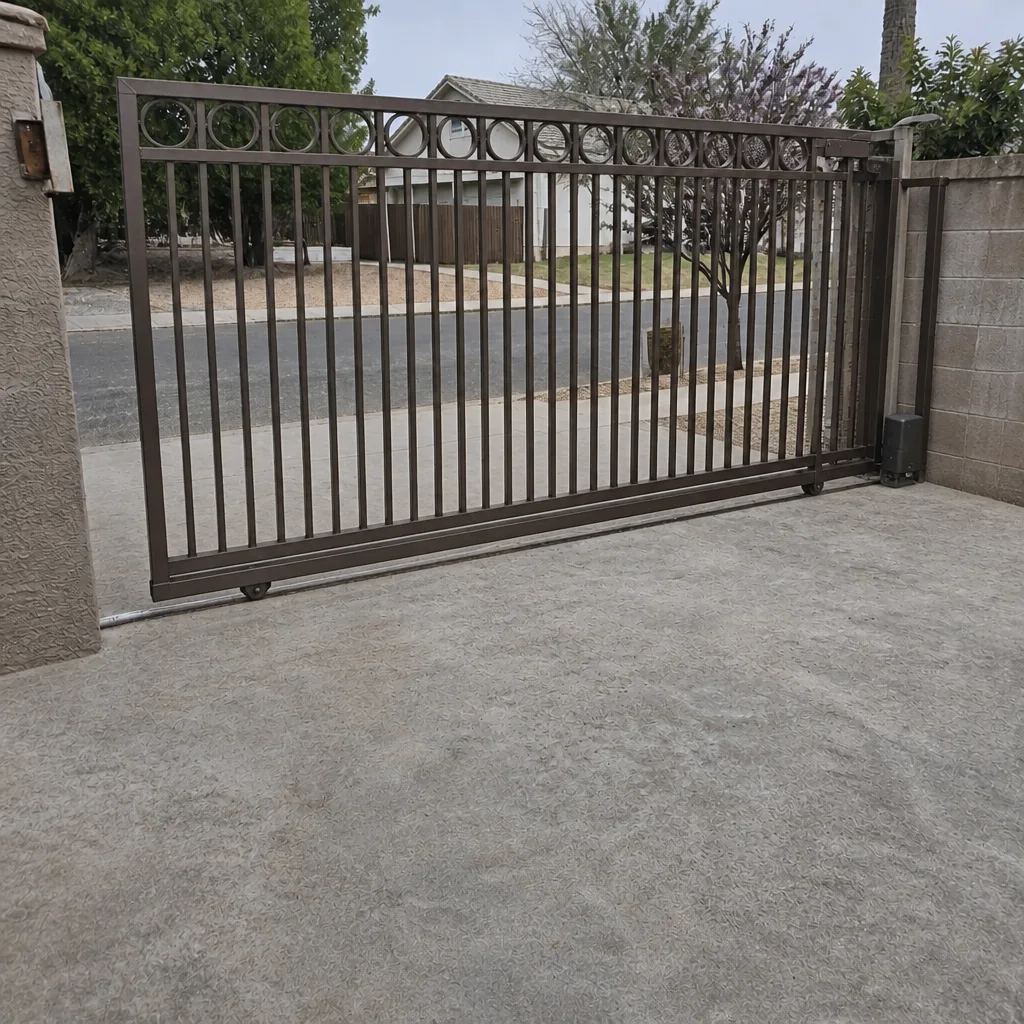 After
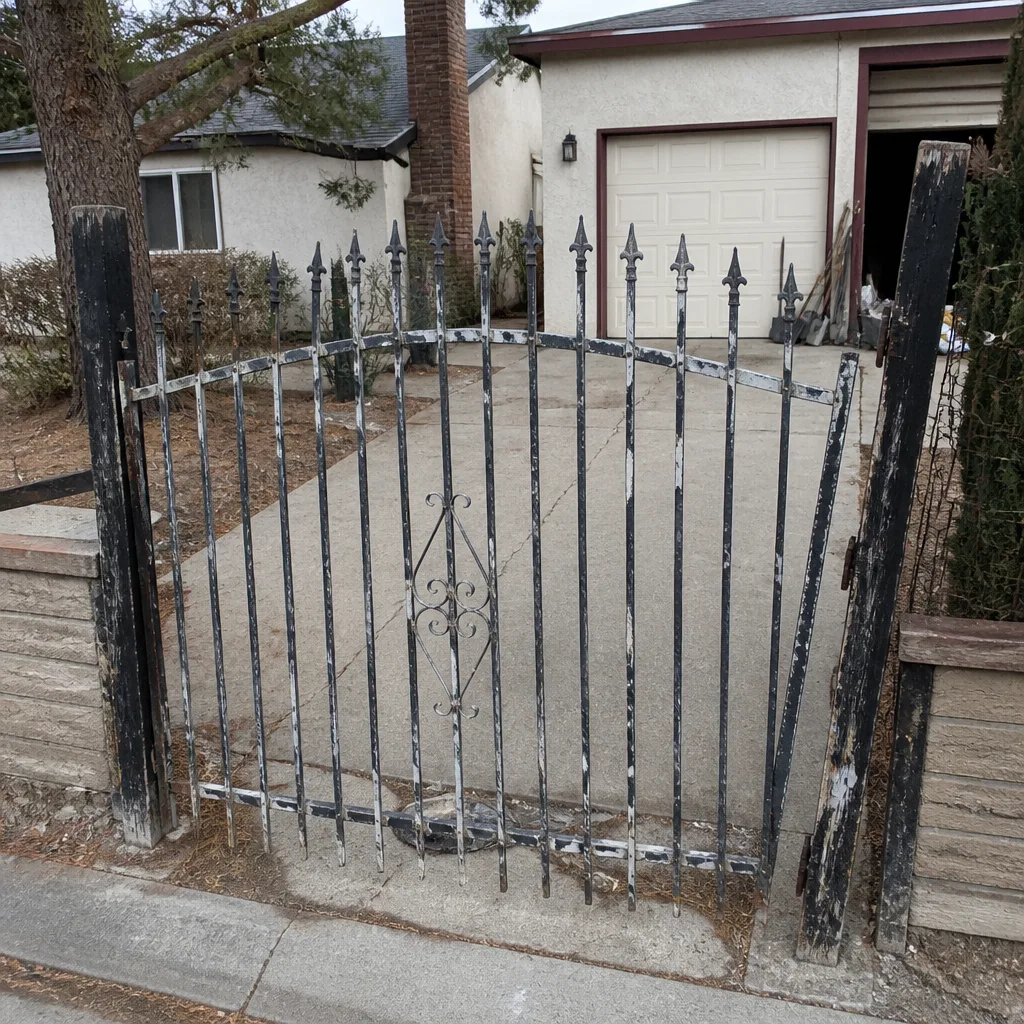 Before
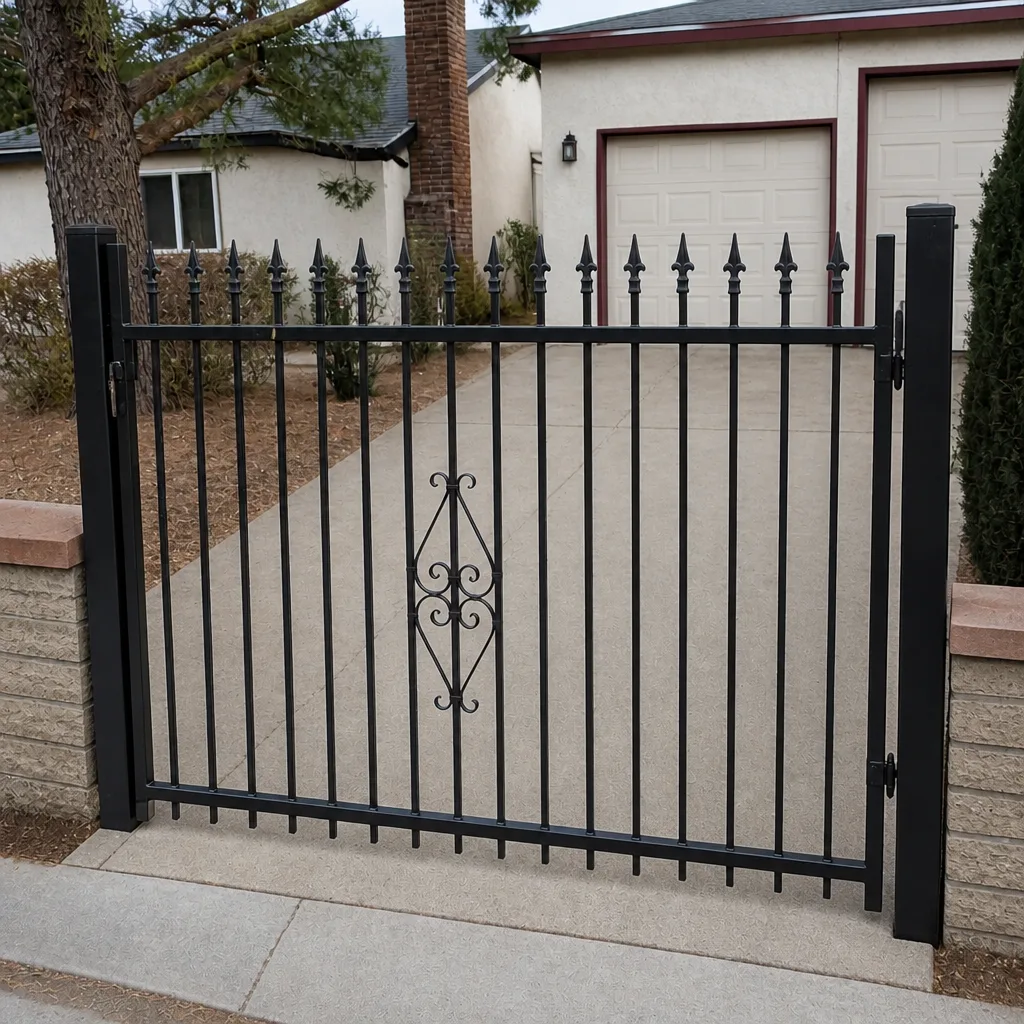 After
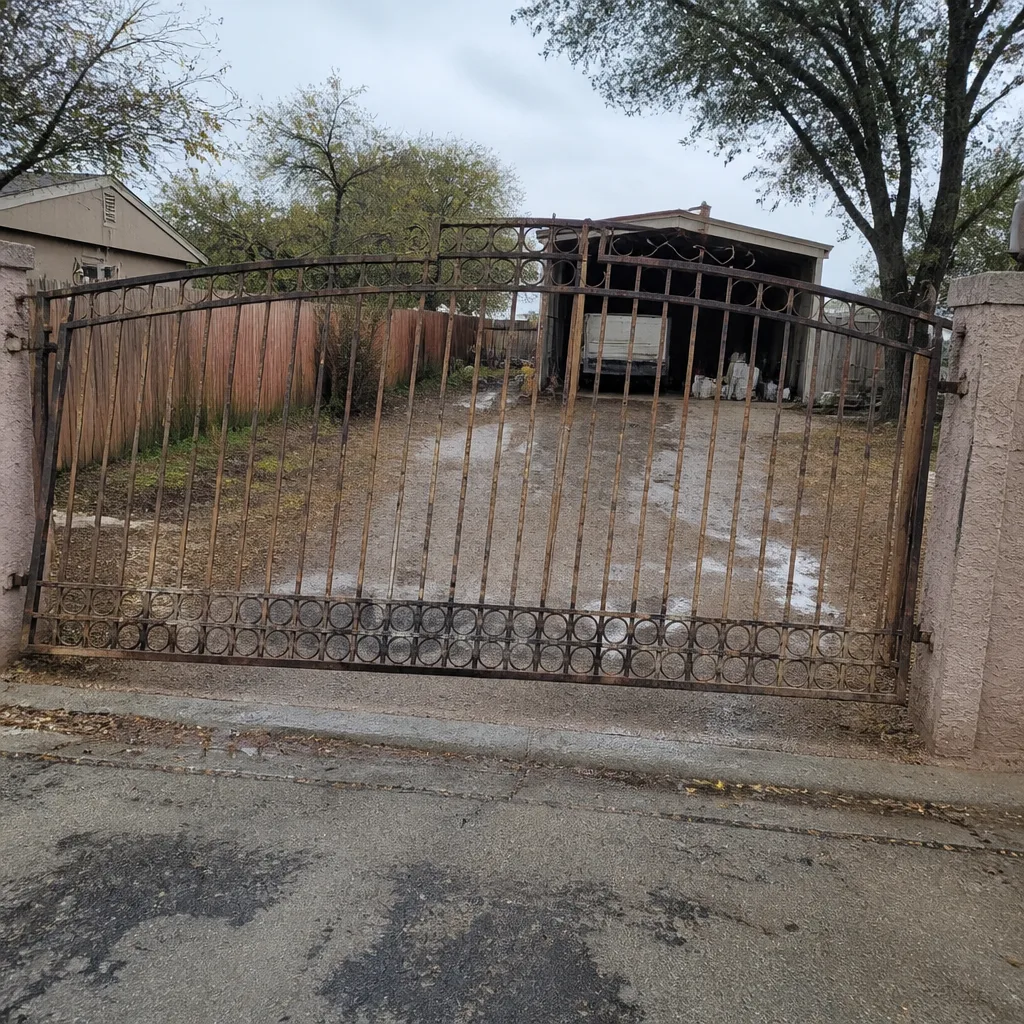 Before
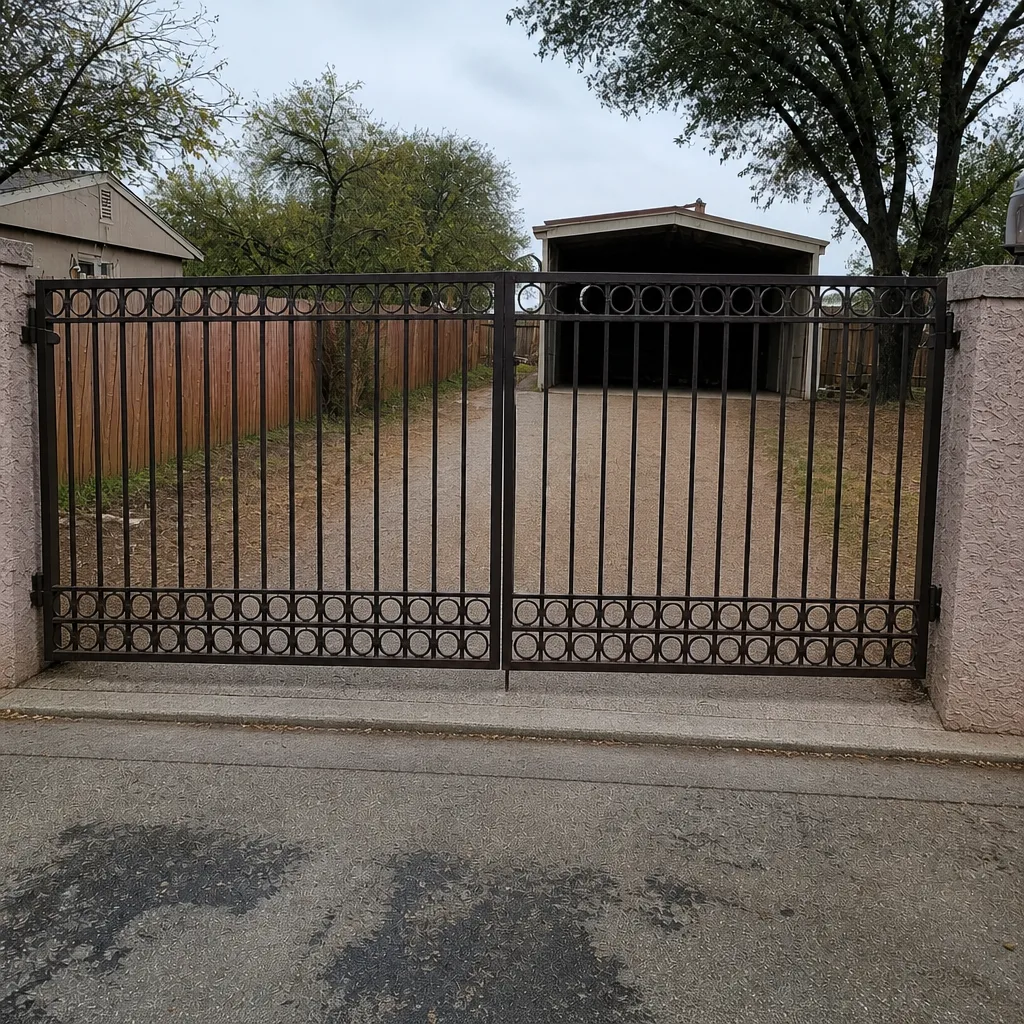 After
Frequently Asked Questions
Only for a limited list of tasks: loose bolts, debris in the track, dirty sensors, lubrication, and visual inspections. Any repair involving springs, motors, wiring, or entrapment safety devices should be done by a trained gate technician. Call (855) 928-1304 for a straight answer on your specific gate.
You can reach the adjustment, but you shouldn’t – limit switches are one of the deferred-consequence repairs. A wrong adjustment can work for days and then damage the motor or void the manufacturer warranty. A technician visit is a small, defined cost compared to a motor replacement. For a free second opinion on the repair, call (855) 928-1304.
Yes, in many cases. Manufacturers base their warranties on professional installation and adjustment; a controller adjusted outside its intended parameters or a motor run out of spec can void the warranty. Ironworks is trained on nine brands – including BFT, Linear, and Ghost Controls – and knows the specifications for the unit on your driveway. Estimates are free: (855) 928-1304.
Test the reverse function first. Walk in the gate’s path and confirm it reverses on obstruction, and check that the photo-eye sensors are clear and aligned. If the gate doesn’t reverse or the sensors are blocked, stop using it and call a professional. In Whitney, we’ll come out and test the safety features on that same visit – call (855) 928-1304.
Focus on the track area, hinge points, and the photo-eye lenses on both sides of the driveway. Whitney’s wind and heat move grit and dust onto gate hardware quickly, so a monthly sweep, a check for loose bolts, and a light lube keeps the gate running smoothly. None of that is a repair – it’s maintenance, and it belongs to you.
That’s the most common outcome after a DIY attempt: what looked like a small job turns into a motor controller issue or a hinge that needs welding. We’ll diagnose it, give you a written price, and settle it before any work begins. Call (855) 928-1304 for a free estimate, and if you have an existing estimate from another company, our second opinion is free too.
The Bottom Line
The question isn’t whether you’re capable of a repair. It’s whether the repair is forgiving of a first attempt. Loose bolts, debris, dirty lenses, and regular lubrication are safe to handle yourself and save you a service call. Springs, motor calibration, wiring, and entrapment safety sensors are the opposite: mistakes there are either immediately dangerous or quietly expensive weeks later. Sort the repair on that scale, and you’ll usually know which way to go. For the parts that matter, a trained gate specialist is cheaper than the alternative. And every job we do is done right and backed in writing.
Ready to stop worrying about the gate and start using it the way it should work? Call (855) 928-1304 for a free estimate. A live person answers the phone 24 hours a day, 7 days a week, and we’ll settle the price in writing before any work starts.
Written by the team at Ironworks Gate Co. Whitney.