
Last updated November 17, 2026
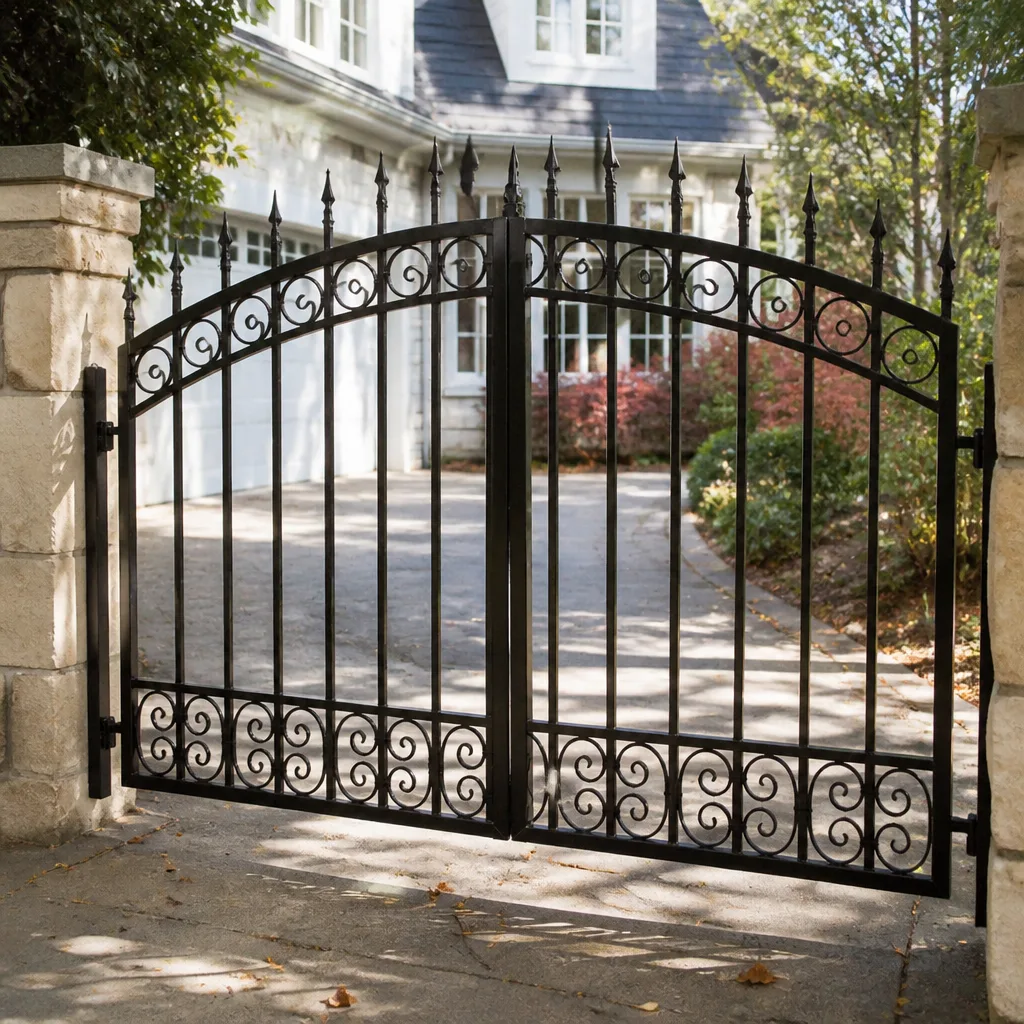 Wrought iron
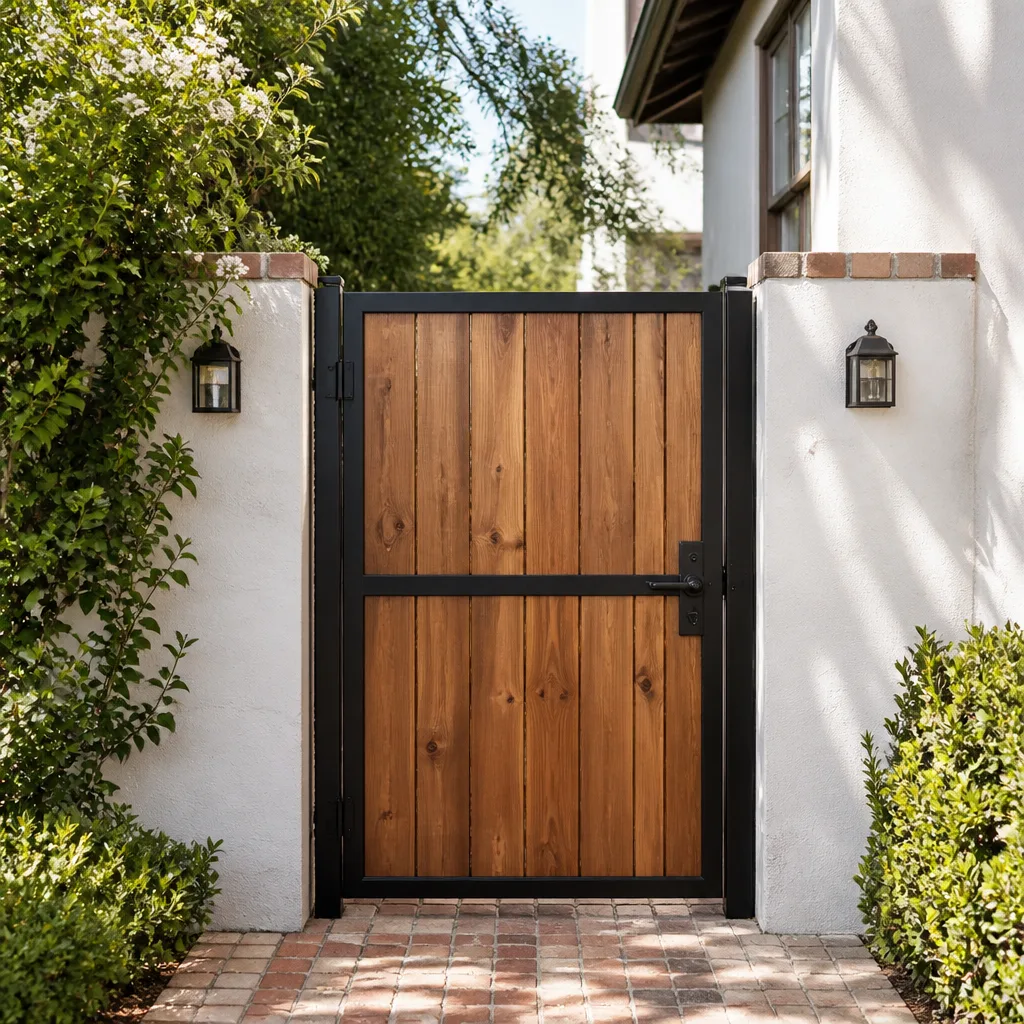 Wood & steel frame
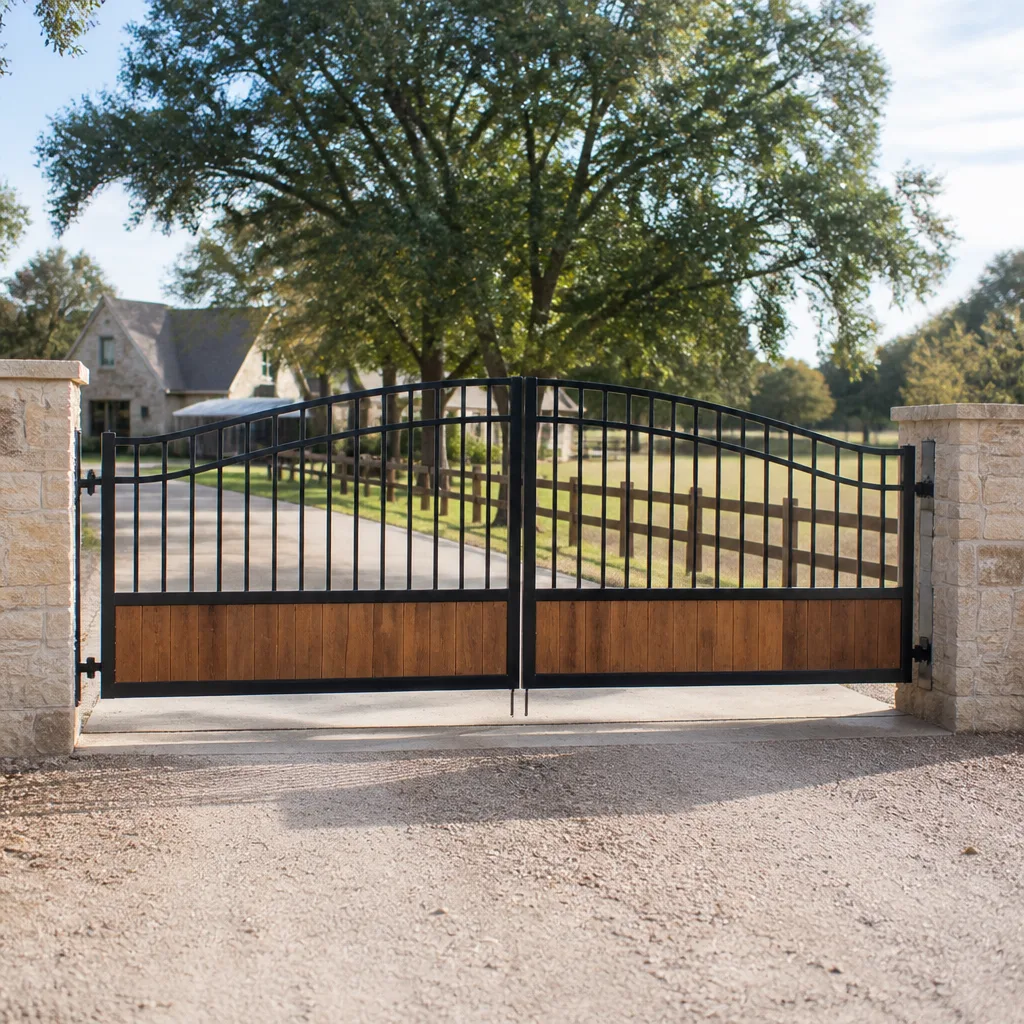 Farm & ranch
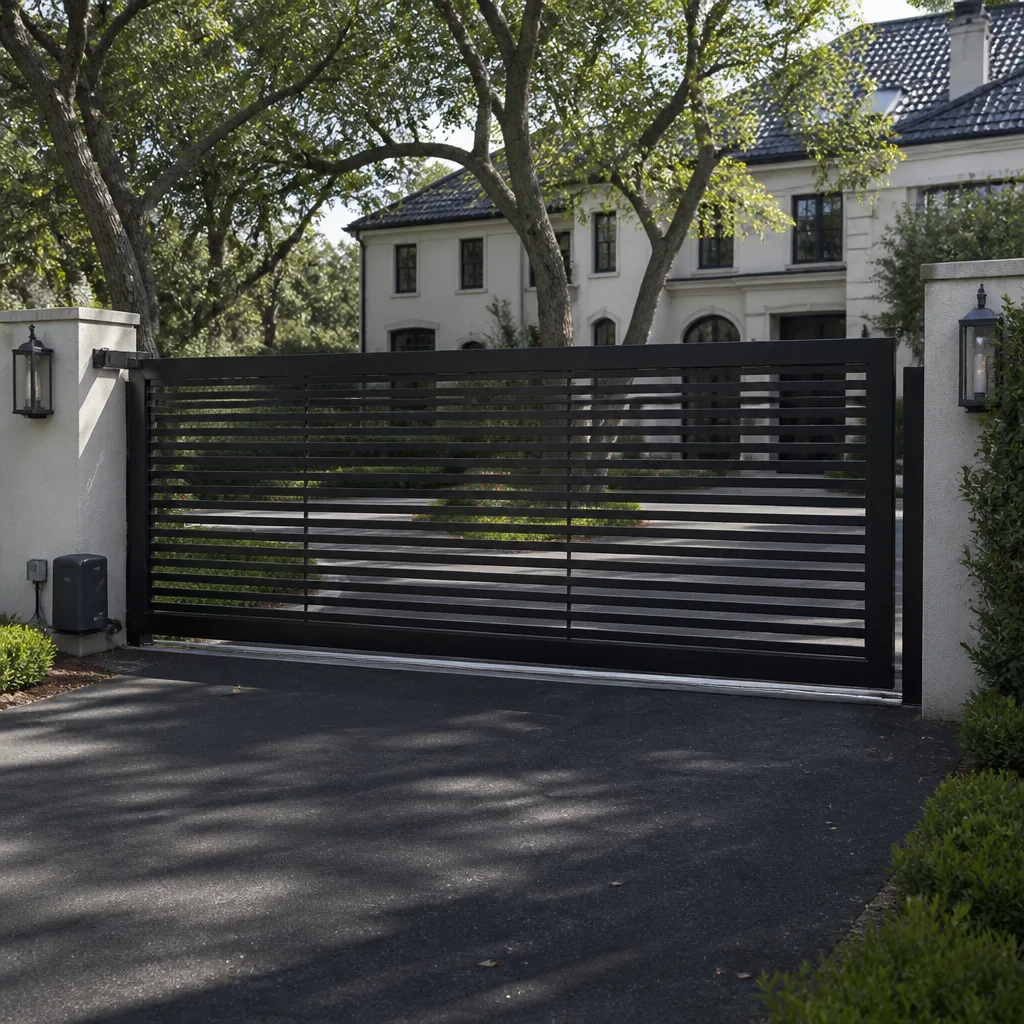 Sliding driveway gates
 LiftMaster operators
Free on-site gate assessment - hinges, posts, and your LiftMaster or Nice gate operator checked before anything is quoted
The assessment is free and the quote is the invoice.
Get your free estimateHow Long Does Gate Installation Take? Timelines and What to Expect
A gate installation that takes one day on-site can take three weeks start to finish, and the homeowners who are most frustrated are always the ones who only counted the on-site hours. A crew welds, hangs, and tests a gate in a day. But the day itself is the shortest part of the story. What decides whether your project moves smoothly or stalls is everything that happens before the first torch is lit: the site survey, the permit pull, the material lead time. This guide breaks the whole timeline into its real phases, explains why a custom iron gate waits longer than a pre-hung panel, and covers the site conditions in Whitney that add days. You’ll finish knowing exactly where the time goes.
Quick Answer
Driveway gate installation usually takes one to two days of on-site work, but the full project from signing to a working gate typically runs two to five weeks. In Whitney and the surrounding valley, the biggest variables are permit and HOA approval time and whether you choose a custom-fabricated iron gate (longer material lead) or a pre-hung panel (shorter). Concrete curing can push a two-day job into two visits.
Styles & brands we work with
- Wrought iron
- Wood & steel frame
- Farm & ranch
- Sliding driveway gates
- LiftMaster operators
Table of Contents
- The Four Phases of a Gate Project
- Custom Iron vs. Pre-Hung Panels: Lead Times That Matter
- Site Conditions in Whitney That Add Time
- One-Day vs. Two-Day Installation
- Permits and HOA Approval: The Quiet Delay
- What to Have Ready Before the Crew Arrives
- Common Mistakes to Avoid
- When to Call a Professional
The Four Phases of a Gate Project
A gate installation isn’t one event. It’s four phases, and skipping the first three in your planning is why timelines get away from people. Here’s how the work actually sequences.
- Site assessment (a few days). Someone measures the opening, checks the grade, inspects the soil, looks at existing concrete, and notes where power can be run for an operator. This decides everything downstream: gate style, post depth, whether the driveway needs coring.
- Design and fabrication / materials (five to fifteen business days). A custom iron gate is built to your dimensions. A pre-hung steel or aluminum panel ships from stock. The gap between these two is the single biggest timeline variable.
- Permit and HOA approval (one to three weeks). Most municipalities want a permit for a gate that spans a driveway, and many HOAs have their own design review. This phase runs in parallel with fabrication, if you’re lucky, and stalls the job if the paperwork wasn’t started early.
- Installation day (one to two days). Posts set, gate hung, operator wired if you’re automating, safety edges and stops tested. Then the walkthrough.
In our experience, homeowners who understand this sequence make better decisions at phase one, because they can choose a pre-hung panel when they need speed or commit to custom iron when they want the gate to be the last one the house ever needs. For a full breakdown of the installation work itself, see our page on Gate Installation in Whitney.
Custom Iron vs. Pre-Hung Panels: Lead Times That Matter
The choice between a custom-fabricated iron gate and a pre-hung panel drives the middle of your timeline, and Whitney’s market has its own rhythms here. Custom iron is built to your opening, your style, and your grade, which is why it can’t sit on a shelf.
- Pre-hung aluminum or steel panel: often available in a matter of days when the size matches a standard opening. Faster, but limited to stock dimensions and finishes.
- Custom-fabricated iron: commonly five to fifteen business days for fabrication, longer if the design involves heavy scrollwork, a powder-coat finish, or non-standard hardware. The advantage is a gate that fits your driveway exactly and, hung correctly, closes the way it did the day it went up.
Why does the distinction matter in Whitney specifically? Because the climate out here punishes lightweight hardware and shallow installs. A custom iron gate built with proper wall thickness and a finish that holds up to sun and dust will outlast a stock panel that gets baked and beaten. When a homeowner tells us they never want to think about the gate again, custom iron is usually the right call, even with the longer lead time. If you’re weighing automation alongside the gate, our Gate Motor & Opener in Whitney page covers what operators work best with heavier custom gates.
Site Conditions in Whitney That Add Time
Whitney’s terrain does not always cooperate. Three conditions show up again and again on local jobs and each one can add time to the install day.
- Unlevel driveways. A sloping apron changes how posts are set and how the gate swings. We’ve seen grade swing 6 to 8 inches across a single opening, which means the posts need to be set independently and the bottom rail cut to follow the slope. That’s measured work, not a quick hang.
- Caliche soil requiring deeper post holes. Whitney sits over some of the hardest, most cemented soil in the valley. Caliche doesn’t dig like loose dirt; it can require a rock bar, auger changes, or deeper holes to reach stable bearing. A post hole that would take ten minutes elsewhere can take forty here. Getting the depth right is what keeps a heavy gate from sagging in three years.
- Existing concrete that must be cored. If your driveway entrance is already poured, posts need cores drilled through the slab, and the concrete needs to cure before the gate goes up. That cure time is often what turns a one-day install into a two-visit job.
These are exactly the conditions we plan for on a Whitney site survey, so the crew arrives knowing what the ground will do. In neighborhoods off the main corridors, where lots are larger and the grade is less forgiving, the survey is often the difference between a smooth day and a stalled one.
One-Day vs. Two-Day Installation
Most gate installs split cleanly into one-day and two-day categories. Knowing which one you’re in helps you plan around it.
A realistic single-day installation
The opening is level to lightly sloped, there’s no existing concrete to core, the ground is diggable, and the gate is a stock or pre-fabricated panel that’s already on site. The crew sets posts, hangs the gate, mounts the operator if you’re automating, and walks it through. For an operator, that means wiring to one of the major brands we’re trained on, whether that’s a Linear swing unit, a Viking or Ghost Controls system. Safety edges, stops, and keypad programming get tested before the crew leaves.
When it becomes a two-day (or two-visit) job
If posts need to be set in concrete and the gate has to hang on cured anchors, the crew sets posts on day one and returns after the concrete has cured to hang and align the gate. On a sloped or caliche-heavy Whitney driveway, this is common and it’s the right way to do the work, not a sign of trouble. The gate goes up only after the posts are stable enough to carry it.
Permits and HOA Approval: The Quiet Delay
This is the phase that surprises people most, and it’s the one homeowners almost never factor in. A driveway gate that crosses an access point usually requires a permit, and the specific requirements vary by jurisdiction. Add HOA design review on top and you can be looking at a few weeks of paperwork before anyone touches your property.
- Check the permit requirement early. Ask whether your gate needs a permit based on its span, height, and whether it includes an automated operator. Don’t wait until fabrication is done to ask.
- Submit HOA design review if you have one. Many HOAs want the gate style, finish, and height approved before install. Getting that approval in motion during the survey phase keeps it off the critical path.
- Run permit and fabrication in parallel. The smartest timeline is one where the permit is approved at roughly the same time the gate is finished and ready to ship.
Because the exact permit rules depend on your address and your gate’s specs, the right move is to ask a qualified gate company before you order anything. That guidance is part of what a proper site assessment gives you, and it prevents the most common and most avoidable delay in the whole process.
What to Have Ready Before the Crew Arrives
You can shave a half-day off installation just by having the right things ready. Here’s the checklist we’d hand any Whitney homeowner before install day.
- Clear the driveway and gate approach. Move vehicles, trailers, and anything within the gate’s swing path. The crew needs room to set a ladder, stage posts, and run a level line.
- Confirm power access for the operator. If your gate will be automated, know where a power source is and whether it’s a dedicated circuit. Running power is part of the job, but the crew needs to know the source.
- Locate any irrigation, gas, or utility lines crossing the post area. A call to the local utility locating service before install day is cheap insurance against a punctured line and a stalled job.
- Have your HOA approval and permit in hand. No crew should start a job that isn’t fully approved. Getting these in a folder before the crew arrives keeps the day moving.
- Decide on the operator brand and any access features ahead of time. Keypads, remote count, and brand selection (say, a DoorKing access control or a Linear operator) should be settled at the quote, not improvised on install day.
When these are ready, the crew spends its time on the gate, not on searching for a breaker panel or waiting for a signature. For ongoing maintenance that keeps a newly installed gate closing cleanly for years, our Gate Repair in Whitney page covers the tune-ups most homeowners forget about.
Common Mistakes to Avoid
- Counting only the install day. The single biggest reason homeowners feel blindsided is that they planned around the on-site day and ignored the survey, permit, and lead-time phases. Build two to five weeks into your expectations.
- Ordering a gate before the site survey. A gate built to the wrong grade or opening is a delay you pay for twice. Measure first, order second.
- Skipping the permit and HOA question. Assuming your gate is exempt because it’s on private property is risky. Ask early, before material is committed.
- Underestimating caliche and slope. Whitney’s soil and grade add real time to post work. A crew that quotes a flat one-day job without checking the ground is a crew you should question.
- Leaving power and access features to install day. Deciding on the operator brand, keypad, and remote count on the morning of install adds hours. Settle it at the quote.
- Not clearing the work area. A driveway full of vehicles and stored equipment can cost half a day. Clear it the night before.
- Forgetting the safety edges and operator setup. An automated gate without properly wired and tested safety edges is a liability. Make sure the job includes testing them, not just mounting the operator.
When to Call a Professional
Some parts of a gate project are genuinely dangerous and shouldn’t be a weekend DIY. Gate operators combine high-torque motors, moving metal, and electrical power, and a heavy gate hung on posts that weren’t set right is a hazard the first time it swings. Posts that won’t hold, cored concrete, sloped driveways, caliche, and any work with an automated operator are all reasons to call a trained professional rather than take it on yourself. Getting the depth, alignment, and safety edges right matters more than saving on labor, and a gate that’s hung badly is expensive to undo. Ironworks Gate Co. Whitney offers free estimates in Whitney – call (855) 928-1304 and we’ll walk your site and give you a written price before any work begins. We’re also happy to second-opinion any written estimate you already have.
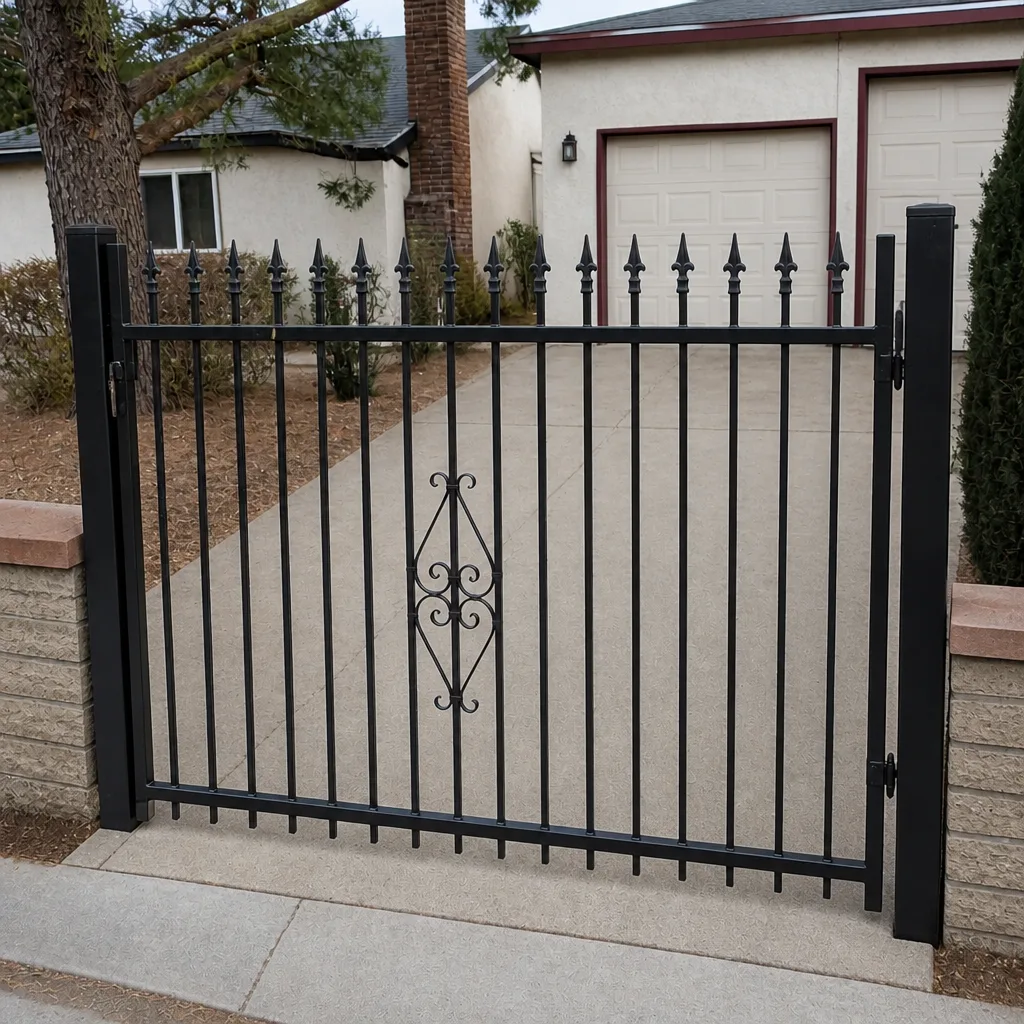
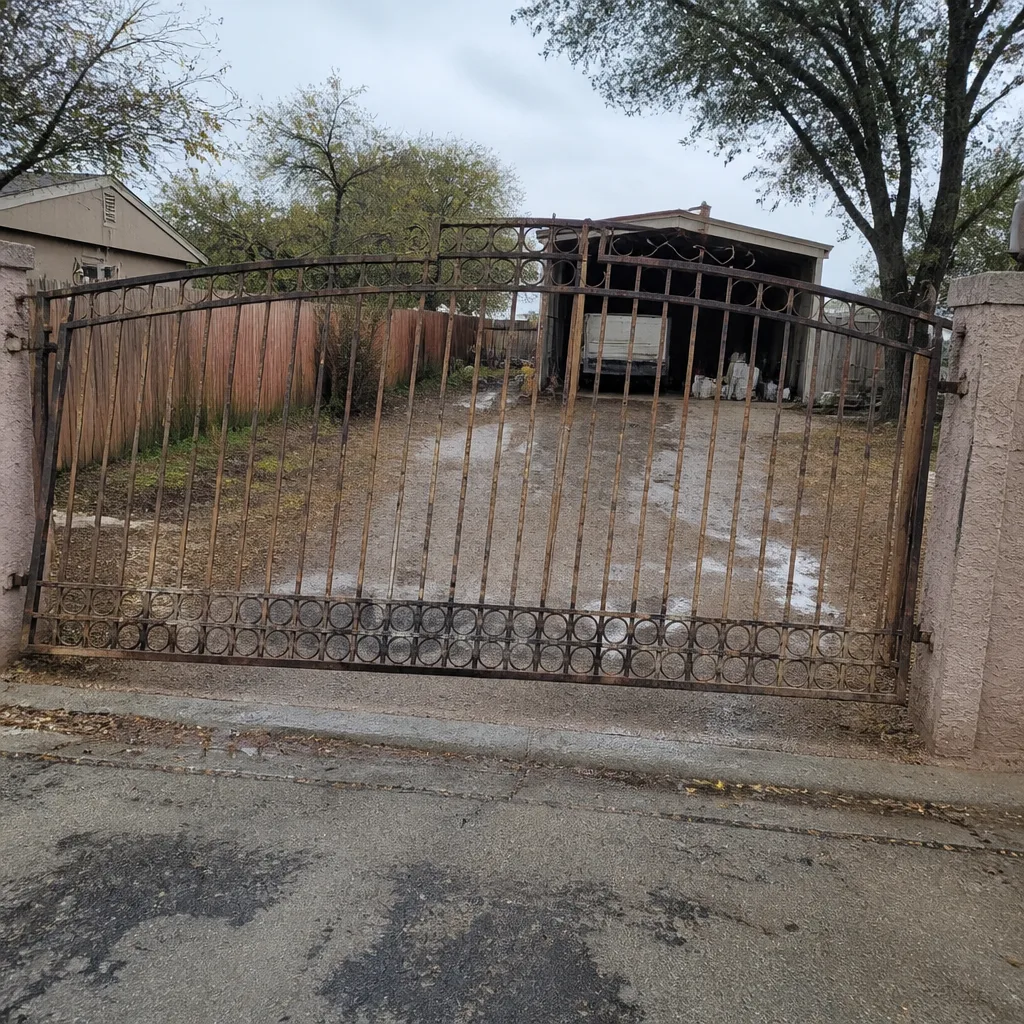
See the difference
 Before
 After
 Before
 After
 Before
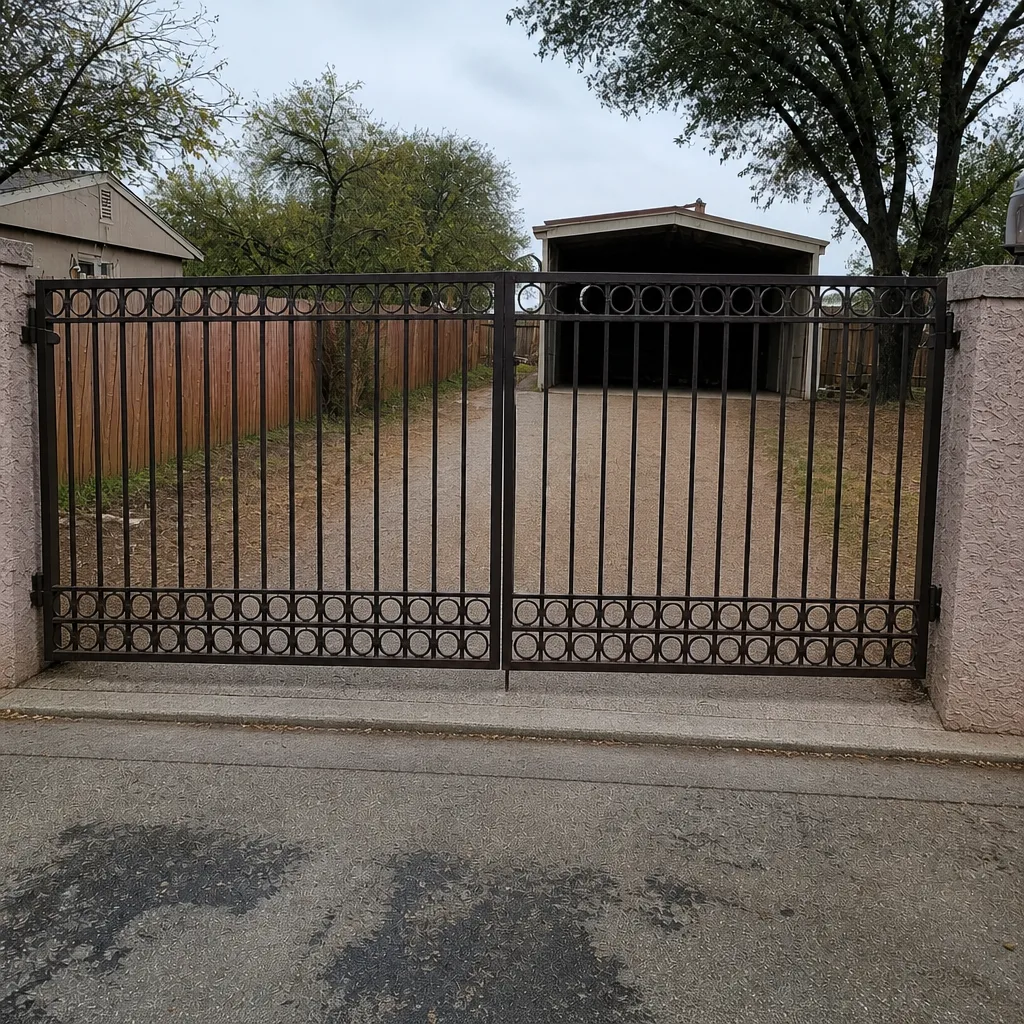 After
Frequently Asked Questions
Plan for two to five weeks from the day you commit to a working gate, with one to two days of that being on-site installation. The rest is site assessment, material lead time, and permit or HOA approval. A pre-hung panel with a permit already approved can move faster; custom iron and HOA review push it longer. Call (855) 928-1304 for a timeline for your specific gate.
Yes, a single-day install is common when the opening is level, there’s no concrete to core, and the gate is already on site. The crew sets posts, hangs the gate, mounts and tests the operator, and walks it through. Sloped or caliche-heavy driveways in Whitney often turn a one-day job into a two-visit job because the concrete needs to cure before the gate is hung. Call us and we’ll tell you which category your driveway is in.
Custom iron is fabricated to your exact opening, style, finish, and grade, which takes five to fifteen business days or more, while a stock panel ships in days. The trade-off is fit and durability: custom iron handles Whitney’s sun and dust better and holds its swing longer. A pre-hung gate is the faster choice; custom iron is the gate you don’t think about again. Call (855) 928-1304 for a free estimate on either.
It depends on your gate’s span, height, and whether it includes an automated operator, and many HOAs also require design approval. The safe move is to confirm both before you order materials. A qualified gate company can tell you what your address requires during the site assessment. Call (855) 928-1304 and we’ll help you sort out the requirements before anything is fabricated.
Unlevel driveways, caliche soil that requires deeper post holes, and existing concrete that must be cored are the three conditions we see most in Whitney. Each one adds time to post work or requires a cure period before the gate can hang. A proper site survey catches these before install day so the quote and timeline reflect reality. Call us for a site assessment and a written price.
Yes. If your gate is automated, the job includes running power to the operator, wiring it, and installing and testing the safety edges, stops, and access controls. We’re trained on nine operator brands, including Linear, Viking, Ghost Controls, DoorKing, LiftMaster, FAAC, BFT, Elite, and Mighty Mule, so the right unit is matched to your gate. Call (855) 928-1304 for an exact quote, and estimates are free.
The Bottom Line
The install day is the shortest part of a gate project. Plan around the two to five weeks that include the site survey, material lead time, and permit and HOA approval, and you’ll spare yourself the frustration that catches homeowners who only counted the on-site hours. In Whitney, the ground itself (slope, caliche, existing concrete) often decides whether you get a one-day install or a two-visit job. Choose custom iron or a pre-hung panel based on how long you’re willing to wait versus how much you want the gate to last. Get the survey and the permit sorted first, and the rest follows. For our full Whitney service overview, visit Ironworks Gate Co. Whitney home.
When you’re ready to move forward, call (855) 928-1304 for a free estimate in Whitney. We’ll walk your site, explain what your driveway and soil require, and give you a written price settled before a single bolt is turned. Every job is backed by our written 90-Day Done Right Promise, and a live person answers every call around the clock.
Written by the team at Ironworks Gate Co. Whitney.