
Last updated November 17, 2026
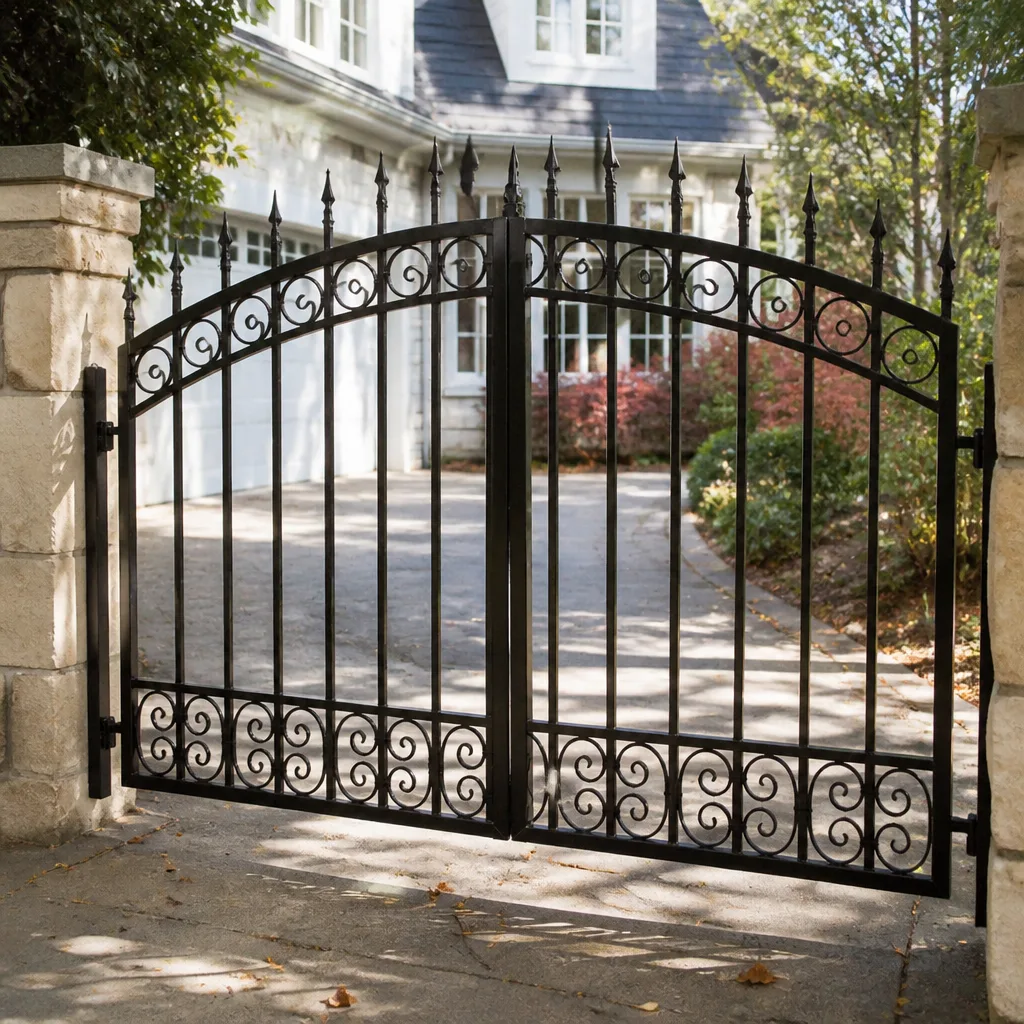 Wrought iron
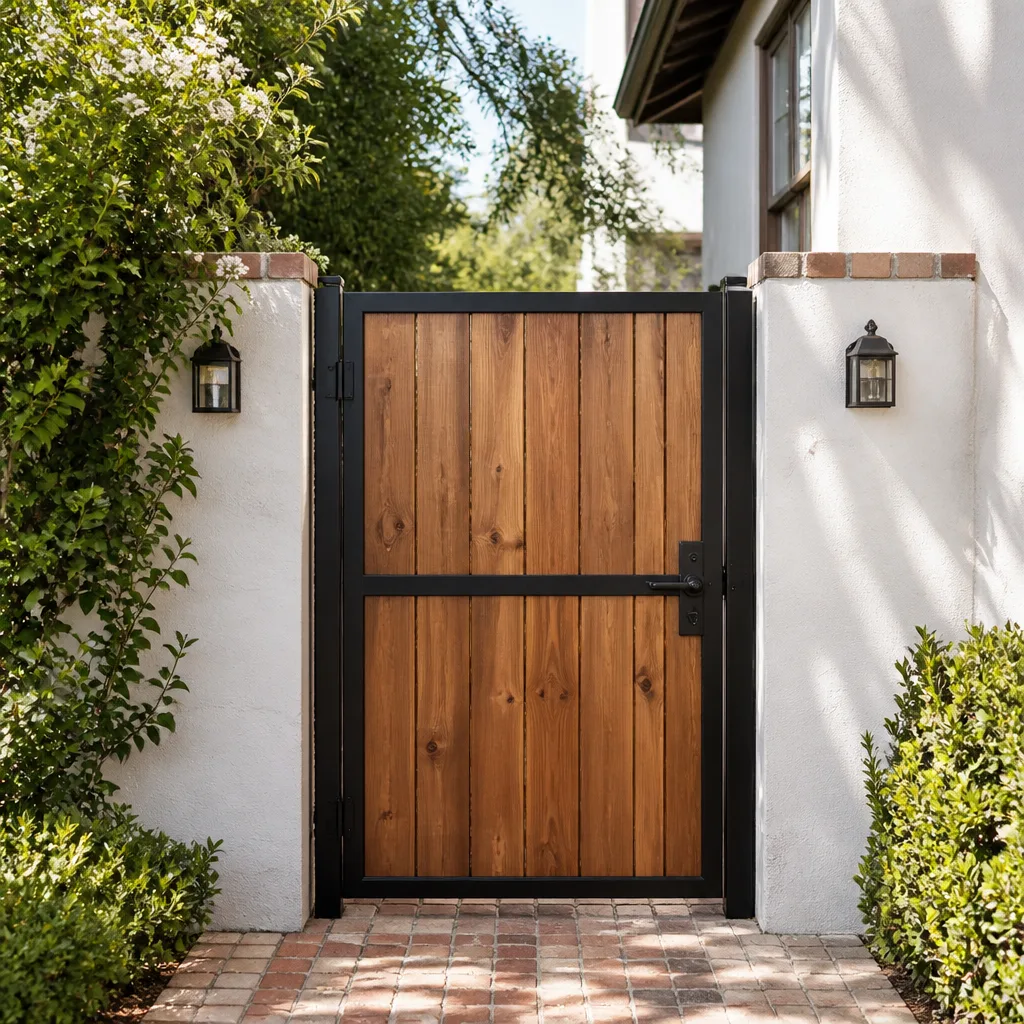 Wood & steel frame
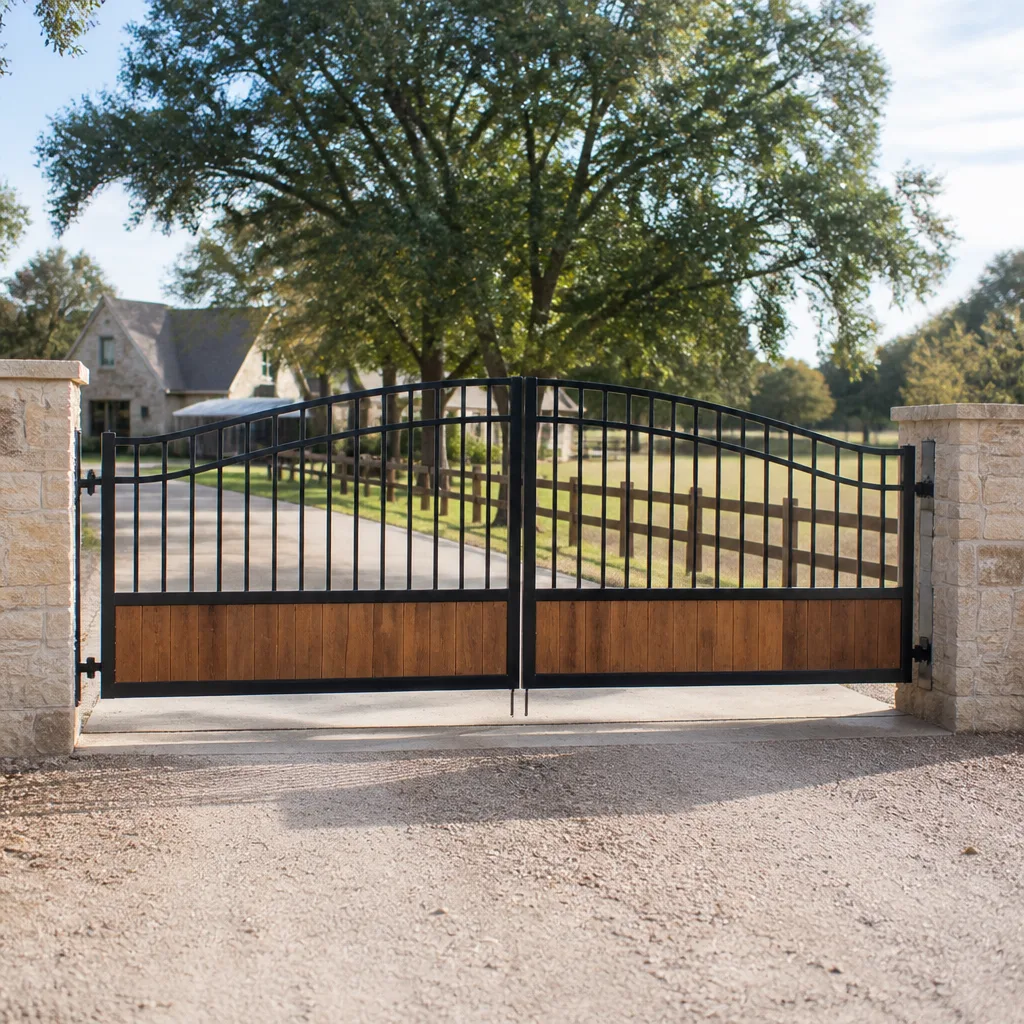 Farm & ranch
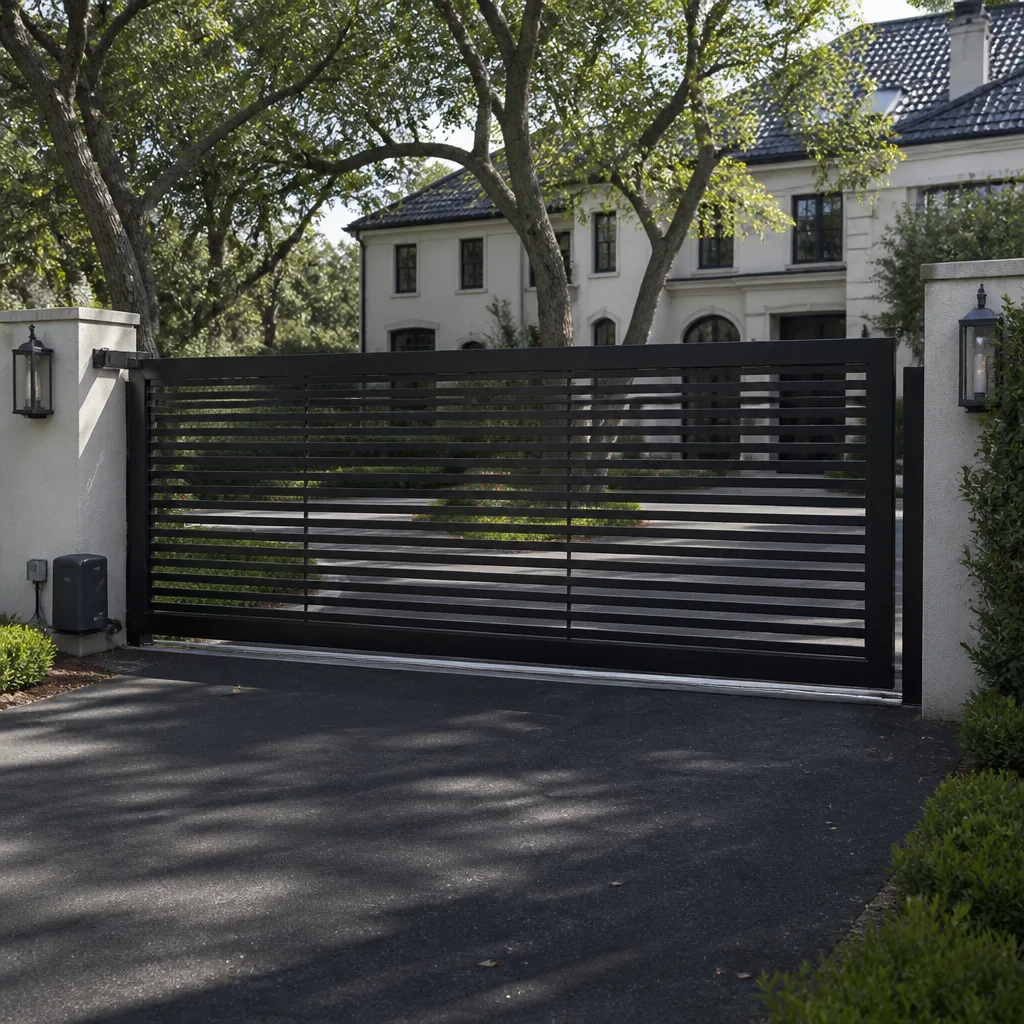 Sliding driveway gates
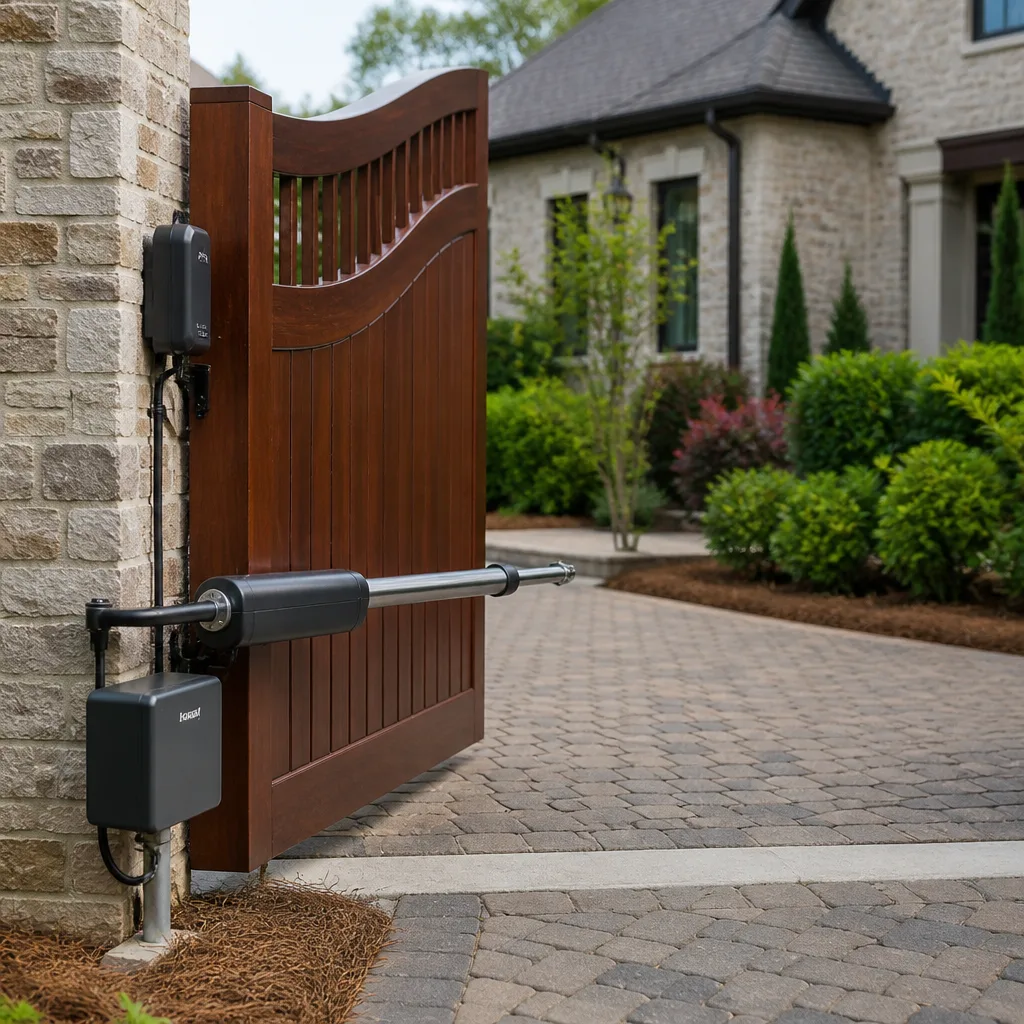 LiftMaster operators
Free on-site gate assessment - hinges, posts, and your LiftMaster or Nice gate operator checked before anything is quoted
The assessment is free and the quote is the invoice.
Get your free estimateThe Complete Gate Parts & Welding Guide for Whitney Homeowners
A gate built to coastal California specs will often show rust along its welds within three years in Whitney’s alkaline soil. Not because the work was poor, but because the wrong filler metal and primer were used for this specific environment. Most gate guides are written for a generic American suburb that doesn’t exist here. This one accounts for Whitney’s UV intensity, its freezing nights and 110-degree afternoons, and the caliche that sits under half the valley. You’ll learn which steel and coatings survive here, how to name the part that broke, why weld quality only reveals itself years later, and how to judge whether a salvaged part is worth installing.
Quick Answer
In Whitney, a gate holds up when the steel grade, coating system, and weld filler are matched to alkaline soil and high UV, not to a coastal climate. The parts that fail first are hinges, latch keepers, and bottom rails at the weld, usually within three to seven years if they were built for a milder environment. Matching the right parts and welding to Whitney’s conditions is what separates a gate that lasts twenty years from one that sags by year five.
Styles & brands we work with
- Wrought iron
- Wood & steel frame
- Farm & ranch
- Sliding driveway gates
- LiftMaster operators
Table of Contents
- Which Steel Grades and Coatings Hold Up in Whitney
- Naming the Part That Broke: A Function-by-Function Guide
- Why Weld Quality Shows Up in Alignment, Not Day One
- Caliche, Footings, and Why Your Gate Binds in July
- Evaluating Used or Salvaged Gate Parts
- The Seasonal Check Every Whitney Homeowner Should Run
- Common Mistakes to Avoid
- When to Call a Professional
Which Steel Grades and Coatings Hold Up in Whitney
The steel that performs in Whitney is not the cheapest steel on the rack, and it isn’t the fanciest either. It’s the grade that tolerates a soil pH that runs alkaline, summer surface temperatures that bake a black gate past 140 degrees, and winter mornings that drop near freezing. That combination punishes the bottom of the gate hardest, because the bottom rail sits closest to the soil and takes the most splash from irrigation.
Here’s how the common options actually perform locally:
- Hot-dip galvanized steel is the workhorse for Whitney. The zinc coating sacrifices itself before the steel does, which matters when alkaline soil attacks the base. Expect fifteen to twenty years of service on a properly galvanized frame before re-coating.
- Powder-coated steel looks sharp and holds color against UV, but the coating is only as good as the prep under it. A powder coat applied over mill scale or a thin primer will fail from the inside out in Whitney’s sun, and you won’t see it until it blisters.
- Mild steel with a quality primer and topcoat works fine if the primer is a zinc-rich or epoxy system rated for alkaline exposure and the topcoat is UV-stable. Skip either and the weld seams are the first place rust appears.
- Bare or lightly painted steel has no business on a Whitney gate. The UV load and alkaline splash will eat it within a few seasons.
The coating system matters as much as the steel. A three-coat system (zinc-rich primer, intermediate coat, UV-stable topcoat) is what we specify for gates that face west or south, where afternoon sun does the most damage. Brand names matter less than the mill certificate and the prep work. If a bid doesn’t tell you the steel grade and the coating system by name, ask. A square deal starts with knowing what you’re buying. For installation specifics, see our Gate Installation in Whitney page.
Naming the Part That Broke: A Function-by-Function Guide
Half the difficulty of a repair call is describing what failed. When you can name the part by its job, the technician arrives with the right hardware and the fix often happens in one visit. Here’s the vocabulary, organized by what each part does rather than what it’s called.
- Hinges carry the weight and set the swing. A gate that drags, pops, or won’t stay where you put it is usually a hinge problem, not a gate problem. Look for worn bushings, wallowed screw holes, or a hinge plate pulling away from the post.
- Latch keepers receive the latch and hold the gate closed. If the gate latches only when you lift it, the keeper has shifted or the gate has dropped.
- Drop rods anchor a gate into the ground when it’s open or closed, common on double-drive gates. A drop rod that won’t seat means the gate has settled out of plumb or the rod sleeve is bent.
- Diagonal bracing is the frame’s spine. It keeps the gate square. If a diagonal weld has cracked, the gate will sag at the latch side within months, long before the crack is visible.
- Bottom rails and vertical pickets take the most abuse from irrigation splash and lawn equipment. Rust-through at the bottom rail is the most common failure we see in Whitney.
- Post caps and base plates protect the post interior and the anchor. A missing cap lets rainwater into the post, and a rusted base plate lets the whole gate lean.
When you call, describe the symptom and the part: “The gate drags at the latch side and the bottom hinge looks loose.” That’s enough for us to bring the right replacement and finish the job in a single visit. Our Gate Repair in Whitney team keeps the common hardware for Whitney gates on hand for exactly this reason.
Why Weld Quality Shows Up in Alignment, Not Day One
A bad weld can look perfect the day the gate is hung. The failure is slow. Heat from welding changes the metal’s grain structure, and if the filler metal doesn’t match the base steel or the cooling is rushed, that joint becomes the weak point. In Whitney’s temperature swings, a marginal weld opens and closes with the metal twice a day. Within a few years, the gate is out of square and the latch no longer lines up.
What to watch for, in order of how early it shows:
- Year one to two: a slight drag at the latch side that wasn’t there at install. Often the diagonal weld is the culprit.
- Year two to four: rust blooming along a weld seam, not the flat face. Weld seams are where moisture and alkaline splash collect first.
- Year three to seven: the gate no longer stays open or closed on its own; the frame has twisted out of square.
- Any time: a visible crack at a weld, especially where a diagonal meets a rail. That’s a structural warning, not a cosmetic one.
The fix for a poor weld is usually re-welding with the correct filler for the base steel, then re-coating the seam with a zinc-rich primer before topcoat. A good weld in Whitney should carry a gate for twenty years or more. The indicator isn’t how it looks at install, it’s whether the gate is still square when your grandkids are old enough to open it.
Caliche, Footings, and Why Your Gate Binds in July
Whitney sits on soil that includes caliche, a cemented layer of calcium carbonate that behaves almost like soft rock. Caliche changes how you dig a footing and how deep it must go. A post set in loose fill above a caliche layer will heave in winter and settle in summer. That’s why a gate that swings freely in March can bind by July. The post hasn’t moved much, but “not much” is all it takes when the gate is a lever thirty feet long.
Three things we account for on every Whitney footing:
- Depth to stable material. A footing needs to reach below the active soil layer, and caliche sometimes forces a deeper or wider hole. Skimping here is the number one cause of a gate that won’t stay aligned.
- Drainage. Alkaline soil plus standing irrigation water is the fastest route to a rusted base plate. The footing should shed water away from the post, not pool it.
- Expansion and contraction. Steel grows and shrinks with temperature. A gate installed in a 110-degree July afternoon needs enough clearance to still open at 28 degrees in January. We set tolerances for the swing range, not just the day of install.
When a gate binds by midsummer, the fix is rarely the gate itself. It’s almost always a post that wasn’t set deep enough for Whitney’s soil, or a hinge that’s been carrying the load the footing should. This is our home market, and it shapes how we hang every gate we touch. You can see how this plays into the full range of services on our Ironworks Gate Co. Whitney home page.
Evaluating Used or Salvaged Gate Parts
Salvaged parts can be a smart buy, and they can also be a waste of a Saturday. The difference is inspection. Some parts age well; others are already at the end of their service life by the time you find them at a swap meet or salvage yard.
Run this checklist before you pay for any used gate part:
- Check for cracks at every weld, not just the ones you can see. Run a gloved thumb along each seam. A hairline crack will catch.
- Look for rust that pits, not just rust that stains. Surface oxidation is fine; rust that has eaten into the metal is scrap.
- Test hinge play. A used hinge should feel tight with no side-to-side wobble. Any wobble means worn bushings, and it won’t improve.
- Confirm the steel grade if you can. A hot-dip galvanized part survives better than a painted mild-steel one, and it’s worth more.
- Make sure the dimensions match. Hinge plate spacing, latch throw, and drop rod length are not universal. A part that’s 1/8 inch off will bind.
- Prefer salvaged structural parts (posts, frames) over salvaged moving parts (hinges, latches, rollers). Moving parts wear out; structural parts don’t.
If a used part passes all six, it can be a good buy, especially for a vintage gate where the style matters. If it fails any of the first three, walk away. A new part is cheaper than a second repair. For the automation side of the gate, our Gate Motor & Opener in Whitney team can tell you whether a salvaged part is compatible with your opener before you install it.
The Seasonal Check Every Whitney Homeowner Should Run
A ten-minute check twice a year prevents most of the repairs we see. Do it in spring and again in early fall, before the temperature swings get serious.
- Walk the swing. Open and close the gate by hand. It should move smoothly with no drag, pop, or hitch.
- Look at the bottom rail. Rust here is the earliest sign of a coating failure. Catch it while it’s surface rust.
- Test the latch and drop rod. Both should seat without lifting or forcing.
- Check the post caps. A missing cap means water in the post, which means a rusted post from the inside out.
- Look at the weld seams. A new crack at a diagonal weld is a call-us-now sign.
- Clear the track and the ground. Gravel and grass growth at the base cause as many “broken gates” as anything else.
If you’d rather have someone run this check, our $89 seasonal tune-up covers it, and it’s a good way to catch a small issue before it becomes a footing problem. A gate that’s tuned twice a year will outlast one that gets attention only when it fails.
Common Mistakes to Avoid
- Using coastal-spec parts in Whitney. A primer or powder coat designed for mild humidity won’t survive our UV and alkaline splash. Ask what the coating is rated for before you buy.
- Setting posts in the shallow fill above caliche. This is the leading cause of gates that bind in summer. A footing has to reach stable material, even if it means a deeper hole.
- Judging a weld by how it looks at install. A bad weld can look perfect on day one. The sign is alignment drift over two to three years, not a cosmetic flaw.
- Ignoring a rusted bottom rail. It’s the first part to fail on a Whitney gate, and it’s cheap to fix early and expensive to ignore.
- Buying salvaged moving parts. Hinges, latches, and rollers are already worn when you find them used. Salvage structural parts; buy new moving ones.
- Skipping the seasonal check. Most of the repairs we do in Whitney were visible six months earlier to anyone looking.
- Accepting a bid with no named steel grade or coating system. If the bid is vague about materials, the gate will be too.
When to Call a Professional
Some gate work is homeowner-friendly: a visual seasonal check, clearing gravel from a track, replacing a post cap. But several situations need a trained hand. A visible crack at any weld is structural and shouldn’t be left. A gate that binds in summer usually needs footing work, and digging near a settled post can make things worse. Any repair that involves a gate opener should be handled by someone trained on the brand, because a miswired motor or a missing safety edge is a genuine hazard. The same goes for welding near an energized motor or a control board. And if you’re unsure whether a part is salvageable, a second opinion is free. Ironworks Gate Co. Whitney offers free estimates in Whitney, call (855) 928-1304. A live person answers around the clock, and every job is backed by our 90-Day Done Right Promise in writing.
See the difference
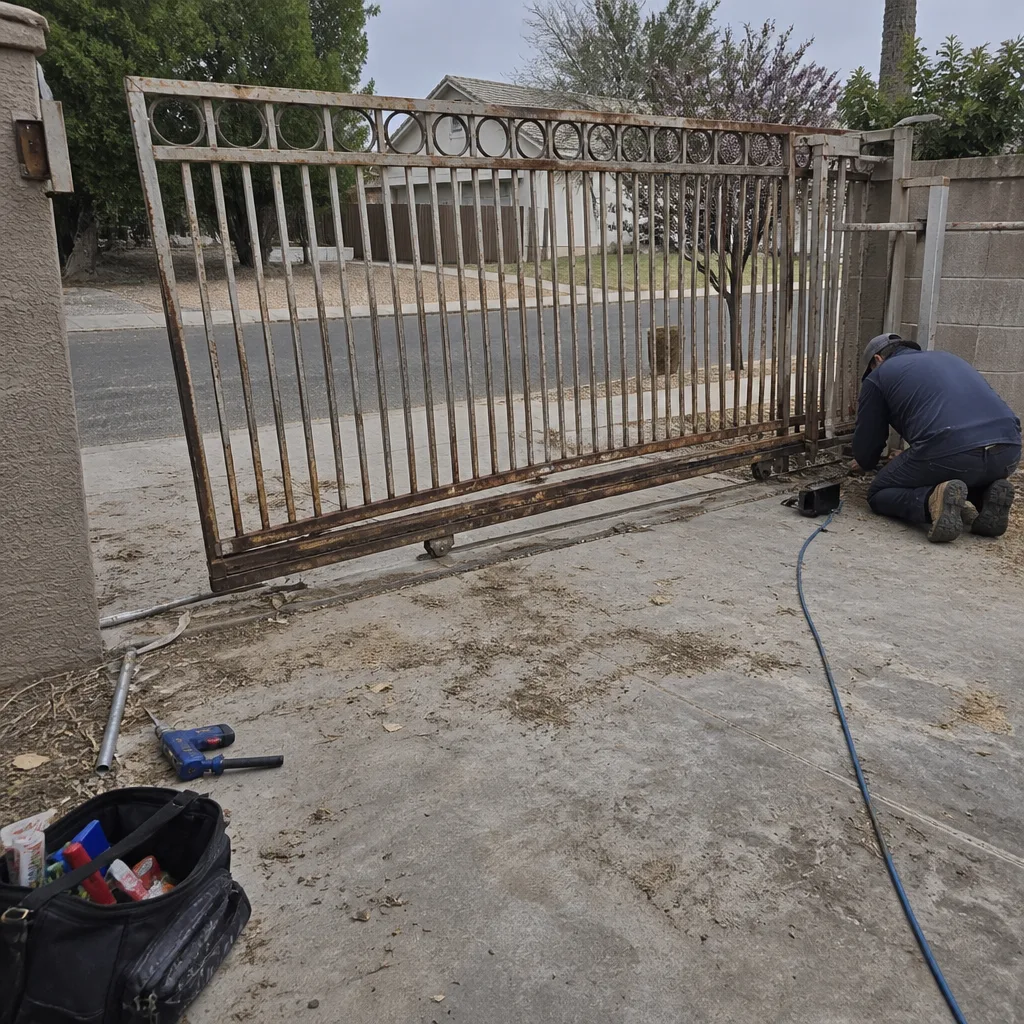 Before
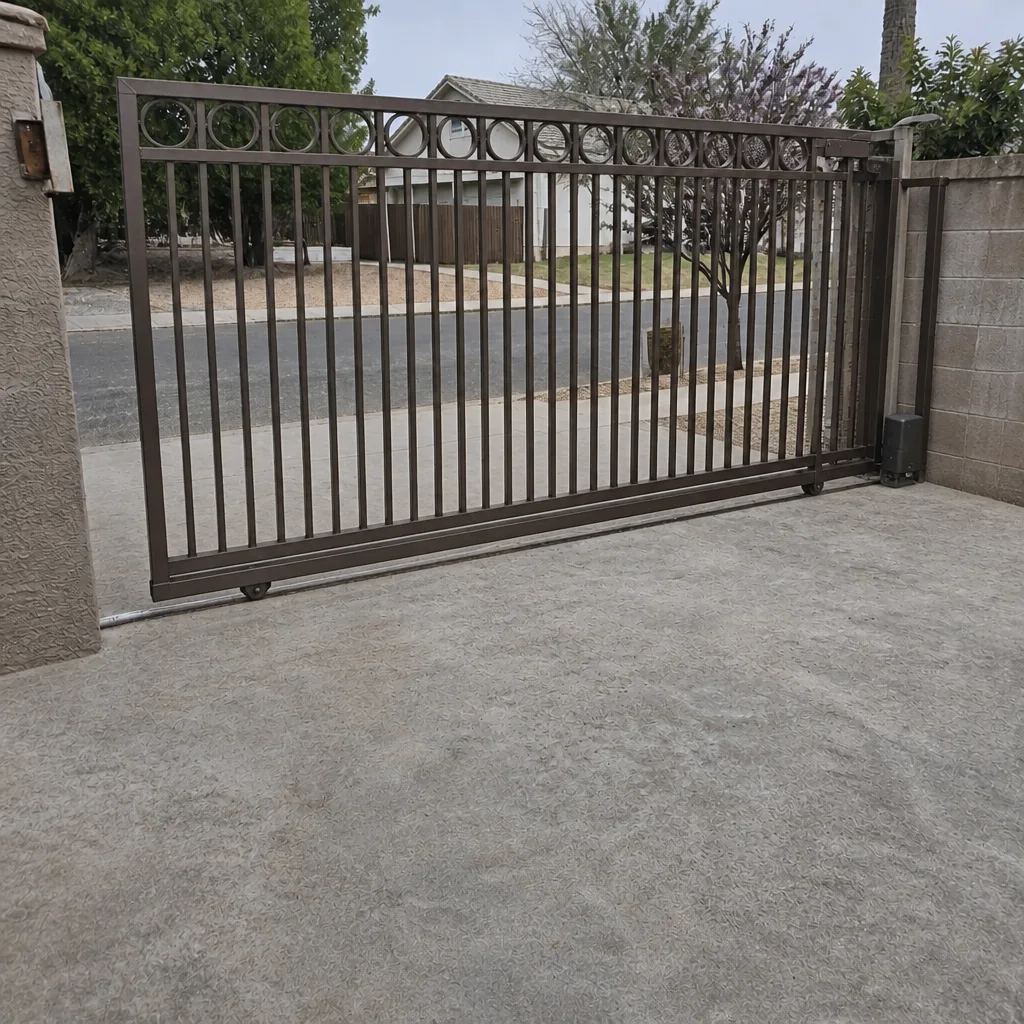 After
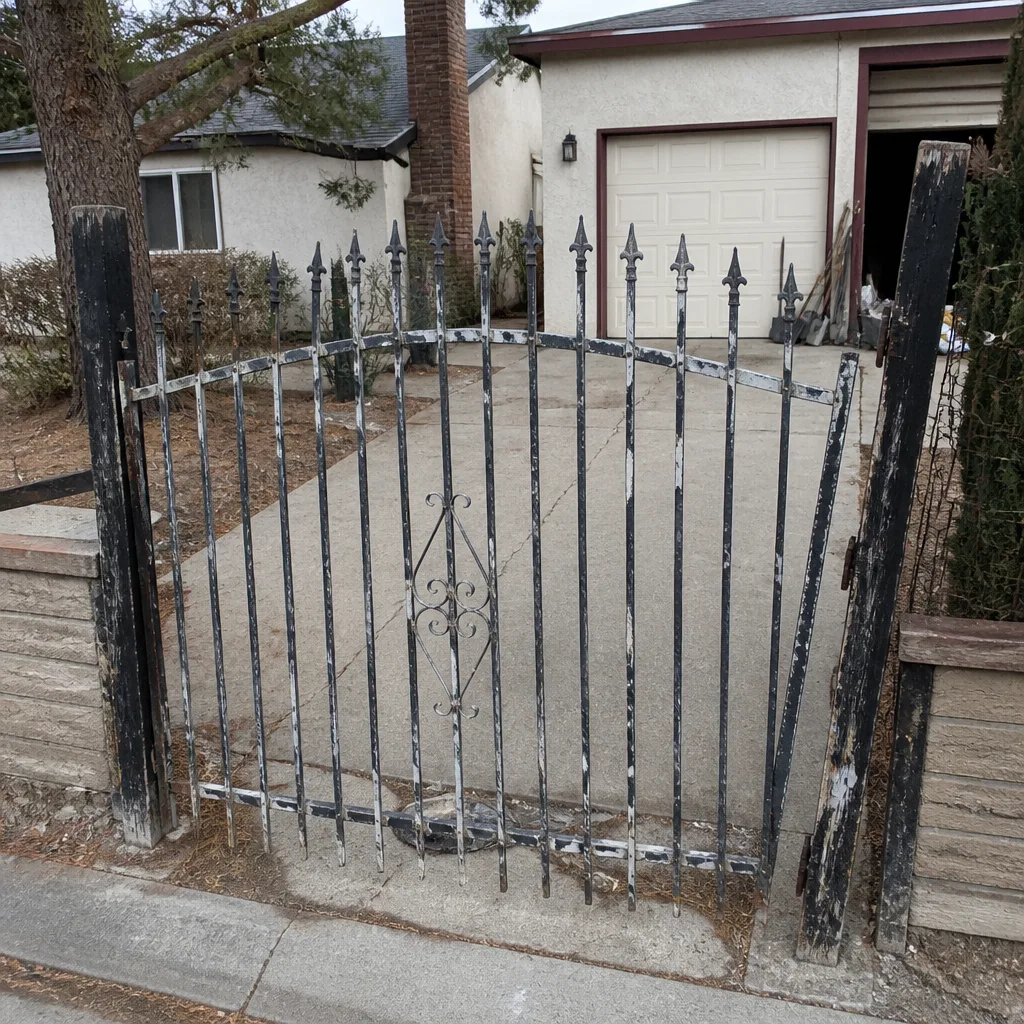 Before
 After
 Before
 After
Frequently Asked Questions
Alkaline soil combined with high UV and irrigation splash attacks the bottom rails and weld seams first. A gate built with a coastal primer or the wrong filler metal for the steel will show rust at the welds within three years, even when the original work was sound. Matching the coating system to Whitney’s conditions is the fix.
Hinges, latch keepers, and bottom rails lead the list. Hinges wear under the load of a gate that has settled slightly, latch keepers shift when the gate goes out of square, and the bottom rail rusts from irrigation splash. Catching any of these early keeps the repair small.
It has to reach below the active soil layer, and caliche can force a deeper or wider hole than a coastal guide would suggest. A post set in the shallow fill above caliche will heave and settle, which is why a gate that swings freely in spring can bind by July. A proper footing is the difference.
Only if it passes a six-point inspection. Structural parts can be worth it; moving parts like hinges and latches are usually already worn. Check for weld cracks, pitting rust, hinge play, compatible dimensions, and a known steel grade before you buy.
Yes, and it’s usually the right fix. The seam gets re-welded with the correct filler for the base steel, then re-coated with a zinc-rich primer before topcoat. Done properly, a repaired weld will carry the gate for years.
Steel expands in heat and contracts in cold, and a gate set on a footing that hasn’t reached stable material will shift with the soil too. By July the two changes combine and the gate binds; by January it swings freely again. Fixing the footing and setting swing tolerances for the full temperature range solves it.
The Bottom Line
Whitney’s soil and sun ask more of a gate than coastal climates do, and the parts and welds that ignore that will fail early. Use hot-dip galvanized steel or a proper three-coat system, reach stable material with every footing, and judge weld quality by alignment over time rather than by how it looks on install day. Know the parts by function so you can describe what broke, and inspect any salvage before you buy it. None of this is complicated, it’s just specific to here. That’s the whole point of this guide.
Ironworks Gate Co. Whitney specializes in driveway and estate gate services: repair, installation, motors and openers, access control, and parts and welding. Our technicians have up to 13 years of experience, we’re trained on nine leading automation brands including LiftMaster, FAAC, BFT, and Mighty Mule, and a live person answers the phone 24 hours a day. Every job is quoted upfront and settled before a single bolt is turned, and every job is backed by the written 90-Day Done Right Promise. Standing offers include $50 off any repair over $250, a free second opinion on any written estimate, an $89 seasonal tune-up, and a permanent 5% senior and veteran discount.
Call (855) 928-1304 for a free estimate. Tell us what the gate is doing, and we’ll tell you what it needs.
Written by the team at Ironworks Gate Co. Whitney.