
Last updated November 17, 2026
 Wrought iron
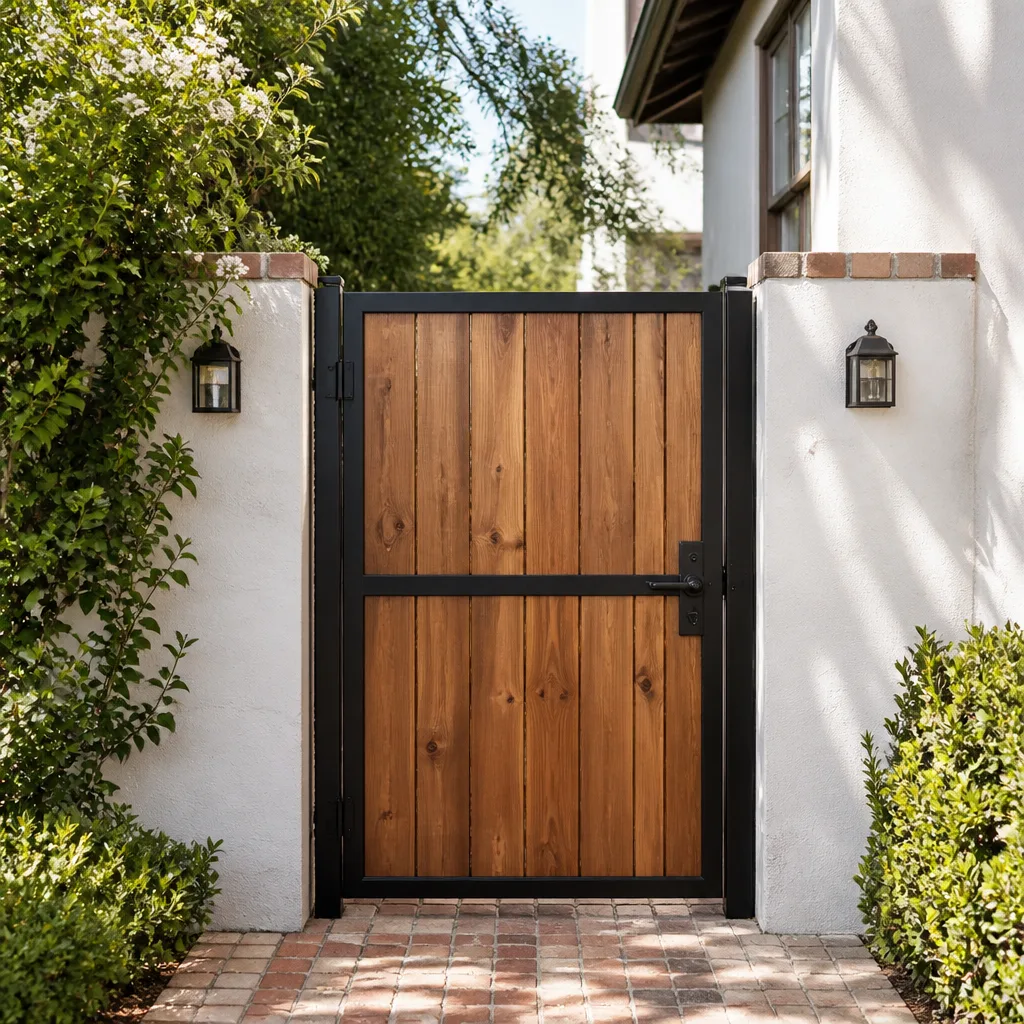 Wood & steel frame
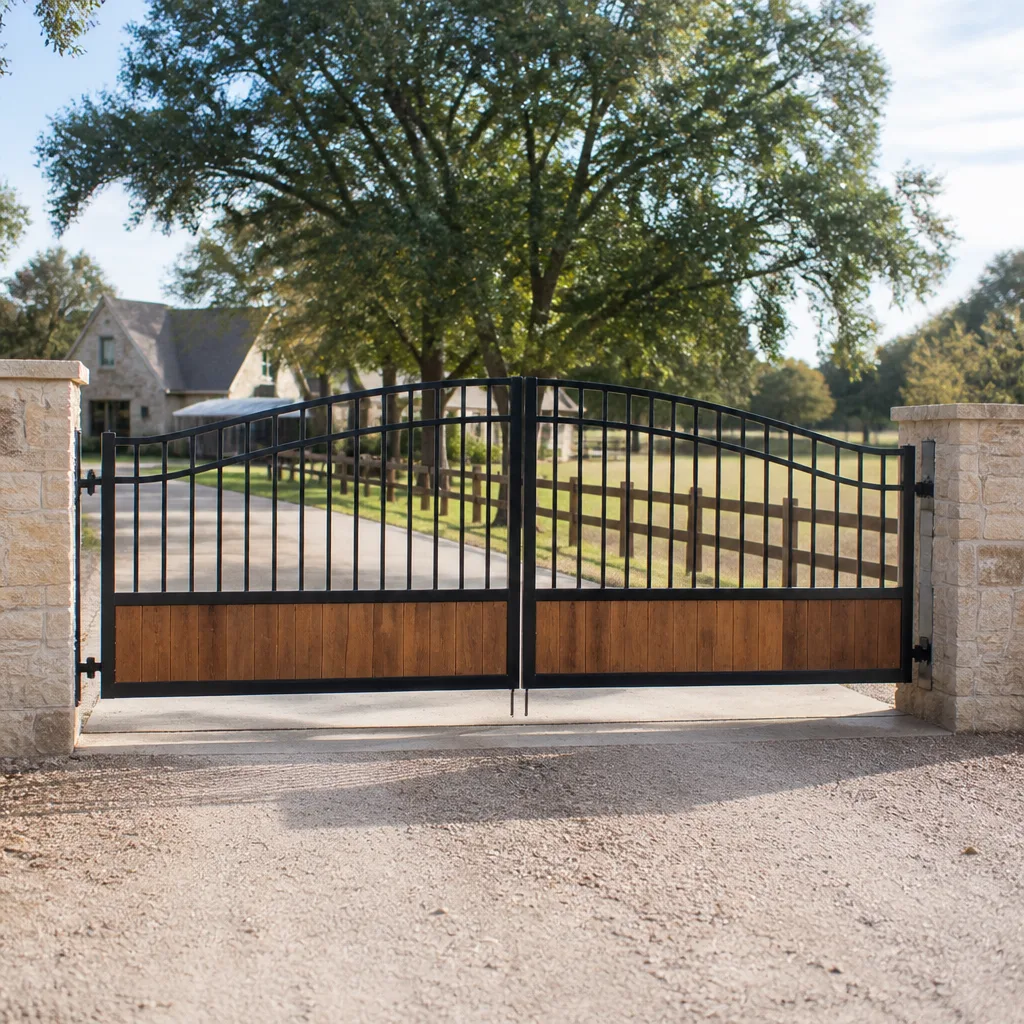 Farm & ranch
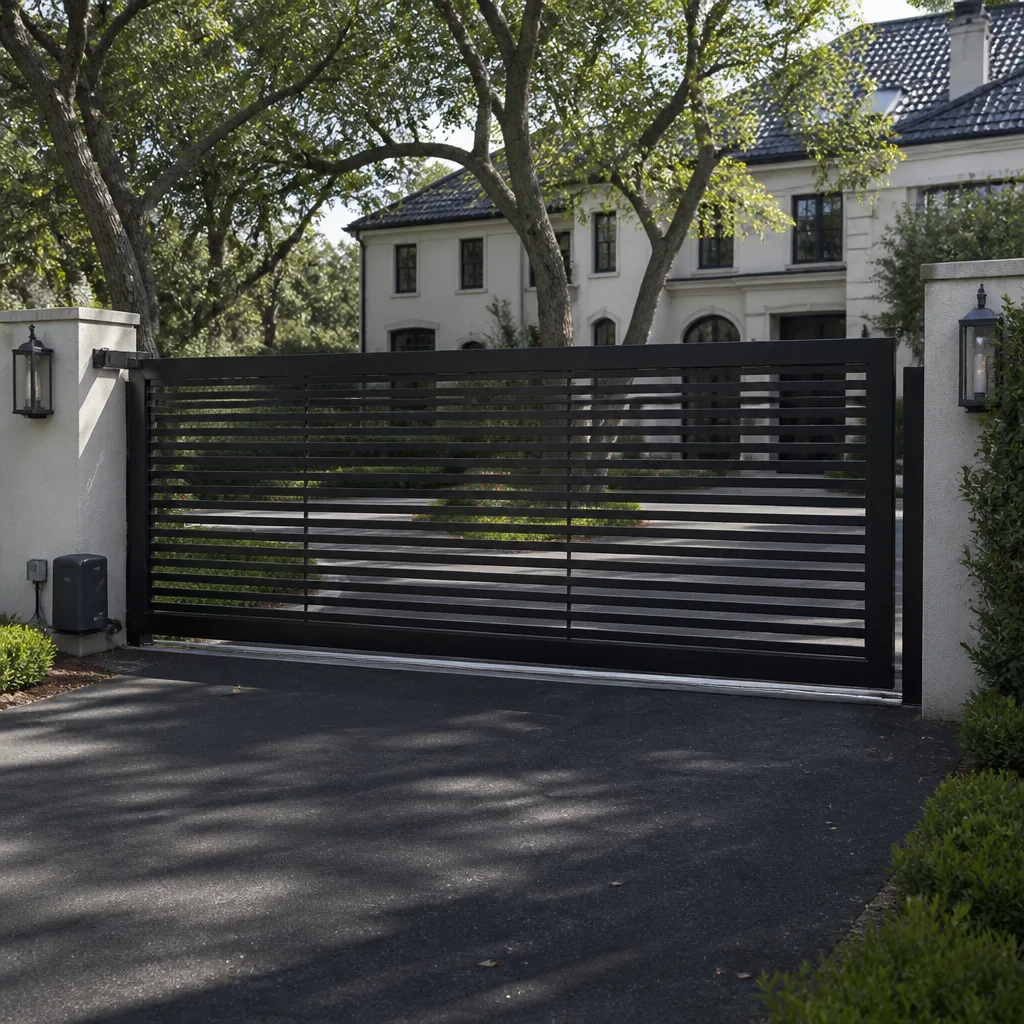 Sliding driveway gates
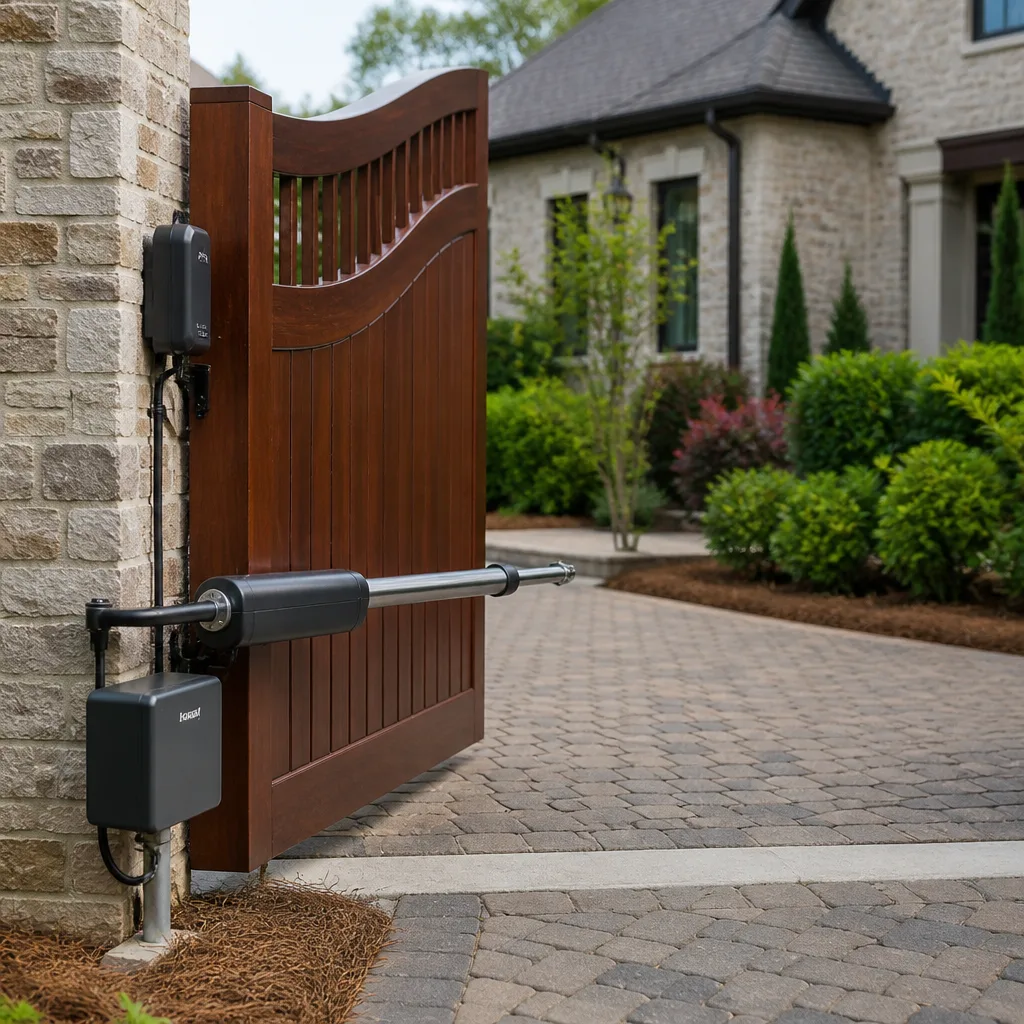 LiftMaster operators
Free on-site gate assessment - hinges, posts, and your LiftMaster or Nice gate operator checked before anything is quoted
The assessment is free and the quote is the invoice.
Get your free estimateThe Complete Guide to Gate Repair in Whitney
A sagging hinge and a sluggish opener on the same gate are rarely two separate problems. They are almost always the same misalignment telling you two stories at once. One story is about metal that has slowly shifted out of true. The other is about a motor working harder than it should to compensate. Fix either one in isolation and the other comes back to bite you within a season. That is the pattern we see most often on driveways around Whitney, and it is the reason this guide treats a gate as a system rather than a pile of parts. By the end, you will understand how gates fail, how to read the symptoms, and how to tell a repair that lasts from one that sends you back to square one in six months.
Quick Answer
Gate repair in Whitney usually means correcting a misalignment that has developed in the frame, hinges, or posts, then checking whether the operator and safety devices were stressed by that misalignment. A single component swap rarely solves a gate that sags, drags, or stops halfway. A proper diagnosis treats the frame, hinge, post, operator, and safety loop as one mechanical system, and that is what keeps a repair from failing again.
Styles & brands we work with
- Wrought iron
- Wood & steel frame
- Farm & ranch
- Sliding driveway gates
- LiftMaster operators
Table of Contents
- Why Most Gate Repairs Fail the Second Time
- Diagnosing a Gate as a System, Not a Set of Parts
- Whitney’s Caliche Soil and the Slow Misalignment Chain
- How Automated and Manual Gates Fail Differently
- Gate Types and Their Unique Failure Points
- Structural, Electrical, or Operational: Telling Them Apart
- The Parts That Wear First in Desert Heat
- A Simple Seasonal Check You Can Do Yourself
Why Most Gate Repairs Fail the Second Time
When a gate starts dragging, the first instinct is to replace what looks broken. A hinge looks worn, so the hinge gets swapped. The gate closes better for a few weeks, then the drag returns. What happened is that the real cause, a post that has crept a fraction of an inch out of plumb, was never addressed. The new hinge simply absorbed the same stress the old one did, and it gives out faster because it is new and has no slack yet.
This is the most expensive pattern in gate repair. Homeowners pay twice for the same problem, and the second bill is often larger because the first repair added hardware that now has to be undone. We see it regularly on older properties in gate repair in Whitney where a gate has been through two or three quick fixes over a decade, each one layering onto the last.
The fix is a diagnosis before any part is ordered. That means checking post plumb, hinge wear, frame square, and operator travel together. It takes longer up front. It costs less over the life of the gate.
- A new hinge on a leaning post will fail again, usually within a year.
- A new opener on a binding gate will burn out early because it fights the same friction.
- A fresh coat of paint over a cracked weld hides the problem until the weld lets go.
- Shimming a hinge to compensate for a shifted post works until the shim works loose in the heat.
Diagnosing a Gate as a System, Not a Set of Parts
Think of your gate as five connected pieces: the frame and gate leaf, the hinges or rollers, the posts and footings, the operator or motor, and the safety loop (photo eyes, edge sensors, keypad or control board). A change in any one of them puts load on the other four. That is why a gate that closes “almost” right is never just one thing.
Here is the order a proper diagnosis should follow, from the ground up:
- Check the footings and post plumb. If the post has moved, everything above it is fighting a losing battle. Measure plumb on both the hinge post and the latch post.
- Inspect the frame and welds. Look for cracks at the corners, rust bleed at the joints, and any sign the gate leaf is out of square. A frame that has twisted will bind no matter how the hinges are adjusted.
- Test the hinges or rollers. Worn hinges show up as slop in the gate, not just squeak. Rollers on a slide gate should turn freely with no flat spots.
- Check the operator last. Once the gate moves freely by hand across its full travel, then test the motor. A motor that struggles on a free-moving gate has a real problem. A motor that struggles on a binding gate is telling you the gate is the problem.
- Verify the safety loop. Photo eyes, edges, and the control board all need to be working before the gate is put back in service. This is not optional and not something to skip for convenience.
That sequence matters because it prevents the most common wasted expense: buying a motor when the gate needs a hinge and post reset. We have seen gates in Whitney where a homeowner had already paid for a new opener before calling us, and the old opener was fine. The gate had never been made to move freely.
Whitney’s Caliche Soil and the Slow Misalignment Chain
Whitney sits on ground that most gate guides never account for. Much of the area is underlain by caliche, a naturally cemented layer of calcium carbonate that behaves almost like shallow bedrock in places and turns into a shifting, expansive mess where it has been broken up during construction. On top of that, the desert’s wet-and-dry cycle moves hard-pan clay soils seasonally. A footing set into that ground does not stay put the way a footing set into stable loam does.
What this means in practice is a slow failure chain that plays out over years:
- The soil under one post dries, shrinks, and settles a fraction of an inch.
- The post tips slightly out of plumb, and the gate leaf no longer hangs true.
- The hinge takes on load it was never designed for, and the gate begins to sag at the latch end.
- The operator now has to push through that sag, and it works harder on every cycle.
- The control board or motor eventually gives out, and the homeowner assumes the motor was bad.
This is the single most important thing to understand about gate repair in Whitney. The motor is often the last thing to fail in a chain that started in the dirt. We have corrected countless gates around the established neighborhoods where the footing was the real culprit and the operator was a symptom. When we reset a post on a properly prepared footing, the gate stops fighting itself and the hardware lasts the way it should.
How Automated and Manual Gates Fail Differently
A manual gate and an automated gate want different things from a repair. Mixing up the two approaches wastes money in both directions.
Manual gates fail mechanically and predictably. The forces are all human: pushing, pulling, the weight of the leaf, the friction in the hinge, the alignment of the latch. A manual gate that sticks usually needs the hinge, the frame, or the post addressed, and once it moves freely by hand, the job is essentially done. There is no control board to chase, no sensor to test.
Automated gates fail in layers. The mechanical layer still matters, but on top of it sits an electrical layer: the operator, the control board, the wiring, and the safety devices. An automated gate can be mechanically perfect and still refuse to open because a photo eye is misaligned or a limit switch has drifted. It can also be electrically perfect and destroy itself because the gate binds and the motor keeps pushing.
That is why automated gates need a technician who can work both sides of the line. On a FAAC or BFT system, for instance, the fix might be a hinge adjustment, a limit-switch reset, or a control-board setting, and guessing wrong costs a part you did not need. When the electrical side is genuinely the problem, our gate motor & opener service in Whitney is built around this two-sided diagnosis rather than a parts-swap approach. The rule of thumb: fix the mechanical side first, then test the electrical side against a gate that actually moves.
Gate Types and Their Unique Failure Points
Every gate type carries its own weak spots. Knowing yours tells you what to watch.
Swing Gates
Swing gates hang on hinges and pivot at the post, so they are the most sensitive to post movement and hinge wear. Their first failure point is the hinge post tipping out of plumb, which shows up as a gate that drags at the latch end or swings open on its own. The second is hinge wear, which shows as sag and slop. The third is the operator arm or actuator, which takes the brunt when the gate is misaligned.
Slide Gates
Slide gates roll along a track or hang from a cantilever, so their failures are about the travel path. The first is the track or guide, which can shift, fill with debris, or wear flat over time. The second is the roller or carriage, which develops flat spots and starts to rumble. The third is the operator’s limit settings, which drift and leave the gate stopping short or overrunning. A slide gate that binds mid-travel is almost always a track or roller problem, not a motor problem.
Bi-Fold Gates
Bi-fold gates have more moving joints than any other type, so they fail at the pivots. The first is worn pivot pins or bushings, which introduce slack that compounds across the folds. The second is the track or guide at the base, which can bend or shift. The third is the synchronization of the operator, since a bi-fold that opens unevenly stresses the whole frame. Bi-fold repairs demand patience because adjusting one joint changes the load on all the others.
If the gate is beyond repair or you are adding one to the property, our gate installation in Whitney covers swing, slide, and bi-fold work with footings prepared for this ground.
Structural, Electrical, or Operational: Telling Them Apart
The most expensive mistake in gate repair is fixing the wrong category. A gate problem falls into one of three buckets, and the symptoms tell you which.
- Structural: the gate sags, drags, binds, or will not latch. It moves wrong by hand. The cause lives in the frame, hinges, rollers, posts, or footings.
- Electrical: the gate is mechanically free but the motor, control board, wiring, or power supply is at fault. It may not move at all, or it may move erratically.
- Operational: the mechanics and the electricals are both fine, but the settings are wrong. Limit switches, force settings, remote programming, keypad codes, and safety-device alignment all fall here.
Here is how to test which one you have before you call. Disconnect the operator (or put it in manual release, following the manufacturer’s instructions for your model). Push the gate through its full travel by hand. If it moves freely and latches cleanly, your problem is electrical or operational. If it binds, drags, or will not close, your problem is structural, and no motor or board will fix it.
This one test saves money more reliably than anything else in this guide. A gate that will not move by hand does not need a new opener. A gate that moves perfectly by hand but will not respond to the remote does not need new hinges. Misdiagnosing that distinction is how homeowners end up paying for parts they never needed.
The Parts That Wear First in Desert Heat
Whitney heat is hard on gate hardware, and it wears certain parts faster than a gate in a milder climate would see.
- Hinges and bushings dry out and lose lubricant faster, so metal-on-metal wear sets in early.
- Seals and gaskets on the operator crack and let dust into the housing, which shortens motor and board life.
- Batteries in keypads, remotes, and backup systems fail faster in sustained heat.
- Paint and powder coat fade and chalk, then let moisture reach bare metal at weld seams, which is where rust starts.
- Wiring and connectors at the control board loosen and corrode over the dry-hot, cool-night swing.
This is why regular service is not a sales pitch in this climate, it is a maintenance reality. A tune-up catches a drying hinge or a cracking gasket before it turns into a motor or a weld repair. On brands like Linear and Viking, we routinely see a small seal or battery issue turn into a much larger repair when it is left alone for a couple of seasons. Our Ironworks Gate Co. Whitney home lays out the seasonal tune-up we offer for exactly this reason.
A Simple Seasonal Check You Can Do Yourself
You do not need to service your own gate. But a few minutes of observation each season catches problems while they are cheap to fix. Here is a check you can run safely, without tools and without touching any moving parts while the gate is powered.
- Watch it move. With the gate powered off and in manual release, push it through its full travel slowly, following the manufacturer’s instructions for your model. Listen for grinding, feel for binding, and note where it catches.
- Look at the gap at the latch. If the gate no longer meets the latch post squarely, the frame or post has moved.
- Check the posts for lean. A plumb line, or even a phone level held against the post, will show a post that has crept out of true.
- Clear the travel path. Rocks, gravel, and yard debris in the track or under a swing gate cause drag that the motor then fights.
- Test the safety devices. Walk through the photo-eye beam and press the edge sensor to confirm the gate reverses as it should. If it does not, stop using the gate and call a professional.
- Listen to the motor. A motor that sounds strained or cycles oddly is signaling a mechanical problem underneath it.
One safety note, and it is not a small one: gate operators and their springs and counterweights store serious energy, and the control board carries line voltage. Never open the operator housing, adjust a limit switch, or reach into a moving gate to clear an obstruction. Bring in a trained technician for anything past observation.
Common Mistakes to Avoid
- Replacing the opener before checking the gate. In Whitney, most “failed” openers are working against a gate that binds. Put the gate in manual release and push it by hand first.
- Shimming a hinge instead of resetting the post. A shim buys a month and returns worse, because the post is still moving and the hinge is now under uneven load.
- Ignoring a small post lean. A quarter inch of lean at the post becomes an inch at the latch, and that inch is what wears out hinges and motors.
- Patching a weld without finding why it cracked. A weld on a gate frame cracks because the frame is flexing. Fix the flex or the new weld fails too.
- Disabling a safety edge or photo eye to “get by.” This is a serious safety risk and one of the most common causes of gate injury. Never run a gate with a safety device bypassed.
- Skipping maintenance in the heat. Dry hinges, cracked seals, and dead batteries are all easier and cheaper to catch in a tune-up than after they fail.
- Hiring whoever shows up first. A generalist who has never worked on a FAAC or BFT control board will guess, and guessing costs you parts.
See the difference
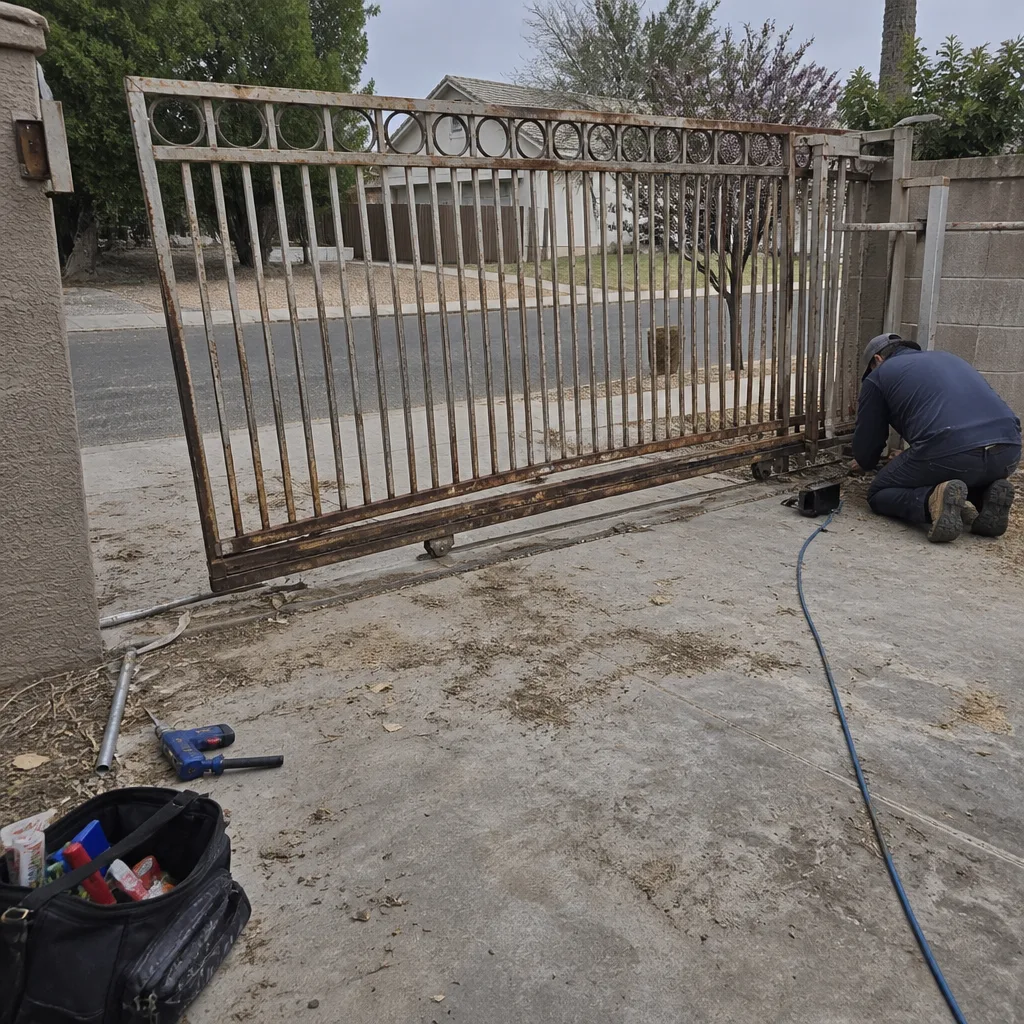 Before
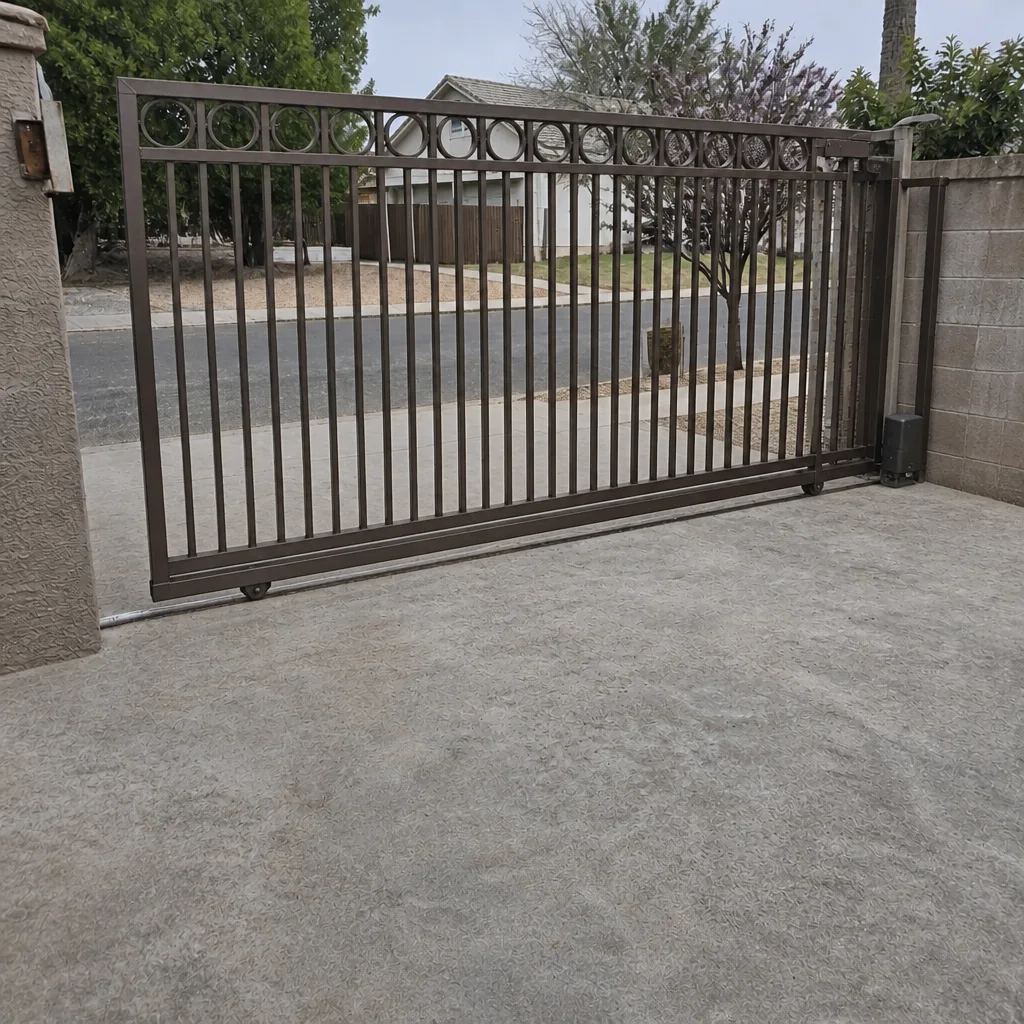 After
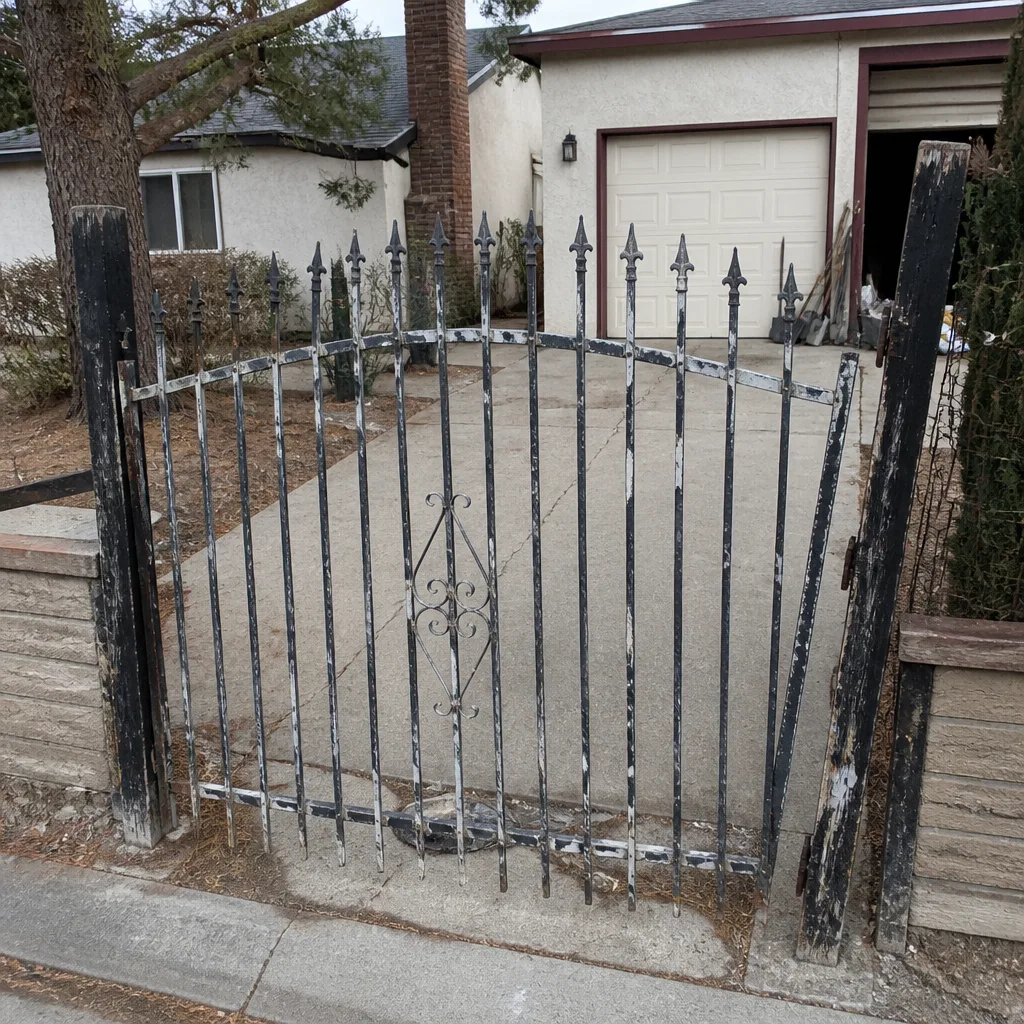 Before
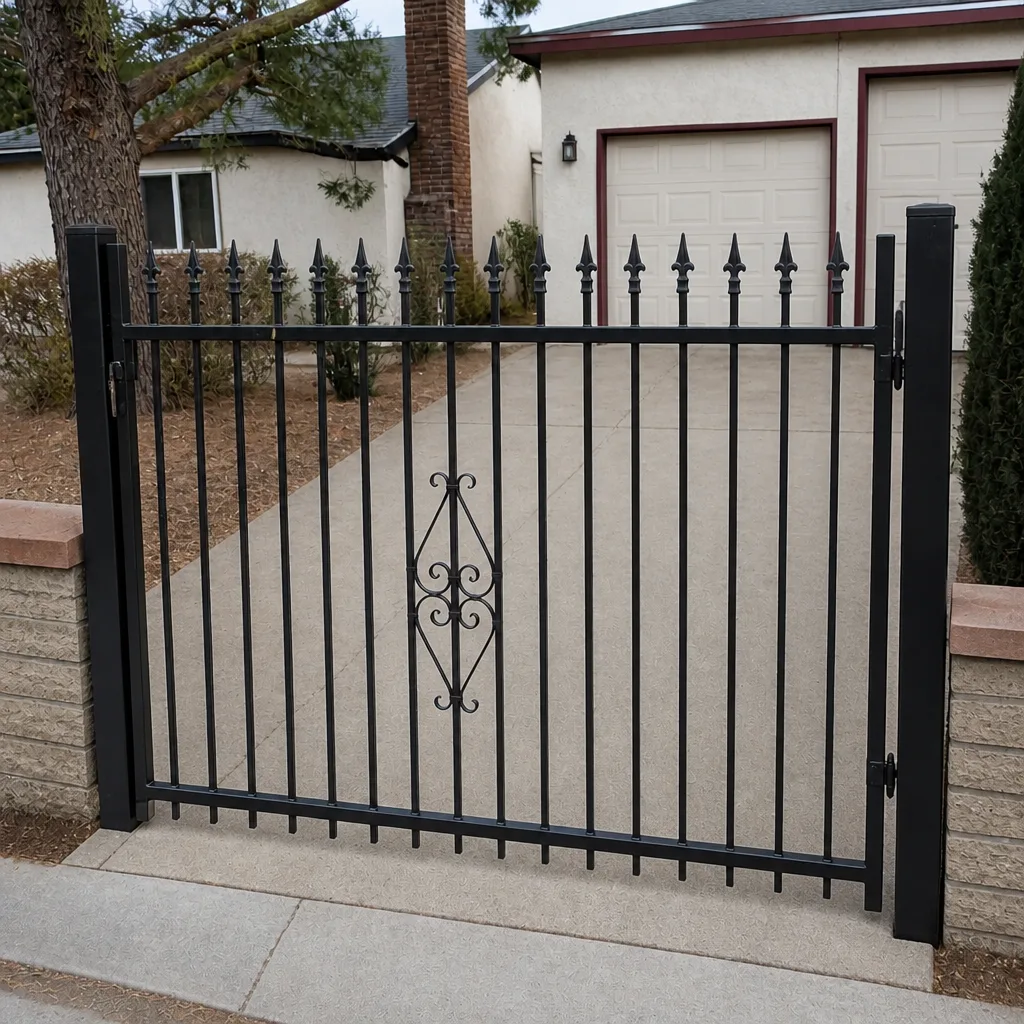 After
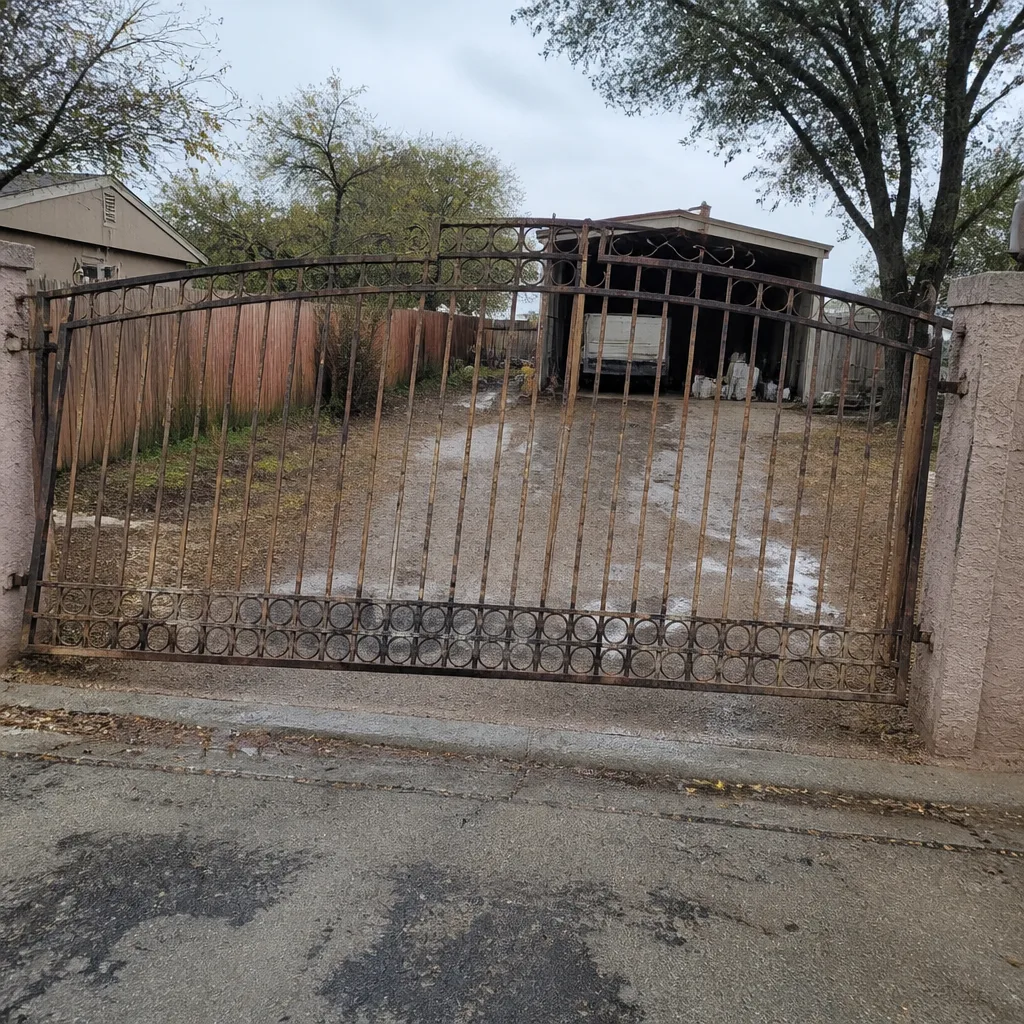 Before
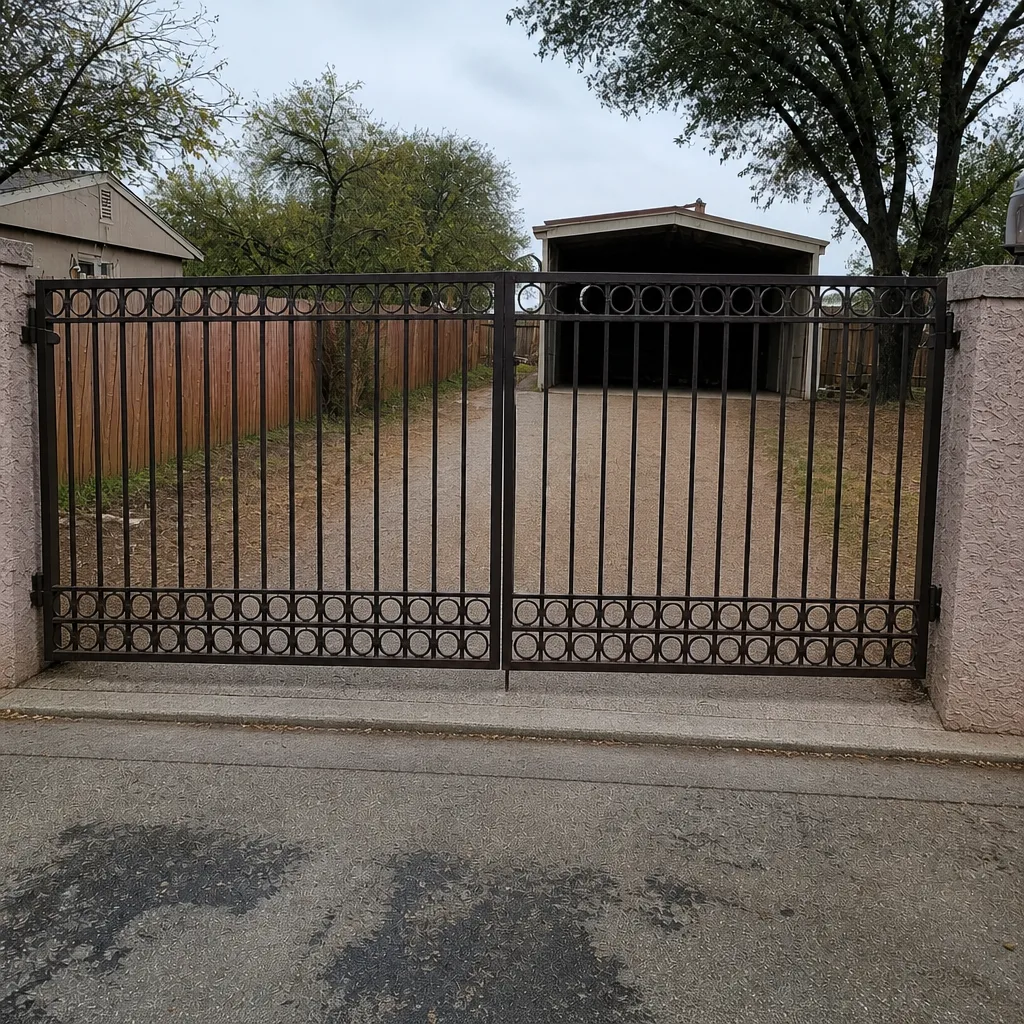 After
When to Call a Professional
Some problems are safe to observe and not safe to fix. Call a professional when the gate binds or drags and you have confirmed it by hand, when a post has visibly leaned, when the motor strains or trips its breaker, when the control board or limit switches need adjusting, or when any safety device fails to reverse the gate. Those are the repairs that go wrong and injure people when handled without training. Ironworks Gate Co. Whitney offers free estimates in Whitney, and our technicians are background-checked and trained on the major automation brands so the fix is right the first time. We quote and agree on a price before any work begins, and every job is backed by our written 90-Day Done Right Promise. Call (855) 928-1304 for a free estimate.
Frequently Asked Questions
Most gate repairs in Whitney fall in a range shaped by what’s actually wrong: a hinge or alignment correction sits at the low end, a post reset or weld repair sits in the middle, and an operator or control-board repair sits higher. We quote the price and agree on it before any work starts, so there are no surprises on the bill. Call (855) 928-1304 for an exact quote, and know that estimates are free.
For many repair calls in Whitney, yes. A live person answers our phone 24 hours a day, seven days a week, so you get a real answer, not a voicemail, whenever the gate fails. Call (855) 928-1304 and we will tell you honestly how soon we can be there.
In Whitney, the answer is usually the soil. Caliche and hard-pan clay shift with the wet-and-dry cycle, and a footing that was not prepared for that movement lets the post creep out of plumb. Each small shift adds load to the hinges and operator until something fails. A proper repair resets the post on a footing built for this ground, which is what stops the cycle. Call (855) 928-1304 for a free estimate.
Not necessarily. Put the gate in manual release and push it through its full travel by hand. If it binds or drags, the opener is likely fine and the gate is the problem. If the gate moves freely and the opener still will not run, the fault is electrical or in the control board. We test both sides before recommending a part. Call (855) 928-1304 to talk it through.
Most likely, yes. We are trained and equipped on FAAC, BFT, Linear, Viking, and several other leading automation brands, which means the right fix gets made the first time instead of a guess. Call (855) 928-1304 with your model on hand and we will confirm.
A repair includes a full diagnosis of the gate as a system, the correction of the underlying cause, and a check of the operator and safety devices before we leave. Every job is backed by our written 90-Day Done Right Promise: if it is not right, we come back and make it right, no arguing. Call (855) 928-1304 for a free estimate.
The Bottom Line
Gate repair in Whitney works best when you treat the gate as a system. The post, the frame, the hinges, the operator, and the safety loop all pull on each other, and the part that looks broken is rarely the one that started it. Whitney’s caliche soil and hard-pan clay make that more true here than in most places, because a slow shift underground shows up months later as a sagging hinge and a tired motor. Test the gate by hand, read the symptom, and fix the cause. For the repairs that matter, call a trained professional and get it done right, backed in writing.
If your gate is dragging, sagging, or refusing to open, call Ironworks Gate Co. Whitney at (855) 928-1304 for a free estimate. A live person answers around the clock, our technicians have up to 13 years of experience, and we settle a fair, upfront price before a single bolt is turned. Done right, and backed in writing.
Written by the team at Ironworks Gate Co. Whitney.