
Last updated November 17, 2026
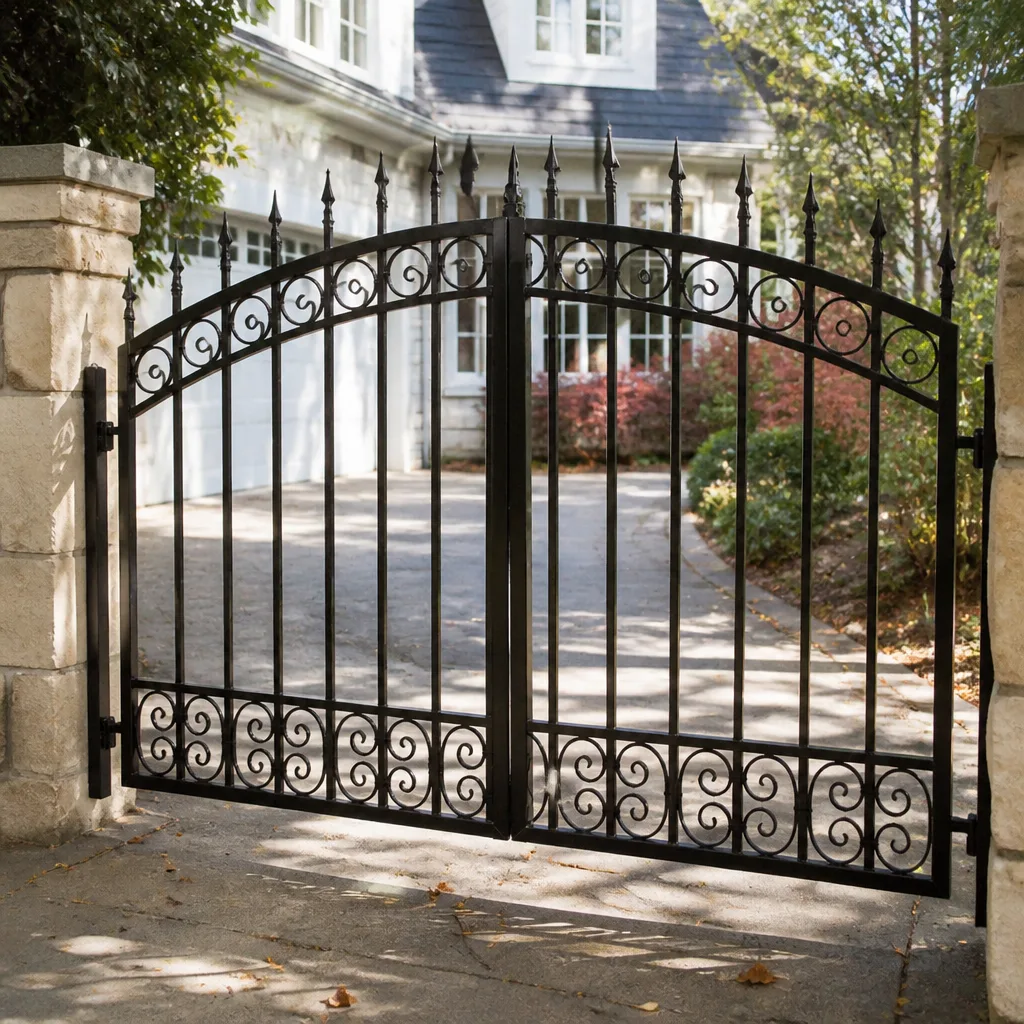 Wrought iron
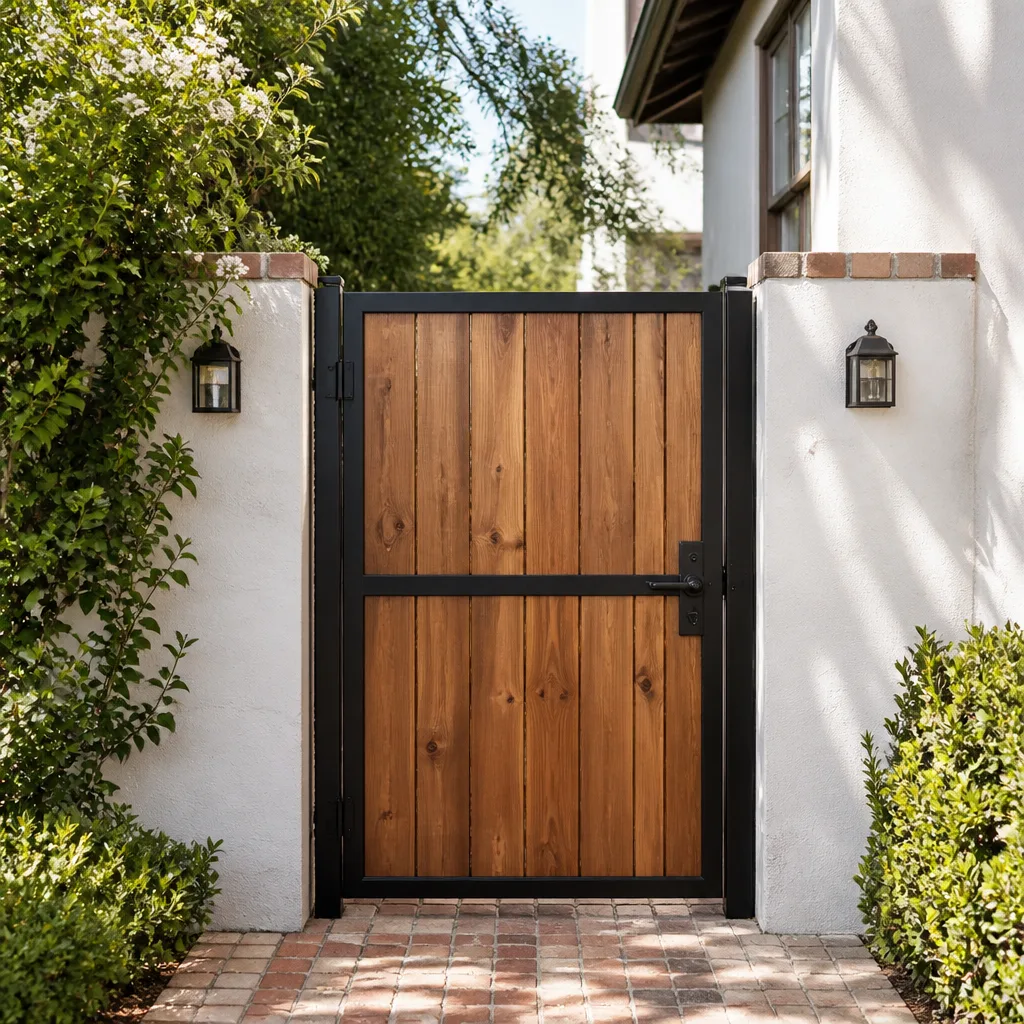 Wood & steel frame
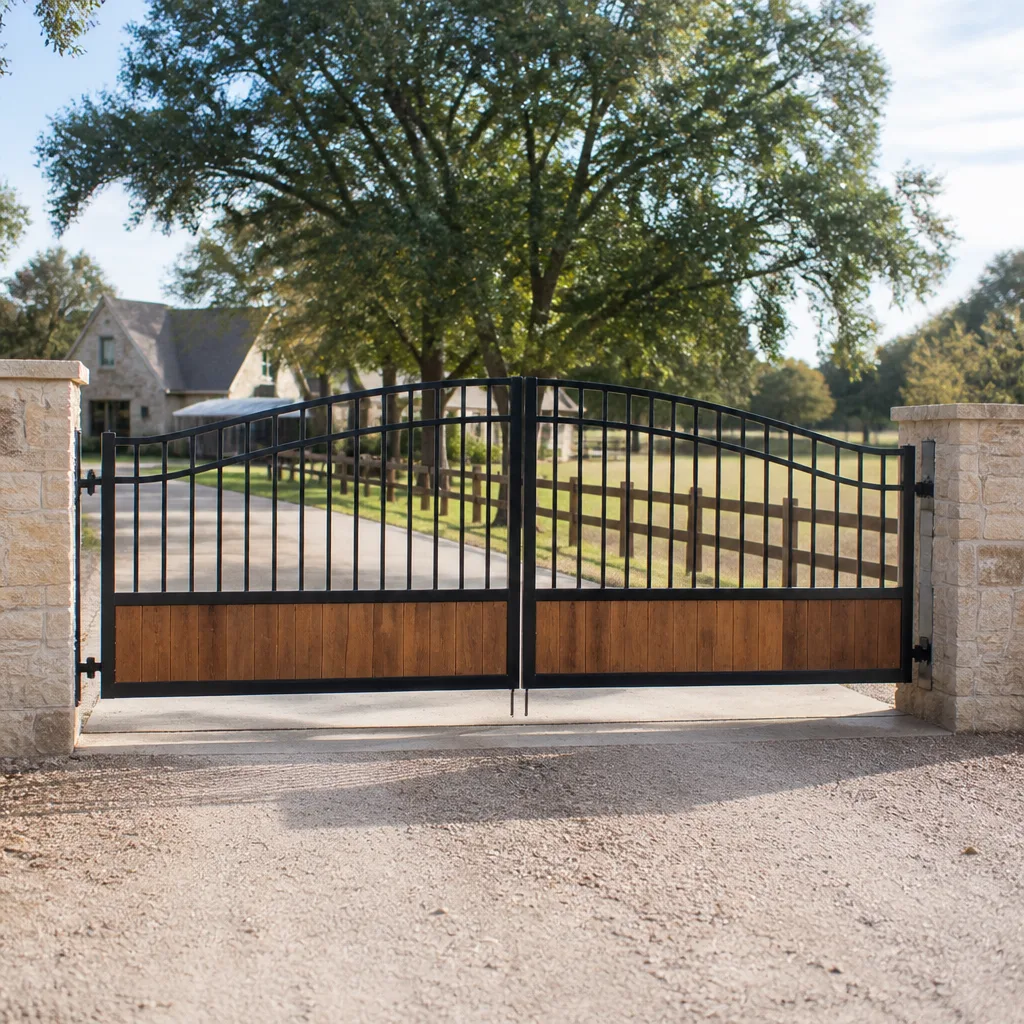 Farm & ranch
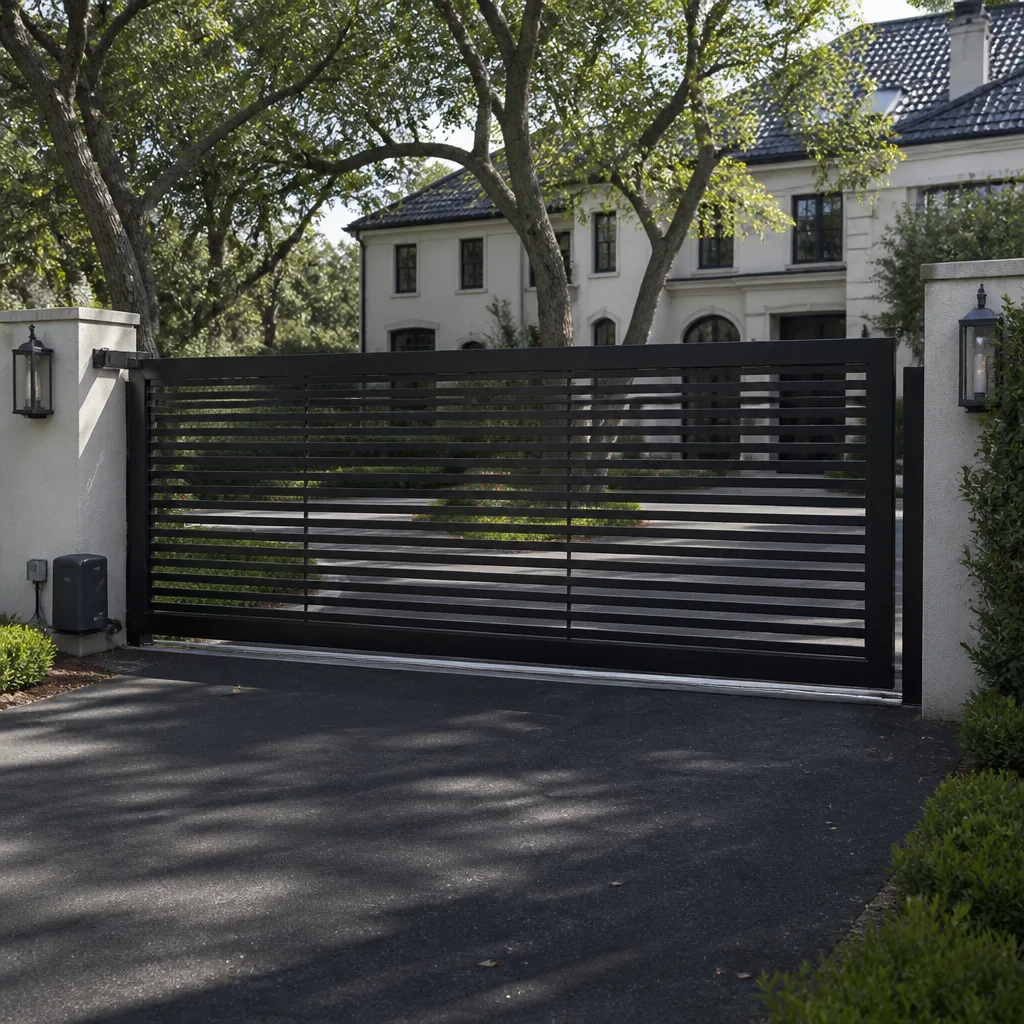 Sliding driveway gates
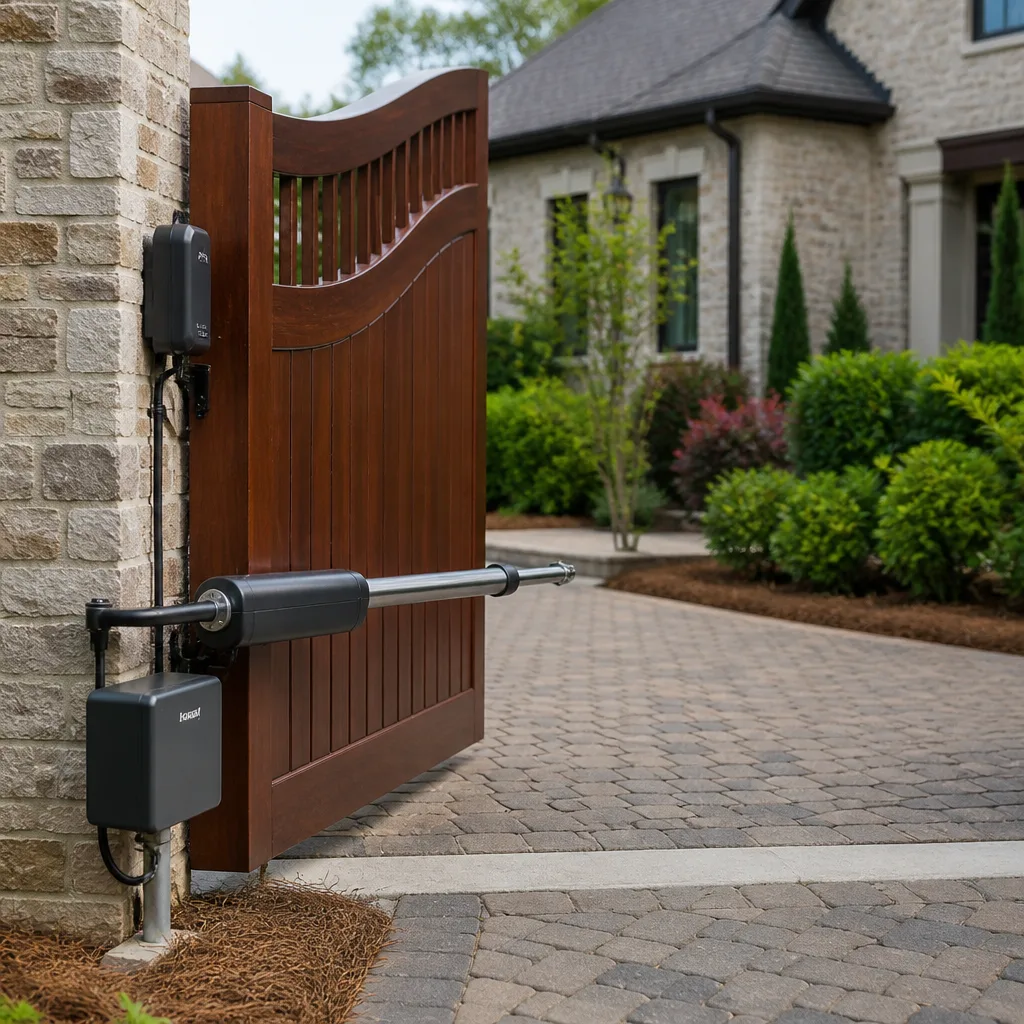 LiftMaster operators
Free on-site gate assessment - hinges, posts, and your LiftMaster or Nice gate operator checked before anything is quoted
The assessment is free and the quote is the invoice.
Get your free estimateThe Complete Gate Repair Guide for Whitney Homeowners
A gate that worked fine in a coastal California suburb will fail faster in Whitney. Caliche soil heaves posts differently than coastal clay, and the sun at this elevation degrades rubber and coating in ways a product warranty written in Ohio never accounted for. Most gate repair guides assume a mild climate and neutral soil, and neither exists here. This guide was written for the specific conditions of the Las Vegas valley: alkaline ground, temperature swings that cross 100°F between seasons, wind that never stops, and HOAs that want documentation. You’ll learn what actually fails first on a Whitney gate, what order repairs should be done in, and which problems cannot wait.
Quick Answer
Gate repair in Whitney usually starts with the posts, not the hardware. Caliche soil and seasonal temperature swings cause post footings to heave and shift, and once a post moves, hinges bind, latches misalign, and opener motors work against resistance they were never sized for. A correct repair fixes post integrity first, then hardware, then automation, so the same problem doesn’t return in six months.
Styles & brands we work with
- Wrought iron
- Wood & steel frame
- Farm & ranch
- Sliding driveway gates
- LiftMaster operators
Table of Contents
- Why Whitney’s Caliche Soil Breaks Gate Posts
- UV, Heat, and Coating Failures at Whitney’s Elevation
- Wind Load and What It Does to Gate Hardware
- The Repair Priority Order for Whitney Properties
- Which Repairs Are Time-Sensitive and Which Can Wait
- When the Problem Is the Opener, Not the Gate
- Documenting Your Gate for Insurance and HOA Records
- A Seasonal Maintenance Calendar for Whitney Gates
Why Whitney’s Caliche Soil Breaks Gate Posts
The soil under most of the Whitney and Las Vegas valley area is caliche: a calcium-carbonate-rich layer that hardens almost like concrete when dry and shifts unpredictably when saturated. A gate post footing set in caliche doesn’t just sit in the ground – it sits against a material that expands with summer irrigation and contracts hard in winter. That cycle, repeated across seasons, is what pulls posts out of plumb, cracks the concrete collar around the base, and eventually lets the whole post lean.
We’ve seen this pattern repeatedly in Whitney: a gate that swung clean in March starts scraping the ground by August. The hardware hasn’t failed. The footing has moved a half inch, and a half inch at the hinge side of a 12-foot gate translates to a full inch of drag at the latch. Homeowners often replace hinges, latches, and sometimes the whole opener trying to chase a symptom, when the repair that solves it is resetting and re-anchoring the post.
Alkaline soil also accelerates corrosion. Steel hinge plates, weld seams, and galvanized anchors in direct contact with Whitney’s soil chemistry oxidize faster than in neutral ground, and it shows up first at the bottom hinge and the post cap where water pools. If you notice chalky white deposits or rust bleeding out of a weld seam at the base, that section of steel is telling you it’s exposed to the soil cycle.
What to look for before assuming hardware is the problem:
- A concrete collar that’s cracked, tilted, or separated from the post.
- Visible lean in the post when you sight down its length against a fence line.
- A gate that swings freely in winter and drags in summer, or vice versa.
- White mineral deposits or rust staining at the base or bottom hinge.
- Fresh cracks in the driveway or walkway running away from the post footing.
If any of those are present, the repair priority starts with the post – resetting, re-leveling, or in some cases re-pouring a deeper footing set below the active soil layer. That depth matters here, and a contractor who sets posts at a mild-climate depth will watch them heave within a couple of seasons.
UV, Heat, and Coating Failures at Whitney’s Elevation
Whitney sits at roughly 2,000 feet of elevation, and UV intensity at that elevation is measurably higher than at sea level. Powder coatings, rubber weatherstripping, and the synthetic seals inside gate openers degrade faster here than the manufacturer warranty assumes. A powder coat rated for “five years” in a product spec sheet is often a three-year coating in Whitney. The sun is the reason.
The visible signs usually start at the top rail and the latch side – the surfaces that catch the most direct afternoon sun. Chalking, color fade, and fine cracking in the coating open the steel underneath to moisture, and once that starts, the corrosion inside the joint is harder to stop than surface rust. Rubber seals on openers crack and harden, letting in dust that wears the internal gears. Driveway gate motors rated for a certain duty cycle run hotter in Whitney’s summer, which shortens motor life and can trigger thermal cutoffs.
What to check each spring and fall:
- Run a hand along the top rail: chalky residue means the clear coat is failing.
- Look for spiderweb cracks in the powder coat, especially at weld seams and corners.
- Inspect the opener’s rubber gasket and any weatherstripping for hardening or cracking.
- Check the control box for sun-cracked plastic or faded keypad buttons.
- Test the opener during the hottest part of the day – if it hesitates or trips a thermal safety, the unit is working too hard or running too hot.
Touch-up, re-coating, and replacing seals are among the cheapest repairs you can make in Whitney, and they’re the ones most often skipped. The alternative is a gate that needs full refinishing years before it should. When coatings have already failed to bare steel, a proper weld-and-refinish job from a gate specialist will outlast another coat of spray paint by a wide margin.
Wind Load and What It Does to Gate Hardware
Whitney’s wind is constant enough that it’s worth treating as a structural force, not a nuisance. Spring gusts push against a solid-panel driveway gate like a sail, and every push loads the hinges, the latch, and the opener arm. Repeated loading is what wears hinge pins, elongates latch strike plates, and forces an opener to work against a moving target – the gate itself flexes slightly in wind, and an opener sized for a calm-climate install will labor against that flex.
Slatted and picket gates pass wind through and suffer less, but they still take a beating at the latch and the top hinge. We see two patterns repeatedly in Whitney:
- Hinge wear at the top and bottom pins on solid gates, with the middle hinge often still tight. That’s a wind-load signature, not a normal wear pattern.
- Opener strain where the gate is solid and the operator is a lightweight arm style sized for a smaller gate than the wind actually presents.
If your gate has had three or more hinge replacements in five years, the right move is to look at the load path, not just the hinge itself. Sometimes the fix is a heavier hinge plate or a reinforcing strap welded across the hinge side. Sometimes it’s upsizing the opener to something that can handle wind load without stalling, and a brand like FAAC or BFT will have a model rated for the size and panel style you have. This is where a specialist’s training across multiple gate-automation brands saves you from a guess that gets re-done. If the opener itself is the weak point, our page on Gate Motor & Opener in Whitney goes into selection and sizing.
The Repair Priority Order for Whitney Properties
The most common mistake Whitney homeowners make is starting a repair from the top of the gate and working down. The correct order is the reverse, and it saves real money:
- Post integrity first. Check plumb, footing condition, and corrosion at the base. A post that moves will undo every other repair you make.
- Structural steel second. Weld seams, frame joints, hinge plates, and the gate’s frame itself. Cracks, bending, or separation need to be addressed before hardware is re-hung.
- Hardware third. Hinges, latches, rollers, stops, and strike plates. With a straight, stable gate, hardware swaps are quick and stay put.
- Automation and access control last. Once the gate is level, square, and swinging on aligned hinges, the opener and keypad can be dialed in to actual conditions rather than compensating for a leaning gate.
This order is especially important because automation installs are usually the most expensive line item. A homeowner who calls about a straining opener sometimes finds the opener was fine all along and the gate was binding at the hinge. Conversely, an opener that’s been forced to work against a dragging gate often needs replacement even after the gate is fixed, because the motor and gears have taken damage. Do the structure first, then hardware, then automation, and there’s no wasted spend.
We’ve found that most Whitney properties get through the first three steps in a single visit. The upfront price is settled before any work starts, and the price you agree to is the price you pay. If we open the control box and find a problem we didn’t expect, we tell you and quote it – we don’t add a surprise to the invoice.
Which Repairs Are Time-Sensitive and Which Can Wait
Not every gate problem is urgent, but in Whitney’s climate a few really are. Sorting them correctly protects both your property and your wallet.
Time-sensitive in Whitney:
- A leaning post that swings a gate into a vehicle or pedestrian path. The gate can drop without warning if the footing keeps moving.
- A gate that stopped closing reliably while an opener is still trying to move it. The motor will keep forcing against the obstruction until gears fail, turning a hardware repair into an opener replacement.
- Any failure that leaves the property unsecured, including a gate that won’t latch at night.
- Broken hinge plates or cracked weld seams at the frame – a weld failure can go from hairline crack to full separation in a single wind event.
- Opener overheating, tripping the safety reversal, or failing to close all the way. A gate that reverses unpredictably is a safety issue, and it needs the same-day attention as any other.
Can wait for a scheduled visit:
- Cosmetic coating fade, chalking, or minor rust touch-up.
- A sluggish swing that still works, where no post movement is present.
- Keypad battery replacement and routine code changes.
- Seasonal lubrication and an annual tune-up, which is less expensive and much less stressful when it’s on the calendar rather than an emergency.
If a post is visibly leaning or a hinge is separating, don’t wait for a convenient week. Call for a same-day assessment. If you’re unsure whether your gate fits the urgent list, our Gate Repair in Whitney page covers the triage and offers a free second opinion on any written estimate.
When the Problem Is the Opener, Not the Gate
Roughly half the “the gate won’t work” calls we take in Whitney turn out to be a gate problem wearing an opener costume. The other half are genuinely opener problems, and those require someone trained on the specific make. Ironworks technicians are trained and equipped on nine gate-automation brands, including FAAC, BFT, Linear, Viking, and others, so the diagnosis is made on the first visit regardless of what’s mounted on your post. That matters because a generalist will often recommend replacing the whole unit when the real fault is a worn drive gear on a Linear or a misread safety sensor on a Viking.
Signs to look for in the opener itself:
- Motor runs but the gate doesn’t move, or moves with a grinding sound – mechanical drive wear.
- Opener heats up quickly and shuts down in the afternoon rather than the morning – thermal cutout from overwork or a failing fan.
- Gate reverses on its own mid-cycle, especially in strong wind – safety sensor or load sensor trip.
- Buttons on the keypad or remote work intermittently – low battery or signal interference.
- Gate stops partway and needs a nudge to finish – limit switch or encoder issue.
Each of those is a specific repair, and none is a “replace the whole opener” answer. If we do find the opener needs replacement, we’ll quote the exact unit and the install before any work is booked. When the gate and the operator both need work, our Gate Installation in Whitney page covers what a full replacement involves for Whitney properties.
Documenting Your Gate for Insurance and HOA Records
Whitney’s HOA-heavy neighborhoods want documentation, and so does a homeowner’s insurance policy. If a wind event bends a gate into a parked car or a gate fails and damages property, the difference between a smooth claim and a contested one is usually a dated record of the gate’s condition before the incident. Building that record is simple and you can do most of it yourself.
A basic gate condition file should include:
- Dated photographs of the full gate from both sides, plus close-ups of each hinge, the latch, the post bases, and the opener’s serial plate.
- A written note of any existing damage, lean, rust, or paint failure, with the date you observed it.
- Receipts and reports from any repair or service work, including the original install paperwork if you have it.
- The opener’s make, model, and approximate install date.
- Your HOA’s gate-related rules on file, including any color, height, or set-back requirements.
When a gate specialist performs a repair, ask for a written report of what was found and what was corrected. Our written 90-Day Done Right Promise is the guarantee on the work itself, and the documentation that comes with a completed job gives you a dated record that insurance and HOA claims can use. A small effort now prevents an argument later, and in Whitney’s wind and heat, that argument is more likely than most homeowners expect.
A Seasonal Maintenance Calendar for Whitney Gates
A gate that gets attention twice a year will outlast one that gets attention only when it breaks. Here is a schedule built around Whitney’s actual climate rather than a generic one.
Spring (March – May):
- Walk the post line and check for lean or collar cracking after winter moisture.
- Test the opener during midday heat to catch thermal issues early.
- Inspect rubber seals and weatherstripping for hardening from winter sun.
- Schedule any coating touch-up before summer glare hits the top rail.
Summer (June – August):
- Monitor the opener for stalling or thermal cutouts during the hottest part of the day.
- Keep the track and hinge points lubricated with a product rated for high heat.
- Watch the gate’s swing – a post that swells in the heat is easier to catch early.
Fall (September – November):
- Re-check post plumb before winter.
- Clear the opener control box of any dust accumulation.
- Test the safety sensors and the manual release.
- Book a seasonal tune-up if you haven’t had one this year.
Winter (December – February):
- Check for water pooling at the post base after any rain.
- Test everything once, note any change from fall, and file the note with your documentation.
Our $89 seasonal tune-up is built around that twice-a-year rhythm, and it’s the most reliable way to catch a post issue before it becomes a hinge problem and a hinge problem before it becomes an opener replacement.
Common Mistakes to Avoid
- Replacing hinges on a leaning gate. New hinges on a moving post won’t fix the drag, and the second set will wear just as fast. Fix the footing first.
- Setting posts at a mild-climate depth. Whitney’s caliche moves deeper than coastal soil, and a post set short will heave within a season or two.
- Assuming the opener is the problem when the gate is binding. If the gate drags when you move it by hand, the motor isn’t the fault, and replacing it wastes money.
- Ignoring coating failure until the steel is bare. UV at Whitney’s elevation eats powder coat faster than the warranty assumes; catching chalk and hairline cracks early is far cheaper than refinishing later.
- Booking a generalist for a brand-specific opener. A technician unfamiliar with FAAC, BFT, Linear, or Viking will often recommend replacement when a specific component is the real fault.
- Skipping the documentation file. A dated record of your gate’s condition is what turns an insurance claim from an argument into a routine approval.
- Running a failing opener on a dry track. A gate that’s binding and dry will force the opener to overwork, and the motor usually gives out before the gate does.
See the difference
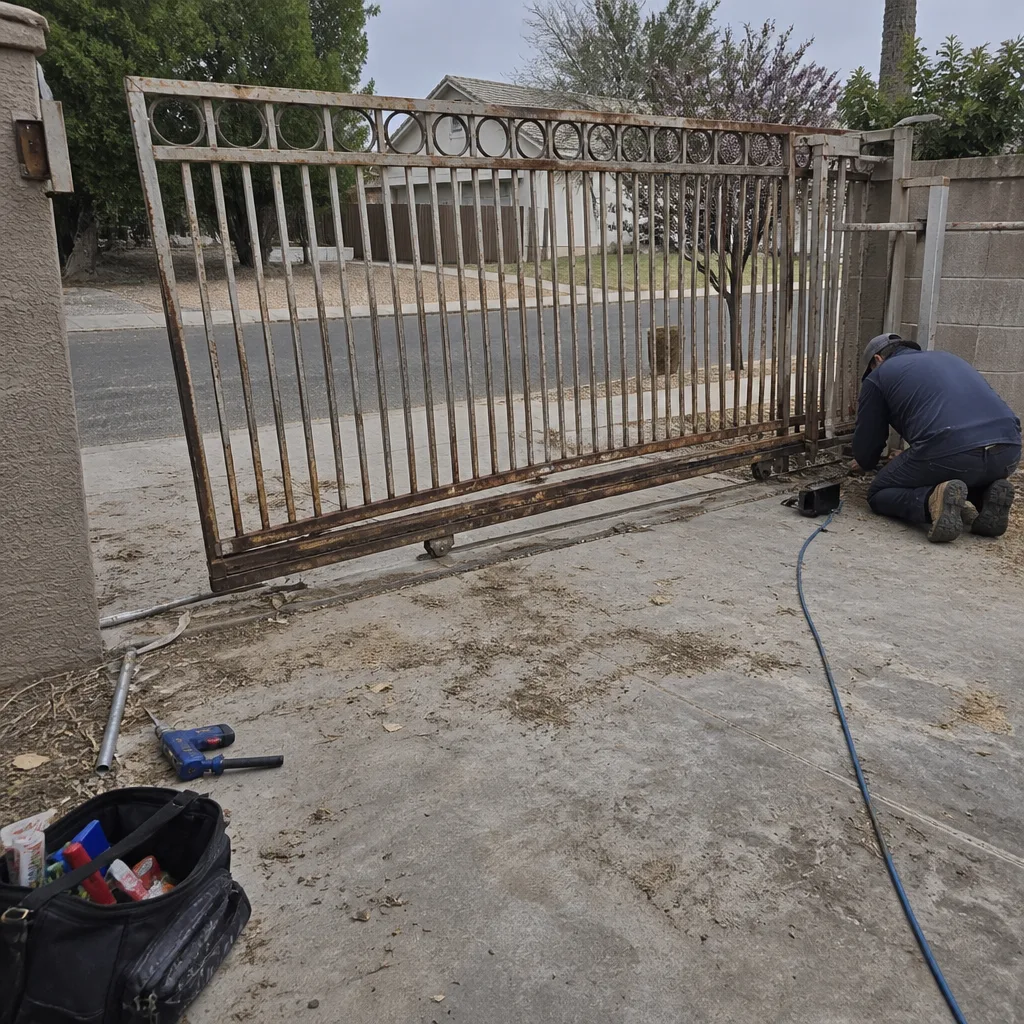 Before
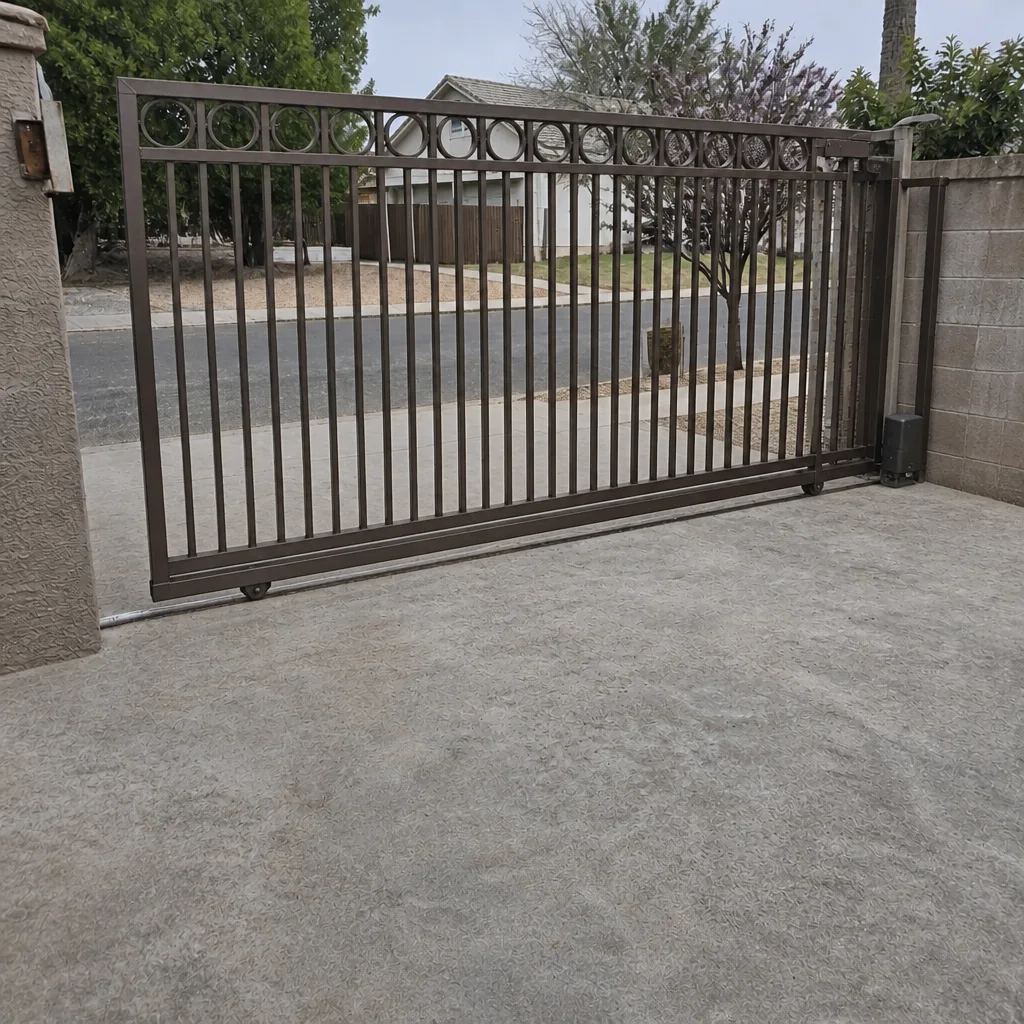 After
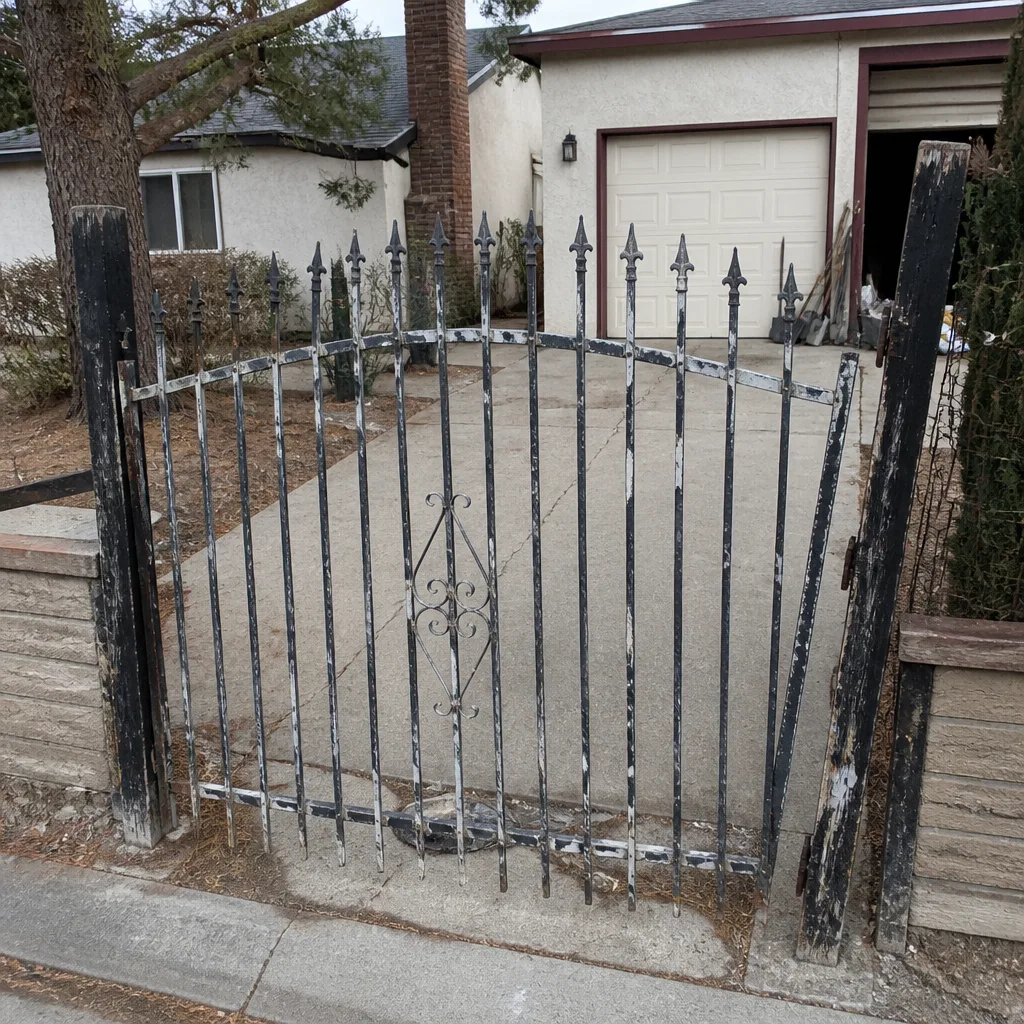 Before
 After
 Before
 After
When to Call a Professional
Call a professional when a post is leaning, a weld seam has cracked, a hinge plate has separated, or the opener is stalling, reversing on its own, or shutting down in the heat. Those are the conditions where a wrong repair makes the next one more expensive, and where our 90-Day Done Right Promise means you’re covered in writing if anything isn’t right. High-tension springs and heavy counterbalances on a driveway gate carry stored energy that can cause serious injury, so leave those to a trained technician rather than adjusting them yourself. If you’re unsure whether your situation is urgent, that’s a reason to call as well – a quick conversation usually settles it. Ironworks Gate Co. Whitney offers free estimates in Whitney and a free second opinion on any written estimate you already have. Call (855) 928-1304 and a live person will answer, day or night.
Frequently Asked Questions
Most Whitney gate repairs fall between $180 and $650, and the biggest variable is whether the post needs work. Hinge and latch repairs sit toward the low end, post resetting and weld repair in the middle, and opener or automation work toward the top. We quote the exact price before any work starts and the agreed price is what you pay. Call (855) 928-1304 for an exact quote – estimates are free.
We handle same-day calls on urgent gate problems in Whitney, including a gate stuck open, a post that’s leaning, or an opener that won’t close the gate. We also answer live 24 hours a day, so calling at 9 p.m. reaches a person rather than a voicemail. Call (855) 928-1304 to confirm same-day availability for your address.
Whitney’s caliche soil, high summer heat, strong wind, and elevation-driven UV all attack a gate on a different schedule than a milder climate would. Posts heave, powder coat chalks faster than warranty ratings assume, and wind load wears hinge hardware before the gate’s expected lifespan. A gate that’s cared for on a Whitney schedule – seasonal checks plus prompt repair – avoids the worst of it.
Our technicians are trained and equipped on nine gate-automation brands, including FAAC, BFT, Linear, Viking, LiftMaster, Ghost Controls, DoorKing, Elite, and Mighty Mule. That means the correct fix is made on the first visit regardless of what’s mounted on your post. Call (855) 928-1304 and tell us the brand and model if you know it.
A proper Whitney installation includes footings set to depth for caliche soil, a gate frame built to handle wind load, powder coating chosen for high UV, and opener and access control sized to the actual gate. Because posts are set and concrete needs to cure, installation is measured, ordered, and scheduled rather than same-day. Call (855) 928-1304 for a free measure and a written price.
Yes, we handle the electrical supply run to the operator, the safety reversing edges, and the access control wiring as part of an installation or a full automation upgrade. Those items are scoped and quoted in advance so you know exactly what’s included before the work is booked. Call (855) 928-1304 to schedule a free on-site measure.
The Bottom Line
Whitney’s climate treats gates differently than the rest of the country, and the repairs that work here start from the ground up: posts first, hardware second, automation last. Caliche soil, elevation-driven UV, and constant wind are the three forces that wear a gate fastest, and each has a specific early warning that a homeowner can watch for in a twice-a-year check. When work is needed, the upfront price is agreed before a bolt is turned, the 90-Day Done Right Promise covers it in writing, and a live person answers the phone any hour. The right repair, done once, is the one you never think about again.
For gate service in Whitney, visit Ironworks Gate Co. Whitney home or call (855) 928-1304 for a free estimate and a straightforward conversation about what your gate actually needs.
Written by the team at Ironworks Gate Co. Whitney.