
Last updated November 17, 2026
 Wrought iron
 Wood & steel frame
 Farm & ranch
 Sliding driveway gates
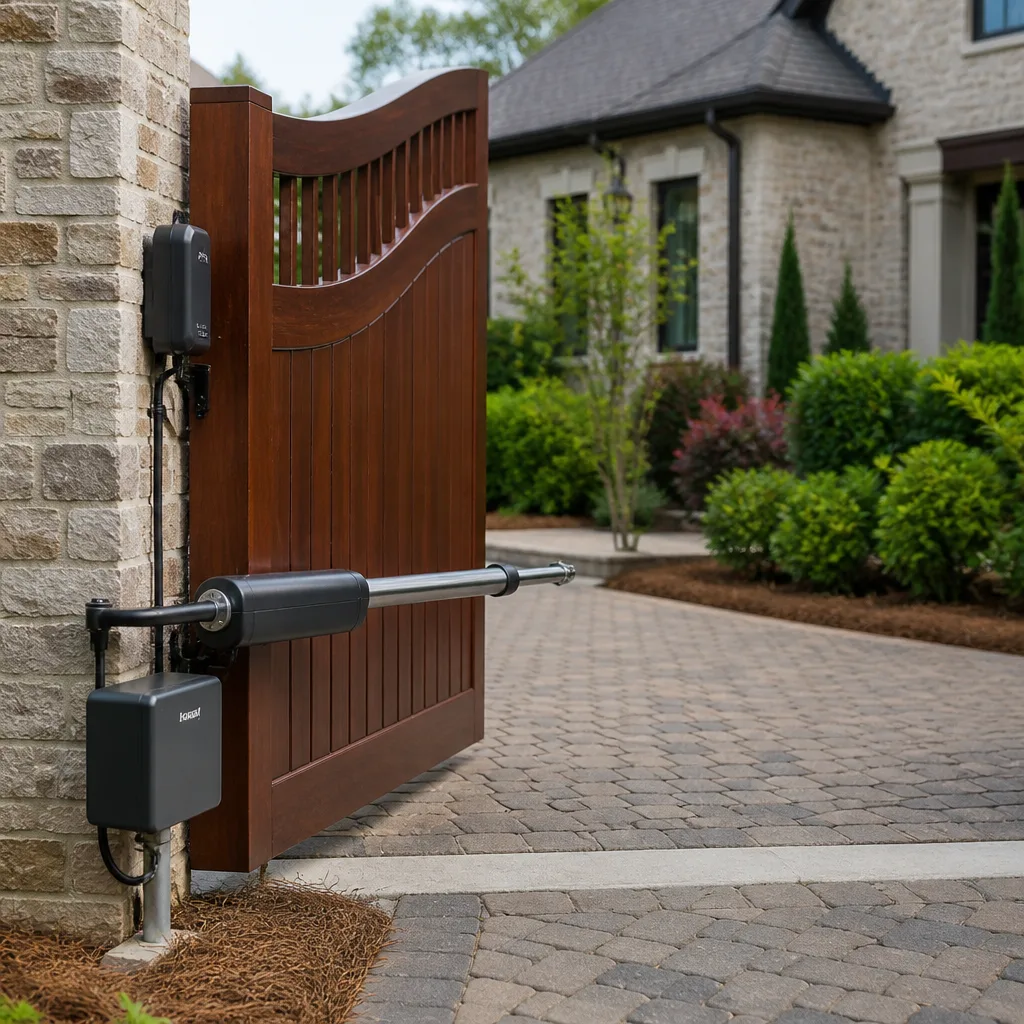 LiftMaster operators
Free on-site gate assessment - hinges, posts, and your LiftMaster or Nice gate operator checked before anything is quoted
The assessment is free and the quote is the invoice.
Get your free estimateGate Motor & Opener Maintenance Schedule: What to Do and When
Most gate opener manuals publish maintenance intervals for an average climate that doesn’t exist here. A FAAC or BFT operator installed in Whitney spends July working through 105°F afternoons, and that heat breaks down lubricants roughly three times faster than those printed intervals assume. A motor serviced on the factory calendar can sit through two Whitney summers before anyone looks at the chain, and by then the wear is already done. This guide walks through a maintenance schedule built for Whitney’s actual seasons: what to check in spring before the heat arrives, what to watch in midsummer, what to assess in fall, and what to do to make the motor survive to next June. You’ll get named lubricants, realistic time estimates, and the electrical checks most homeowners never think about.
Quick Answer
A gate opener in Whitney needs a light inspection every three months, a full lubrication service twice a year (late spring and late fall), and a professional electrical and safety check once a year before summer. The schedule should follow Whitney’s seasons rather than the manufacturer’s generic annual interval, because summer heat cooks the lubricant on the chain and rack gear well before a calendar-year service comes due.
Styles & brands we work with
- Wrought iron
- Wood & steel frame
- Farm & ranch
- Sliding driveway gates
- LiftMaster operators
Table of Contents
- Why Whitney’s Climate Breaks the Standard Schedule
- Pre-Summer Heat Prep: The Most Important Service of the Year
- Mid-Summer Inspection: What to Watch When It’s 105°F
- Post-Summer Assessment: Reading the Damage
- Winter Readiness: The Short, Cheap Tasks That Prevent Spring Failures
- The Right Lubricant in the Right Place: A Named Guide
- The Electrical Checks Homeowners Overlook
- Keeping a Log: Why the Record Shortens Every Future Service Call
Why Whitney’s Climate Breaks the Standard Schedule
Gate opener manufacturers build their service intervals around an average annual temperature somewhere in the 60s and a climate where the motor runs without much thermal stress. Whitney is not that climate. From late May through September, a gate operator lives in an enclosure that can hold 130°F or more in direct sun. The chain, the rack gear, and the hinge pins lose their film of lubricant far faster than the manual anticipates.
We’ve seen this play out repeatedly in Whitney. A Linear or Viking operator that should give eight to ten years runs into a seized chain or a stripped rack gear at year five, because nobody relubricated it during the third summer. The motor itself is usually fine. The mechanical linkage around it is what fails.
There’s a second climate factor: the swing between seasons. Whitney winters get cold enough at night to stiffen grease and shrink metal, then warm back up by midday. That thermal cycling works hinge pins and bolts loose. Spring and fall are the two moments the gate tells you what the summer did to it, which is why the schedule below splits the year into four blocks instead of two.
If you’re already seeing symptoms rather than planning ahead, a gate repair service in Whitney can catch the mechanical wear before the motor burns out trying to push a stuck gate.
Pre-Summer Heat Prep: The Most Important Service of the Year
Late April through May is the single highest-value maintenance window on the Whitney calendar. Everything you do here buys you through August. Skip it and the motor works the hottest months of the year with whatever lubricant survived last summer, which is usually none.
This is a 60- to 90-minute job if done properly:
- Clean the chain and rack gear first. A brass-bristle brush and a rag to remove built-up grit, old grease, and oxidation. This step takes 15 minutes and the lubricant you apply afterward will actually stay put.
- Apply chain lubricant by name. A dedicated chain and open-gear lubricant that stays where it’s sprayed, not a general-purpose spray. Apply along the full travel of the chain, then run the gate through two complete open/close cycles to distribute it.
- Lubricate hinge pins and roller hardware. White lithium grease on the hinge pins and the roller hardware. 5 to 10 minutes. Don’t skip it; a stiff hinge puts load straight onto the motor.
- Check the chain tension. A chain with more than about a half inch of slack on the chain run needs adjustment. Loose chains slip and jump the sprocket.
- Test the manual release. Open and close the gate by hand with the motor disengaged. The gate should move with steady resistance, not free play and not binding. If you can’t move it by hand comfortably, the motor is fighting something and it will burn out in July.
- Inspect for corrosion at the terminal block. Green or white build-up on the terminal connections is the first sign of the electrical gremlins coming.
For customers on the nine brands we service (LiftMaster, FAAC, BFT, Linear, Viking, Ghost Controls, DoorKing, Elite, Mighty Mule), the spring service also includes brand-specific checks – a FAAC control board and a Mighty Mule DIY-grade operator need very different attention here. If the motor itself is showing early signs of failure rather than just needing service, the gate motor and opener specialists in Whitney can tell you whether it’s a service job or a replacement.
Mid-Summer Inspection: What to Watch When It’s 105°F
July and August in Whitney are not the time for heavy service work. It’s the time for a 15-minute inspection on a cool morning, before the heat arrives. You’re not fixing anything; you’re catching failures early while the parts are cheap.
Run through this list every couple of weeks in summer:
- Listen to the motor on the first cycle of the day. A healthy operator sounds the same at 6 a.m. in July as it did in April. A grinding, whining, or laboring note means something’s binding or the motor is overheating. Stop and call before it seizes.
- Feel the motor housing after an open cycle. Warm is normal. Hot enough that you can’t hold your hand on it is not. Enclosure heat is the number one asset-killer on Whitney gates.
- Check for shade. If the operator sits in full afternoon sun, consider a small shade panel or a hedge – not something bolted to the motor, just anything that keeps the direct sun off the enclosure.
- Look at the chain for visible dry spots. If the lubricant has already cooked off by early July, a light re-application is a 5-minute job that buys two more months.
- Test the safety edges once a week. Press the edge – the gate should reverse. A safety edge that doesn’t reverse is a safety problem, not an inconvenience.
- Walk the track or the swing path. Debris, blown sand, and the occasional rattlesnake all show up in Whitney gates in summer. Clear the travel path.
If the motor is hot, grinding, or refusing to complete a cycle, shut it off at the breaker and call us. Running a hot motor is the most expensive mistake we see in July. A replacement motor is a few hundred dollars; a burned-out control board and motor is several times that.
Post-Summer Assessment: Reading the Damage
September and early October are the audit window. Everything you learned in the spring gets tested. This is a 90-minute to two-hour full service, and it’s the one we recommend hiring out for convenience and completeness, because it involves opening the enclosure and checking the control board.
Post-summer tasks:
- Full relubrication of the chain, rack gear, and hinge pins. The same procedure as spring, because summer has eaten the spring application.
- Inspect the chain for stretched links. A chain that has stretched beyond about 1/8 inch across a 12-inch span needs replacement. Stretched chains are the failure mode behind most sprocket damage.
- Inspect the rack gear for wear on the teeth. If the teeth are visibly rounded or have developed flat spots, that’s the summer talking. A worn rack gear will eventually tear up the pinion on the motor.
- Open the control board enclosure and check for heat damage. Look for discolored circuit traces, capacitors that have swelled at the top, or terminals that have loosened. A 5-minute check catches 80% of board failures before they happen.
- Clear the weep holes at the bottom of the enclosure. A clogged weep hole is why control boards fail after a two-inch rain. They’re small slots or slots with foam covers; a paperclip clears them.
- Test the battery backup under load. Not just “is it there,” but disconnect the AC and run the gate for a full open/close cycle. A healthy battery runs at least three cycles. A marginal battery may fail on the first cold morning.
- Check the photo-eye alignment. Whitney summer sun angles have a habit of blinding the photo-eye in the middle of the afternoon. Clean the lenses and re-aim if needed.
If any single item on this list turns up a real problem, get a quote before the winter months. A free gate service estimate in Whitney in October is cheaper than an emergency call in February.
Winter Readiness: The Short, Cheap Tasks That Prevent Spring Failures
Whitney winters are mild compared to most of the country, but night temperatures in the 30s still stiffen grease and contract metal. The winter tasks are quick – 30 to 45 minutes total – and they prevent the spring failure list.
- Switch to cold-weather-appropriate grease on hinge pins. A general-purpose white lithium grease becomes tacky and resistant in the cold; a light synthetic grease applied in late November handles the night-to-day swing better. 10 minutes.
- Check that the emergency manual release still works. If the motor dies in February, you need to be able to open your gate by hand. Test it, lubricate the release mechanism, and re-engage. 5 minutes.
- Inspect the battery backup connections for corrosion. Cold weather weakens an already-weak battery. 10 minutes.
- Tighten any loose mounting bolts on the operator. Expansion and contraction works bolts loose over a season. A quick turn on every visible fastener. 10 minutes.
- Clear the drain path around the enclosure base. Winter rain accumulates around the concrete pad. A clogged drain path is how control boards flood. 5 minutes.
Winter is also when the gate gets the least use in Whitney homes – which means a real problem caught in December sits dormant until March. A 30-minute winter check turns a $150 emergency into a $40 service item.
The Right Lubricant in the Right Place: A Named Guide
Using the wrong lubricant causes the exact failure you’re trying to prevent. Here’s what goes where:
- Chain: A dedicated chain and open-gear lubricant. Common brands like WD-40 Specialist Chain Lube or a chain-and-roller specific formulation. Avoid WD-40 in the blue-and-yellow can, which is a solvent and will strip lubricant rather than replace it. Avoid heavy axle grease, which attracts grit and forms an abrasive paste.
- Rack gear: A dry-film or chain-and-gear lubricant that won’t hold grit. Same product as the chain is usually fine. Do not use grease.
- Hinge pins and roller hardware: White lithium grease or a synthetic multi-purpose grease. Use sparingly and wipe off the excess. Excess grease on the hinge pin attracts dust and turns into a grinding paste.
- Control board terminal block: No lubricant. Clean with a contact cleaner and leave dry. Anti-corrosion spray on the terminals is fine, but never a grease-based product.
- Motor gearbox: The gear oil in a sealed gearbox is filled at the factory and not user-serviceable. If the housing is leaking, that’s a service call, not a top-off.
The one product to never use on any gate opener: silicone spray in place of a proper lubricant. It feels slippery when first applied but evaporates within weeks and leaves you worse off. This is the single most common mistake we correct in Whitney homes.
The Electrical Checks Homeowners Overlook
Most gate opener failures are electrical, not mechanical. Three checks catch the vast majority:
- Terminal connections for corrosion. Open the control board enclosure and look at the terminal block. Green, white, or blue-green build-up is copper corrosion, and it raises resistance on every connection. A 5-minute visual check with a flashlight catches it. If you see corrosion, a technician can clean and re-seal the terminals.
- Weep holes in the enclosure. Water ingress is the number one cause of dead control boards. The enclosure has small drain slots – if they’re blocked with spiderwebs, debris, or dried mud, water pools at the bottom of the enclosure and finds its way to the board. Clear them once a season.
- Battery backup under load. Disconnect the AC power, and run the gate through two complete open/close cycles. It should complete both cycles. A battery that won’t complete one cycle is failing; replace it before winter. On most residential operators the battery is a sealed lead-acid unit that lasts three to five years.
If you’re not comfortable opening the control board enclosure – and if it’s inside a sealed operator housing, you shouldn’t be – the electrical checks are part of the seasonal service. Never open the operator housing while AC power is on, and never touch the motor capacitor without discharging it first. Capacitors hold a charge after the breaker is off.
If the electrical system is beyond a maintenance check and into gate access control territory – keypads, intercoms, or remote systems that have stopped working – a gate installation consultation in Whitney covers the electrical integration as part of the assessment.
Keeping a Log: Why the Record Shortens Every Future Service Call
The single most useful habit a Whitney gate owner can build: keep a log. A spiral notebook in the kitchen drawer or a note on the phone, whichever is easier. Record the date of each inspection, the tasks performed, and any symptom you noticed (“motor sounded louder in July,” “chain had slack in August,” “safety edge reversed slower after Thanksgiving”).
The log does three real things. First, it tells your service technician what’s been done and when, which turns a 90-minute service call into a 60-minute one. Second, it catches patterns – a motor that needs relubrication every other month instead of every six months is telling you the gate is misaligned or the operator is undersized for the gate. Third, when something does fail, the log shows whether the failure is coincidental or cumulative.
We’ve worked on gates where the owner’s notebook saved us twenty minutes of diagnosis. We’ve worked on the same gate model and same gate weight in Whitney where the owner kept nothing and we had to start from zero. The difference is real.
Common Mistakes to Avoid
- Using generic spray lubricant on the chain. WD-40 in the standard can strips lubricant. Use a proper chain-and-gear product and the chain will last years longer.
- Servicing on the manufacturer’s calendar. Whitney’s climate eats lubricant three times faster than the manual’s average. Spring and fall service is the minimum; spring-only is asking for a summer failure.
- Skipping the weep holes. A 30-second task that prevents the $400 control-board replacement that floods cause.
- Ignoring the manual release. The one time you need it is when it’s seized. Test it every season.
- Running a hot motor. If the motor is hot enough to burn your hand, stop. The motor may survive; the control board won’t.
- Greasing the hinge pins with axle grease. It attracts grit and forms an abrasive paste. White lithium, sparingly.
- Not keeping a log. Every future service call starts from zero without one, which costs both your time and your wallet.
See the difference
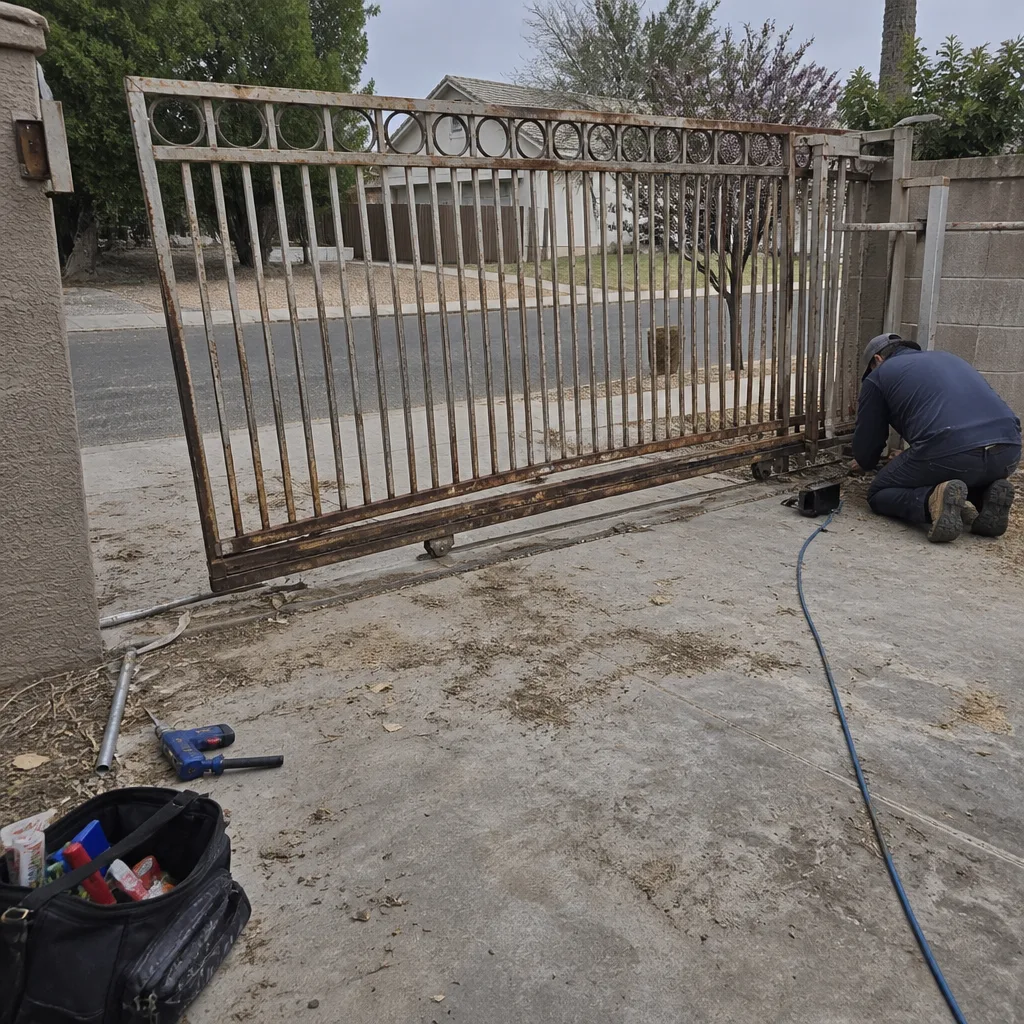 Before
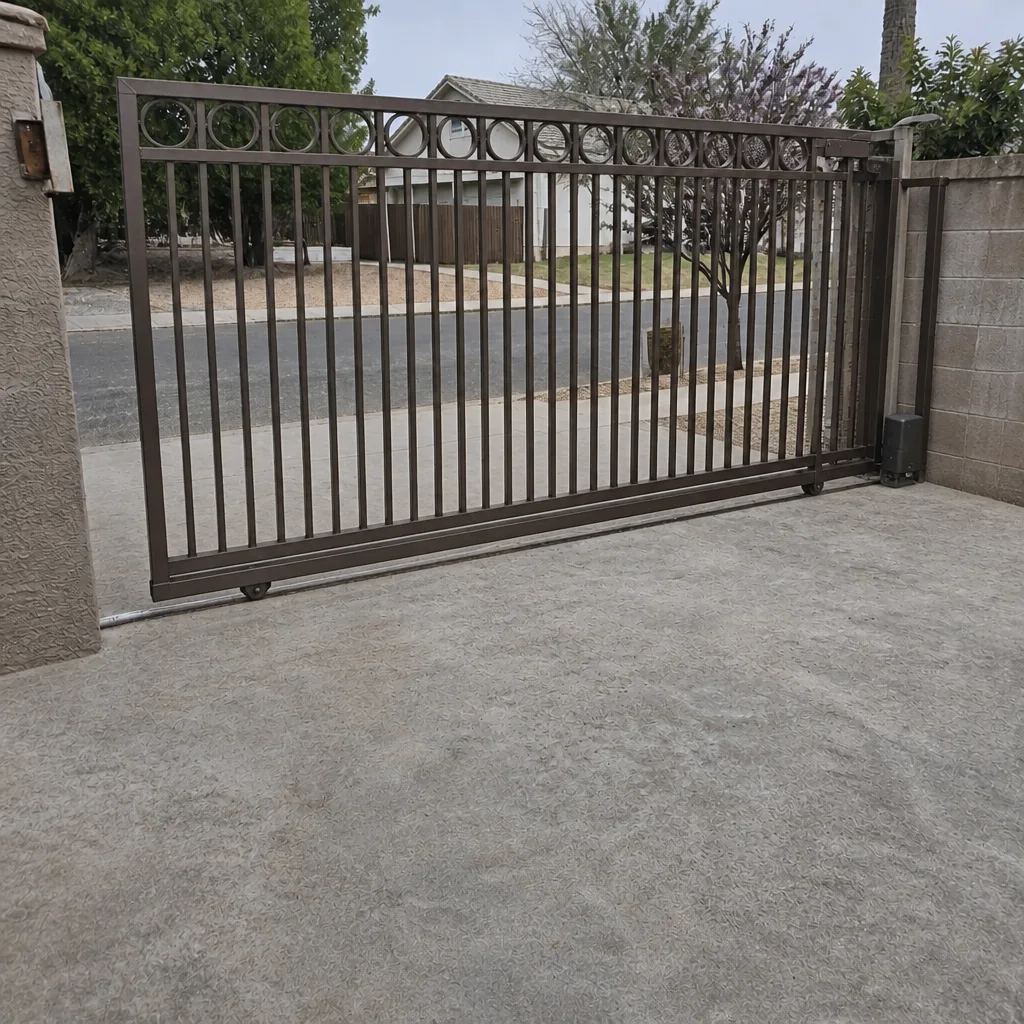 After
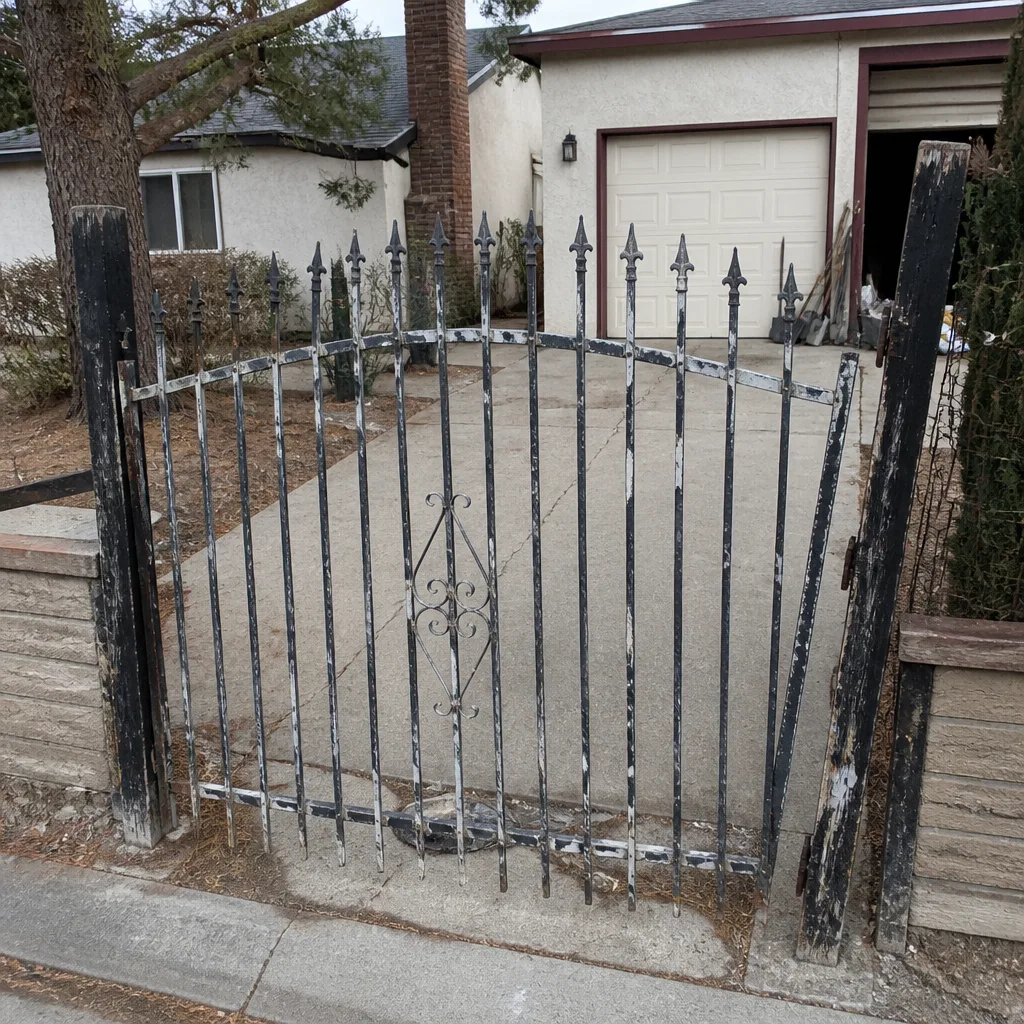 Before
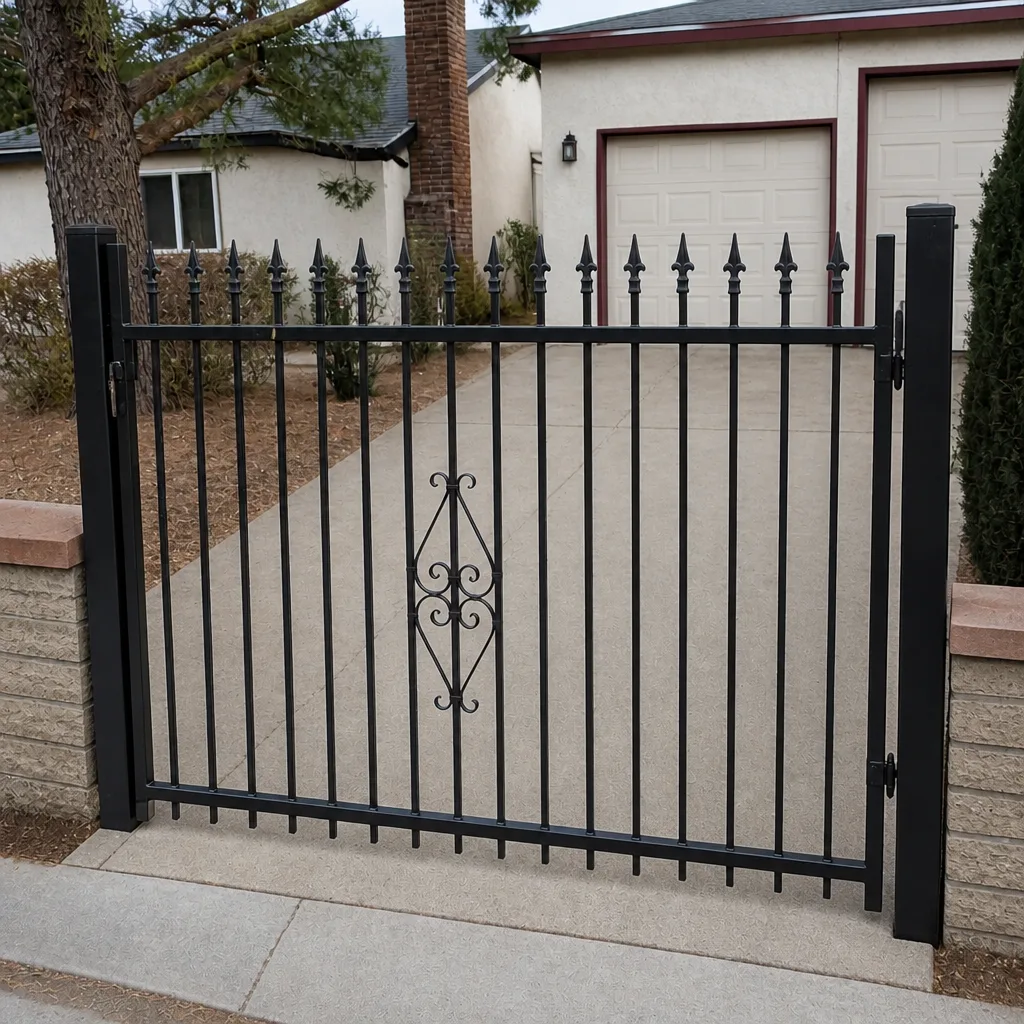 After
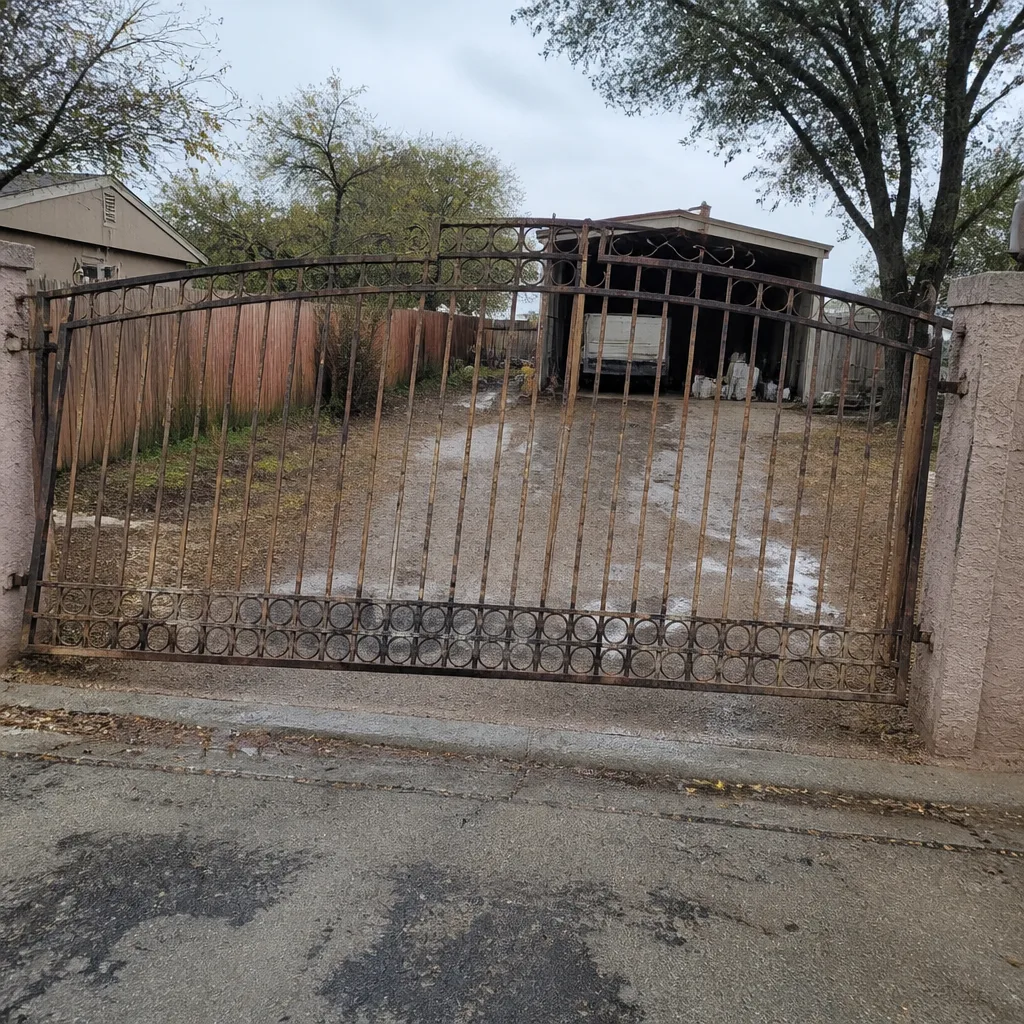 Before
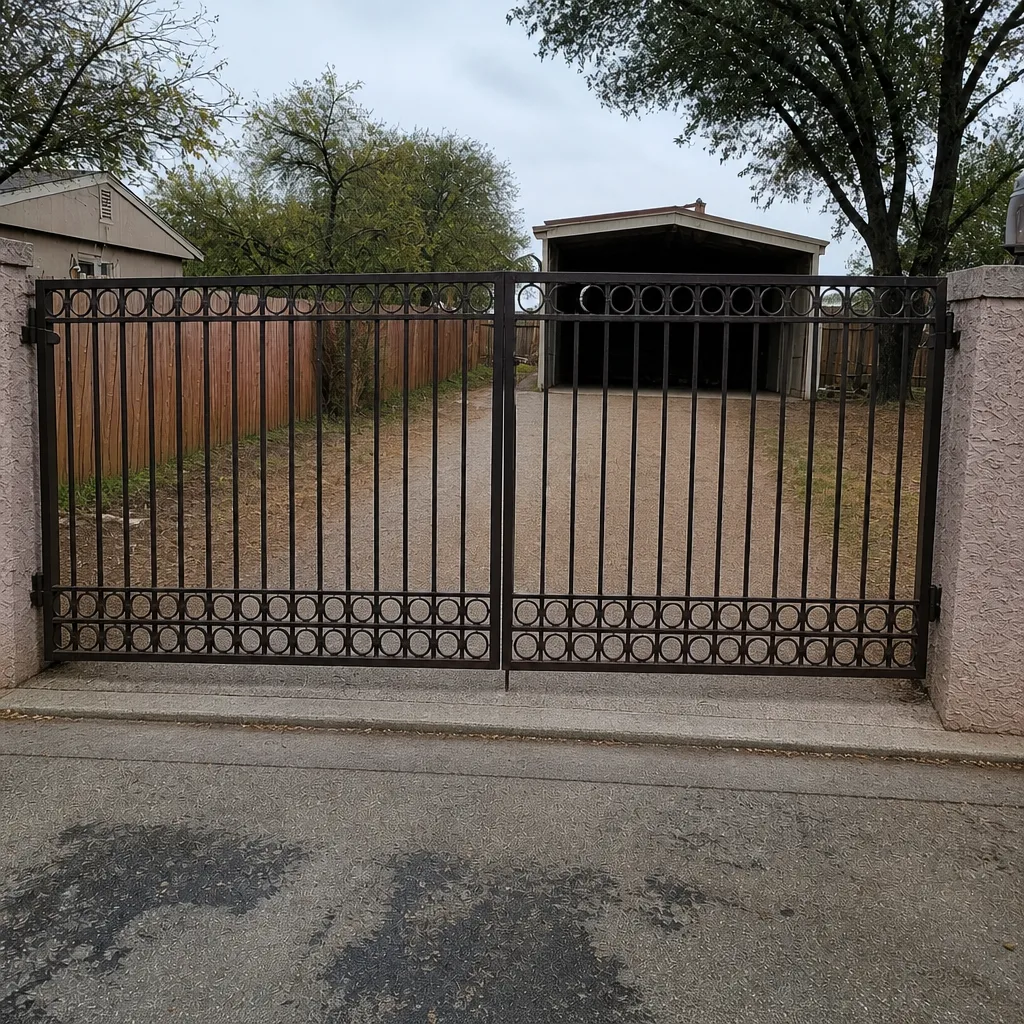 After
When to Call a Professional
Some maintenance is homeowner-level – relubricating the chain, testing the manual release, clearing the weep holes. Some needs a technician: anything involving the control board, the motor capacitor, the battery backup system, or the safety edges failing to reverse. High-tension gate hardware and electrical work are dangerous to service without training, and this is not a DIY category.
Call us if: the motor makes grinding or laboring noises, the gate reverses or stops partway through a cycle, the safety edge fails to reverse, the battery won’t complete even one cycle, the chain has developed visible slack or wear, or the motor housing is too hot to hold your hand on after a single cycle. Call us also if you’ve simply never serviced the opener and you don’t know its history – we’d rather do a $89 seasonal tune-up in Whitney than a $1,200 motor replacement. Ironworks Gate Co. Whitney offers free estimates in Whitney. Call (855) 928-1304.
Frequently Asked Questions
Twice a year minimum, in late spring before the heat arrives and in early fall after it breaks, with light 10- to 15-minute inspections every few weeks in July and August. Whitney’s summer heat breaks down lubricants faster than the manufacturer’s annual interval assumes, so the standard “once a year” recommendation is too little here. Call (855) 928-1304 for a seasonal tune-up.
Spring service is a full clean-and-relubricate before the heat, plus a mechanical inspection of the chain, rack gear, and hinge pins. The annual service includes all of that plus opening the control board enclosure, checking the electrical connections, clearing the weep holes, and testing the battery under load. In Whitney we recommend the full annual once a year in fall, and a lighter spring service in late April or May. Call (855) 928-1304 for exact pricing.
No. Standard WD-40 in the blue-and-yellow can is a solvent-based product that strips existing lubricant and evaporates within weeks. Use a dedicated chain and open-gear lubricant instead. The right product keeps the chain running years longer; the wrong product causes the exact wear you were trying to prevent. Call (855) 928-1304 if you’re not sure which lubricant to use.
Disconnect the AC power and run the gate through two complete open/close cycles. A healthy battery completes both cycles; a marginal battery fails on the first cold morning. Most residential sealed-lead-acid batteries last three to five years and cost roughly $60 to $120 to replace. Call (855) 928-1304 to schedule a battery test.
Not different schedules, but different maintenance details. A FAAC or BFT operator has slightly different chain and gear recommendations than a Linear or a Mighty Mule, and the control board layouts and battery access differ. We’re trained on nine brands – LiftMaster, FAAC, BFT, Linear, Viking, Ghost Controls, DoorKing, Elite, and Mighty Mule – and the tech dispatched to your gate will be equipped for whichever is on your driveway. Call (855) 928-1304.
Start with an annual service to establish a baseline, then adopt the seasonal schedule from there. A first-time service typically includes a full clean, relubrication, control board inspection, electrical check, battery test, and mechanical inspection of the chain and rack gear. Most first-time services find something small worth fixing. Call (855) 928-1304 for a free estimate.
The Bottom Line
A gate opener in Whitney needs a seasonal maintenance schedule, not a generic annual checkup. Spring before the heat (60-90 minutes), summer light inspections (15 minutes every couple of weeks), fall full service (90 minutes to 2 hours), and winter readiness (30-45 minutes). The most expensive mistakes are the simplest: generic spray lubricant on the chain, clogged weep holes, and skipped battery tests. Get those right and a FAAC, BFT, Linear, or Viking operator runs through many more Whitney summers than one serviced on the manufacturer’s calendar. Every job we do is backed in writing by the 90-Day Done Right Promise. For a free estimate, call Ironworks Gate Co. Whitney at (855) 928-1304.
Written by the team at Ironworks Gate Co. Whitney.