
Last updated November 17, 2026
 Wrought iron
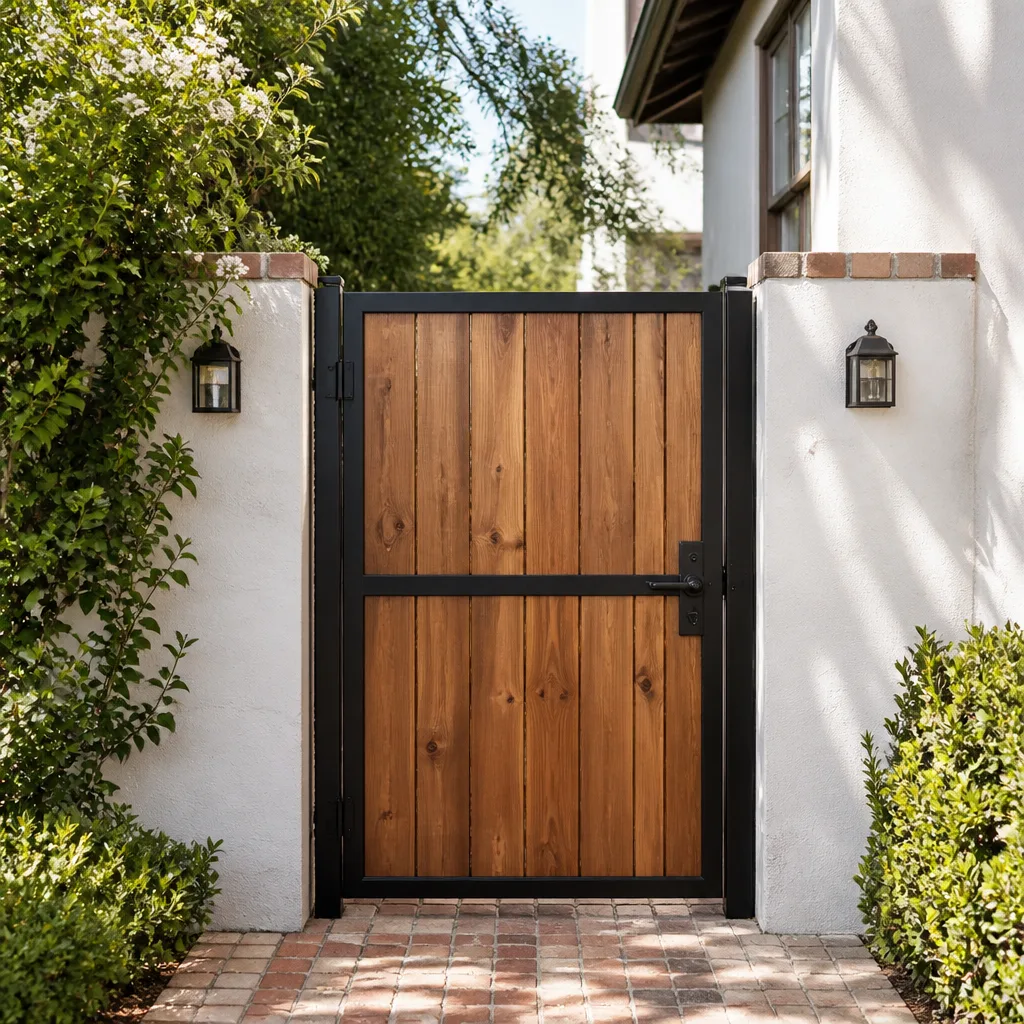 Wood & steel frame
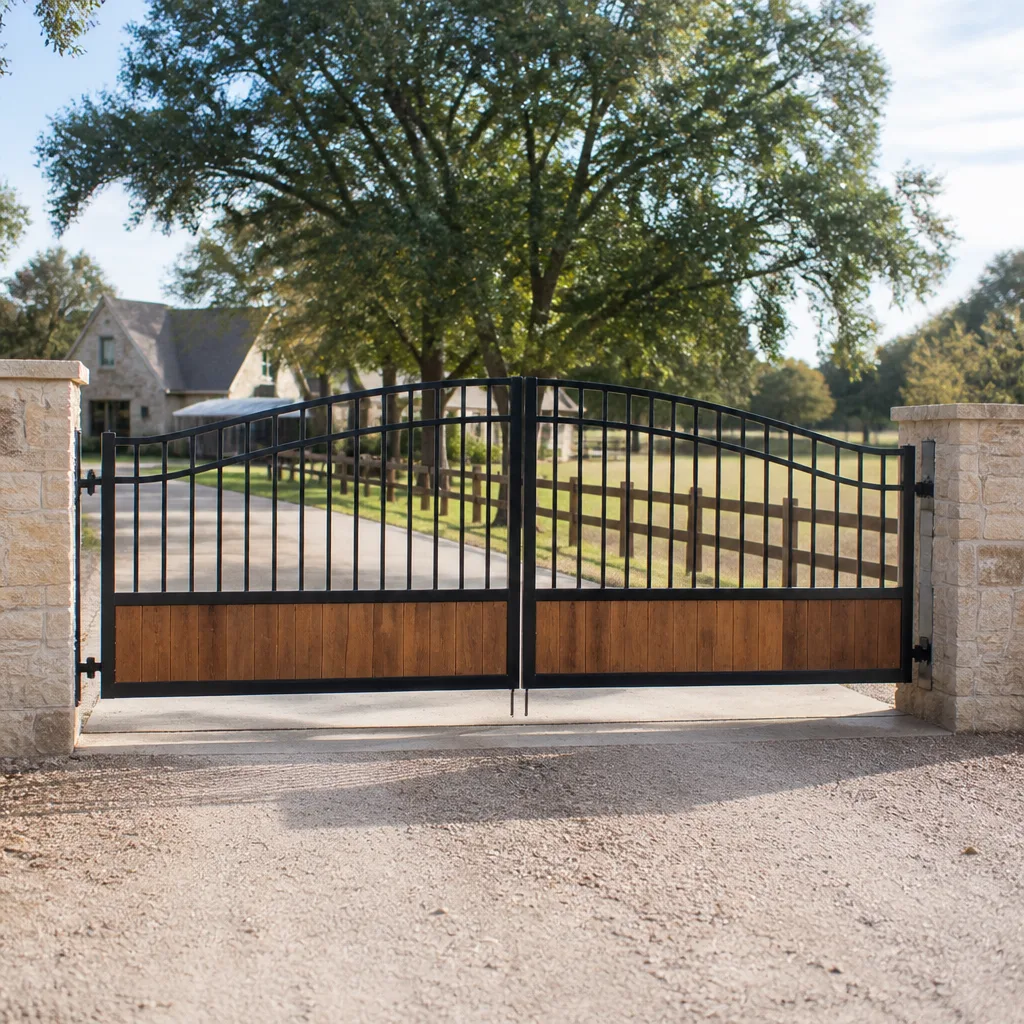 Farm & ranch
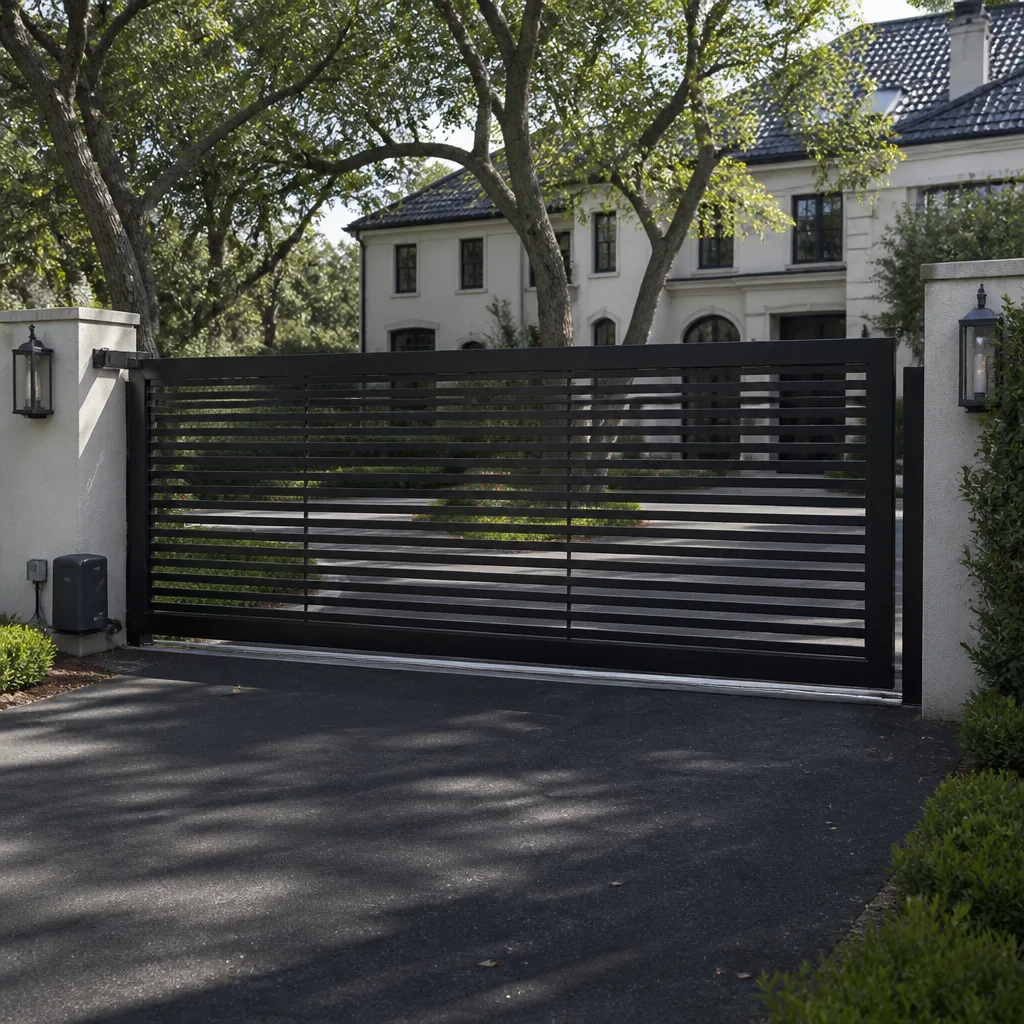 Sliding driveway gates
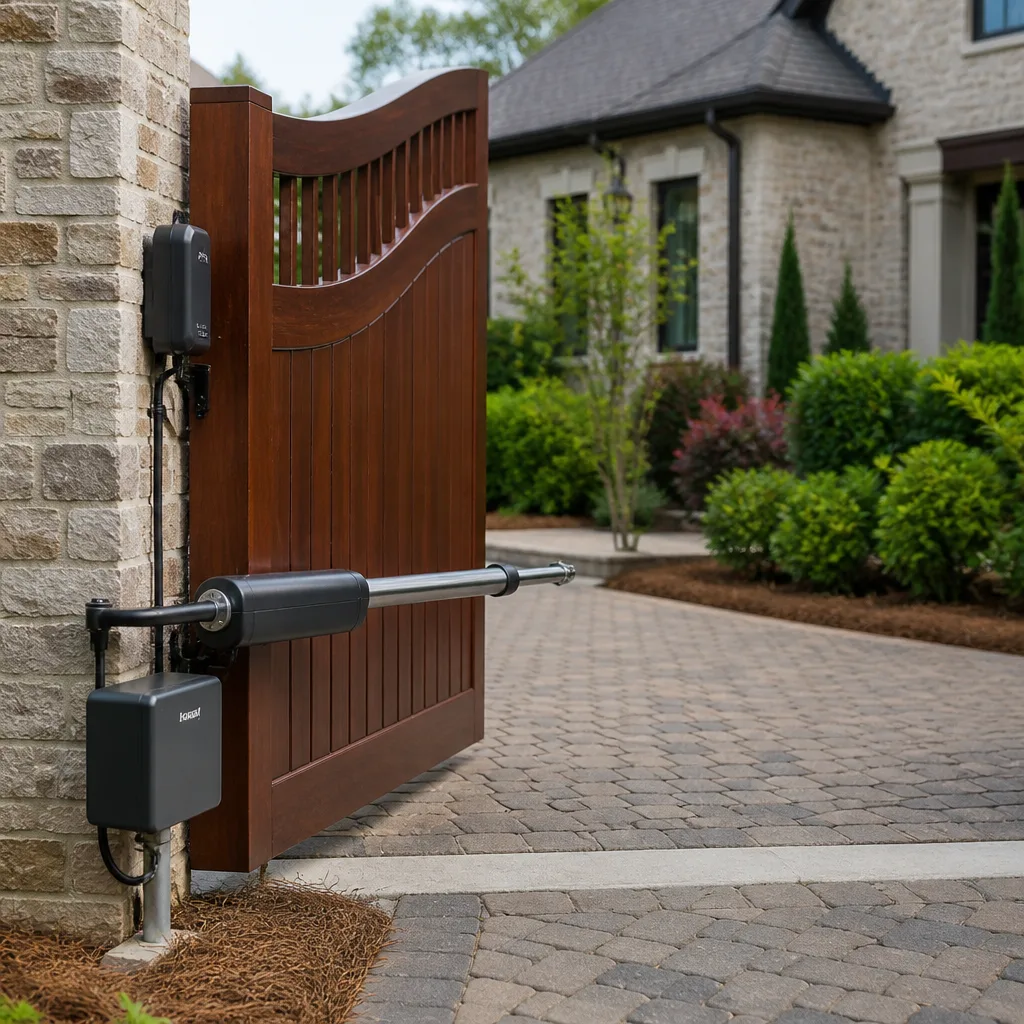 LiftMaster operators
Free on-site gate assessment - hinges, posts, and your LiftMaster or Nice gate operator checked before anything is quoted
The assessment is free and the quote is the invoice.
Get your free estimateGate Motor & Opener Warning Signs Every Homeowner Should Know
That grinding sound a lot of homeowners ignore for three months is not the gate “breaking in.” It is metal grinding on metal, and every cycle takes a little more material off the gears inside the drive unit. By the time the gate finally stops moving, what could have been a clean repair has become a motor replacement. We’ve watched this play out across Whitney more times than we can count. This guide teaches you the language a failing opener speaks through sounds, hesitations, and small behavior changes, so you can schedule a repair on your terms instead of calling in a panic.
Quick Answer
The warning signs of a failing gate opener fall into four categories: unusual sounds (grinding, clicking, humming without motion), behavioral changes (hesitation, partial travel, reversing direction), visual evidence (oil stains, rust weeping from hardware), and electrical symptoms (flickering lights, shrinking remote range). Early signs usually appear weeks before a gate stops working. A gate that moves without being triggered, or one that won’t reverse when it hits an obstruction, is a safety emergency and needs the opener shut off immediately.
Styles & brands we work with
- Wrought iron
- Wood & steel frame
- Farm & ranch
- Sliding driveway gates
- LiftMaster operators
Table of Contents
- Warning Sign Category 1: The Sounds Your Gate Makes
- Warning Sign Category 2: Changes in How the Gate Moves
- Warning Sign Category 3: What You Can See Under and Around the Opener
- Warning Sign Category 4: Electrical Symptoms and Remote Trouble
- Why a Gate Works in the Morning but Struggles in the Afternoon
- Opener Problem or Structural Problem? How to Tell the Difference
- Safety-Critical Signs: Shut the Gate Down Today
- Your 60-Second Monthly Self-Inspection
Warning Sign Category 1: The Sounds Your Gate Makes
Sound is the earliest signal a motor gives you. A healthy opener makes a steady, even hum as the gate travels. Anything outside that is worth listening to.
Grinding is the big one. It usually means the gears inside the drive or the arm are wearing against each other, and every pass removes more metal. In Whitney, where summer dust settles into every exposed moving part, we hear grinding complaints most often on gates that haven’t been greased or inspected since the season before. Left alone, grinding turns to a snapped gear, and the gate just stops.
Clicking is often the first stage of the same problem, or a failing limit switch that’s telling the motor the gate has reached the end of its travel when it hasn’t. A single click at each end of the run is normal. A ratcheting series of clicks during travel is not.
Then there’s the hum with no motion. You press the remote, you hear the motor working, but the gate doesn’t move. This points to a stripped gear, a broken drive chain, or a disengaged manual release. It’s a mechanical failure inside the unit, and it won’t fix itself.
- Grinding: metal-on-metal wear in the gears or drive arm. Escalates fast.
- Clicking or ratcheting: limit switch failure or stripped gear teeth.
- Humming without motion: stripped gear, snapped chain, or manual release left open.
- Groaning when starting: dry bushings or a hinge loading the gate.
- Buzzing near the control box: electrical fault. Stop and call.
If your gate is making any of these sounds, our Gate Motor & Opener service in Whitney starts with a listen before we ever touch a wrench.
Warning Sign Category 2: Changes in How the Gate Moves
A gate’s motion is its handwriting. When the movement changes, something underneath is changing too.
The most common behavioral sign is hesitation, a short pause before the gate starts moving after you trigger it. On the surface, it looks like the gate is “thinking.” What’s actually happening is the motor working harder to overcome resistance, usually from a hinge that’s stiffened, a track with debris, or a capacitor beginning to fail. A gate that used to start the instant you pressed the button and now pauses a count or two is telling you to have it looked at.
Partial travel is another. The gate opens halfway and stops. Or it closes to within a foot of the post and stalls. Partial travel usually points to a limit switch, a control board fault, or an obstruction the safety sensors are detecting and reversing. Sometimes it’s just a spider web across a photo-eye in a dusty Whitney side yard. Other times it’s a failing board.
Direction reversal mid-travel, with nothing in the way, is a specific warning. If the gate reverses on its own with no obstruction, a safety edge, photo-eye, or loop detector is misfiring.
- Watch the full cycle: open the gate, then close it, and time each pass.
- Note where it hesitates or stalls: start, middle, end of the run.
- Repeat five times: an intermittent problem is still a problem.
- Write down what you saw: it shortens the diagnosis on the visit.
Warning Sign Category 3: What You Can See Under and Around the Opener
You don’t have to open the housing to spot trouble. The clearest visual warnings sit right under the drive unit and around the gate hardware.
Oil stains on the concrete beneath the opener housing or the drive arm are your clearest sign. Gate motors hold a small amount of gear oil and sealed lubricant, and when a seal fails, that oil weeps out. It usually starts as a light stain, darkens over weeks, and means internal wear. A single old stain may be from a factory fill. A new stain appearing on clean concrete is a leak that needs attention.
Rust weeping from hinges, the drive arm, or the operator bracket is the second sign. In the desert heat of Whitney, rust is less common on painted steel than in wetter climates, but it shows up fast on gates near irrigation lines or on the older galvanized hardware we still service. Rust flaking at a hinge point means water is getting in where it should not, and the hinge is freezing up. That freeze loads the motor on every cycle.
- Oil beneath the housing: failing seal or internal wear.
- Rust streaks from hinges: frozen pivot point, loading the motor.
- Cracks in the operator bracket welds: structural fatigue. Welding is a gate job, not a motor job.
- Bent drive arm or track: impact damage, often missed until it causes a stall.
- Loose anchor bolts at the operator base: the whole unit shifting under load.
If the hardware itself is what’s failing, that’s work for our Gate Repair in Whitney crew, not a swap of the opener.
Warning Sign Category 4: Electrical Symptoms and Remote Trouble
The electrical side of your gate is quieter than the mechanical side, but just as telling.
Flickering indicator lights on the control board, the photo-eye housing, or the keypad are an early electrical symptom. A steady green or red LED is normal. A pulsing one that shouldn’t be, or a light that’s gone dark when it shouldn’t be, is a sign of a voltage problem, a loose connection, or a component drawing too much current.
Inconsistent remote response is another. If you used to open the gate from fifty feet down the driveway and now you have to be ten feet away with the remote pointed straight at the receiver, something has changed. Sometimes it’s just a dying battery in the remote. But if a fresh battery doesn’t fix it, the receiver antenna may have been damaged, a wire may be loose, or interference from a new piece of electronics nearby may be drowning out the signal.
Tripped breakers on the dedicated circuit serving the gate are the last electrical warning. A gate on its own breaker should not trip that breaker more than once in a very rare while, if ever. Repeated trips mean the motor is drawing more current than it should. That’s a failing motor, a failing capacitor, or a wiring fault.
Flickering lights, shrinking remote range, and tripping breakers all fall inside the work we do every week on Gate Installation in Whitney and its supporting electrical work. Loose or exposed wiring is a safety issue. Cut power at the breaker and call us.
Why a Gate Works in the Morning but Struggles in the Afternoon
This pattern is so consistent in Whitney that we can often name the failing component before we arrive. If your gate glides open at 7 a.m. and fights you at 3 p.m., the problem is almost always thermal. And it points to one specific part.
The capacitor is the part that gives the motor the extra kick of starting torque it needs. As capacitors age, they lose capacitance, and they lose more of it as they heat up. A worn capacitor holds enough at 75 degrees to start the motor cleanly. At 110 degrees on the sunny side of a block wall, it doesn’t, and the gate stalls or hums for a second before it catches. This is why the pattern is worse on the south-facing side of a property and worse in June than in January.
The second suspect is a motor that’s simply running hotter than it should, because of anything that adds load: a stiff hinge, a dry track, a bushing that’s tightened up. Heat compounds the problem, so the gate performs in the cool of morning and fails once the day warms the metal. Replacing a capacitor is an inexpensive fix. Replacing a motor that’s burned through its windings after months of thermal stress is not. This is the exact scenario that makes early diagnosis worth the call.
Opener Problem or Structural Problem? How to Tell the Difference
Replacing the motor on a gate with a failing hinge solves nothing. The new unit fights the same load the old one did and fails sooner. Distinguishing a structural problem from an opener problem is one of the most useful diagnostic skills a homeowner can develop.
Start by disengaging the opener and moving the gate by hand. Every automatic gate has a manual release, usually a key or a lever on the drive arm. With the motor disconnected, push the gate through its full swing. If it moves smoothly with light effort, your gate is sound and the problem is in the opener. If it drags, binds, or requires real effort to push, your problem is structural. Fix the structure first.
Common structural problems we see in Whitney:
- Hinges that have sagged: the most common cause of a gate suddenly dragging.
- Bent frames or racked posts: often from impact, sometimes from soil movement.
- Dropped gates: the gate has settled and now hangs against the ground or the strike post.
- Failed welds: at the frame corners or where the operator mounts.
- Worn wheels or track: on sliding gates, flattened wheels create constant drag.
If the gate drags by hand, our Ironworks Gate Co. Whitney team handles both sides of the job: weld and hinge repair and opener service, in one visit. That’s the whole point of hiring a gate specialist rather than a generalist.
Safety-Critical Signs: Shut the Gate Down Today
Some warning signs don’t wait for a scheduled repair. A gate weighs hundreds of pounds and carries enough force to injure a person or a child. Every automatic gate is designed with safety devices the motor trusts, and those devices are what needs your attention right now.
Shut off the opener at the breaker and call us if any of these are true:
- The gate moves without being triggered. This is a control or sensor fault. A gate that opens on its own can also close on its own, and sometimes on a person.
- The gate does not reverse when something is in its path. Every automatic gate is required to reverse when it meets an obstruction. If it doesn’t, the safety device has failed and the gate must not run.
- Wiring is exposed, chewed, or hanging. Rodents, sun damage, and years of vibration all attack the low-voltage wiring that runs to photo-eyes and safety edges. Exposed wiring at 120 volts is a shock hazard. At any voltage it’s a fire hazard.
- The safety edge on the gate is loose or severed. A safety edge is a rubber strip that senses contact. If it’s dangling or cut, it can’t do its job.
- The gate makes contact with a vehicle or person and does not stop. Even a soft nudge on a slow gate is a sign the force-limiting system has failed.
Never test a gate’s safety device by standing in its path. Use a box or a rolled-up towel placed on the ground in front of the gate, and watch from a safe distance. If the gate doesn’t reverse, shut it off and call a professional. This is not a job for a weekend fix.
Your 60-Second Monthly Self-Inspection
You can catch most of what this guide describes from the driver’s seat of your car, before you pull into the driveway, in about a minute. Do it once a month, on the same day, and you’ll know your gate better than any technician.
- Park outside the gate with the engine off. Roll the window down. Listen.
- Trigger the gate and listen for grinding, clicking, or hesitation. Compare it to what it sounded like last month.
- Watch the full travel. Does it open and close freely, or does it drag, stall, or reverse?
- Look at the ground beneath the operator. Any new oil stain?
- Check the hinges and the drive arm for rust streaks or cracks. A quick visual from a few feet back is enough.
- Test the remote from the same spot at the same distance every month. Shrinking range is a warning.
- With the gate open, place a box in its path and trigger a close. It should stop and reverse immediately. If it doesn’t, shut the gate off at the breaker and call us.
Write down anything that changed. When you call, tell us what you noticed and when. That one-minute habit is the difference between a small repair and an emergency visit.
The brands we service most often are LiftMaster, Mighty Mule, and DoorKing operators, all of which speak the same warning language once you learn to listen.
Common Mistakes to Avoid
- Ignoring a new noise because the gate still opens. A grinding gate that still moves is in the middle of destroying its own gears. The longer you wait, the more expensive the bill.
- Greasing everything that looks dry. The wrong grease on the wrong part, especially on a track or chain, collects Whitney dust and turns into grinding paste. Use the lubricant the manufacturer specifies, and only where it belongs.
- Calling a generalist handyman for an opener problem. Gate openers are specialized. Most generalists don’t carry the parts or have the training on more than one or two brands, and you’ll typically end up paying for a second opinion anyway.
- Replacing the motor before checking the gate. If the gate drags by hand, the motor isn’t the problem. We see this failure pattern over and over in Whitney.
- Trusting the wind to test a gate’s safety reverse. A gate that stops for a friend’s car at the driveway isn’t the same thing as a gate that stops for a child. Use a proper test object monthly.
- Leaving exposed or chewed wiring for “next season.” Rodent damage is common in the desert. Exposed wiring at any voltage is a safety issue, and it’s the kind that doesn’t heal itself.
- Running a gate with a safety edge that’s been cut or detached. This is the single most dangerous condition a residential gate can be in. Shut it off and call.
See the difference
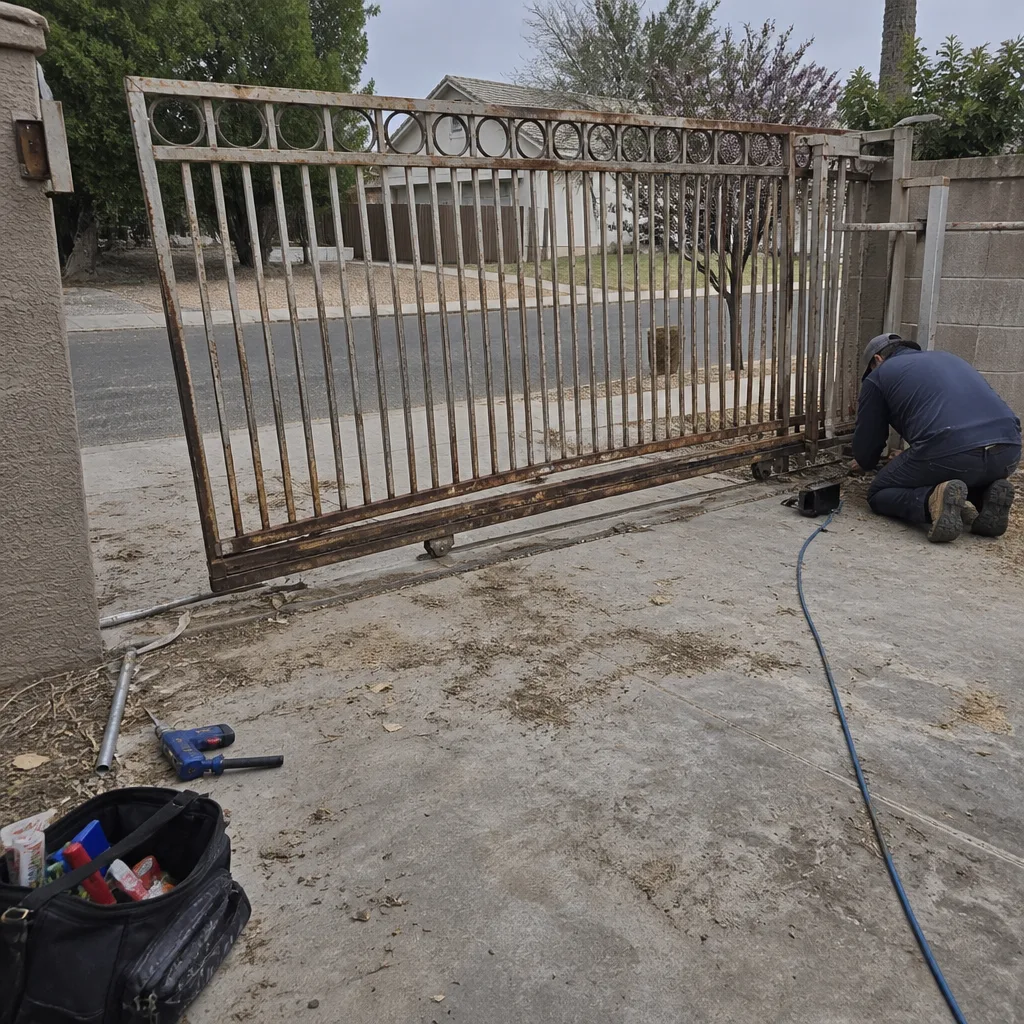 Before
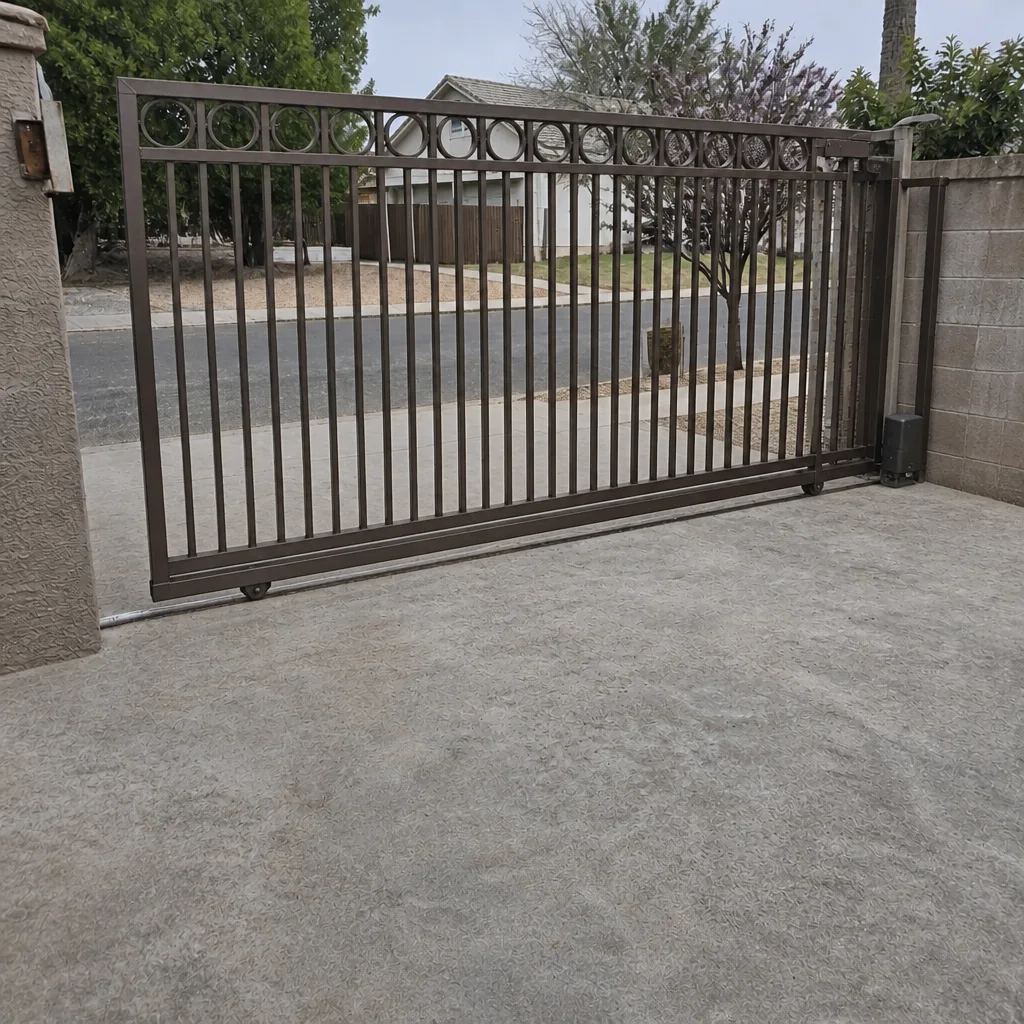 After
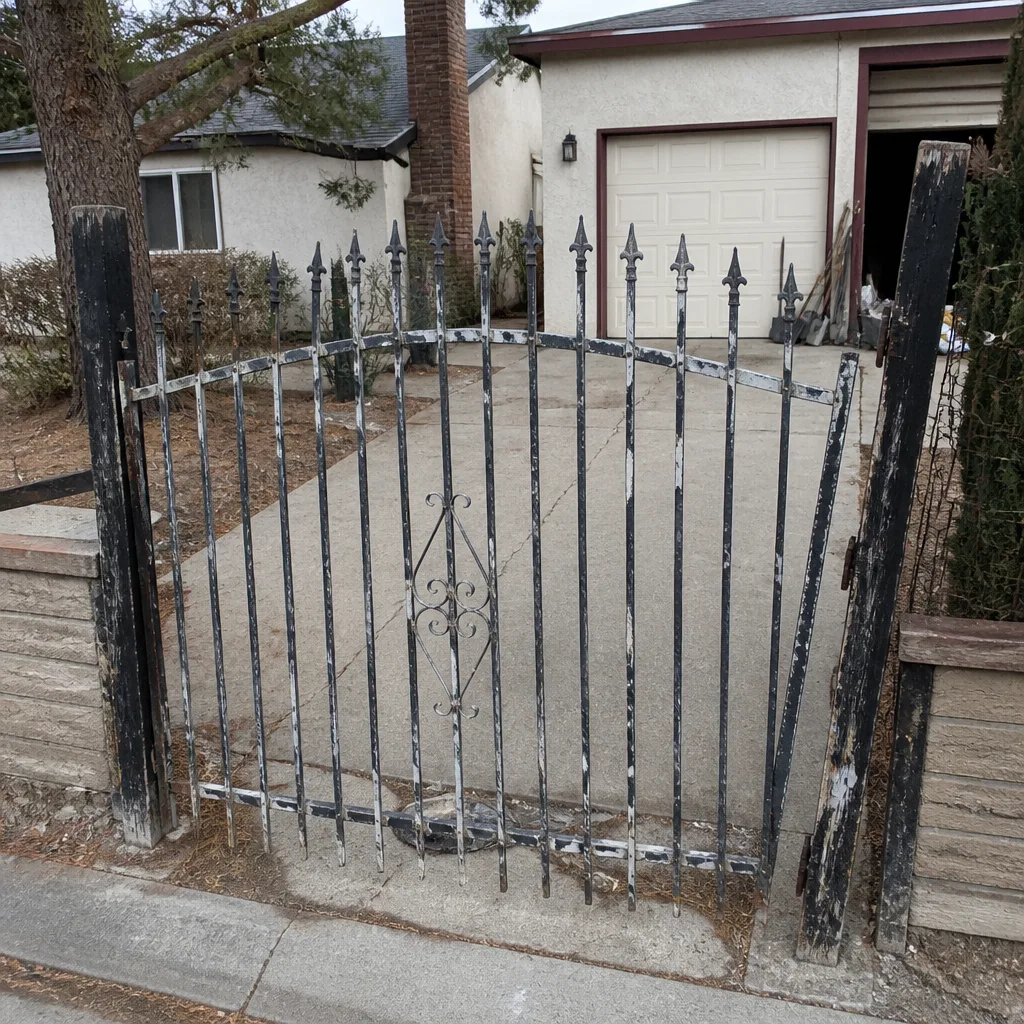 Before
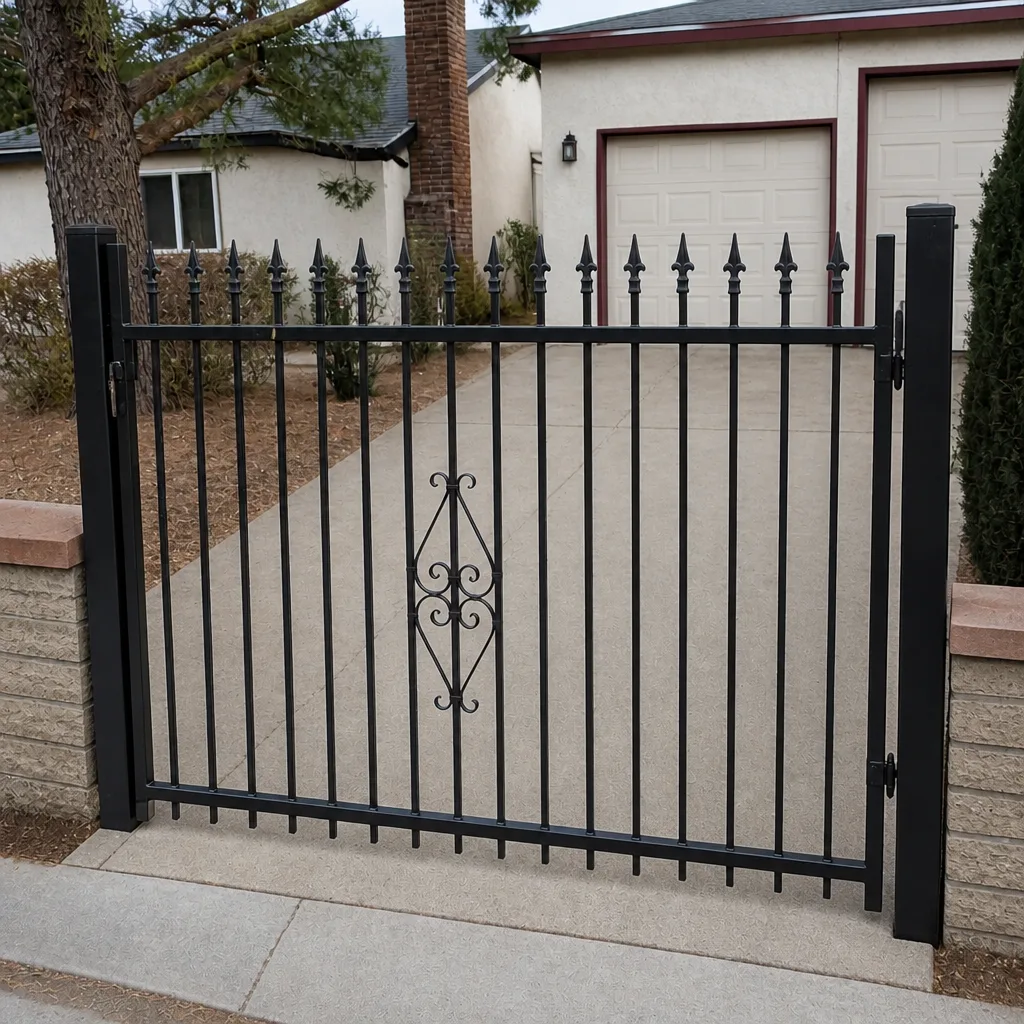 After
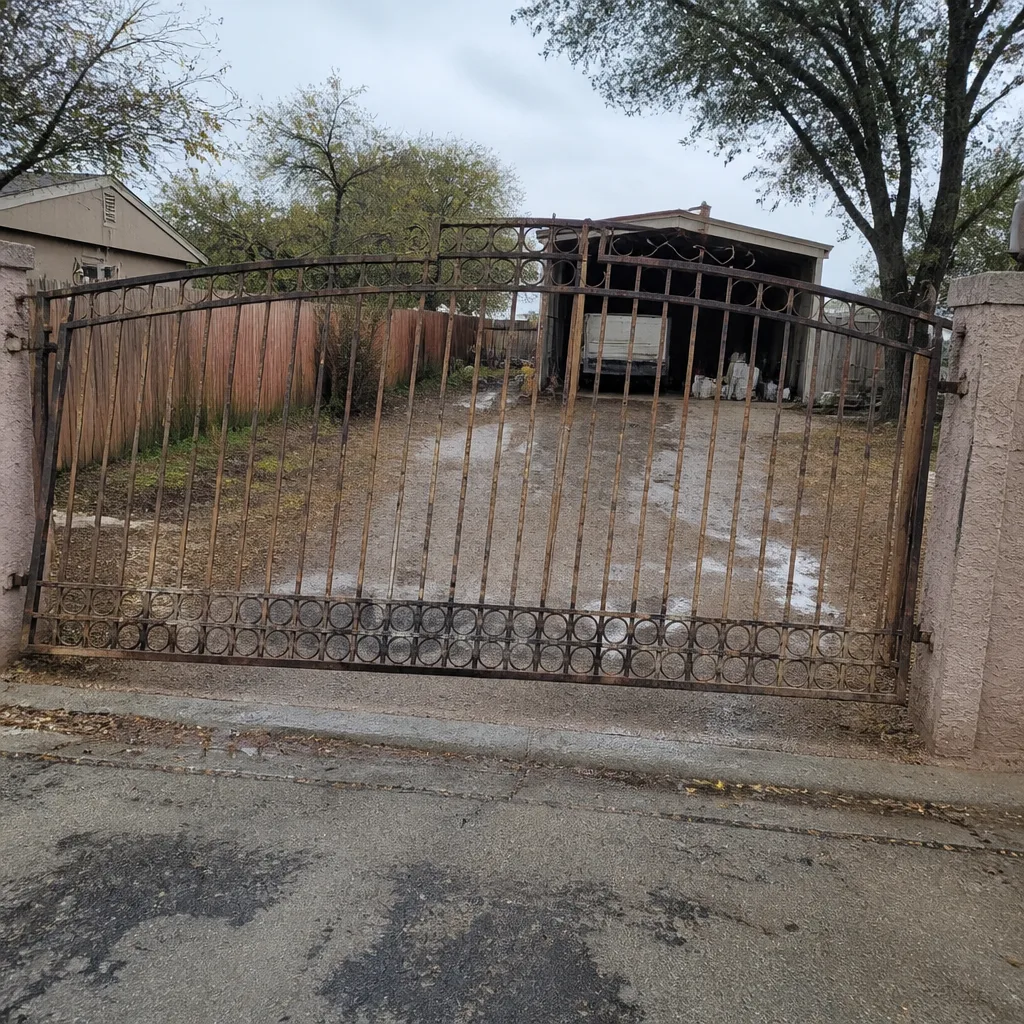 Before
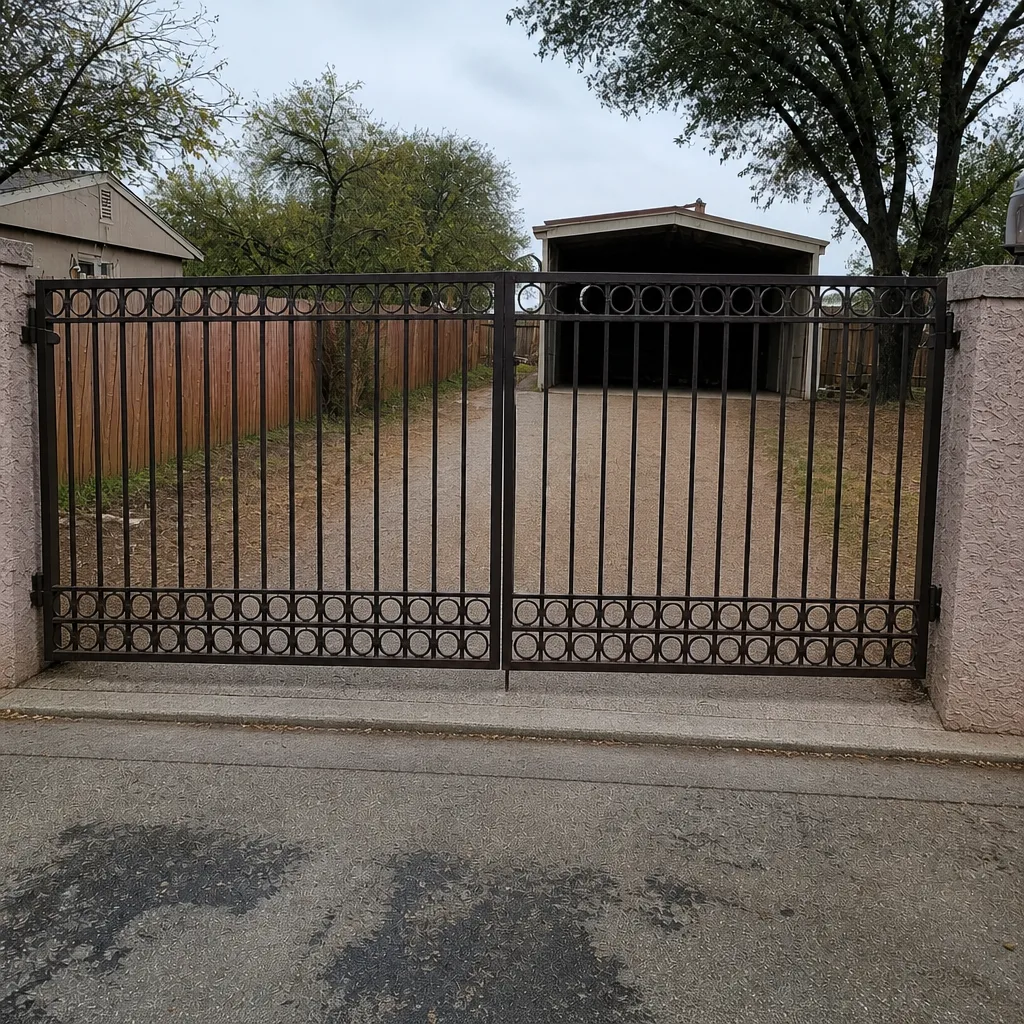 After
When to Call a Professional
Call us when you hear the grinding sound, when the gate hesitates, when you see oil on the concrete, or when the remote stops reaching as far. Call us when the gate works in the morning and fights the afternoon heat, because that pattern points to a specific part that’s cheap to fix now and expensive to fix later. And call us the moment the gate moves without being triggered, fails to reverse on an obstruction, or has exposed wiring, because those are the signs that put a person in harm’s way.
Ironworks Gate Co. Whitney offers free estimates in Whitney and does the work in a single visit more often than not. You get a call answered by a live person, an upfront price before any bolt is turned, and a written 90-Day Done Right Promise on every job. Call (855) 928-1304.
Frequently Asked Questions
Grinding is usually the first sign, and it means metal is wearing against metal inside the drive unit. A close second is hesitation when the gate starts to move. Both appear weeks before the gate stops working. Call (855) 928-1304 at the first sound of grinding for a free estimate.
That thermal pattern almost always points to a failing capacitor in the opener, or a motor that’s running hotter than it should because of a stiff hinge or dry track. Heat lowers the capacitor’s ability to deliver starting torque, so a worn one fails in the afternoon and works in the morning. The good news: a capacitor is inexpensive to replace. Call (855) 928-1304 to schedule a diagnostic before the motor burns out.
Disengage the manual release and push the gate through its full swing by hand. Smooth and easy means the opener is the problem. Dragging, binding, or hard to move means the gate itself needs repair. Call us for a free estimate, and we’ll walk through both sides in the same visit.
No. A gate without a working safety reverse must be shut off at the breaker and not used until a technician restores it. This is a life-safety device, and it can fail without any other symptom. Call (855) 928-1304. We answer the phone 24 hours a day.
Once a year is the minimum for most residential openers, and twice a year for gates in dusty or high-use locations. Whitney’s summer heat and desert dust accelerate wear on gears and hinges, and an annual tune-up catches the small stuff before it fails. Our $89 Seasonal Tune-Up covers the full inspection. Call (855) 928-1304 to book one.
Our technicians are trained and equipped on nine leading gate-automation brands, including LiftMaster, DoorKing, Mighty Mule, and Elite. We’ve serviced most of them in Whitney side yards over the years, and we carry the correct parts to make the fix on the first visit. Call (855) 928-1304 for a free estimate.
The Bottom Line
A gate opener does not fail without warning. It grinds, it hesitates, it leaks a little oil, it fights the afternoon heat, and it shrinks its remote range, all before it ever stops working. Homeowners who learn to listen to those signals schedule their repairs. Homeowners who wait call us in a panic, on the day the gate finally quits, and often pay for a motor replacement that could have been a capacitor. Do the 60-second monthly check, take the grinding seriously, shut the gate off the moment a safety device fails, and call us early. That’s how a gate gets old gracefully instead of dying young.
Contact Us
If any sign in this guide sounds familiar, don’t wait for the next cycle. Call Ironworks Gate Co. Whitney at (855) 928-1304 for a free estimate. We answer the phone 24 hours a day, every day, and a live person will pick up. You’ll get an upfront price before any work starts, a background-checked technician on the visit, and the written 90-Day Done Right Promise behind every job. A gate that’s grumbling this week can be quiet by the weekend, and it’s one call away.
Written by the team at Ironworks Gate Co. Whitney.