
Last updated November 17, 2026
 Wrought iron
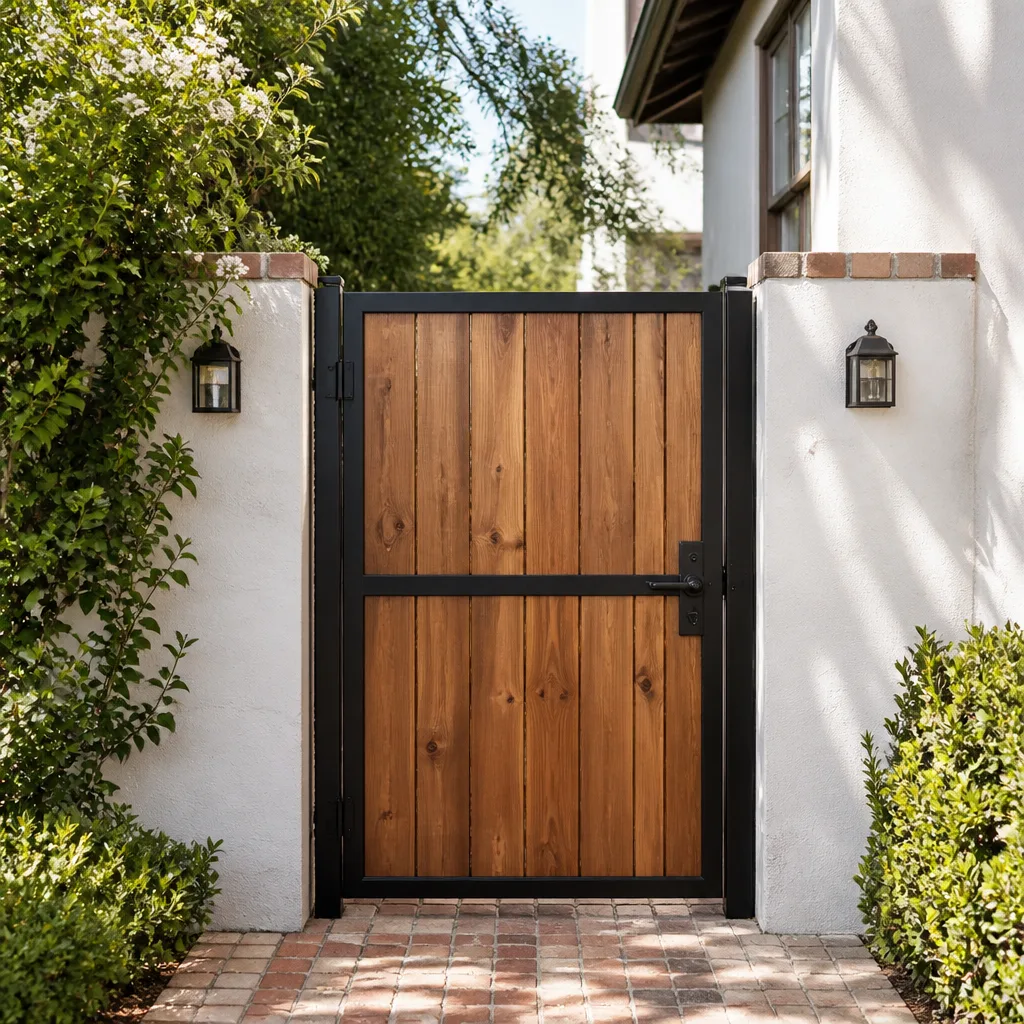 Wood & steel frame
 Farm & ranch
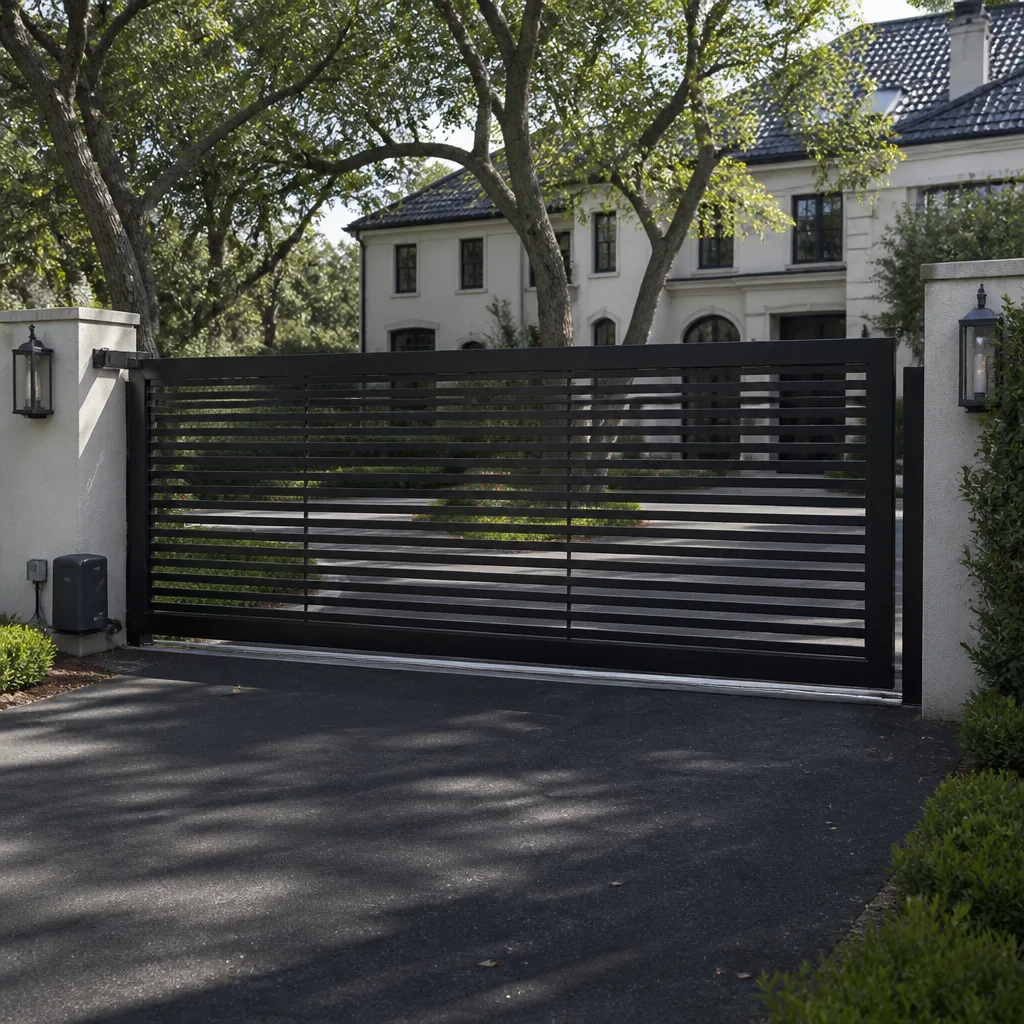 Sliding driveway gates
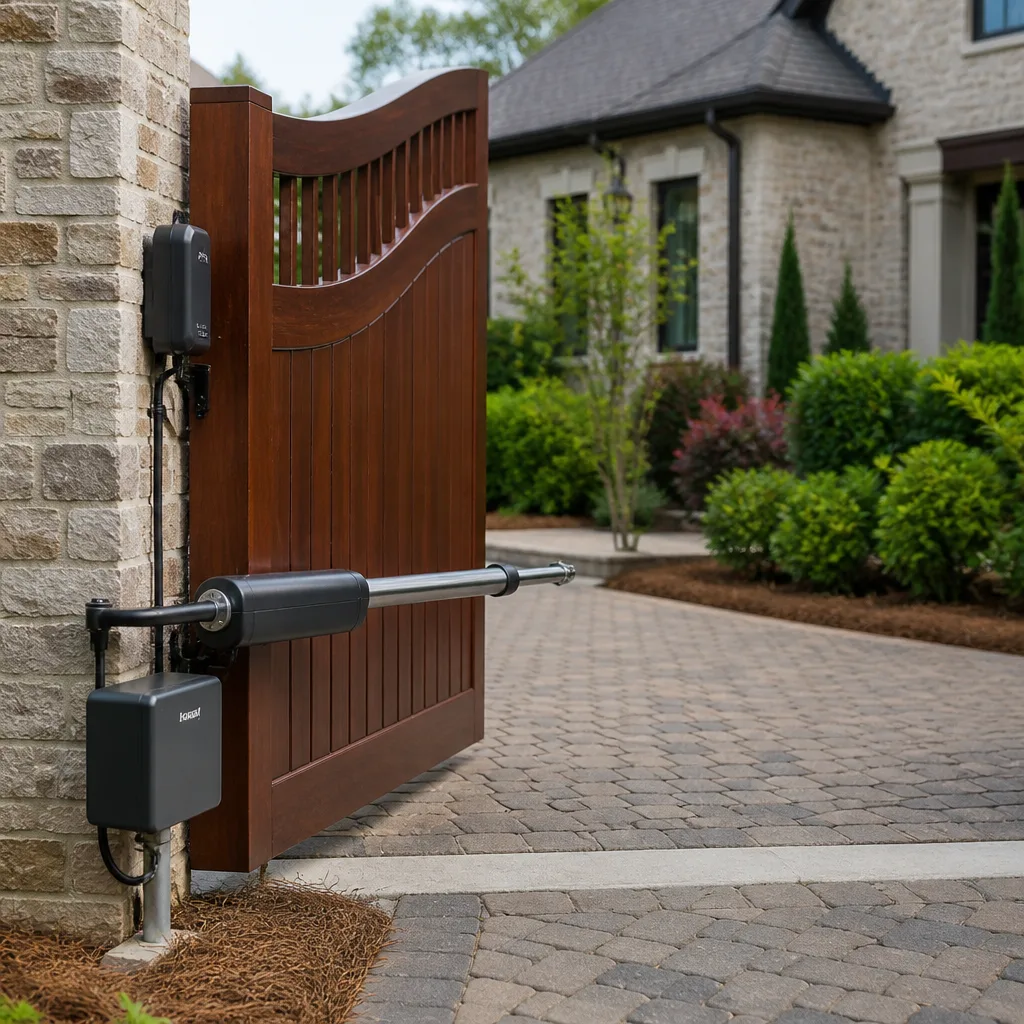 LiftMaster operators
Free on-site gate assessment - hinges, posts, and your LiftMaster or Nice gate operator checked before anything is quoted
The assessment is free and the quote is the invoice.
Get your free estimateGate Motor & Opener Troubleshooting: Common Problems and How to Fix Them
The most common reason a gate opener “just stopped working” is a tripped internal breaker that resets with a single button. Most homeowners only find that out after they’ve paid for a service call. In our experience across Whitney and the surrounding neighborhoods, roughly half of the calls we get could be sorted out at the keypad or the control box in under five minutes, and the other half go faster when the homeowner can describe what the gate is doing. This guide walks the same diagnostic ladder our technicians climb, so you can either solve the problem yourself or hand us the details we need to fix it on the first visit.
Quick Answer
Work from the simplest cause to the most complex: check the power and the internal breaker first, then the remote batteries, then the safety sensors, then the manual release, and only after that the control board. A gate that won’t move at all is usually a power, breaker, or safety-sensor fault. A motor that hums but doesn’t move the gate is almost always a mechanical obstruction, a bound hinge, or a slipping chain. Anything that requires opening the control box, splicing a wire, or adjusting the travel limits on a swing gate should go to a trained technician.
Styles & brands we work with
- Wrought iron
- Wood & steel frame
- Farm & ranch
- Sliding driveway gates
- LiftMaster operators
Table of Contents
- The Symptom-Based Decision Tree
- Gate Won’t Move at All
- Motor Hums but the Gate Doesn’t Move
- Gate Moves Partway and Stops
- Gate Reverses Before Closing
- Gate Moves but the Remote Doesn’t Trigger It
- Safety Sensor Troubleshooting and the Sun Angle Problem
- Battery Backup Versus Main Power
- What Should Never Be DIY-Diagnosed
The Symptom-Based Decision Tree
Before you touch anything, answer one question: what exactly is the gate doing? The answer tells you which branch of the ladder to climb. This is how a technician thinks about it, and it’s how you should too.
- The gate doesn’t move at all and the motor is silent. Start with power and the internal breaker.
- The motor hums, buzzes, or clicks but the gate stays put. This is mechanical. Look at obstructions, hinges, the chain, and the track.
- The gate moves partway and stops. Usually a travel limit, a binding point, or a low battery on a solar or backup unit.
- The gate reverses before it closes. Nine times out of ten this is a safety sensor or a false obstruction signal.
- The gate works from the wall button but not the remote. The problem lives in the remote, the receiver, or the antenna, not the motor.
The split between mechanical and electrical matters because it tells you when to stop. Mechanical problems are visible. You can see a bent hinge, a rock wedged in the track, or a chain hanging loose. Electrical problems hide inside a control box, and that’s where a homeowner’s tinkering turns a $200 repair into a $900 one. If you can see the problem with your eyes, you’re probably safe to investigate. If you can’t, put the tools down and call a gate repair company. That one rule will save you money more often than any other advice in this guide.
Gate Won’t Move at All
A completely dead gate has a short list of likely causes, and the internal breaker sits at the top. Many operators, including the Linear and Viking units we service regularly in Whitney, have a small reset button on the control board or the power supply. When the motor draws too much current from a bind, a power surge, or a lightning strike, that breaker trips to protect the board. Pressing it can bring a gate back to life in seconds.
- Check the power supply. Confirm the outlet or dedicated circuit hasn’t tripped at the home’s main panel. A tripped GFCI outlet at the gate post is a frequent culprit after a monsoon-season storm in Whitney.
- Find and press the reset button on the operator. It’s usually a small red or black button inside the housing. Press it once and try the gate.
- Check the safety sensors. If the photo eyes are misaligned or blocked, most operators won’t move the gate at all. Clear any debris and confirm both lenses face each other.
- Look at the manual release. If the gate has been left in manual mode, the operator won’t engage even with power. Re-engage the release lever.
- Test the wall button versus the remote. If the wall button works, the fault is in the remote. If neither works, it’s in the operator or the power.
If you’ve reset the breaker, confirmed power, cleared the sensors, and the gate still won’t budge, that’s your signal to stop. Board-level faults and wiring issues are best handled by a technician who can meter the circuit. When the diagnosis points to the motor itself, a gate motor & opener service in Whitney can confirm whether a repair or replacement is the right call.
Motor Hums but the Gate Doesn’t Move
A humming motor with a stationary gate means the electrical system is working and the mechanical system isn’t. The motor is trying to turn; something is preventing the gate from following. In Whitney’s older neighborhoods, where gates have seen a few decades of heat and dust, this is often a hinge or a chain rather than the motor.
- Obstruction in the path. A rock, landscaping, a fallen branch, or a child’s toy in the track or under a swing gate will stall it. Walk the full travel path and look.
- Bound or rusted hinges. A hinge that’s seized from grit and dry heat makes the motor strain. Work the gate by hand with the operator disengaged. If it’s stiff, the hinges need attention.
- Slack or jammed chain. On a sliding gate, a chain that’s jumped the sprocket or lost tension will hum without moving the gate. Don’t force it; forcing a jammed chain can bend the sprocket.
- Slipping clutch or worn gear. Some operators have a clutch that slips under strain. If it’s worn, the motor turns but the gate doesn’t.
Disengage the operator and push the gate by hand along its full travel. If it rolls or swings smoothly, the problem is inside the operator. If it fights you, the gate itself needs repair before any motor work. That distinction is why we always check the gate before the opener. A new motor on a binding gate burns out fast, and that’s a waste of your money. Our gate repair in Whitney covers both the hardware and the automation, so the whole system gets looked at together.
Gate Moves Partway and Stops
A gate that travels a few feet and then quits is telling you it’s hitting a limit or a load it can’t push through. The cause is usually one of four things.
- Travel limits out of adjustment. The operator is programmed to stop at set points. If those points have drifted, or the gate has settled, it stops early. Limit adjustments live inside the control box, which is technician territory on swing gates.
- A binding spot along the path. Walk the gate by hand to find the spot where it gets hard. A warped track, a low hinge, or a sunken post shows up here.
- Low battery on a backup or solar unit. As the battery fades, the operator loses the current to finish the cycle. It starts strong and stalls.
- Overheating from repeated cycles. A gate that gets cycled dozens of times in a row will trip its thermal protection and pause. Let it cool and see if it recovers.
Partway failures are the trickiest to self-diagnose because the gate works, just not all the way. Note the exact point where it stops. That detail alone tells a technician where to look, and it’s the kind of thing we ask on the phone before we ever roll out. A precise answer from you cuts the visit time substantially.
Gate Reverses Before Closing
Reversing before closing is almost always the safety system doing its job, either correctly or falsely. The operator is sensing an obstruction that may not exist. This is the single most common “failure” we hear about, and it’s rarely a motor problem.
- Misaligned photo eyes. The two sensors across the driveway must face each other squarely. A bump, a weed, or a settling post throws them off. Straighten them and confirm the indicator lights on both are solid.
- Dirty lenses. Dust and spider webs on the lens read as a blocked beam. Wipe both sides with a soft cloth.
- Sun in the sensor. Low morning or evening sun pointed straight at a receiver can blind it. This is a real, common cause in Whitney’s open, west-facing driveways.
- Obstruction in the path or a stiff hinge. The operator senses resistance and reverses. Something’s binding.
- Entrapment device fault. Safety edges and reverse sensors that have failed will trigger a default reversal.
Test the sensor alignment first. The fix is often a matter of nudging a bracket a quarter inch. If the gate reverses only at certain times of day, look at the sun. If it reverses at random, suspect a loose wire or a failing sensor, and that’s a call.
Gate Moves but the Remote Doesn’t Trigger It
When the wall button opens the gate but the remote won’t, the operator is fine and the problem is in the remote, the receiver, or the antenna. This is one of the easier branches to sort out yourself.
- Replace the remote battery first. It’s the cause more times than anything else. A fading battery can weaken the signal without killing it outright.
- Test a second remote. If another remote works, the fault is the first remote, not the receiver.
- Check the antenna. The receiver antenna wire at the operator can come loose or get damaged. Confirm it’s connected and not shorted against the housing.
- Re-pair the remote. If the remote lost its programming, re-syncing it to the receiver usually restores it. Follow the operator’s pairing steps.
- Look at the receiver board. If no remote will trigger the gate, the receiver may have failed. That’s a technician job.
Access control sits at the end of the ladder for a reason: it’s frequently the remote, not the gate. If the keypad or entry system is also misbehaving, the whole access layer should be reviewed. Our gate access control in Whitney teams handle receivers, keypads, and entry systems alongside the operators they run.
Safety Sensor Troubleshooting and the Sun Angle Problem
Safety sensors deserve their own section because most guides skim them, and yet they cause a large share of the calls we get. The photo eyes are the gate’s most important safety feature. A gate that closes on a car, a child, or a pet is the thing we care most about preventing.
To test alignment, look at the indicator lights on both sensors. Most models show a solid light when the beam is received and a blinking or off light when it isn’t. If one is blinking, the pair isn’t lined up. Loosen the bracket and face them squarely, then retighten. Clean both lenses. Confirm nothing – a weed, a trash can, a parked car – sits in the beam path.
Then there’s the sun. In Whitney, with its open lots and long west-facing driveways, the late-afternoon sun hits a receiver at an angle that can fool it into thinking the beam is broken. The gate reverses, and the homeowner can’t figure out why it only happens around 5 p.m. If your gate misbehaves only at a consistent time of day, note the time. A sun shade, a repositioned sensor, or a hood on the lens usually solves it. That’s a fix worth doing right the first time, because proper gate installation in Whitney accounts for sun and terrain before the first post goes in.
Battery Backup Versus Main Power
Battery backup units cause a specific kind of confusion: the gate seems to work, then doesn’t, then works again. The backup is supposed to carry the gate through an outage. When the battery fades, it drags down the whole system.
- Signs the backup battery is the problem: the gate is slow, weak, or only travels partway; the operator beeps or flashes a low-battery indicator; the gate works fine on full power but struggles after a power blip.
- Signs the main power is the problem: the operator is completely dead even with a known-good battery; the wall button doesn’t work; nothing lights up on the control panel.
- How to tell them apart: check the operator’s indicator lights and any audible alerts. A low-battery code points to the battery; a dead panel points to power.
Backup batteries degrade with Whitney’s heat and need replacing every few years. If your gate has a backup and it’s acting weak, the battery is the first place to look. If the main power is out at the breaker, no battery will help until that’s restored. Either way, don’t overlook the obvious panel trip before you buy a new battery.
What Should Never Be DIY-Diagnosed
Some things are safe to check and some are not. This is the line, and we don’t want you crossing it.
- The control board. Opening the control box exposes live wiring and delicate electronics. A slipped probe or a short can destroy the board or injure you.
- Wiring splices and mains connections. Gate operators run on line voltage. Any work at the power side is electrician and technician territory, full stop.
- Mechanical stop limits on a swing gate. Travel limits set the arc the gate travels. Get them wrong and the gate can slam, over-travel, or tear hardware loose. On a swing gate the arm or the stop can cause injury if misadjusted and then hit.
- Safety edges and entrapment devices. These are the devices that protect a person from being crushed. Never disable one, and never test one by putting a hand where the gate meets the post.
We will always tell a homeowner when a problem is theirs to fix and when it isn’t. The half of issues you can handle at the keypad and the sensors are genuinely yours. The other half belongs to a technician, and forcing it costs more in the end. That’s a square deal, and it’s how we’d want our own family treated.
Common Mistakes to Avoid
- Forcing a jammed gate. Pushing a binding gate to prove it moves bends hinges and strips gears. Disengage the operator and work it by hand first.
- Replacing the motor before checking the gate. A new opener on a rusty, binding gate burns out fast. Fix the gate, then the motor.
- Ignoring the internal breaker. That reset button solves more “dead gate” calls than any other single step. Try it before you call.
- Disabling a safety sensor to make the gate close. It’s the most dangerous shortcut in this trade. The reverse feature exists to keep a person from being hurt. Never bypass it.
- Cleaning the sensor lens with a hose. Water in a sensor housing rusts the contacts. Wipe with a dry cloth instead.
- Putting off a slow or weak gate. In Whitney’s summer heat and monsoon season, a struggling opener turns into a dead one. A small fix now beats a big repair later.
- Adjusting travel limits on a swing gate yourself. The arc is more dangerous than it looks. A misadjusted swing gate can swing wide and fast. Leave it to someone who knows the machine.
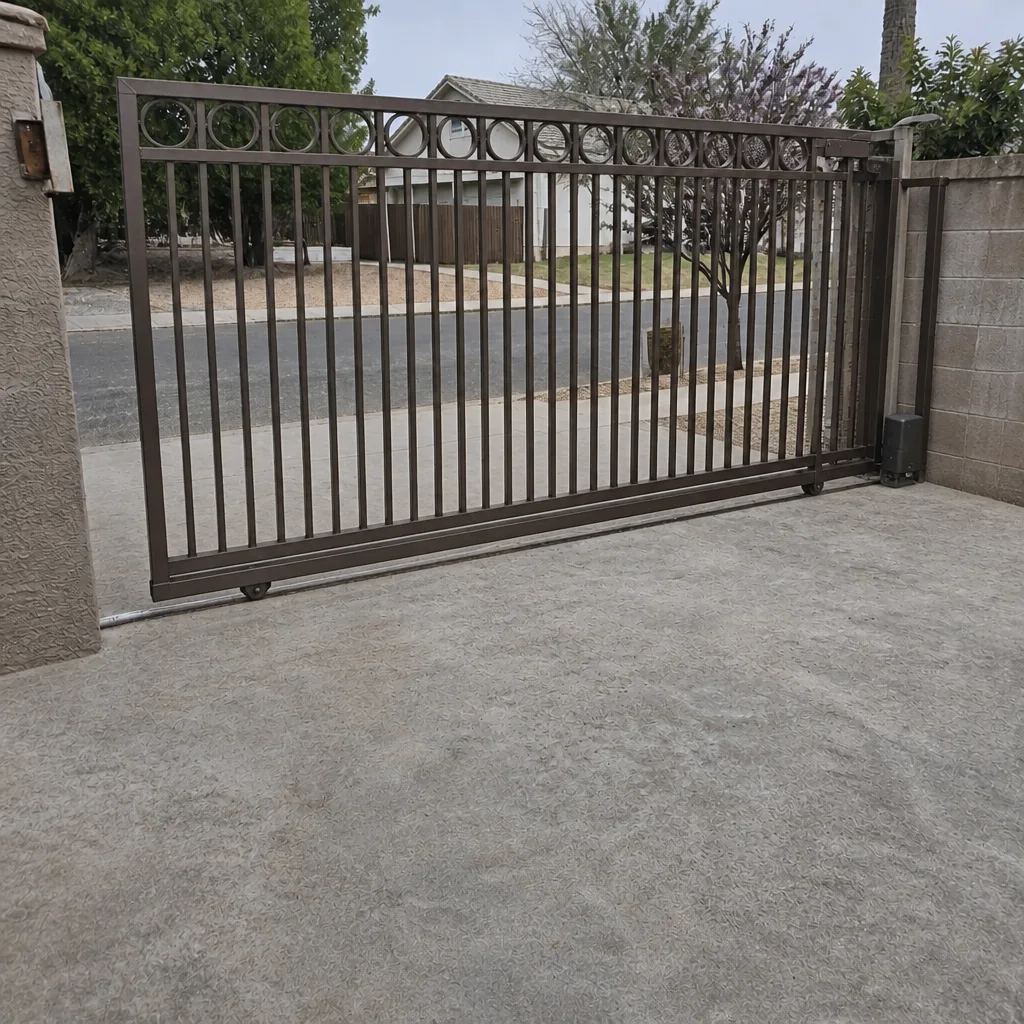
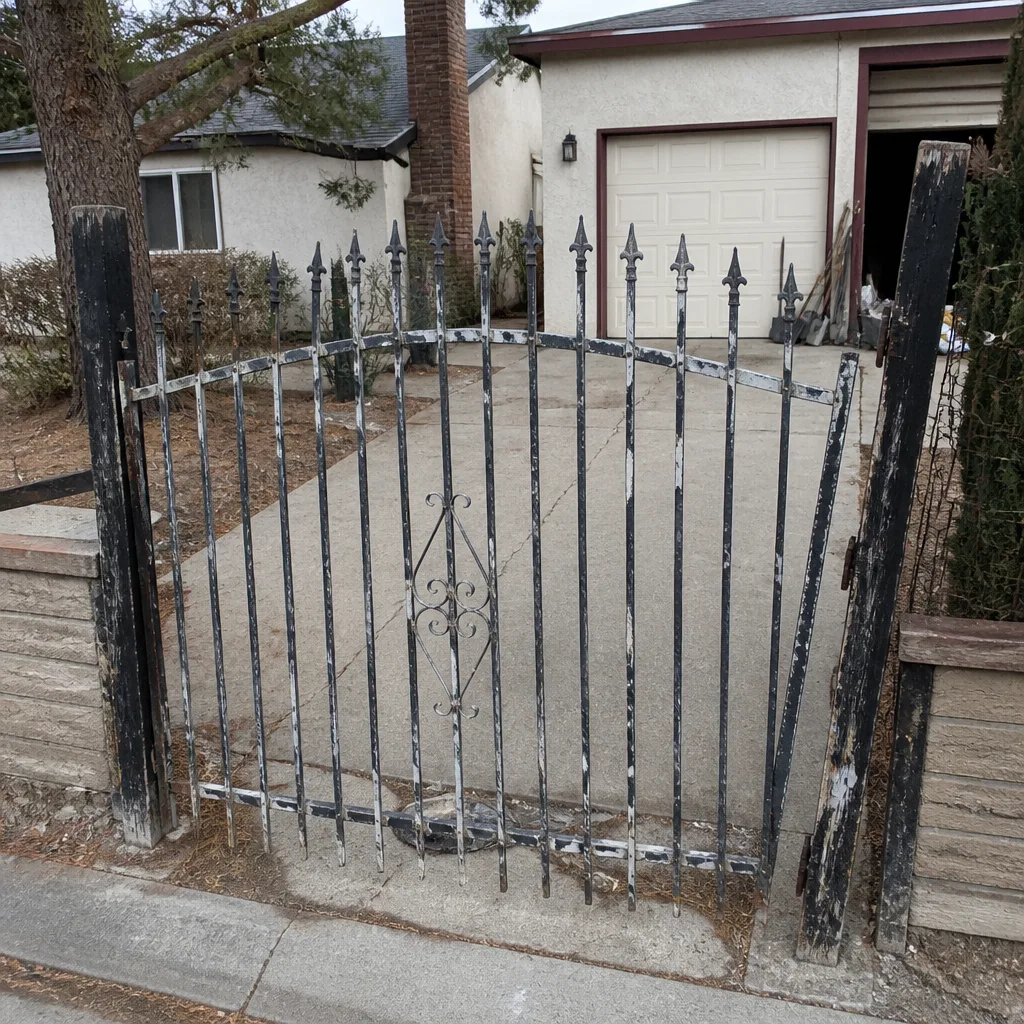
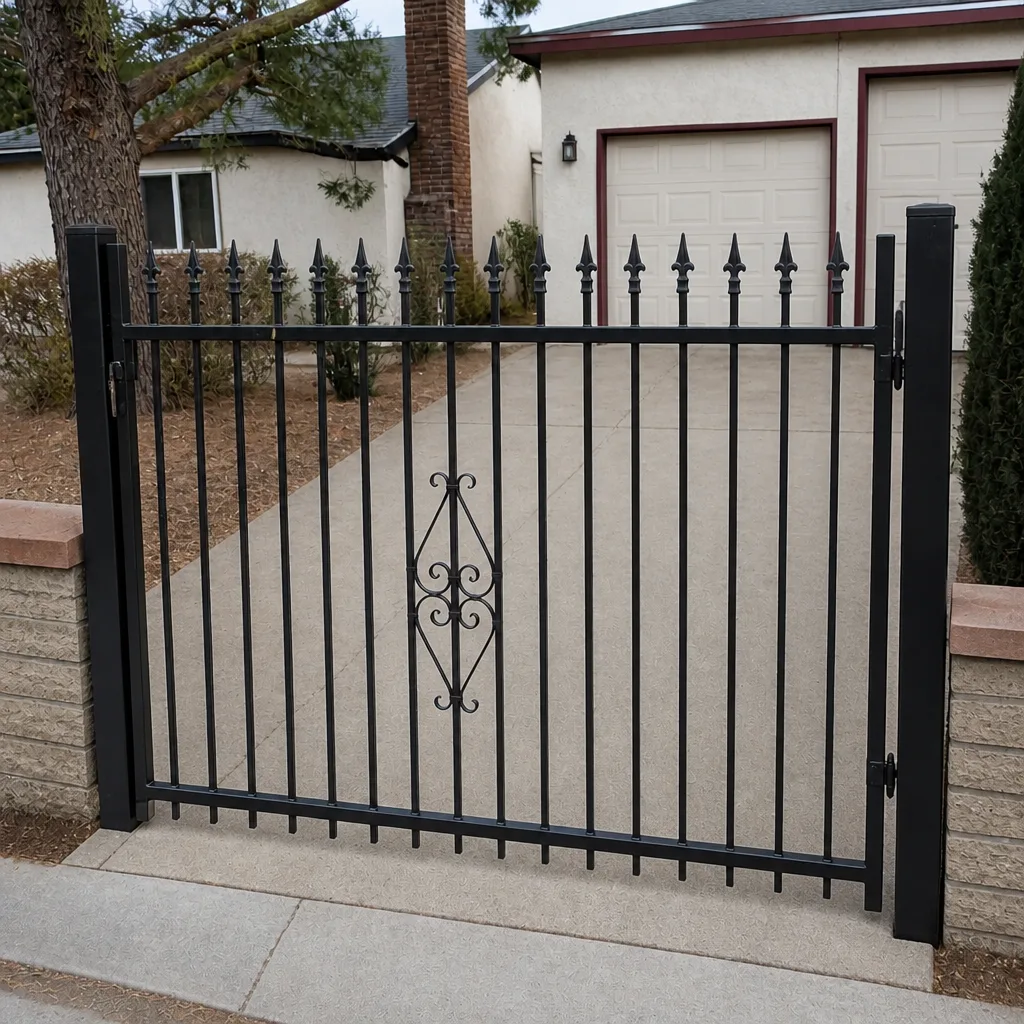
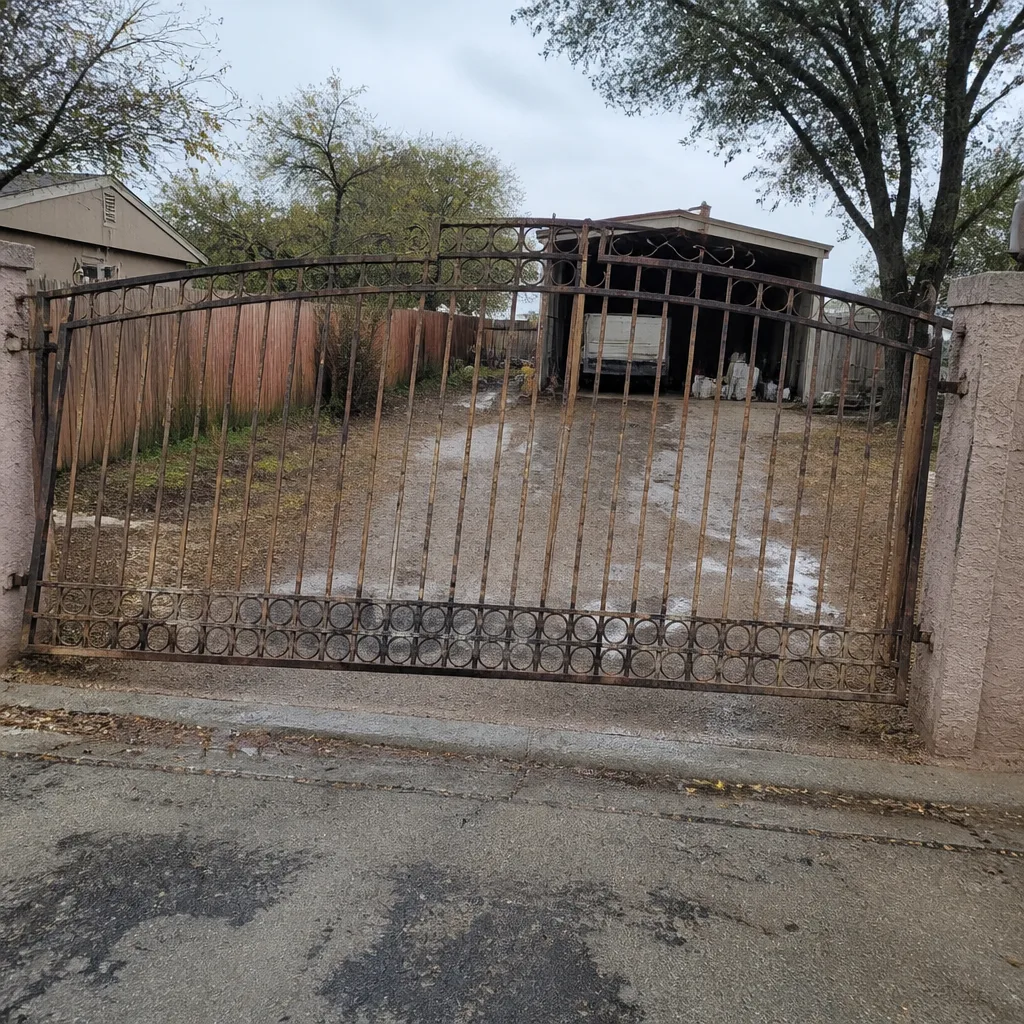
See the difference
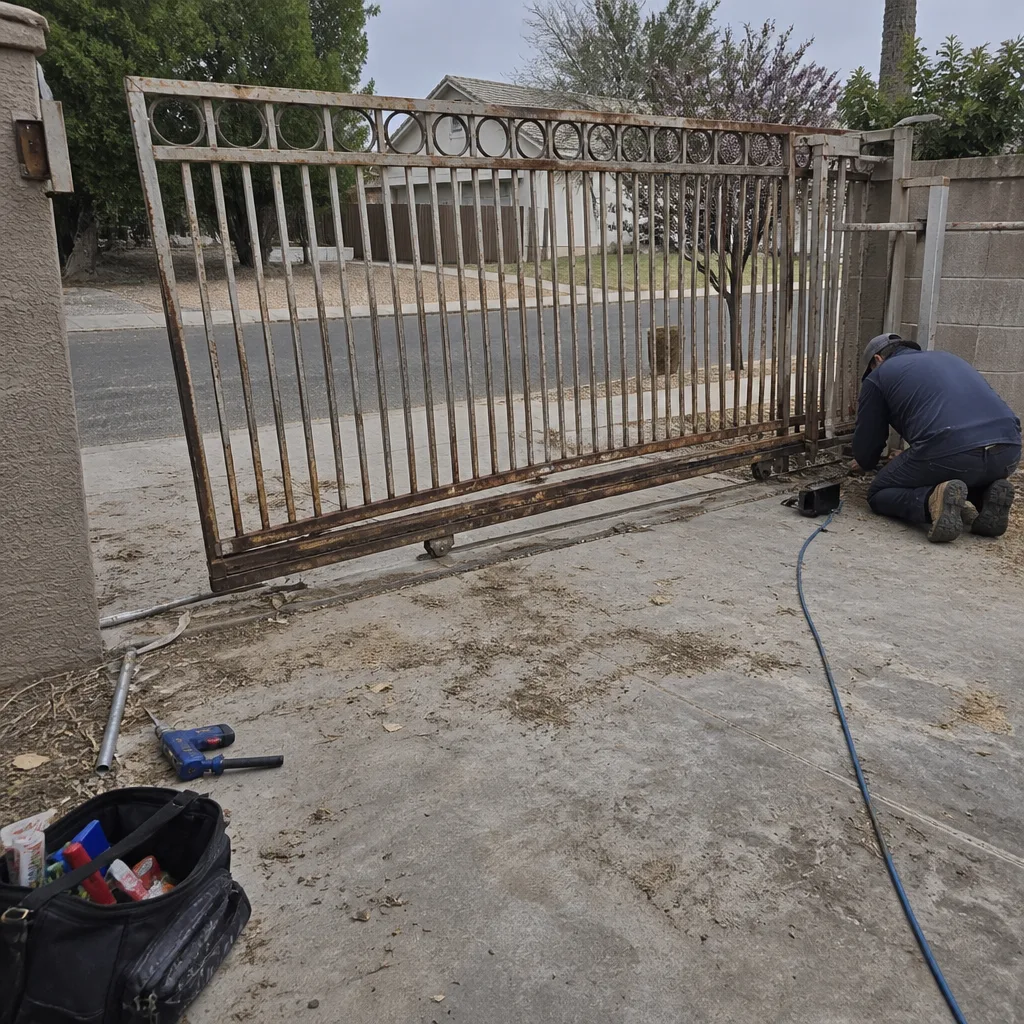 Before
 After
 Before
 After
 Before
 After
When to Call a Professional
Call a professional when the problem lives inside the control box, when a wire is spliced or damaged, when the gate doesn’t move even after a breaker reset, or when a swing gate needs its travel limits adjusted. Call sooner if the gate reverses unpredictably with people nearby, or if a safety edge isn’t working. Those aren’t inconveniences; they’re hazards, and a trained technician should be the one on them. Also call if the diagnosis points to the motor or the board; a proper repair protects the rest of the system and keeps a 40-year-old gate closing like the day it was hung. Ironworks Gate Co. Whitney offers free estimates in Whitney and a live person answers the phone around the clock. Call (855) 928-1304 and we’ll help you sort out what your gate is telling you.
Frequently Asked Questions
In most cases it’s a tripped internal breaker inside the operator, followed by a dead remote battery or a misaligned safety sensor. Press the reset button on the operator, replace the remote battery, and clear the photo eyes before assuming the motor failed. If the gate is still silent after all three, that’s when you call (855) 928-1304.
Yes, for the simple causes: the breaker reset, remote batteries, sensor alignment, and clearing obstructions. No for the control board, wiring splices, safety edges, and swing-gate travel limits, which need a trained technician because they involve live wiring or moving parts that can injure. When in doubt, call and we’ll talk it through with you at no charge.
A reversing gate is usually a safety sensor that’s misaligned, blocked, or blinded by low sun. In Whitney’s open, west-facing driveways, late-afternoon sun hitting the receiver is a common cause, and a gate that only misbehaves at the same time each day points straight at it. Straighten and clean the sensors first; if it keeps happening, call us for an exact fix.
If the operator is completely dead and nothing lights up, suspect main power and check the home’s panel and the gate’s outlet first. If the gate works weakly or only partway, or the operator shows a low-battery alert, the backup battery is the likely cause. Both are common after outages, and either can be sorted quickly. Call (855) 928-1304 for a free estimate if you’re unsure.
Don’t keep running a gate that reverses unpredictably with people or vehicles nearby. The reversal means the safety system is sensing an obstruction it can’t clear, and relying on it to close is asking the wrong component to do the job. Park clear of the gate and have it looked at before regular use.
We service nine leading gate-automation brands, including Linear, Viking, DoorKing, LiftMaster, FAAC, BFT, Ghost Controls, Elite, and Mighty Mule, so the right fix is made on the first visit whatever is on your driveway. Our technicians have up to 13 years of experience, and every job is backed by our written 90-Day Done Right Promise. Call (855) 928-1304 for a free estimate.
The Bottom Line
Gate opener problems follow the same ladder, and the climb starts at the simplest step: power, breaker, remote batteries, sensors, manual release. Those steps solve roughly half of what goes wrong, and they give a technician the detail needed to fix the rest faster. Mechanical problems you can see are yours to investigate. Electrical problems you can’t – the board, the wiring, the swing-gate limits, the safety edges – belong to a trained technician. Know the difference and you’ll spend less and get the gate fixed once. Whatever your gate is doing, the Ironworks team is ready to help, and we’re proud to serve Whitney with a square deal and a written promise. Back to where it starts with our Ironworks Gate Co. Whitney home page, or call (855) 928-1304 for a free estimate.
Written by the team at Ironworks Gate Co. Whitney.