
Last updated November 17, 2026
 Wrought iron
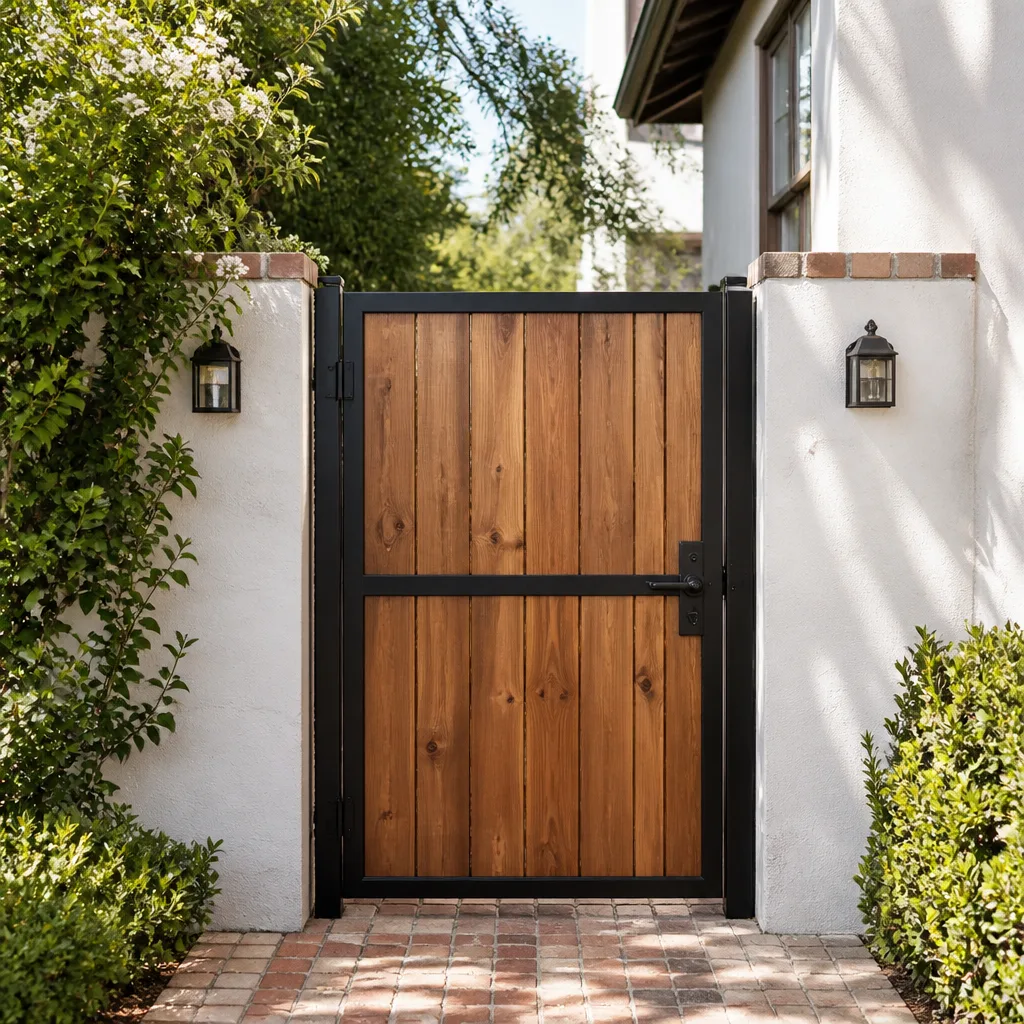 Wood & steel frame
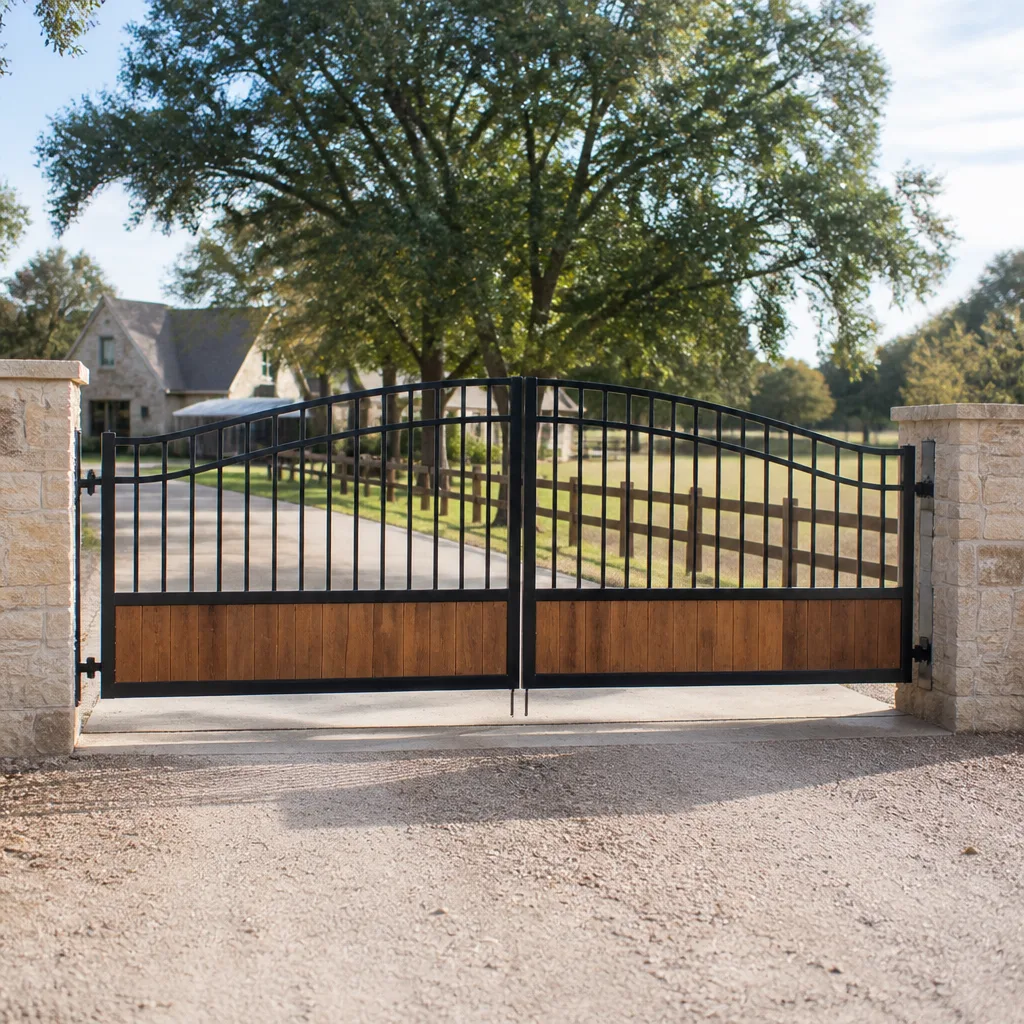 Farm & ranch
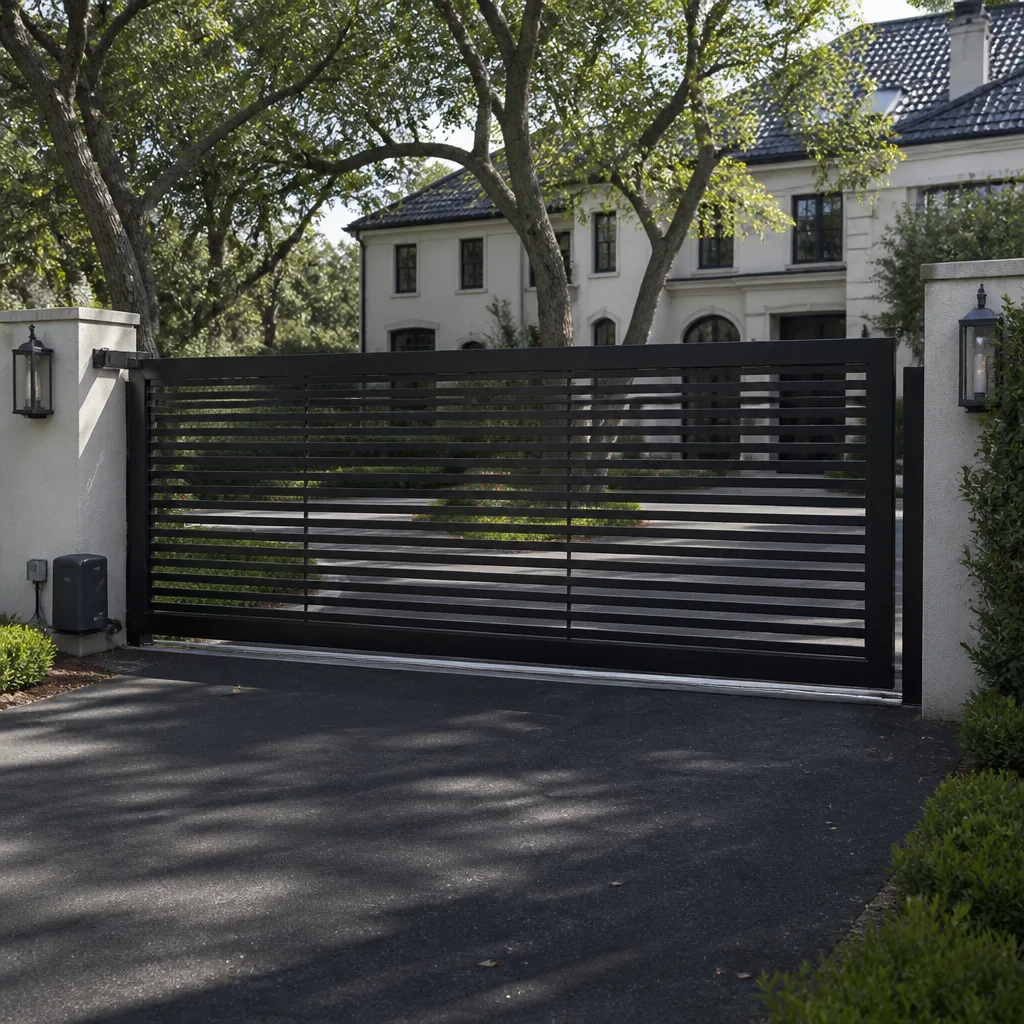 Sliding driveway gates
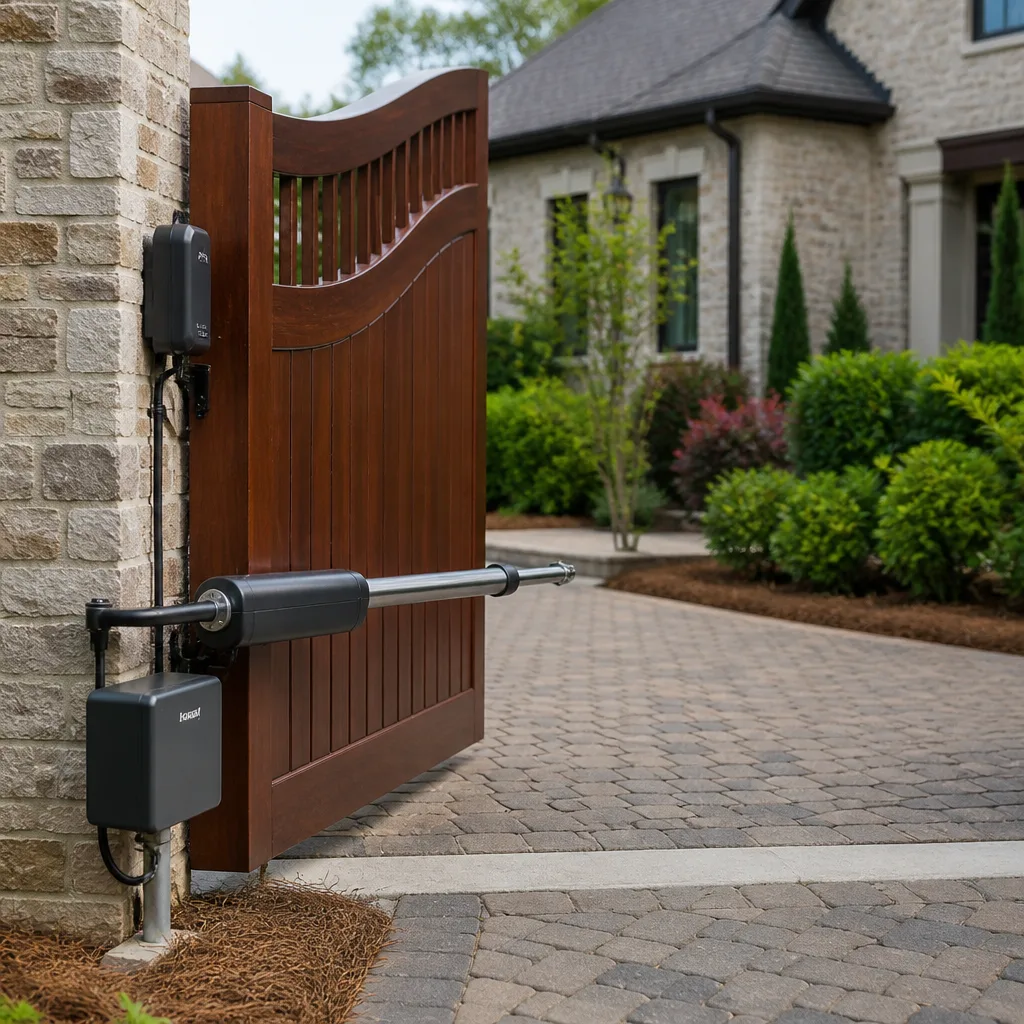 LiftMaster operators
Free on-site gate assessment - hinges, posts, and your LiftMaster or Nice gate operator checked before anything is quoted
The assessment is free and the quote is the invoice.
Get your free estimateGate Repair Emergency Preparedness Guide for Whitney Homes
A gate that fails in the wrong position stops being a convenience problem. Stuck closed, it traps your car on the wrong side at 11 p.m. Stuck open, it leaves your driveway and everything behind it exposed until someone can fix it. In our experience across Whitney, the homeowners who handle these nights calmly are the ones who thought it through beforehand. The rest discover – usually in the dark – that the manual release on their operator hasn’t moved since the day it was installed. This guide walks you through what to do, what not to do, and how to have a plan ready before the gate ever fails.
Quick Answer
If your automated gate is stuck, the first move is to switch the operator to manual release so you can open it by hand, then secure the gate physically if you can’t lock it closed. Most residential gate emergencies in Whitney come down to a dead backup battery, a seized release cable, or a safety edge that has tripped – all fixable, but none of them overnight if you don’t have the right tools or contacts on hand. Have a plan, a kit, and a phone number ready before something fails.
Styles & brands we work with
- Wrought iron
- Wood & steel frame
- Farm & ranch
- Sliding driveway gates
- LiftMaster operators
Table of Contents
- How to Manually Release a Stuck Gate Operator
- Securing a Gate That Has Failed in the Open Position
- If Your Gate Has Struck a Vehicle, Person, or Structure
- Building Your Gate Emergency Kit
- The Power Outage Scenario: Battery Backup and Dead Batteries
- Whitney Conditions That Cause Gate Failures
- Preventing the Next Emergency
How to Manually Release a Stuck Gate Operator
Every automated gate operator has a manual release, and every single one of them works best the first time you try it. After that, the cable, the key, or the release lever starts to seize – especially in Whitney’s dry summer heat where metal and rubber contract and expand through the day. Practicing the release twice a year is the single most useful habit you can build. Here’s how the procedure works across the operators we service most often.
Steps for the most common residential operators
- Turn off power at the operator switch. Not the breaker – the operator’s own power switch if it has one, or the breaker if not. Since 2016, UL 325 safety standards require most residential operators to have a lockable disconnect, so you shouldn’t have to guess.
- Locate the manual release key or lever. On most LiftMaster and Linear swing and slide operators, it’s a keyed cylinder on the top or side of the housing. Insert the key, turn, and pull the release lever down or to the side.
- For FAAC and BFT operators, the release is usually a triangular key inserted at the base of the motor. Turn it clockwise quarter-turn and the gear disengages. You’ll hear or feel the change before the arm moves.
- Test the manual swing. With the release engaged, the gate should swing or slide by hand at walking pace. If it won’t move, stop – don’t force it. A seized hinge or a dropped track is a repair, not a release problem.
- Re-engage the release only after the gate is where you want it. Turn the key back, pull the lever back, listen for the gear to seat, and restore power.
Write down which release type your gate uses and keep the key on a hook by the door. Whitney homeowners who call us at night with a gate stuck closed almost always find the key is in a drawer at the back of the garage, or was handed over in an envelope that never got opened. If you don’t have the manual release key, call Gate Repair in Whitney – we can identify the operator and get the right key or a substitute release mechanism.
Securing a Gate That Has Failed in the Open Position
A gate stuck open is a bigger problem than a gate stuck closed, and homeowners in Whitney underestimate it until they’ve spent a night with their driveway wide open. The gate has failed safe in one sense – it isn’t trapping anyone – but the property behind it is now exposed to the street, and if it’s a swing gate, it may be drifting into the sidewalk or traffic.
Temporary options until a technician arrives
- Manual lock or chain. If the gate has a manual latch or slide bolt, engage it and confirm the gate won’t move by hand. For swing gates without a latch, a chain and padlock around the gate post and frame is the honest solution. It’s not elegant, but it works.
- Cones and a temporary strap. If the gate is drifting into the roadway, use traffic cones or reflective markers and a strap to hold it back against the fence line. This matters on the wider driveways in the gated communities around Whitney Ranch, where a partly open gate can sit in the street.
- Notify household members and any delivery services. If you have a gate keypad or intercom, post a note. A gate that’s physically propped open invites someone to walk through it – and that includes people who shouldn’t.
- Don’t remove the gate. A gate off its hinges is harder to secure and easier to steal. Leave it hung, even if it’s stuck.
The one thing we ask Whitney homeowners not to do is wedge a gate open with something that could later swing free – a brick, a piece of firewood, a cooler. Those slide, the gate swings into a car, and the repair bill goes from a motor to a panel. If you’re not sure how to secure a gate safely, call us and describe the position. We can walk you through a temporary hold on the phone.
If Your Gate Has Struck a Vehicle, Person, or Structure
A gate that has hit something is in a different category from a gate that has simply stopped. It’s a safety emergency, not a convenience one, and the right response is to stop the operator from moving again until someone trained has looked at it.
If a person has been struck
- Call 911 first. If anyone is injured, that comes before anything on the gate. Whitney’s emergency response reaches most neighborhoods quickly, and a stuck gate behind you is not a reason to delay that call.
- Do not move the gate by hand if anyone is pinned or if the gate is supporting weight. A swing gate can be several hundred pounds, and a slide gate more.
- Switch off power at the operator disconnect if it’s safe and reachable. This prevents the gate from cycling again while responders are on scene.
- Do not try to re-test the operator after the incident. A gate that has hit a person has either a failed safety edge, a misaligned photo-eye, or an operator fault – and none of those are visible to the eye.
If a vehicle or structure has been struck
Turn the operator off, take photos, and call your insurance if damage is significant. Do not assume the gate is fine because it still opens. We’ve seen gate frames on Whitney properties that were bent by a vehicle and looked fine until the operator sheared its gearbox two weeks later. The frame needs to be checked before the operator runs again. The same applies to a gate that has hit a mail column or a fence post – the post usually gives way before the gate does, but not always.
Building Your Gate Emergency Kit
A gate emergency kit takes an hour to assemble and saves you hours on the night it matters. It’s not complicated, and it doesn’t need to cost much. The point is to have what you need in one place so you’re not searching a garage in the dark.
What to include
- Manual release key for your specific operator (LiftMaster, FAAC, BFT, and Linear all use different key shapes).
- A copy of the operator manual – paper, printed, in a ziplock bag. Not on the phone that has 4% battery.
- A flashlight that isn’t the one in your car. A headlamp is better.
- A padlock and 6 to 8 feet of chain long enough to lock a swing or slide gate closed.
- Reflective cones or markers for a gate stuck in the roadway.
- Two phone numbers: the gate company you call for service, and a neighbor or family member who can help move a vehicle.
- Your operator model and serial number, written on a card. When you call, this saves 10 minutes.
- A spare backup battery in the correct size for your operator, if your system uses one.
Keep the kit in the garage near the operator, not in the gate housing itself – a gate housing gets hot in Whitney’s summer and cold in winter, and both shorten battery life. If you’re not sure what operator you have, we can identify it and put together the right kit for your property; call (855) 928-1304 or see Gate Motor & Opener in Whitney.
The Power Outage Scenario: Battery Backup and Dead Batteries
Power outages in Whitney are not common, but they happen – summer brownouts, winter storms, the occasional utility fault. When the power drops, a gate without battery backup simply doesn’t open. A gate with battery backup keeps working for a period determined by the battery’s size and its age.
How battery backup works
Most residential gate operators have a battery backup option that takes over when the AC power fails. The battery runs the operator for a set number of cycles, not a set number of hours. A typical residential system might manage a few dozen cycles before it starts to fade – enough to get in and out of the driveway over a day, not enough to leave you comfortable for a week.
What to do when the battery is dead
- Switch to manual release. The same release procedure described above. The battery is not the emergency here – the emergency is needing to move the gate and having no other way to do it.
- Do not jump-start or swap in an unmatched battery. The wrong voltage or chemistry can damage the charging circuit, and in rare cases cause a fire. This is not a job for a car battery and jumper cables.
- Check the battery age. Backup batteries typically need replacement every 3 to 5 years. If yours hasn’t been checked in that window, it’s likely due.
- Call for service. We can test the battery and the charging circuit in a single visit, and we carry and service the major brands – LiftMaster, FAAC, BFT, Linear, and five others – so the right replacement usually goes in on the first call.
If you have a gate on a sloped driveway in the hillside neighborhoods around Whitney, the manual release is even more important. A gate that releases on an incline can roll once the operator lets go. Test it with an adult holding the gate, not a child.
Whitney Conditions That Cause Gate Failures
Whitney’s climate is hard on gate hardware in specific ways that a general guide won’t tell you. Our summer heat warps and expands wooden gate frames and softens rubber seals around operators. The dry air is easy on steel – rust isn’t the problem here that it is in coastal towns – but it’s tough on anything with a rubber or plastic component. The monsoon season in late summer brings sudden moisture, which finds every worn bearing and seizes it.
We see specific patterns. In the neighborhoods around Whitney Ranch and the older streets near the golf course, spring-loaded hinges on swing gates regularly stiffen in early summer because the grease has dried out. On driveways with a slope, slide gate tracks collect grit that acts like sandpaper on the rollers. And the wind – Whitney gets gusts that will push a wide single-swing gate off its stop if the operator’s close-pressure setting is too low. None of those are emergencies in themselves, but each of them is a gate that will one day stop in the wrong position.
If your neighbors’ gates all seem to fail around the same time of year, that’s not coincidence. The seasonal service visit – the Gate Installation in Whitney and service work we do for local homeowners – is often what prevents the emergency call in August.
Preventing the Next Emergency
The best gate emergency is the one that never happens. A small amount of regular attention goes a long way in Whitney, and it costs less than an emergency call.
- Test the manual release twice a year. Spring and fall. It takes 30 seconds and it’s the single highest-value habit on this list.
- Look at the safety edges and photo-eyes. A safety edge is a rubber or foam strip that reverses the gate if it touches something. Press it gently with a hand (not a finger, and not with the operator powered and the gate in motion) and confirm the operator responds. Clear any dirt or debris from the photo-eye lenses – they’re the electric eyes that stop the gate if something breaks the beam.
- Grease what the manual says to grease. Not more, not less. Over-greasing is as bad as no grease.
- Book a seasonal tune-up. Our $89 Seasonal Tune-Up covers the operator, the release, the hinges or track, and the safety devices. It’s the cheapest way to catch a problem before it becomes a night call.
- Know the model and serial number. Write it down. It matters at the moment of failure.
Common Mistakes to Avoid
- Forcing a gate that won’t move by hand. If the manual release is engaged and the gate still won’t move, something mechanical is holding it. Forcing it bends the arm or shears the hinge. In Whitney’s heat, seized bearings are the usual culprit, and they’ll resist force until they’re fixed.
- Leaving the manual release engaged after you use it. Re-engage the release before restoring power. A gate running in manual mode with power on is a gate that can swing free without warning.
- Wedge a gate open with a brick or a cooler. It slides, the gate swings, and you go from a motor repair to a gate-frame repair. Use a chain and padlock if you need the gate secured open.
- Ignoring a safety-edge failure. A gate that has hit something isn’t “working fine now”. The safety device is the reason it hit, and it will hit again.
- Skipping the release test because the gate works. A gate that opens and closes fine can still have a release that’s seized solid. The release is for the day the gate stops, and that day doesn’t announce itself.
- Using a car battery as a substitute. Wrong voltage, wrong chemistry, and a real risk of damage to the operator’s charging circuit. This is one of the few places we’ll say: don’t try to improvise.
- Calling an unlicensed handyman for a gate that has struck a person. This is a safety-device investigation, not a hinge fix. It needs a trained technician and the correct diagnostic tools.
See the difference
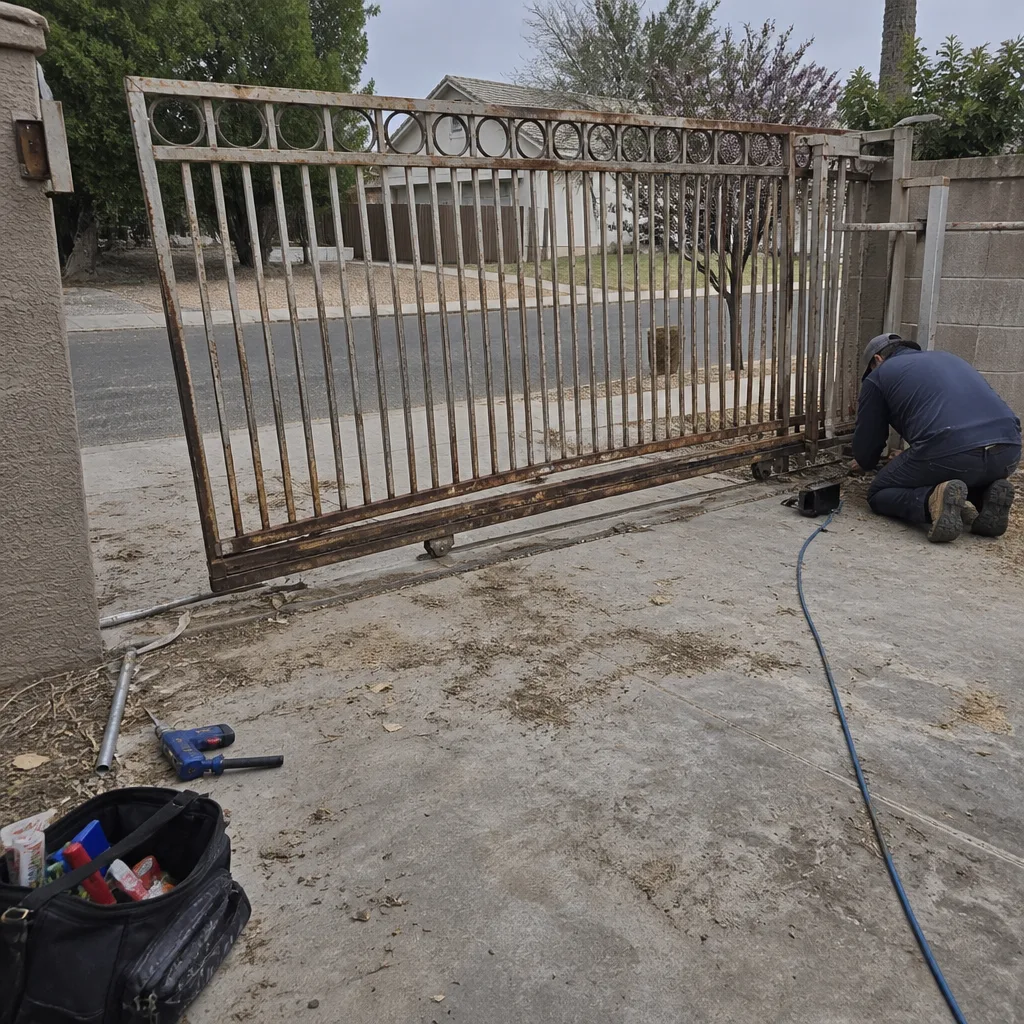 Before
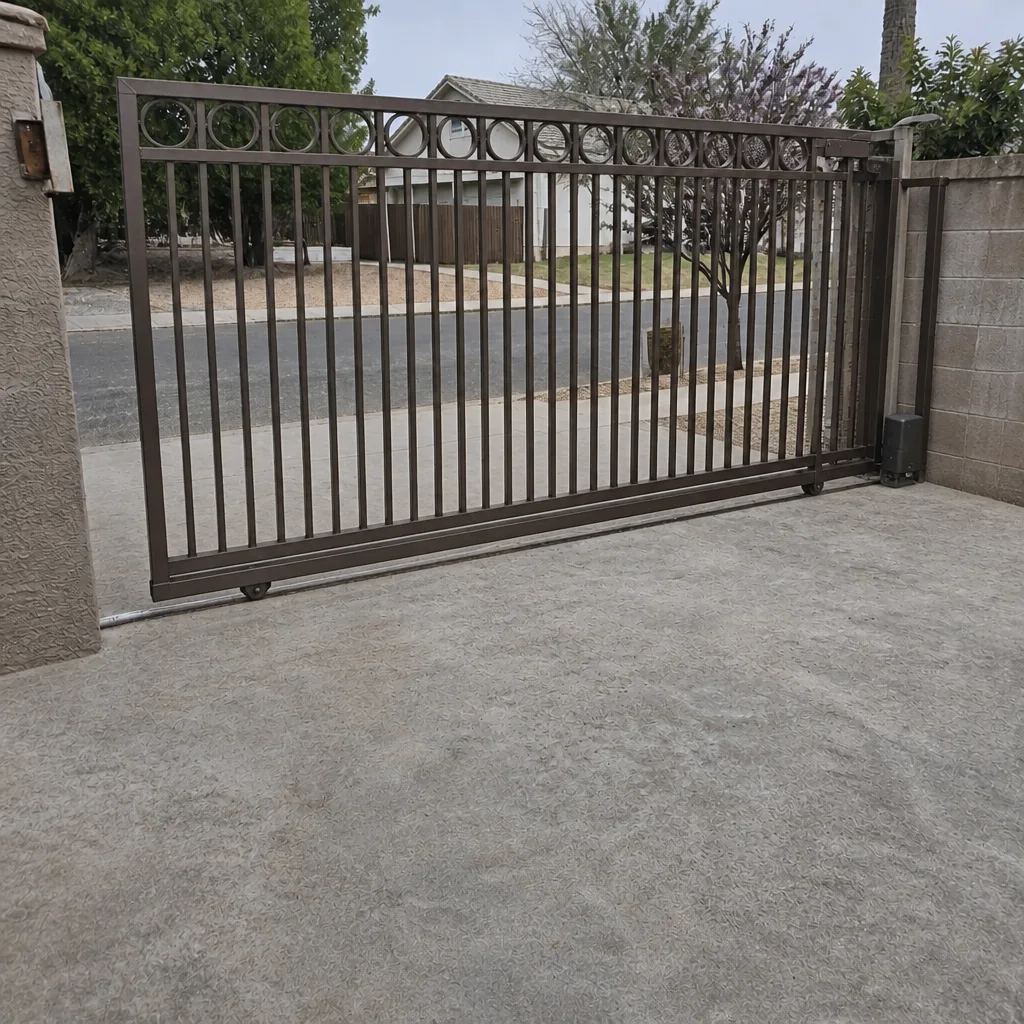 After
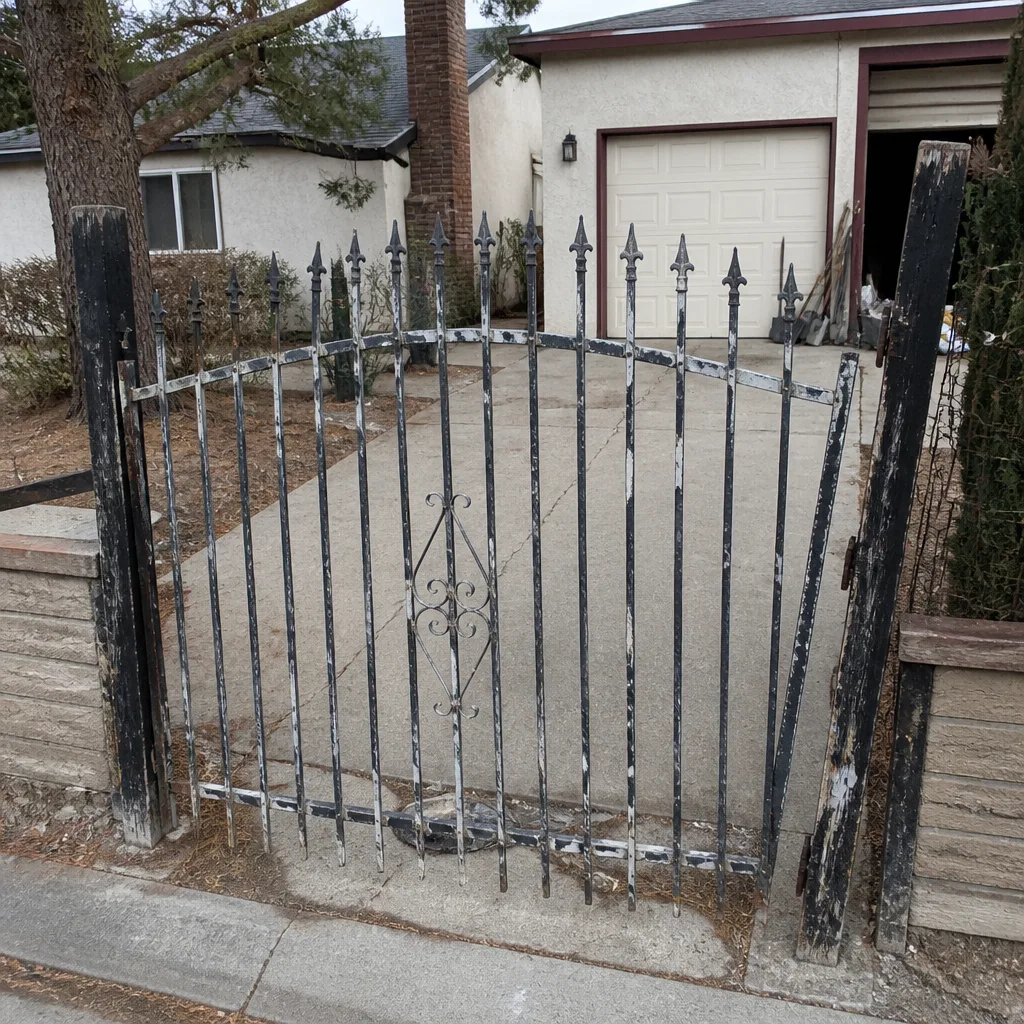 Before
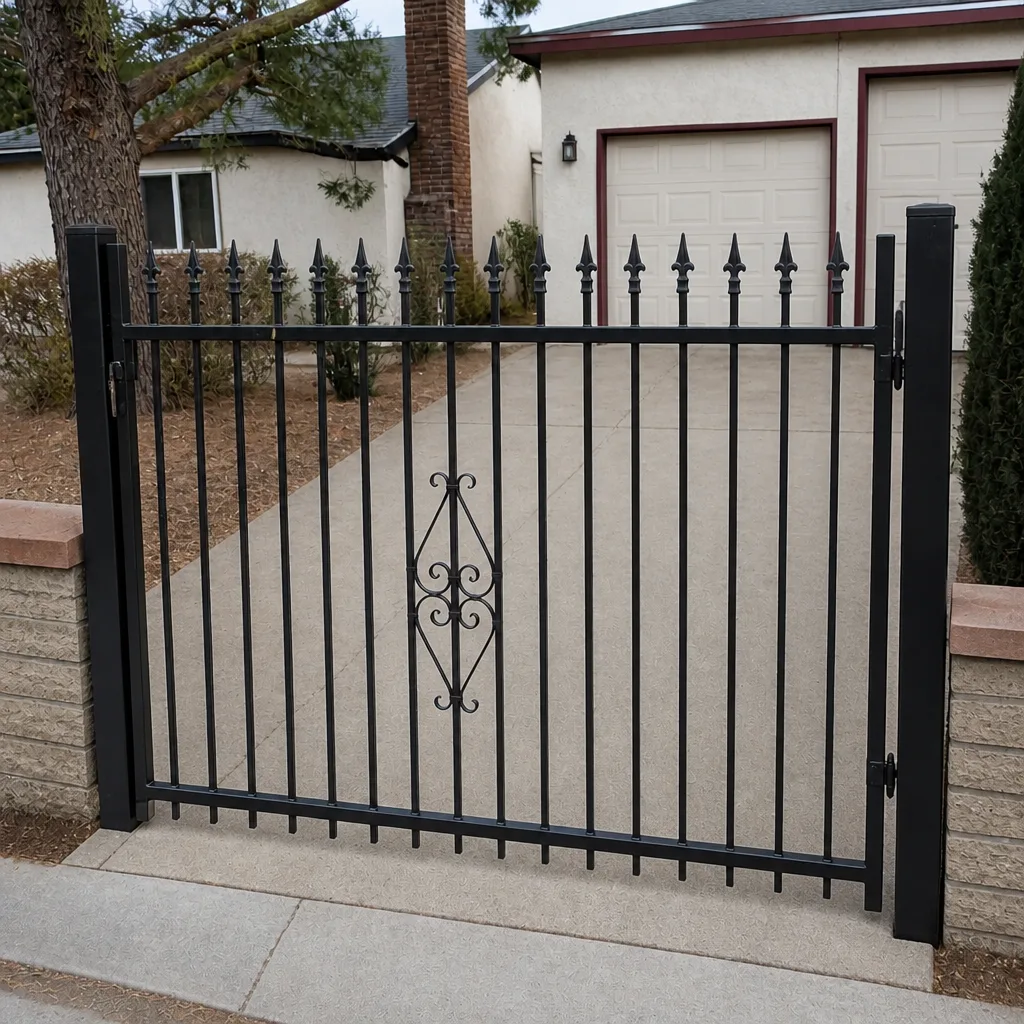 After
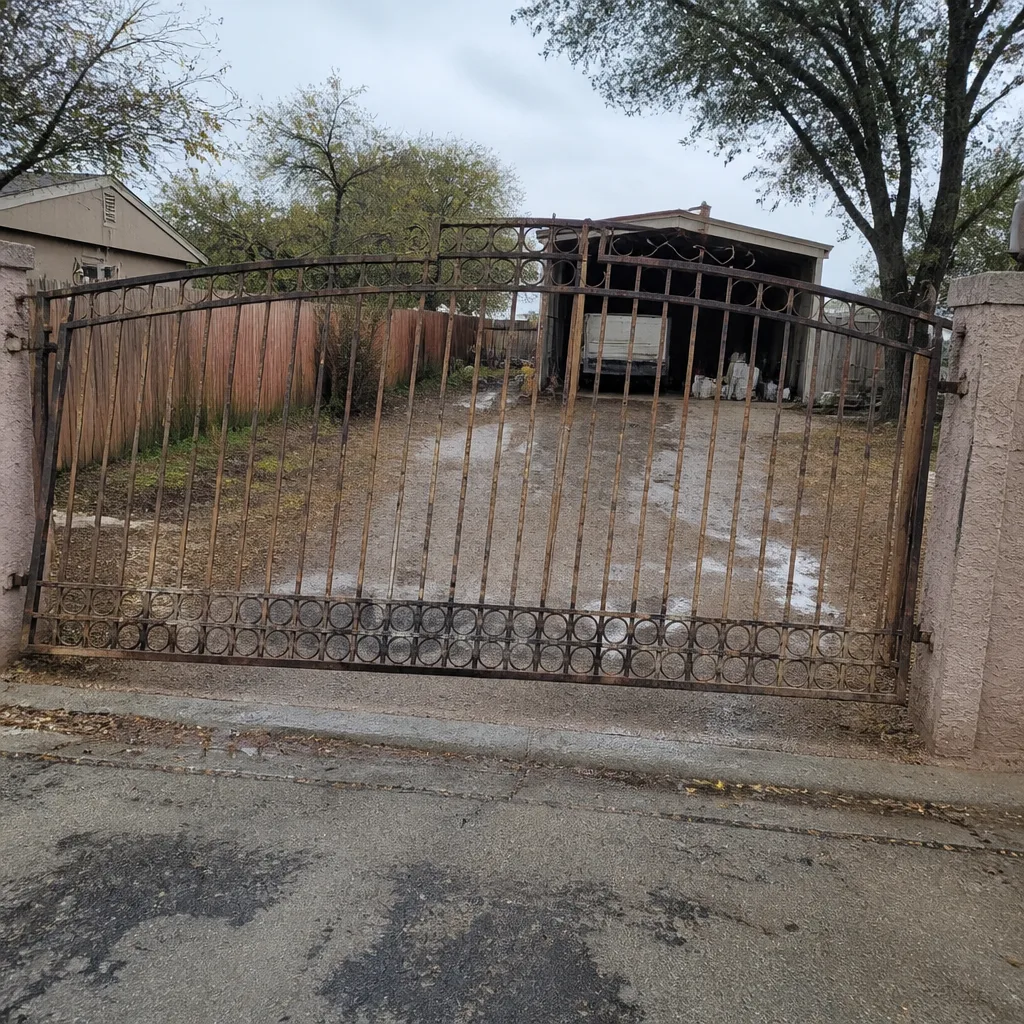 Before
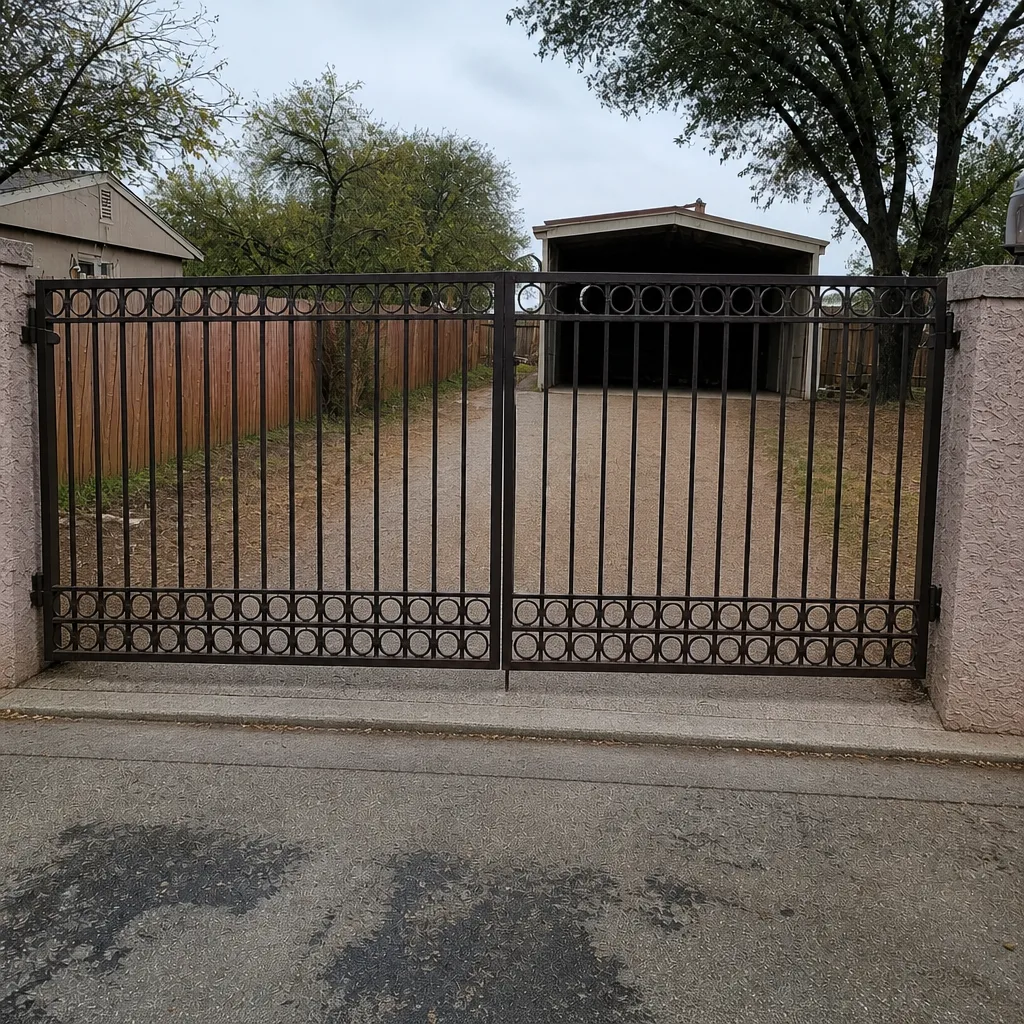 After
When to Call a Professional
Call a professional when a gate has struck a person, a vehicle, or a structure; when the manual release won’t budge; when the operator runs but the gate doesn’t move; when you smell burning from the operator housing; when a safety edge fails a test; or when the gate is stuck open and you can’t secure it yourself. Those are the situations where a same-day visit matters, and we handle them as priority calls. For everything else – a stiff hinge, a slow operator, a battery that’s past its window – book a scheduled visit and get it sorted before it turns into a night you’ll remember. Ironworks Gate Co. Whitney offers free estimates in Whitney – call (855) 928-1304.
Frequently Asked Questions
Use the manual release on the operator, then swing or slide the gate by hand. Every automated operator has one: a keyed lever for LiftMaster and Linear, a triangular key for FAAC and BFT. Find it, keep the key by the door, and test it twice a year. If you don’t have the key, call us and we’ll identify the model and get you the right one.
For genuine emergencies – a gate stuck open, a gate that has struck something, a gate trapping a vehicle – we treat it as priority and get there as fast as we can. Most Whitney calls are handled the same day or next. We’re a live answer, 24 hours a day, so call (855) 928-1304 and we’ll tell you honestly what’s available.
A backup battery typically runs the operator for a limited number of cycles, not for a set number of days, and the number drops as the battery ages. Most need replacement every 3 to 5 years. If your gate stops opening during an outage, the battery is the first thing we test, and it’s usually a same-visit replacement.
Stop. Do not force it. A gate that won’t move in manual mode has a mechanical fault – a seized bearing, a dropped track, a binding frame – and forcing it will bend the arm or shear a hinge. Call a technician and describe what you’re seeing. We can usually diagnose it from a photo and a description.
Yes. We’re trained and equipped on nine major gate-automation brands, including LiftMaster, FAAC, BFT, Linear, Viking, Ghost Controls, DoorKing, Elite, and Mighty Mule. That means the correct fix on the first visit, whatever is on the driveway.
It depends on the property, but treat it as one until you’ve secured the gate physically. A driveway standing open overnight is an invitation, and it’s also a safety issue if the gate drifts into the street. Chain it, lock it, or prop it – but don’t leave it open without securing it. Call us and we’ll walk you through a temporary hold.
The Bottom Line
Gate emergencies are almost always preventable, and the ones that aren’t are survivable. The homeowner who knows where the manual release is, has the key on a hook, keeps a flashlight and a chain in the garage, and has our number in the contact list will ride out a stuck gate in 15 minutes. The homeowner who hasn’t thought about it will spend the night discovering that the release hasn’t moved since installation. Test the release this week. Build the kit this month. Then go back to forgetting the gate exists, which is exactly what a gate is supposed to do. If anything about your gate gives you doubt, Ironworks Gate Co. Whitney is here for it. See Ironworks Gate Co. Whitney home for what we cover, or call (855) 928-1304 for a free estimate.
Written by the team at Ironworks Gate Co. Whitney.