
Last updated November 17, 2026
 Wrought iron
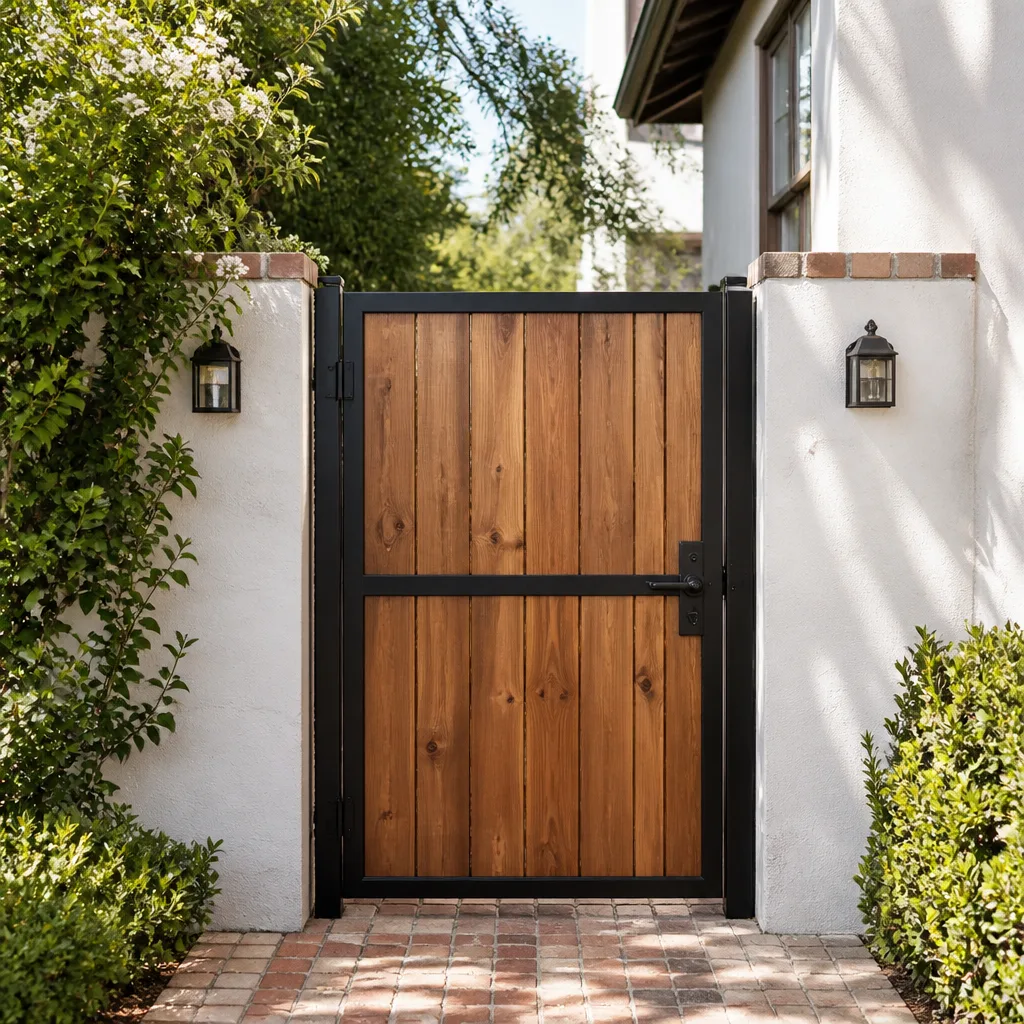 Wood & steel frame
 Farm & ranch
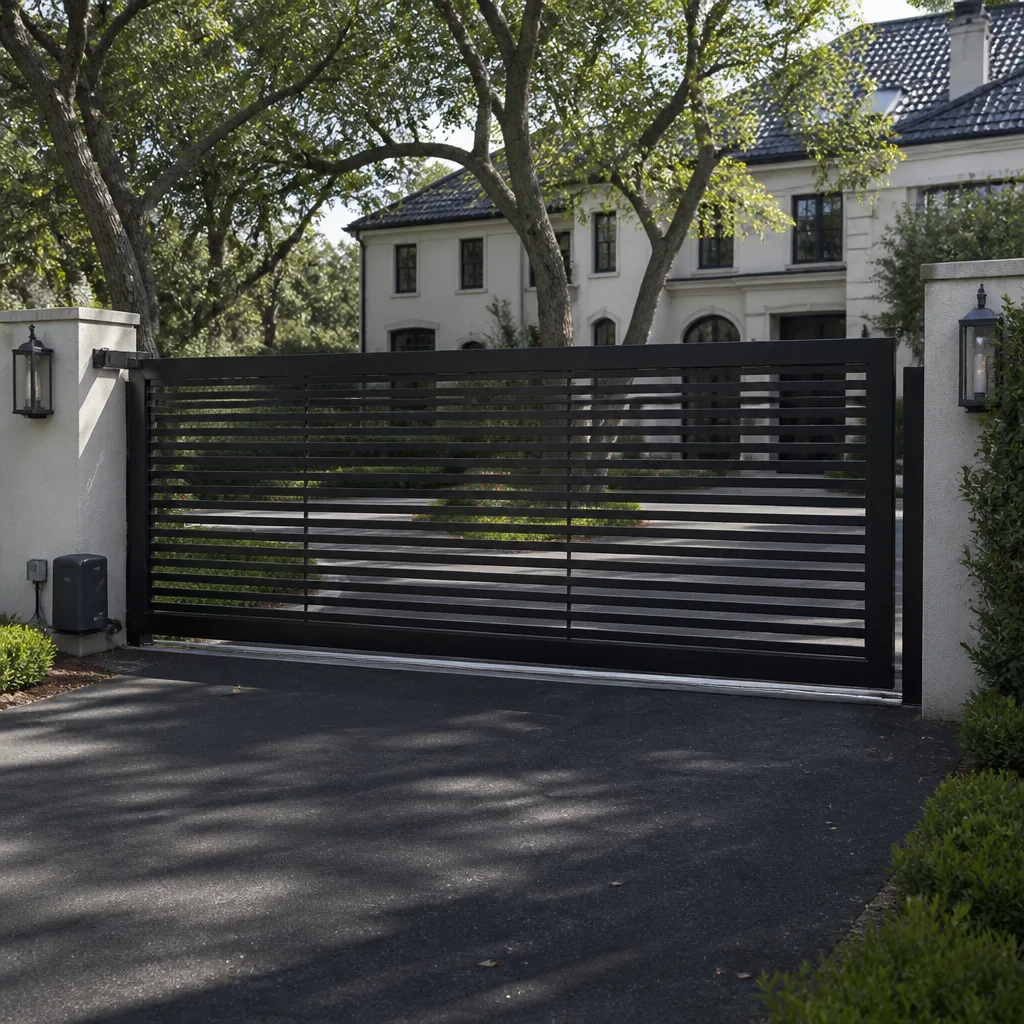 Sliding driveway gates
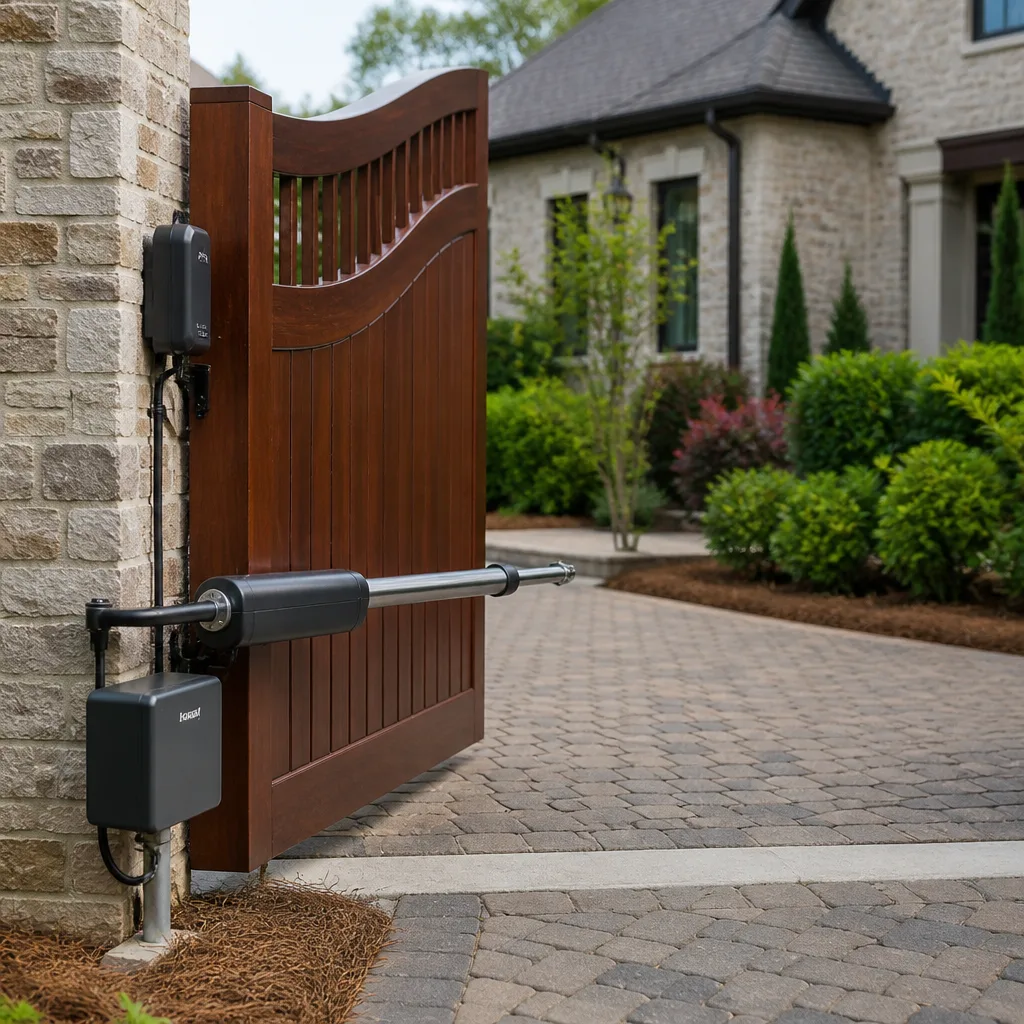 LiftMaster operators
Free on-site gate assessment - hinges, posts, and your LiftMaster or Nice gate operator checked before anything is quoted
The assessment is free and the quote is the invoice.
Get your free estimateGate Repair Maintenance Schedule: What to Do and When
Lubricating your gate every six months sounds responsible until you realize that in Whitney, the period between May and September does more mechanical damage than the other seven months combined. Sustained heat above 105°F cooks ordinary grease into a gummy paste, monsoon dust grinds its way into exposed rollers, and the first hard freeze of December finds every pivot dry and every linkage loose. A calendar built around “spring and fall” was written for a mild climate. This guide gives you the schedule that actually matches Whitney weather: what to check before the heat, after the monsoon, and before the cold, plus the tasks you can safely handle and the ones that need a trained technician.
Quick Answer
The right gate maintenance schedule for a Nevada desert home runs on four triggers, not four seasons: a pre-summer heat check in April, a post-monsoon hardware inspection in September, a pre-freeze lubrication and safety check in November, and a usage-based service interval tied to how many times the gate cycles per day. Homeowners can handle cleaning, visual inspection, and basic lubrication with no tools; anything involving spring tension, motor calibration, or safety-edge testing belongs with a trained gate technician.
Styles & brands we work with
- Wrought iron
- Wood & steel frame
- Farm & ranch
- Sliding driveway gates
- LiftMaster operators
Table of Contents
- Why a Calendar Schedule Fails in Whitney
- The Four Maintenance Triggers That Replace the Calendar
- Homeowner Tasks: What You Can Safely Do
- Professional Tasks: What Needs Calibration Equipment
- Which Lubricants Fail Above 105°F (and What to Use Instead)
- Matching Your Service Interval to Your Gate’s Usage
- How to Log Maintenance So a Technician Diagnoses Faster
- The Compounding Cost of Deferred Maintenance
Why a Calendar Schedule Fails in Whitney
Most gate maintenance advice you’ll find online assumes four distinct, mild seasons. Whitney doesn’t have those. What we have is a long dry stretch that bakes hardware from May through September, a monsoon window in July and August that throws grit and standing water at every exposed joint, and a short but genuine freeze in December and January that finds every dry bearing and loose bolt. That’s three distinct stress events in roughly eight months, and a “twice a year” schedule can miss all three.
In our experience across Whitney, the failures we see cluster in predictable windows. The first week of a real heat wave produces more motor strain calls than any other period: grease thins, motor boards work harder, and gates that were already struggling a little in April suddenly stall in June. The weeks after a monsoon dump produce hinge and track complaints as dust turns to a gritty paste inside rollers. And the first freeze produces the sensor and safety-edge calls, because cold stiffens wiring and shrinks tolerances that were fine at 90°F.
A schedule organized around temperature and weather events rather than the page on the calendar catches each of these before it becomes a repair. That’s the whole idea behind this guide, and it’s how we approach every Whitney gate we service.
The Four Maintenance Triggers That Replace the Calendar
Here are the four triggers we recommend for any Whitney gate, in the order they hit during the year:
- Pre-summer heat check (late April, before sustained 100°F days). Clean and re-lubricate with a heat-stable product, inspect motor ventilation, check battery backup, test all safety devices, and tighten every bolt that has been working loose through spring.
- Post-monsoon hardware inspection (early September, after the July-August rains). Flush dust and grit from rollers and tracks, check for rust bloom on welds and hinges, confirm the gate still swings or slides level, and re-test the safety edges and photo eyes.
- Pre-freeze lubrication and safety check (November, before the first hard freeze). Fresh lubrication on every pivot and linkage, a look at any wiring that runs exposed, and a full safety-reverse test while the weather is still moderate.
- Usage-based service interval. A gate that cycles 50 times a day needs professional service more often than one that opens twice. We cover the exact intervals in the section below.
Notice the trigger before each task, not a month. Whitney heat, Whitney dust, and Whitney cold are the real schedule. If you set reminders on your phone for late April, early September, and mid-November, you’ve captured most of what matters.
Homeowner Tasks: What You Can Safely Do
Plenty of gate maintenance is genuinely safe for a homeowner to handle with no special tools, and doing these tasks consistently is what keeps small problems from turning into service calls. Here’s what we’d hand a Whitney homeowner without hesitation:
- Clear the track or the swing path. Sweep gravel, leaves, and desert grit out of the track on a sliding gate, or out of the swing arc on a swing gate. This is the single highest-value task on the list, and it takes five minutes.
- Wash down the gate and hardware. A garden hose on a mild day removes the fine dust that works its way into moving parts. Avoid a pressure washer on bearings, motors, and control boxes.
- Look for the obvious. Walk the gate slowly and watch for a sagging hinge, a weld that has started to crack, a gap in the safety edge, an obvious rust spot, or a control-box cover that has come loose.
- Listen on every cycle. A grind, a squeal, or a new rattle is diagnostic information. Note it and mention it when you call.
- Apply basic lubrication to exposed pivots, rollers, and the chain or track surface using a product matched to Whitney heat, covered in the lubrication section below.
- Test the safety reverse once a month. Put an object in the gate’s path and confirm the gate reverses or stops. If it doesn’t, stop using the gate and call a technician.
None of this requires a ladder, a wrench, or a screwdriver. It’s just attention, applied on a schedule.
Professional Tasks: What Needs Calibration Equipment
Some tasks look simple and aren’t. Anything involving stored spring energy, motor board calibration, or safety-device alignment can cause serious injury or a much larger repair bill if it’s handled without the right tools and training. Please don’t attempt these yourself, even if a video makes them look easy:
- Spring tension adjustment or replacement. A torsion or extension spring under load can release enough force to cause serious injury, and the correct tension depends on the gate weight and geometry. This is a technician job, always.
- Motor force and limit calibration. Modern operators (LiftMaster, DoorKing, Elite, and the rest) use a programmed force-profile. Setting it wrong means the gate either won’t close reliably or closes too hard, which is a safety problem, not a convenience one.
- Safety-edge and photo-eye alignment and testing. The devices must be tested against the actual gate cycle, not just powered on. A photo eye that lights up but doesn’t trigger a reverse is worse than no eye at all, because it feels safe.
- Battery backup and control-board diagnostics. Board faults, blinking error codes, and backup battery failures need a technician who knows the brand’s diagnostic tree.
- Welding, hinge replacement, and structural repairs. A sagging gate is usually a hinge or weld problem, and welding aluminum or steel correctly in the gate’s own frame is its own skill.
- Any service on the electrical feed or control wiring. Line voltage and low-voltage control wiring both belong to a trained hand.
If your gate is showing any of these symptoms, see our guide to gate repair in Whitney for what to expect on the service call.
Which Lubricants Fail Above 105°F (and What to Use Instead)
Most consumer gate lubricants are formulated for a Mediterranean or mid-Atlantic climate. In sustained Whitney heat above 105°F, several common products break down in ways that are worse than no lubricant at all:
- Thin general-purpose oils evaporate or run off within weeks, leaving rollers dry and exposed.
- Petroleum grease softens and turns gummy, then traps dust and grit instead of shedding it. That grit grinds away at the roller and hinge surfaces underneath.
- Silicone sprays are fine as a light surface treatment but don’t hold up under the load on a heavy gate hinge or a chain under tension.
- Anything labeled “all-season” without a stated temperature range is a gamble in a Whitney summer.
What holds up in Nevada heat is a high-temperature lithium-complex or synthetic grease rated for sustained high operating temperatures, applied thinly to rollers, hinges, and pivot points; a chain-and-cable lubricant that’s designed for outdoor use on gates and garage doors; and dry-film PTFE spray for tracks and sliding surfaces, where dust shed matters more than load capacity. The product label should state a working temperature range that comfortably exceeds your hottest day.
One more rule: less is more. Over-lubricating a gate in Whitney attracts dust. A thin film on the correct surfaces beats a heavy coating every time.
Matching Your Service Interval to Your Gate’s Usage
The last piece of the schedule is the one most homeowners miss: how often your gate actually cycles. A rural gate that opens twice a day is a very different machine from a gate on a busy driveway that cycles fifty times.
- Light use (under 10 cycles per day): the three seasonal checks are usually enough, with an annual professional tune-up.
- Moderate use (10 to 30 cycles per day): add a professional inspection around the mid-summer mark, since the gate never really cools down.
- Heavy use (over 30 cycles per day): plan on professional service every four to six months. The drive train and the operator are both working hard in Whitney heat, and intervals need to reflect it.
If you’re not sure how many cycles you’re running, most modern operators keep a count. Ask your technician on the next visit; it’s a useful number to have. Our gate motor and opener in Whitney guide explains how the operator logs cycles and why they matter for lifespan.
How to Log Maintenance So a Technician Diagnoses Faster
The most underrated cost-savings tool in gate maintenance is a simple log. A technician who arrives to a written history diagnoses a fault in minutes instead of an hour. You don’t need software; a notebook taped to the inside of the control-box cover works perfectly.
Every entry should capture:
- Date and cycle count (if your operator tracks one).
- What you did (cleaned track, lubricated hinges, tested reverse).
- Any change in behavior (new noise, slower close, one photo eye flickering).
- Any professional service performed, and what was replaced.
- Any weather event in the previous week (a big monsoon dump, a heat wave, a hard freeze) if the symptom showed up after it.
That last item is the one most homeowners skip, and it’s the one that tells a technician the most. “It started grinding after the rain last Tuesday” is worth more than an hour of poking around. Bring the log to the visit, or text a photo of it when you call. For a Whitney homeowner, that log is what turns a two-visit diagnosis into a single-visit repair.
The Compounding Cost of Deferred Maintenance
Deferred maintenance on a gate isn’t a straight line. It compounds, because a cheap part failing takes out an expensive one next to it. A worn roller is a $200 repair. Left until it seizes, that same roller can score the track, stress the hinge, and load the operator’s drive train until a $900 motor board fails. Now you’re replacing a board and a roller and a track section.
The same pattern repeats across the gate. A dry hinge becomes a cracked weld. A misaligned photo eye becomes a control-board fault. A weak battery backup becomes a stall at the worst possible moment, because the gate was still running when the power went out. None of these are dramatic on their own. What makes them expensive is timing: in Whitney, they all seem to fail in the first heat wave or the first freeze, when everyone else’s gate is failing too.
Budget the annual professional tune-up as insurance against that. Our $89 Seasonal Tune-Up is designed specifically for this: a full inspection and lubrication matched to the Whitney schedule, done before the failure, not after. If you want a second set of eyes on a written estimate you’ve already been given, we offer a free second opinion. Either way, the repair you avoid is almost always cheaper than the repair you schedule in a panic.
Common Mistakes to Avoid
- Following a “twice a year” calendar copied from a mild-climate website. In Whitney that schedule misses both the pre-summer heat check and the post-monsoon inspection, which are the two that matter most.
- Using a thin general-purpose oil in summer. It runs off in weeks, leaving rollers dry and grinding. Use a high-temperature-rated grease instead.
- Over-lubricating tracks and chains. A thick coating attracts Whitney dust, which turns into an abrasive paste that wears parts faster than no lubricant.
- Adjusting springs or motor force yourself. Both are genuinely dangerous when set wrong, and both need calibration equipment. Leave them to a trained technician.
- Ignoring a new noise. A grind or squeal is the gate telling you which part is about to fail. Note it, log it, and get it looked at before the next heat wave.
- Never testing the safety reverse. A gate that closes without reversing on an obstruction is a hazard, and a photo eye that lights up without triggering a reverse is worse than none. Test it monthly.
- Not keeping a log. Without a written record, a technician has to start from scratch, which means more time on the clock and a less accurate first diagnosis.
See the difference
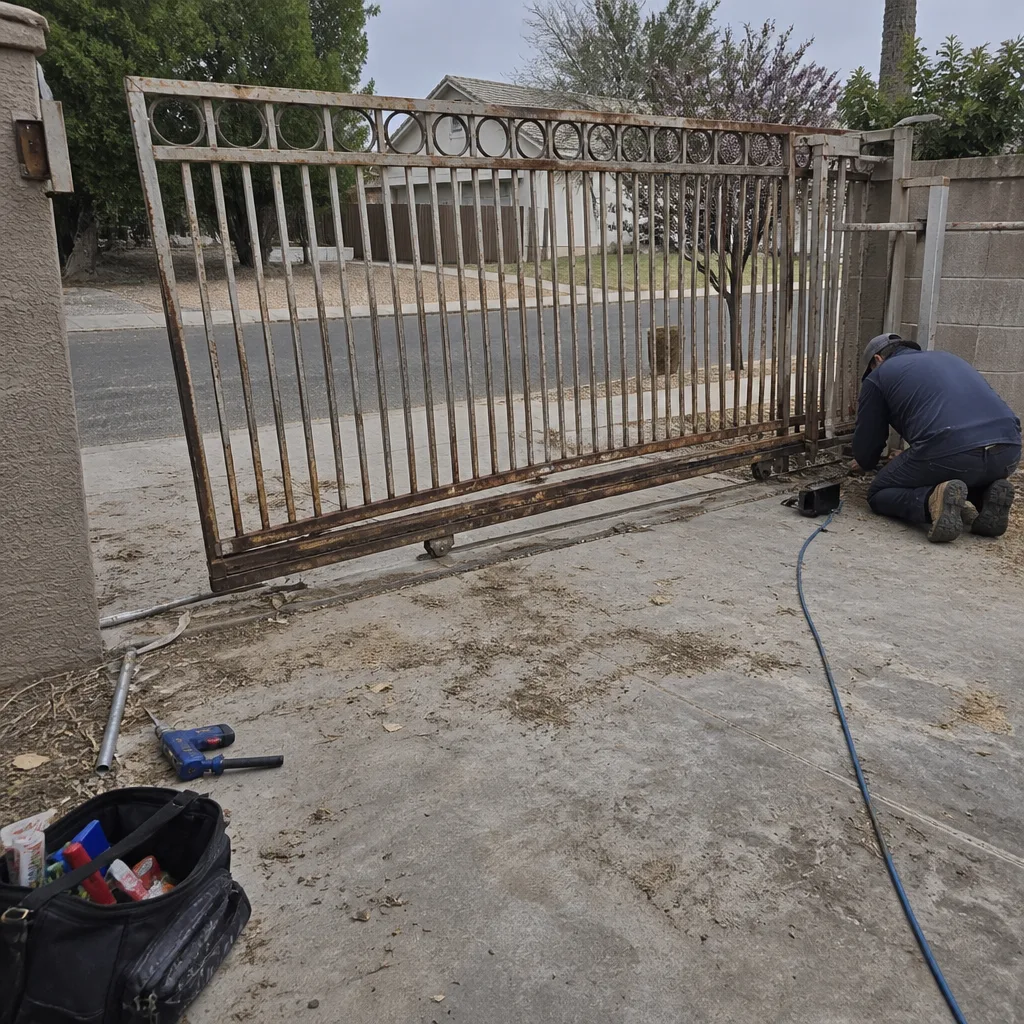 Before
 After
 Before
 After
 Before
 After
When to Call a Professional
Call a gate technician the moment you notice any of the following: a gate that reverses intermittently or fails the safety test, a grinding or squealing noise that appeared suddenly, visible sagging at a hinge, a weld that has started to crack, a photo eye that won’t stay aligned, an operator that throws a fault code, or a battery backup that no longer holds. Also call if the gate has not had a professional inspection in over a year, or if you’ve just moved into a Whitney home and don’t know the gate’s service history.
Ironworks Gate Co. Whitney offers free estimates in Whitney. We service LiftMaster, FAAC, BFT, Linear, Viking, Ghost Controls, DoorKing, Elite, and Mighty Mule equipment, and our technicians have up to 13 years of experience. Most jobs are done in a single visit, and every job is backed by our written 90-Day Done Right Promise. Call (855) 928-1304 for a free estimate.
Frequently Asked Questions
For most Whitney homes, a professional service every six to twelve months, timed to the pre-summer heat check in April and the pre-freeze check in November, plus any usage-based interval (heavier cycle counts need four to six months). The right answer depends on how many times a day your gate opens and closes. Call (855) 928-1304 for a free estimate and we’ll help you set the right interval.
A high-temperature lithium-complex or synthetic grease rated well above 105°F for rollers, hinges, and pivots, a dedicated chain-and-cable lubricant for the drive chain, and a dry-film PTFE spray for tracks and sliding surfaces. Avoid thin general-purpose oils and any product without a stated temperature range. Call (855) 928-1304 for a recommendation specific to your gate.
No. A torsion or extension spring holds enough stored energy to cause serious injury, and the correct tension depends on the gate weight and geometry. Spring work is a trained-technician job. Call (855) 928-1304 and we’ll come out with the right equipment.
Four things: clean and re-lubricate with a heat-stable grease, confirm the motor’s ventilation is clear, test the battery backup, and test every safety device. Do this in late April, before the first sustained 100°F stretch. If anything fails, call (855) 928-1304 before the heat wave, not during it.
Flush grit from the track and rollers, inspect hinges and welds for rust, confirm the gate still sits level, and re-test the safety edges and photo eyes. Monsoon dust acts like sandpaper inside moving parts, so a post-monsoon inspection is worth doing even if the gate seems fine. Call (855) 928-1304 if you’re unsure what to look for.
Yes. A written log of dates, tasks, and symptoms lets a technician diagnose a fault in minutes rather than an hour, which shortens the service call and lowers the bill. It also flags patterns, like a noise that appears after every monsoon, which are nearly impossible to spot from a single visit. Call (855) 928-1304 to book a tune-up and start your log.
For the full scope of what we do, from welding and hinges to automation and access control, start at our Ironworks Gate Co. Whitney home. Thinking about a new gate instead of a repair? See gate installation in Whitney.
The Bottom Line
A gate maintenance schedule for a Whitney home should be built around temperature and weather events, not months on a calendar. Do three checks a year: late April before the heat, early September after the monsoon, and November before the freeze. Handle the safe tasks yourself, and leave spring tension, motor calibration, and safety-device testing to a trained technician. Use a high-temperature lubricant rated for Nevada summers, track your gate’s usage cycles, and keep a simple written log. Deferred maintenance compounds, so the cheapest repair is always the one done before the failure. That’s the whole schedule.
Written by the team at Ironworks Gate Co. Whitney.