
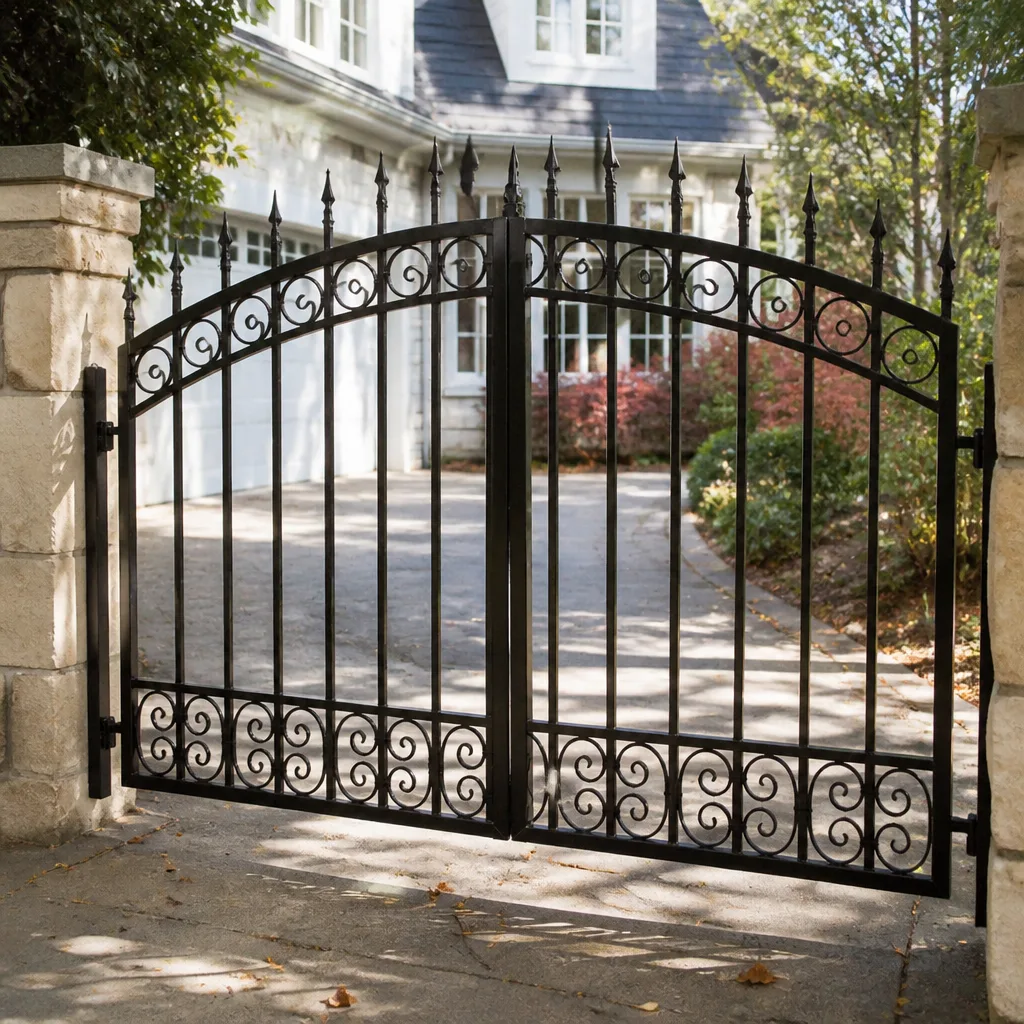
 Wrought iron
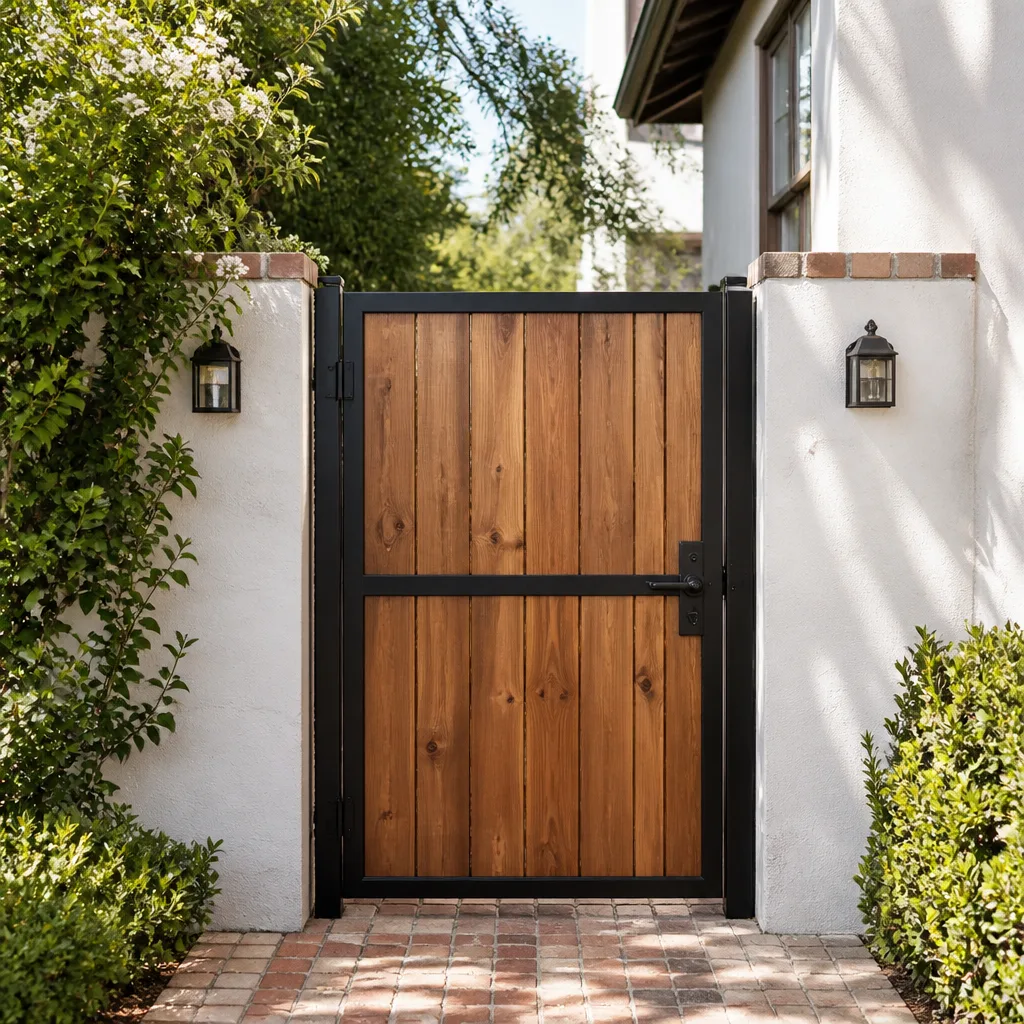 Wood & steel frame
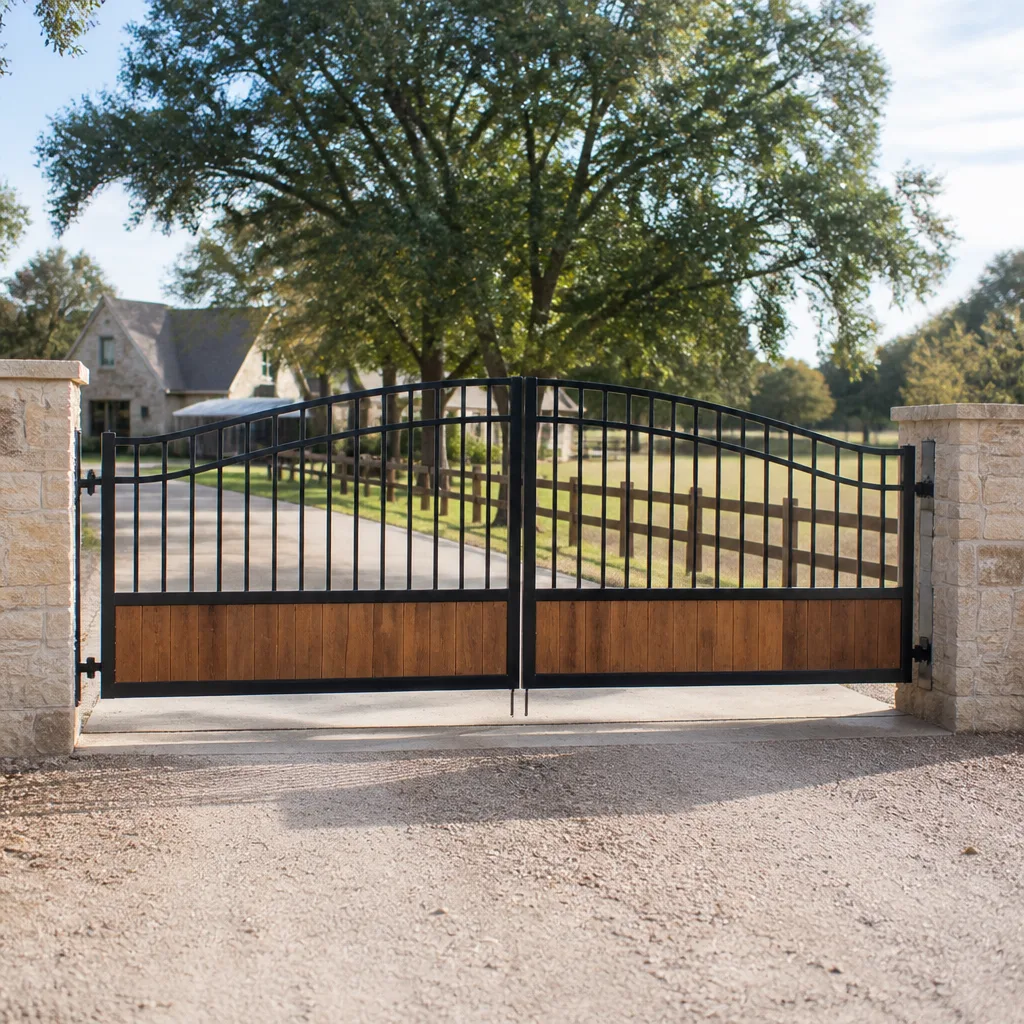 Farm & ranch
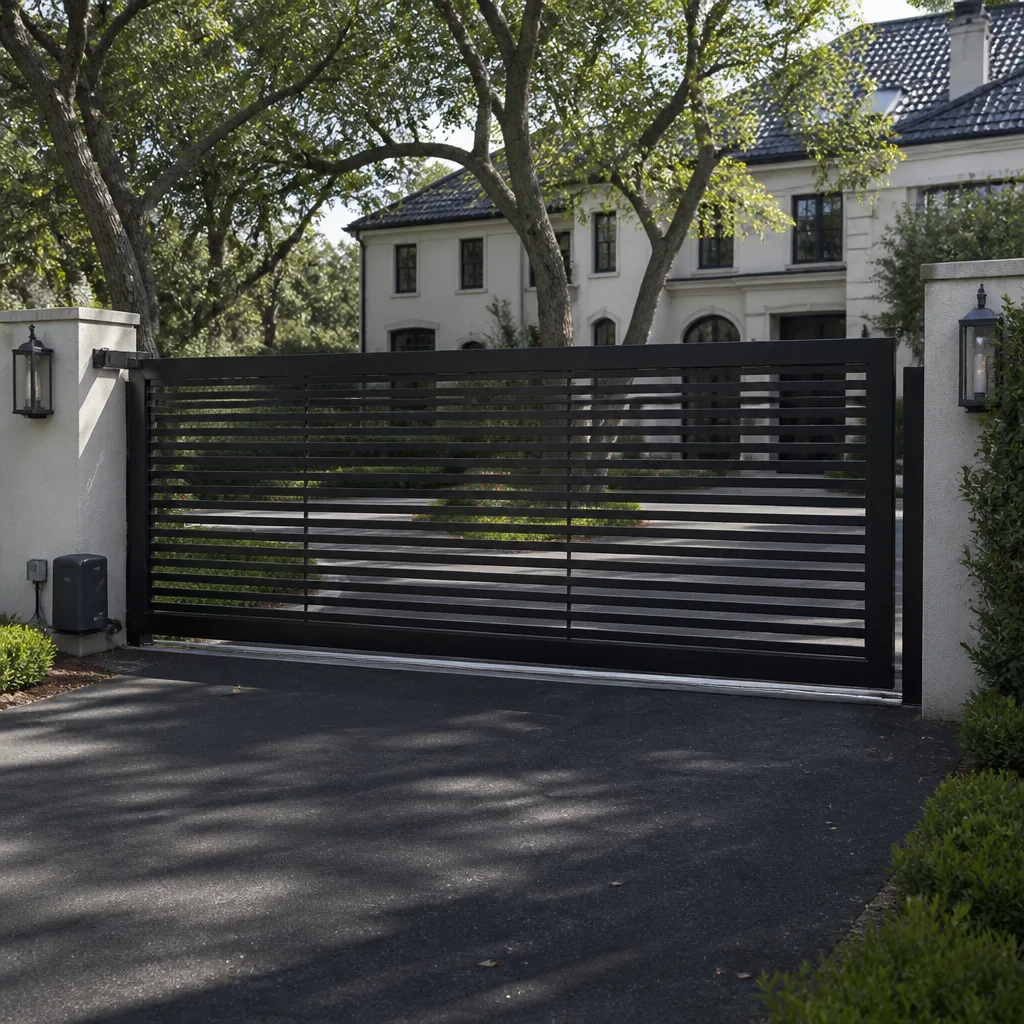 Sliding driveway gates
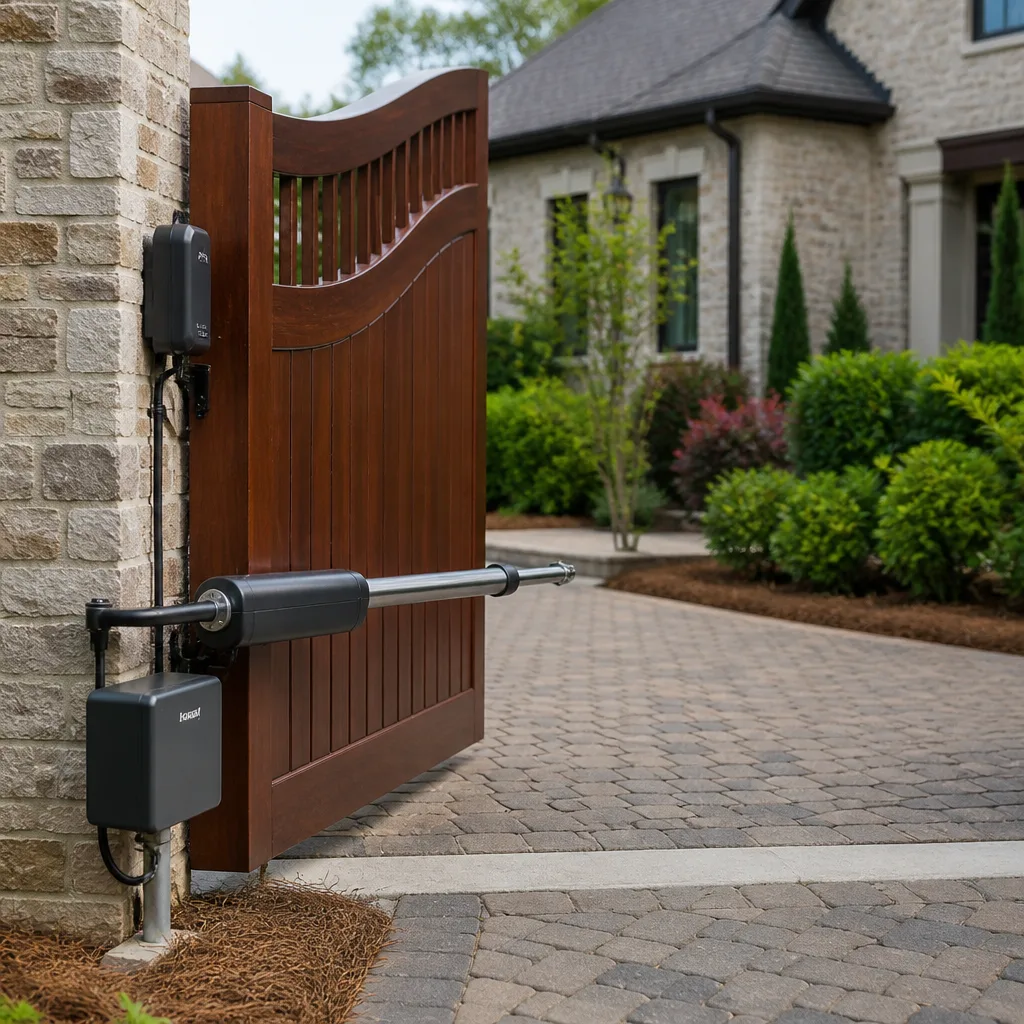 LiftMaster operators
Free on-site gate assessment - hinges, posts, and your LiftMaster or Nice gate operator checked before anything is quoted
The assessment is free and the quote is the invoice.
Get your free estimateStyles & brands we work with
- Wrought iron
- Wood & steel frame
- Farm & ranch
- Sliding driveway gates
- LiftMaster operators
See the difference
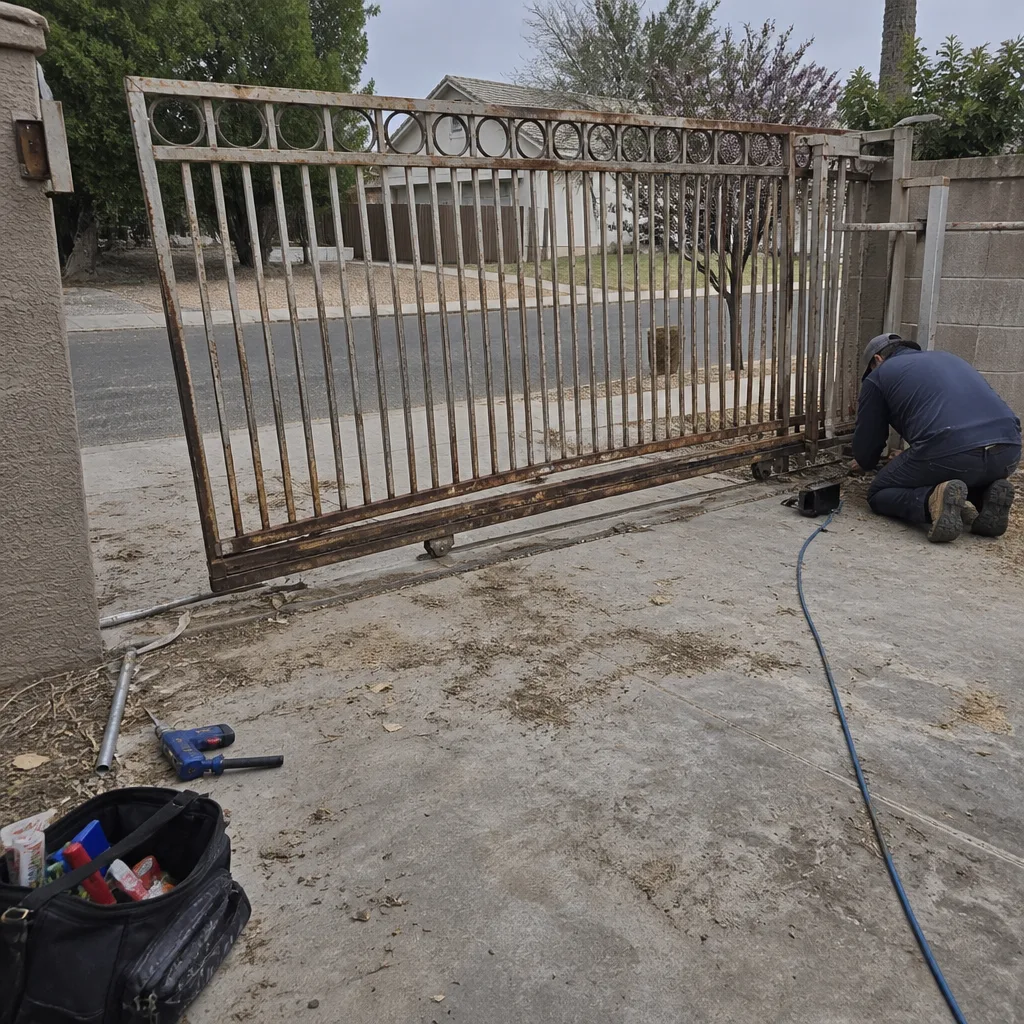 Before
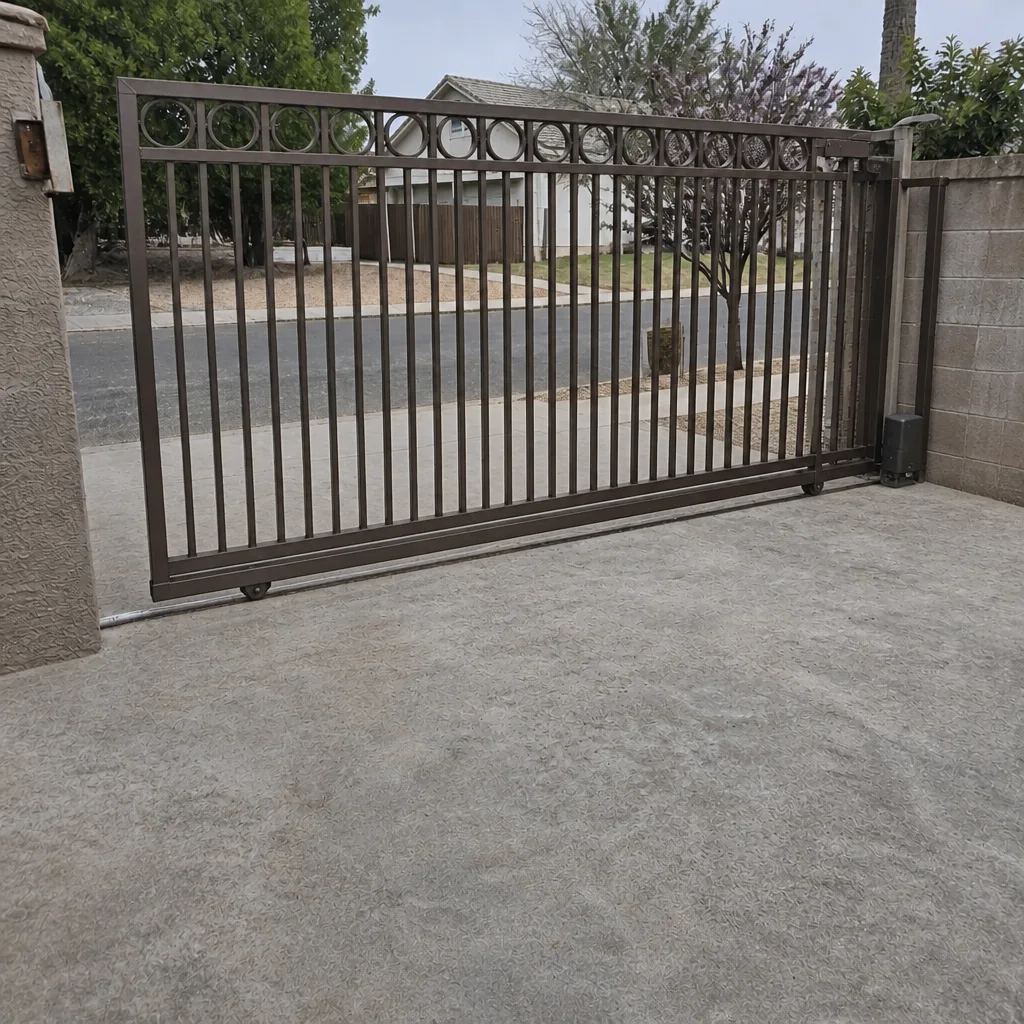 After
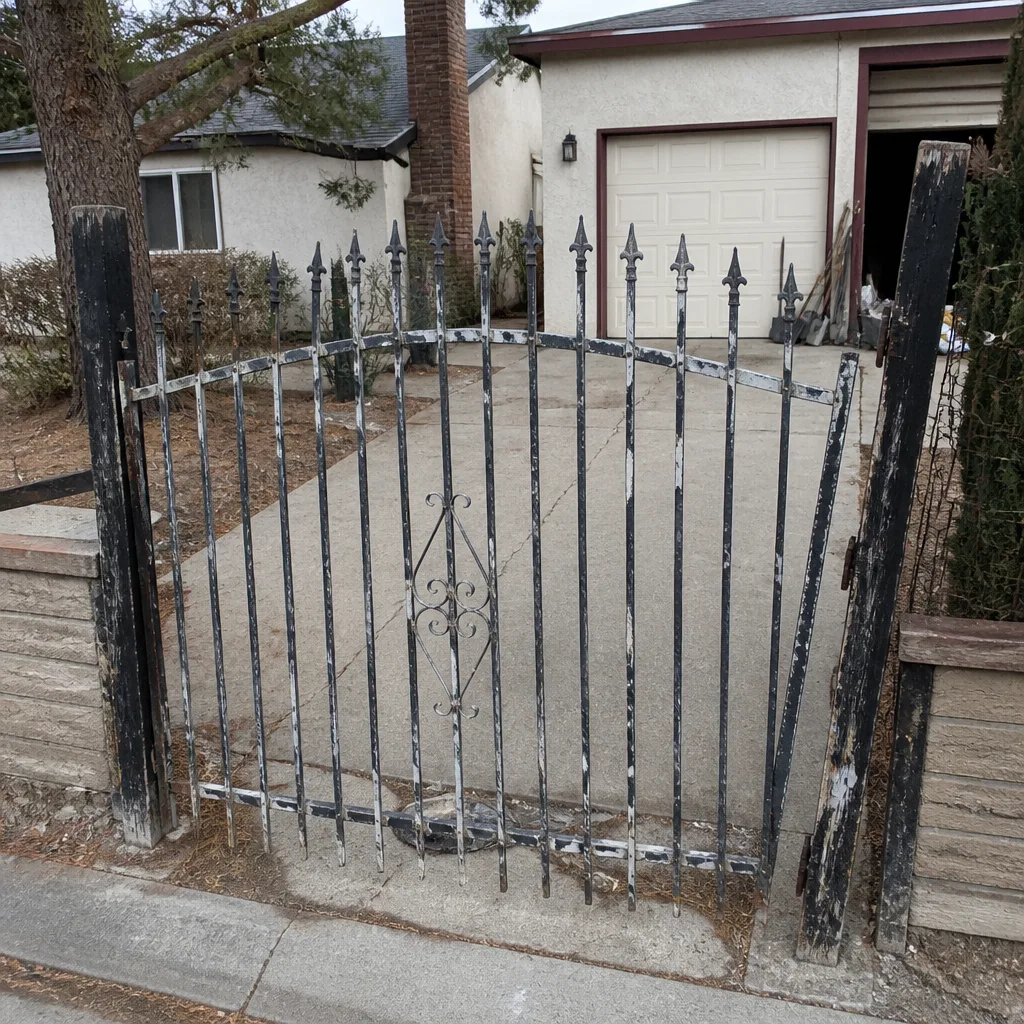 Before
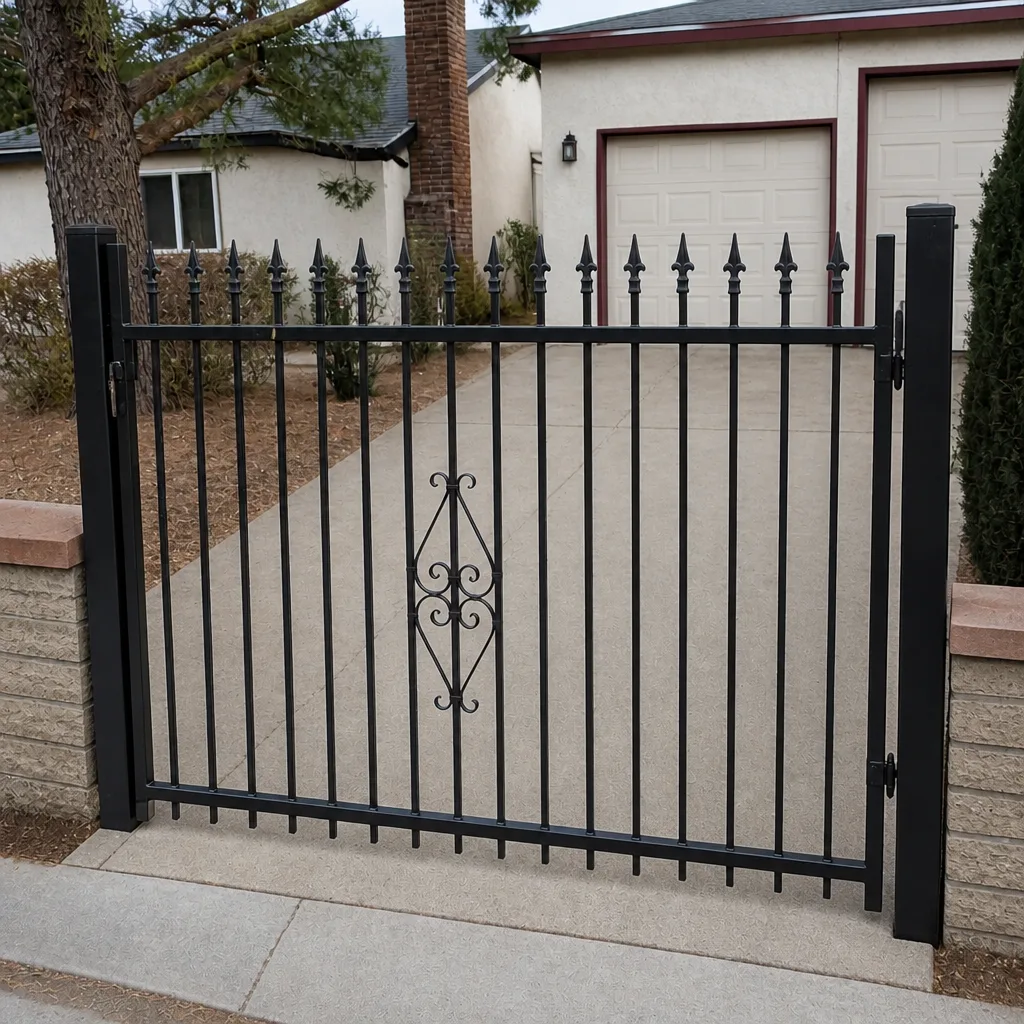 After
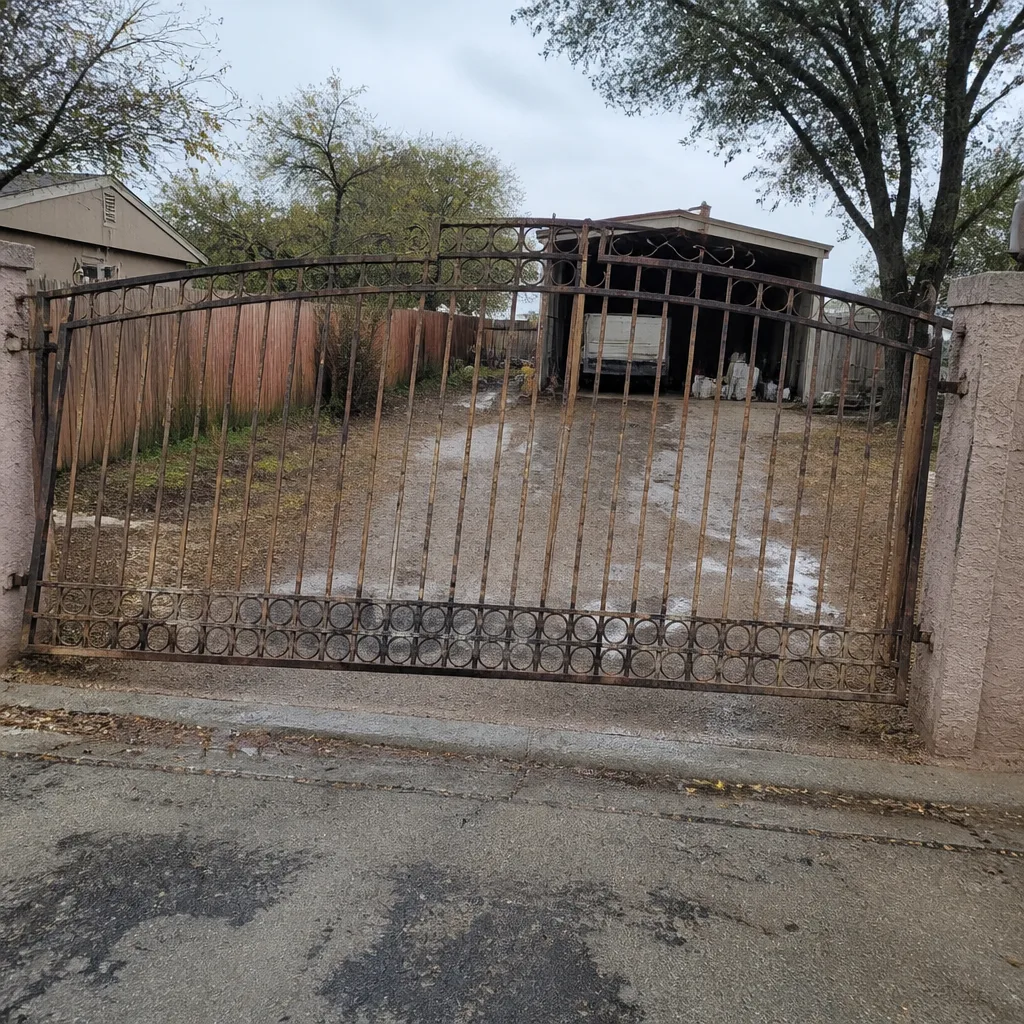 Before
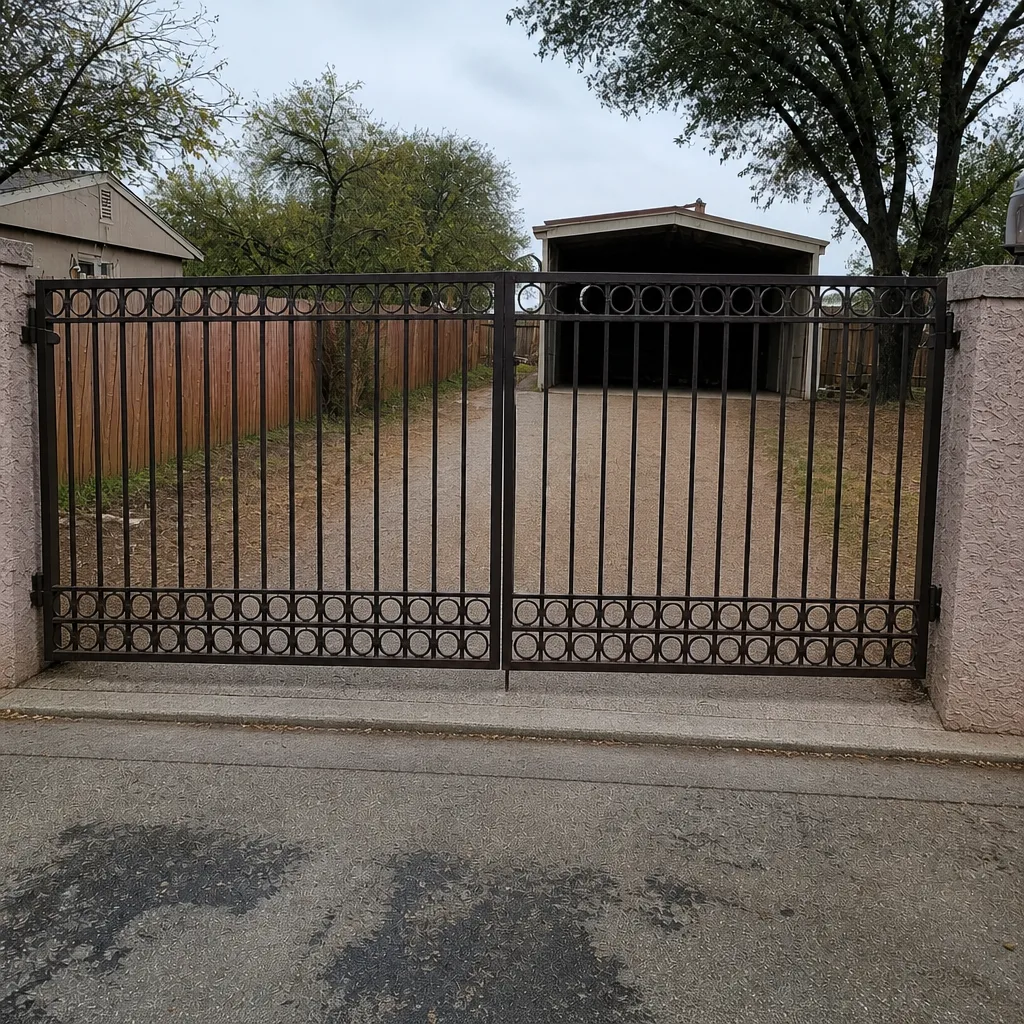 After
Wrought Iron vs Aluminum Gate in Whitney, NV: Choose Aluminum Unless Your Gate Is True Historic Ironwork
Choose aluminum unless you’re restoring genuine historic wrought iron. For almost every driveway gate in Whitney, NV, aluminum is the better long-term material: it doesn’t rust from the inside out, it handles desert heat expansion predictably when installed right, and it usually costs less to own over ten years than patched mild steel. The bigger problem most Whitney homeowners face is that they don’t actually have a wrought iron gate to begin with. Call (855) 928-1304 and we’ll tell you what you’re really working with before anyone quotes a replacement.
We say that plainly because we’ve opened a lot of gates around here. True wrought iron hasn’t been standard in residential gate fabrication since the mid-20th century. What’s hanging on most Whitney driveways is mild steel tube, sometimes painted black and dressed up with scrollwork so it reads as “iron” from the street. It fools a visual inspection for years. The rust is on the inside.
Key takeaways:
- Almost no Whitney residential gate is true wrought iron. Most are mild steel tube; the rest are aluminum.
- Hollow steel tube rusts internally and fails structurally before the surface looks bad. Aluminum doesn’t corrode that way.
- Aluminum expands more per degree than steel. In Whitney’s daily temperature swings, frame clearances must be set with that in mind or the gate binds by afternoon.
- Surface rust on solid welds: usually worth repairing. Tube-wall rust at hinge posts or the bottom rail: usually cheaper to replace in aluminum.
How to tell what material your Whitney gate is actually made of
The street-level look won’t settle it. A magnet and a close look at the welds will. Here’s the order we go in:
- The magnet test. Hold a magnet to the gate. Strong pull almost anywhere on the frame means mild steel. No pull means aluminum. True wrought iron also holds a magnet, but you’ll rarely encounter it on a tract-home gate.
- Look at the weld points. Steel welds are usually ground smooth and painted over, leaving a slight mound or a filled seam. Aluminum welds are often a visible bead, sometimes with a faint dark line where the metal oxidized. If the welds look welded and not molded, that’s a strong clue.
- Check the weight. Aluminum is roughly a third the weight of steel for the same section. A gate you can lift with one hand at the end is likely aluminum. Steel tube feels solid and heavy.
- Look for rust bleeding at the cut ends. Open the gate and look up inside the bottom rail. Mild steel tube that was never capped will show rust streaks or orange dust inside the hollow. Aluminum won’t.
That last check matters more than the others. In the tract homes off Warm Springs Road, we regularly see gates where the paint on the outside looks fine and the inside of the bottom rail is shot. The gate is one good wind gust from failing.
Why mild steel tube fails from the inside out (and aluminum doesn’t)
Hollow mild steel is a cavity. Water gets in through screw holes, unsealed cut ends, and hairline cracks in the paint. Once it’s inside, it sits. It corrodes the inner wall of the tube, and the tube weakens from the inside where you can’t see it. The exterior can look solid for years while the wall thickness quietly drops.
That failure mode explains a large share of the “my gate is sagging” calls we get in Whitney. The homeowner assumes the hinge is loose or the post has shifted. Sometimes that’s true. Just as often, the bottom rail has lost enough wall to bend under its own weight, and the sag is the last visible sign. Aluminum doesn’t corrode that way. It oxidizes on the surface and stops. It can’t hollow itself out from the inside.
In Whitney specifically, the conditions make this worse. Builder-grade ornamental gates went up across the 1980s through the 2000s, often with irrigation running nearby and monsoon water pooling at the post footing. The sun bakes the paint until it cracks, and the cracks let water in. Repair or replacement is the honest fork in the road: if the welds are solid and the rust is surface-level, a repair makes sense and we’ll tell you so. If the rust has eaten into the tube wall at the hinge posts or the bottom rail, replacing with aluminum is usually cheaper than chasing the corrosion.
Where aluminum and steel behave differently in Whitney heat
Aluminum expands more per degree of temperature than steel does. On a Whitney summer day that runs past 110°F, the metal on a driveway gate can swing 80°F or more between early morning and mid-afternoon. An aluminum gate installed with steel-gate tolerances will latch clean at 6 a.m. and drag by 3 p.m. This isn’t a defect in the material. It’s an installation detail. Frame clearances and hinge placement have to be set for expansion, or the gate will bind, and a bind that repeats every afternoon wears the hinges and the opener faster than the gate itself would fail.
We mention this because it’s the number one reason we get called out to re-tune an aluminum gate someone else hung last year. The gate is fine. The clearances were wrong for the climate. A trained installer who’s done this in the desert sets for expansion from the start.
| Property | Mild steel tube | Aluminum | True wrought iron |
|---|---|---|---|
| Common in Whitney homes? | Yes – most builder gates | Yes – common upgrade | Rare; historic only |
| Rust behavior | Hollows out from inside | Surface oxidation, stops | Surface patina, very slow |
| Expansion per 80°F swing | Moderate | Higher; needs expansion clearance | Low |
| Weight | Heavy | Light | Heavy |
| Repairability | Weldable; depends on wall condition | Weldable; special process | Weldable with expertise |
| Typical cost to replace a 12-14 ft drive gate | $1,800-$3,400 fabricated | $1,600-$3,200 fabricated | Custom; $4,500+ if fabricated |
The cost gap between a fabricated mild steel gate and an aluminum gate at this size is smaller than most homeowners expect, often a few hundred dollars. When you factor in that the aluminum won’t hollow out, the total cost of ownership over the next fifteen years tilts toward aluminum. If you’re weighing that against a full replacement rather than a repair, our Gate Installation in Whitney page walks through what a new hang involves.
Repair or replace? An honest decision framework
Here’s the rule we use when we’re standing in front of a gate, and we’ll give it to you straight:
- Repair if the rust is surface-level on solid welds, the tube walls are intact when you probe them, and the posts are stable. A weld repair, a new hinge, or a re-hang often extends the gate ten more years.
- Replace in aluminum if the rust has reached the tube walls at the hinge posts or the bottom rail, or if the gate has sagged beyond what a hinge adjustment can correct. Patching hollow-tube corrosion usually buys a season, not a decade.
- Investigate the post and footing before either decision. In Whitney’s caliche-hard soil, monsoon water can crack and settle the footing, and a gate that’s dragging may just need the post reset, not a new gate.
We have up to 13 years of experience per technician and 42 years of welding craft behind the company. That means we can repair your mild steel, fabricate a new steel section to match, or install aluminum. The recommendation comes from the gate’s actual condition, not from which job pays better. Every job gets the same written 90-Day Done Right Promise, so if the fix doesn’t hold, we come back and make it right. No arguing.
What about your gate opener?
Whichever material you choose, the opener has to match the gate. Aluminum gates are lighter and openers sized for steel can be overkill; they can also be under-sized if a steel gate was replaced with a bigger aluminum one. We’re trained on nine gate-automation brands including LiftMaster, FAAC, Mighty Mule, and BFT, so the right call is made on the first visit. If your operator has been struggling since a gate material change, that’s often a sizing issue, not a motor failure.
For a broader view of what gate work we handle, start at our home page, or look at Gate Installation for the new-gate path.
FAQs
For a typical 12 to 14 foot residential drive gate, aluminum replacement in Whitney runs roughly $1,600 to $3,200 fabricated and hung, and a comparable mild steel gate runs $1,800 to $3,400. A repair instead of replacement is often $250 to $700 depending on what’s failing. Call (855) 928-1304 for an exact number – estimates are free.
Not always from the street, but a magnet test plus a look at the weld points and the inside of the bottom rail settles it in about five minutes. Strong magnetic pull on the frame means mild steel or iron; no pull means aluminum. Rust dust inside the bottom rail confirms hollow mild steel. Call us and we’ll check yours on-site at no charge.
For a residential drive gate, a properly fabricated aluminum gate is strong enough and won’t rust through. True wrought iron is stronger per section, but it’s essentially unobtainable for new residential work, and mild steel tube – the material most Whitney gates are actually made of – is no stronger than aluminum once it begins to corrode internally. Call (855) 928-1304 if you want the tradeoffs weighed for your specific gate.
Not if it’s installed with expansion clearance set for the climate. Aluminum expands more per degree than steel, and an 80°F daily swing past 110°F summer heat is enough to make a mis-installed gate drag by afternoon. The right frame clearances and hinge placement prevent it. Call (855) 928-1304 for a free second opinion on any written estimate.
Get a straight answer on your gate
If you’d rather have it looked at than guess, Ironworks Gate Co. Whitney offers a no-pressure assessment in Whitney. We’ll tell you what material you actually have, whether it’s worth repairing, and if aluminum is the better long-term call. The phone is answered by a live person, day or night. Call (855) 928-1304 for a free estimate.
Written by the team at Ironworks Gate Co. Whitney, serving Whitney, NV.