
Last updated November 17, 2026
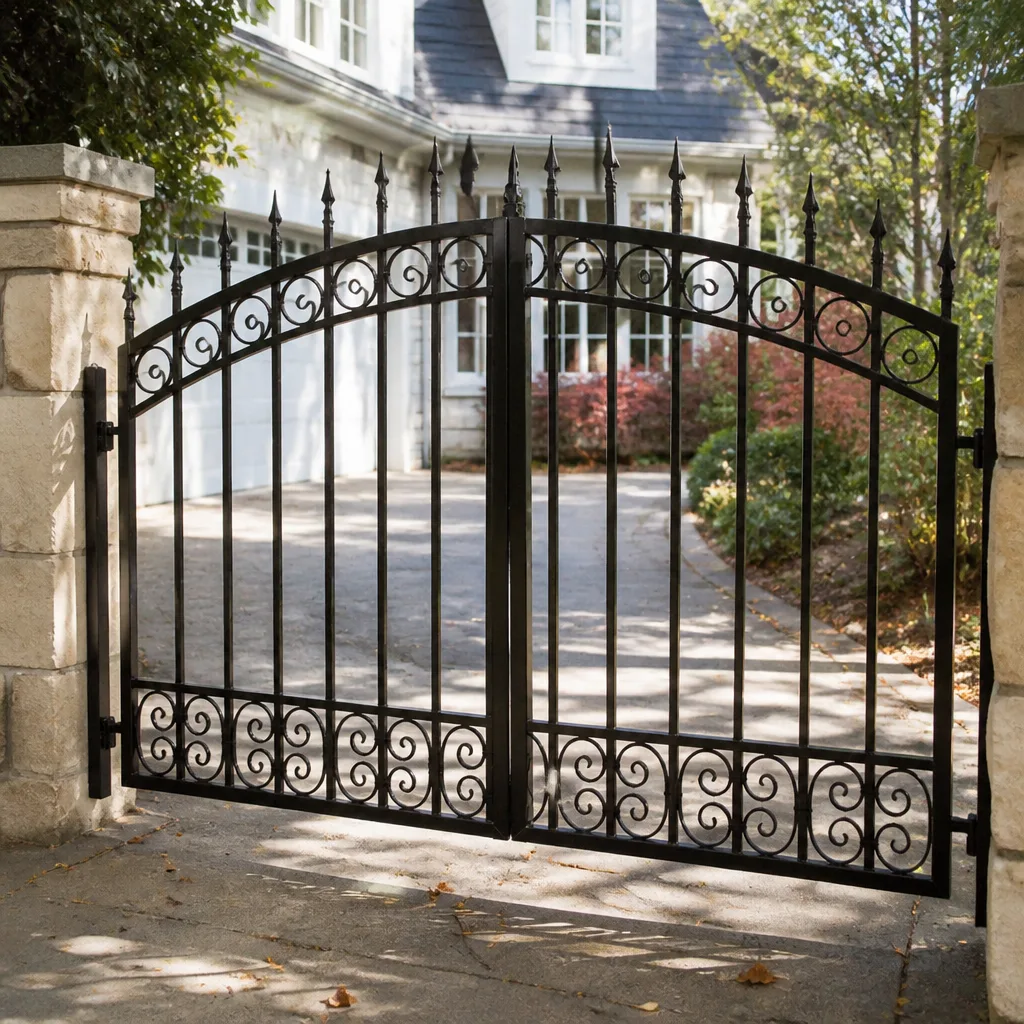 Wrought iron
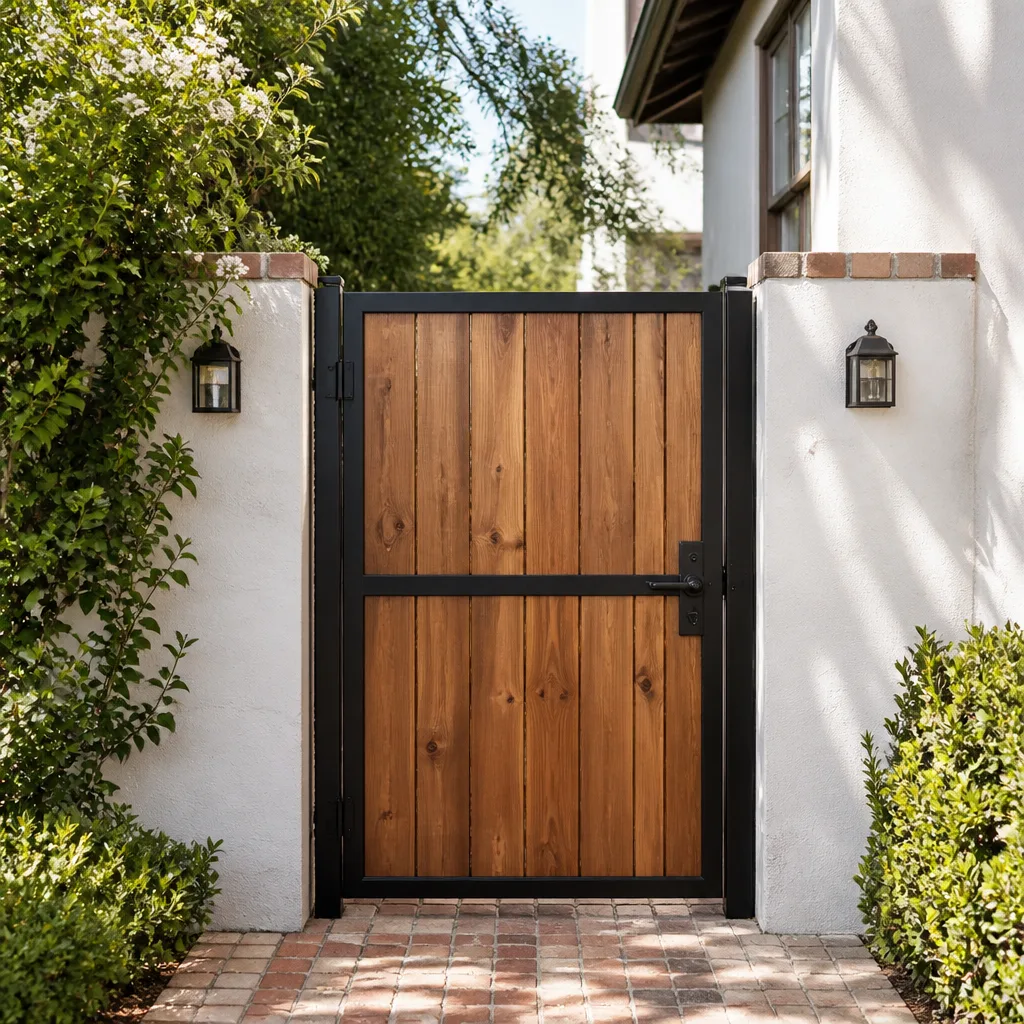 Wood & steel frame
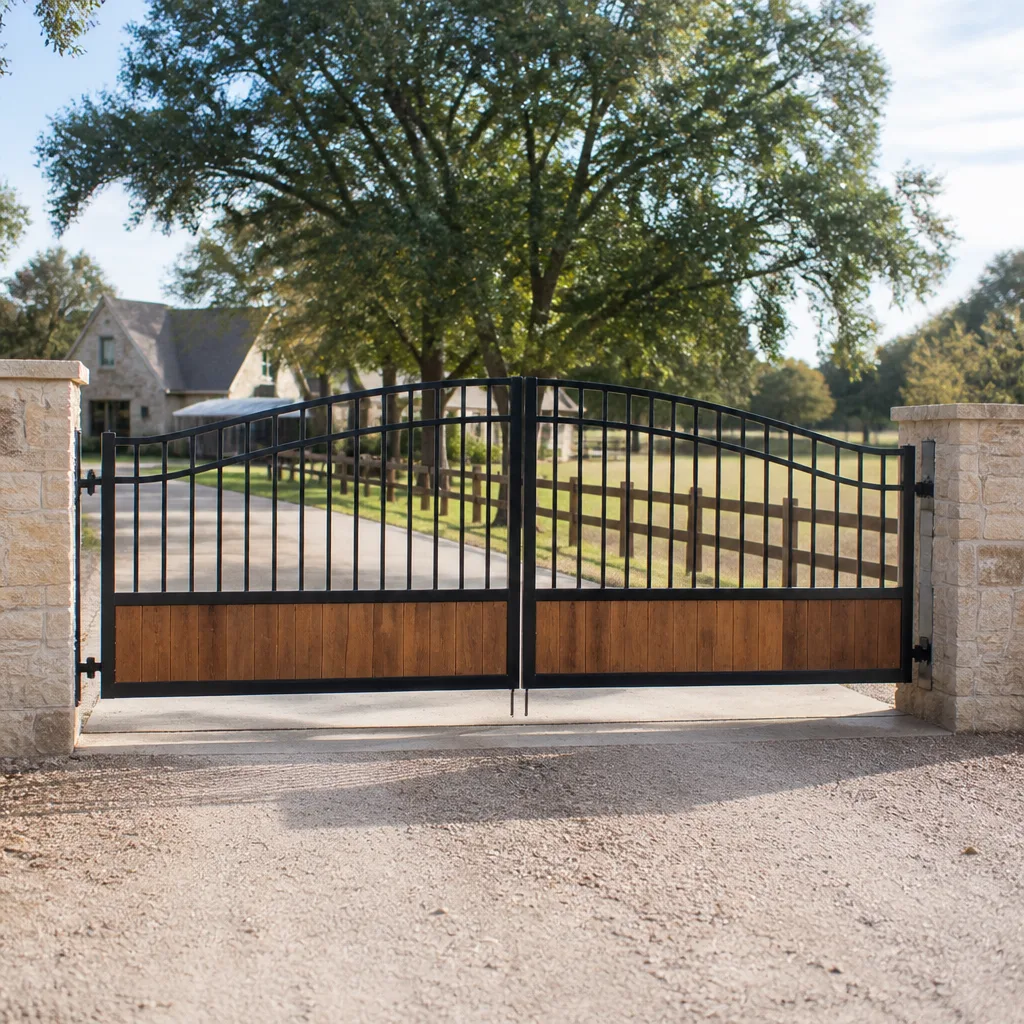 Farm & ranch
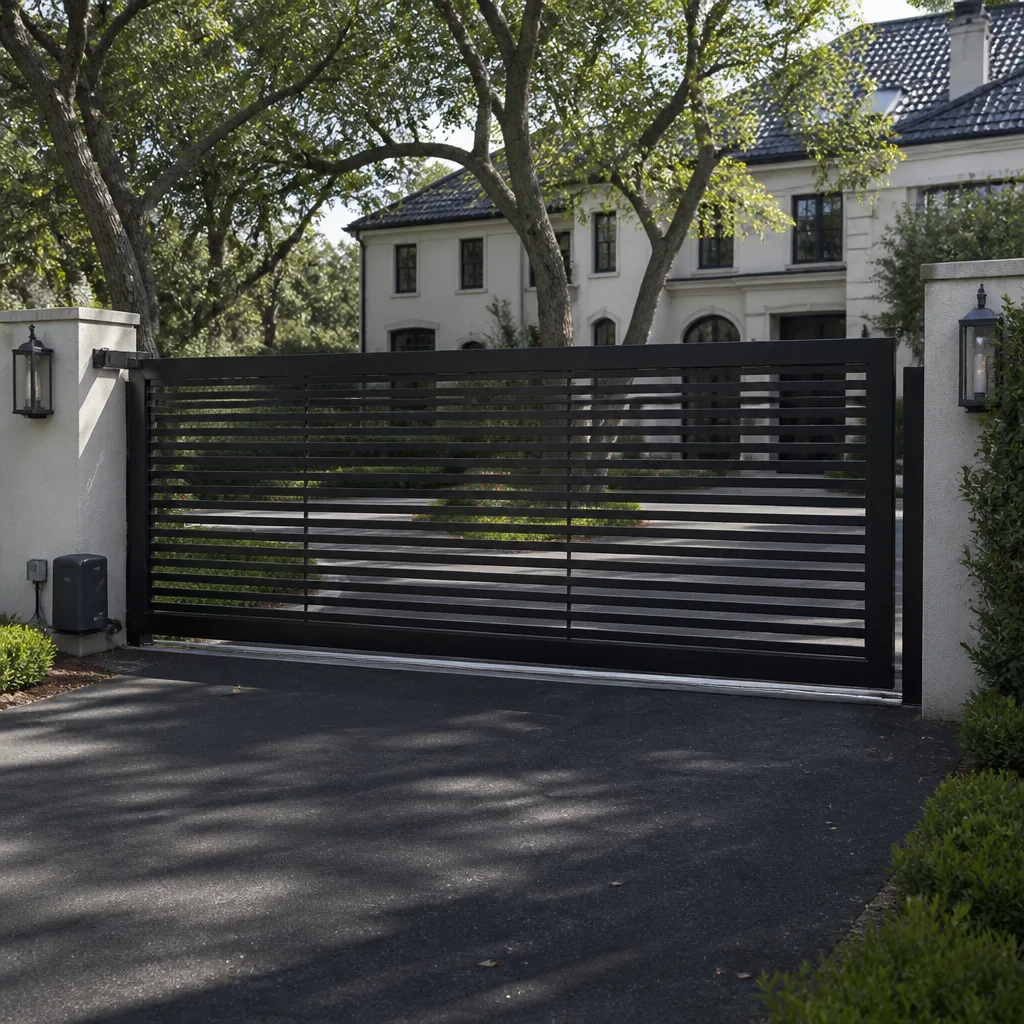 Sliding driveway gates
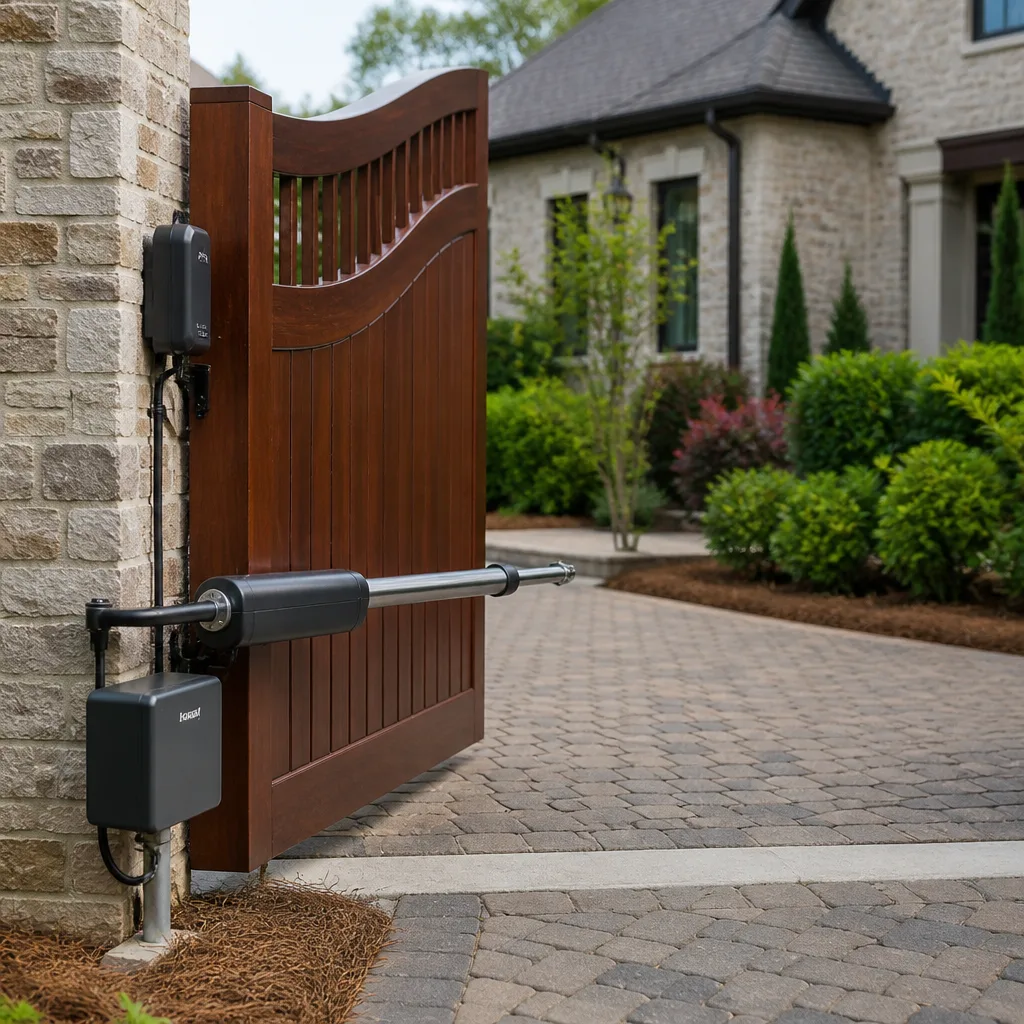 LiftMaster operators
Free on-site gate assessment - hinges, posts, and your LiftMaster or Nice gate operator checked before anything is quoted
The assessment is free and the quote is the invoice.
Get your free estimateGate Repair Warning Signs Every Homeowner Should Know
A gate that hesitates before opening isn’t being slow. It’s telling you something specific, and that specific thing will cost you between $80 and $1,400 depending on how long you wait. In our experience across Whitney, the gates that strand a vehicle at seven in the morning almost always announced the failure weeks earlier: a drag on the first swing, a click that wasn’t there last spring, a spot of rust where the hinge meets the post. This guide names those signs, ranks them by urgency, and explains which ones mean “watch it” versus “stop using the gate today.”
Quick Answer
The most serious gate repair warning signs are a gate that reverses or stops mid-travel, grinding or popping sounds under the motor cover, visible sag at the hinge side, and any exposed or frayed wiring at the operator. Treat hesitation, intermittent operation, and slow drift as urgent rather than minor, because an intermittent fault is more dangerous than a consistent one. Visual checks take under five minutes without tools, and any sign involving springs, cables, or electrical components should be handled by a trained technician.
Styles & brands we work with
- Wrought iron
- Wood & steel frame
- Farm & ranch
- Sliding driveway gates
- LiftMaster operators
Table of Contents
- The Ranked Warning Signs, from Monitor to Stop Using the Gate
- What the Sounds Tell You: Structural, Mechanical, and Electrical
- Why Intermittent Problems Are More Dangerous Than Consistent Ones
- The Five-Minute Visual Check You Can Do Without Tools
- How Warning Signs Compound: One Ignored Symptom Leads to the Next
- Whitney Conditions That Accelerate Gate Wear
- What Repairs Cost and Why Waiting Costs More
The Ranked Warning Signs, from Monitor to Stop Using the Gate
Not every symptom carries the same weight. We rank warning signs by the consequence of ignoring them, not by how dramatic they look. A loud gate can be a minor wear issue; a quiet gate that stops halfway can be a serious safety failure.
- Monitor – cosmetic rust and faded paint. Surface rust on the frame is common in Whitney’s dry, dusty summers. Clean and touch up before it reaches the weld seams. Low urgency, high payoff.
- Monitor – a slightly slower first swing. If the gate takes a second longer to start than it used to, the opener may be compensating for drag. Worth noting, not yet an emergency.
- Schedule a repair – uneven gaps at the bottom or sides. When the gate sits a finger’s width off from where it closed last year, the hinge or post has moved. Small drift today becomes a jammed gate within a season.
- Schedule a repair – a remote or keypad that needs to be pressed twice. This points to a receiver or battery issue on LiftMaster and similar operators. Cheap to fix now, expensive if the gate stops responding entirely.
- Urgent – grinding, popping, or scraping under the motor cover. Gear wear or a failing bearing is in progress. Every cycle makes it worse.
- Urgent – the gate reverses without obstruction. Safety sensors or the control board are misreading. A gate that reverses at random can trap a person or vehicle.
- Stop using the gate – visible sag, a bent track, or a cable that looks slack or frayed. On a swing gate with counterbalance springs, this is a genuine safety hazard. Call a trained technician and do not cycle the gate.
What the Sounds Tell You: Structural, Mechanical, and Electrical
You don’t need an engineer’s ear to sort gate sounds into three buckets. You just need to know what to listen for.
Structural sounds
Creaking at the hinge, a groan that rises and falls as the gate swings, or a loud pop when the gate reaches full open. These come from the frame, posts, and hinges. A gate is a lever, and every one of its cycles loads the top and bottom hinges differently. When a hinge pin wears or a weld starts to crack, the whole gate shifts its weight onto the remaining attachment points. In Whitney, we’ve seen posts shift after a summer of soil contraction and a wet winter, which is why a gate that was true in April can be dragging by October.
Mechanical sounds
Grinding, whining, or a rhythmic thunk from inside the operator housing points to gears, the drive chain, or a roller. On Elite and DoorKing operators, a rhythmic noise usually means a worn gear or a chain that’s jumped its sprocket. That’s rebuild territory in a hurry. Waiting past the first grinding sound turns a gear replacement into a full operator swap.
Electrical sounds
A sharp click that repeats without the gate moving, a buzz from the control box, or a hum that stops abruptly. These say the operator is receiving a signal but not completing the cycle. Common culprits include low battery in the remote, a failing transformer, or a control board that’s flexing under heat. In Whitney’s 100-degree summer afternoons, a marginal control board often works in the morning and fails by two o’clock. That pattern is a clue, not a coincidence.
Why Intermittent Problems Are More Dangerous Than Consistent Ones
Homeowners usually treat a consistently broken gate as urgent and an intermittent one as a nuisance. The reverse is closer to true. A gate that fails every time is predictable: you park the car and walk, or you avoid the driveway until the technician arrives. A gate that fails one time out of ten is unpredictable, and unpredictable gates are the ones that catch people mid-stride or drop on a parked vehicle at the wrong moment.
Intermittent failures usually have one of three roots:
- A safety sensor that’s drifting. Sun glare, dust, or a slightly loose mounting bracket causes the beam to break intermittently. Sometimes the gate closes, sometimes it reverses. If a person or pet is in the path, the gate’s logic already told it not to close – you’ve now lost the reliability that safety feature was built on.
- Loose wiring or a marginal connection. A connection that’s vibrating loose in the control box will read as “okay” for days, then drop a signal at the worst time. It’s cheap to fix and gets ignored the longest.
- A control board or relay on the edge of failure. Temperature swings, humidity, and cycle count all push a marginal board past spec. When it fails, it can fail in “gate stuck open” mode, which leaves your property unsecured overnight.
If a gate works “most of the time,” that’s the moment to call. Not when it stops altogether. In our experience, the single-visit repair is almost always the intermittent one – once you catch it early, the fix is quick and the parts are standard.
The Five-Minute Visual Check You Can Do Without Tools
No wrench, no ladder, no disassembly. Walk the gate once and look at these eight points in order. It takes under five minutes and can catch most of what we’re called out for in Whitney.
- Stand three feet back and look at the gate closed. Are the gaps along the bottom and the strike post even? A gap that’s wider on one side than the other means the gate has shifted.
- Look at the hinge pins. Any rust streaking down the pin, or a pin sitting proud of the hinge leaf, is a wear point.
- Check the post at the ground. Look for fresh cracks in the concrete at the base, or soil that has pulled away. A wobbly post is a security and safety problem.
- Run your hand along the bottom rail. Any soft spot, bubbling paint, or obvious rust-through is structural.
- Look inside the operator housing (just look, don’t open it). Any moisture, insect nests, or chew marks on the visible wiring is a red flag. On a Mighty Mule solar operator, a failing battery or corroded terminal often shows up as a swollen case or a crusty connection.
- Check the safety sensors. Are both lenses clean? Are they aimed at each other squarely? Are the mounting brackets tight?
- Look for cable or chain slack. On a swing gate, a counterbalance cable that looks slack, kinked, or frayed is a stop-sign scenario. On a slide gate, a chain with obvious sag or missing tension is a mechanical issue.
- Test the gate from a distance with the remote. Note whether the gate starts immediately, hesitates, or stutters. That one data point tells a technician a lot.
If any of points two through seven is visibly wrong, note it and call. Don’t test the gate into a failure.
How Warning Signs Compound: One Ignored Symptom Leads to the Next
Gates don’t fail in isolation. They fail in sequence. Understanding the sequence is what turns a warning sign into an early-warning system. Here are three patterns we see routinely in Whitney.
Pattern one: the intermittent remote becomes a dead operator
A homeowner notices the remote needs to be pressed twice. It’s a battery, they think, and let it ride for a season. Meanwhile the operator is over-cycling because it’s also fighting a hinged gate that has started to drag. The combination wears the gearbox faster, and one morning the gate stops mid-travel with the motor still engaged. What would have been a $120 sensor adjustment plus a $15 battery turns into a gearbox rebuild or a full operator replacement.
Pattern two: the slow swing becomes a bent hinge
A gate that takes an extra second to start is telling you the hinge or track is loading the operator. Left alone, the drag concentrates force on the top hinge. When that hinge finally fails, the gate drops a few inches at the outside corner. Now you’re looking at hinge replacement, post reinforcement, and possibly frame straightening. What would have been an $80 lubrication and adjustment visit becomes a multi-hundred-dollar structural repair.
Pattern three: the sun-glare sensor becomes a safety event
The gate intermittently reverses in the late afternoon. It’s sun glare on the safety sensor, the homeowner suspects, and figures it will pass. It doesn’t pass with the seasons in Whitney – the sun angle stays bad for months. One afternoon a child walks behind the gate while it’s reversing, and now the gate’s behavior matters in a way it didn’t before. Safety sensors are the cheapest fix on the list when caught early and the most sobering one when ignored.
Whitney Conditions That Accelerate Gate Wear
Gates in Whitney live in a specific climate, and it shows in the failure patterns we see. The desert summer bakes the operator housing and expands metal parts unevenly, so a gate that ran smoothly in April often starts clicking by July. Winter cold snaps contract the soil around posts, and a gate that was true in fall can start dragging by February. Spring winds carry fine dust that works into hinges and safety sensor lenses – a lens that looks clean can still be clouded enough to misfire. Combined with the sun’s angle through summer afternoons, safety sensors get a workout they don’t see in wetter, cloudier cities.
In our experience, gates on older Whitney properties with original post footings are the most likely to develop the compound problems we described above, simply because the post, the hinge, and the operator have all aged together. A seasonal tune-up catches most of this before it becomes an emergency call.
What Repairs Cost and Why Waiting Costs More
Repair costs depend on the operator brand, the specific part, and how far the wear has gone. The ranges below reflect typical Whitney pricing. Every price is quoted and agreed before any work starts – no surprises on the bill.
- Safety sensor cleaning, alignment, or replacement: $120-$260
- Remote, keypad, or receiver battery/service: $80-$180
- Hinge, roller, or track adjustment: $150-$340
- Gearbox or drive chain service on LiftMaster, Elite, or DoorKing operators: $280-$560
- Control board replacement: $320-$620
- Counterbalance spring or cable service on a swing gate: $240-$520 – and if the gate is sagging badly, possibly more, because the hinge point may also need reinforcement
- Post reinforcement or re-set: $350-$900
The pattern is clear: the least expensive repairs on this list are the ones that get caught by the signs at the top of our ranking. Delay moves you down the list into more expensive territory, and occasionally into full operator replacement – a job that runs considerably more than any single item above. If you’ve had a written estimate from another company and want a free second opinion, we’re happy to look at it with you.
Common Mistakes to Avoid
- Ignoring an intermittent fault because “it worked yesterday.” Intermittent means unpredictable, and unpredictable gates are the ones that catch people off guard. Treat the intermittent remote, the late-afternoon reversal, and the random hesitation as urgent.
- Greasing a hinge that needs to be replaced. Lubrication buys a few weeks of quiet on a worn hinge, then hides the wear from the next inspection. If the hinge is already noisy, get it looked at before greasing it into silence.
- Adjusting a safety sensor by feel instead of with a test. A sensor that’s “aimed roughly” will still misfire in Whitney’s afternoon sun. Small adjustments are fine; if the gate reverses without obstruction, get the sensors properly aligned by a technician.
- Overriding a safety reverse because it’s inconvenient. Disabling a safety reverse lets the gate cycle normally until the day it doesn’t. If your gate is reversing without obstruction, it’s telling you the safety system needs attention – not that the safety system should be removed.
- Standing a sagging gate on the track with a block of wood. Wood under a gate hides the sag from view, but the loads on the hinge and post haven’t gone anywhere. This is one of the most common ways a small repair becomes a structural one.
- Waiting until the gate won’t open at all to call. A gate that won’t open is a fully broken gate. Every sign on the ranked list above the last one is the same visit at a fraction of the cost.
- Assuming a Mighty Mule or Ghost Controls operator failing in summer is “just the heat.” Heat exposes marginal problems – batteries, terminals, control boards – it doesn’t create them. If the operator only fails on hot days, the part is already failing and will fail on a cool day soon enough.
See the difference
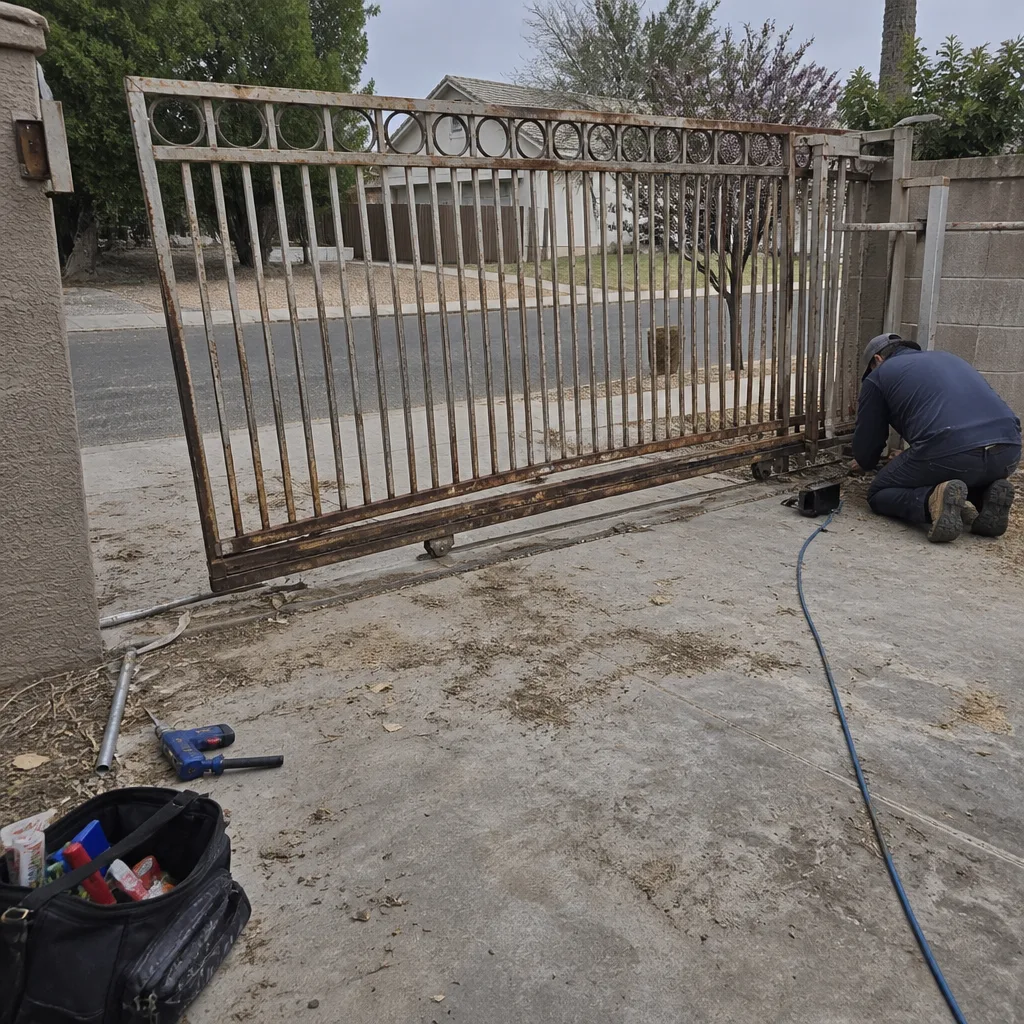 Before
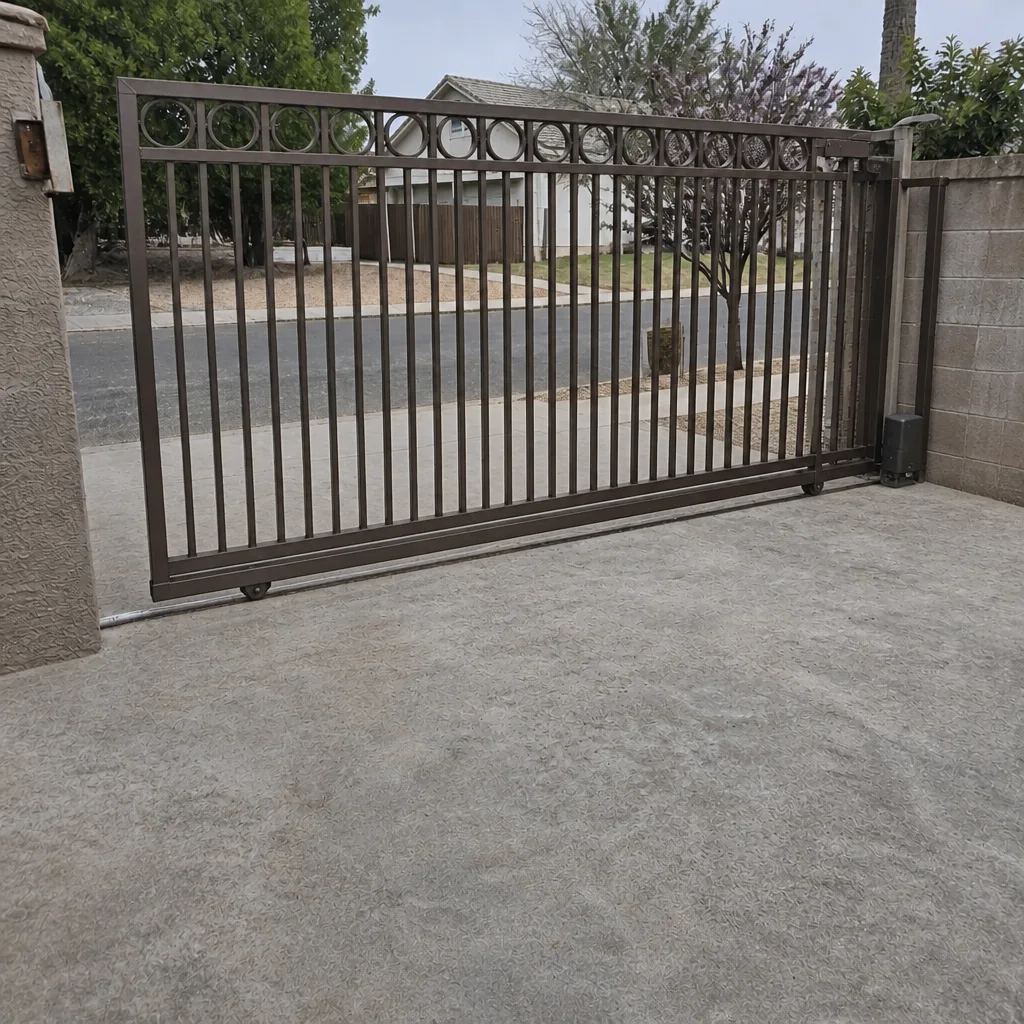 After
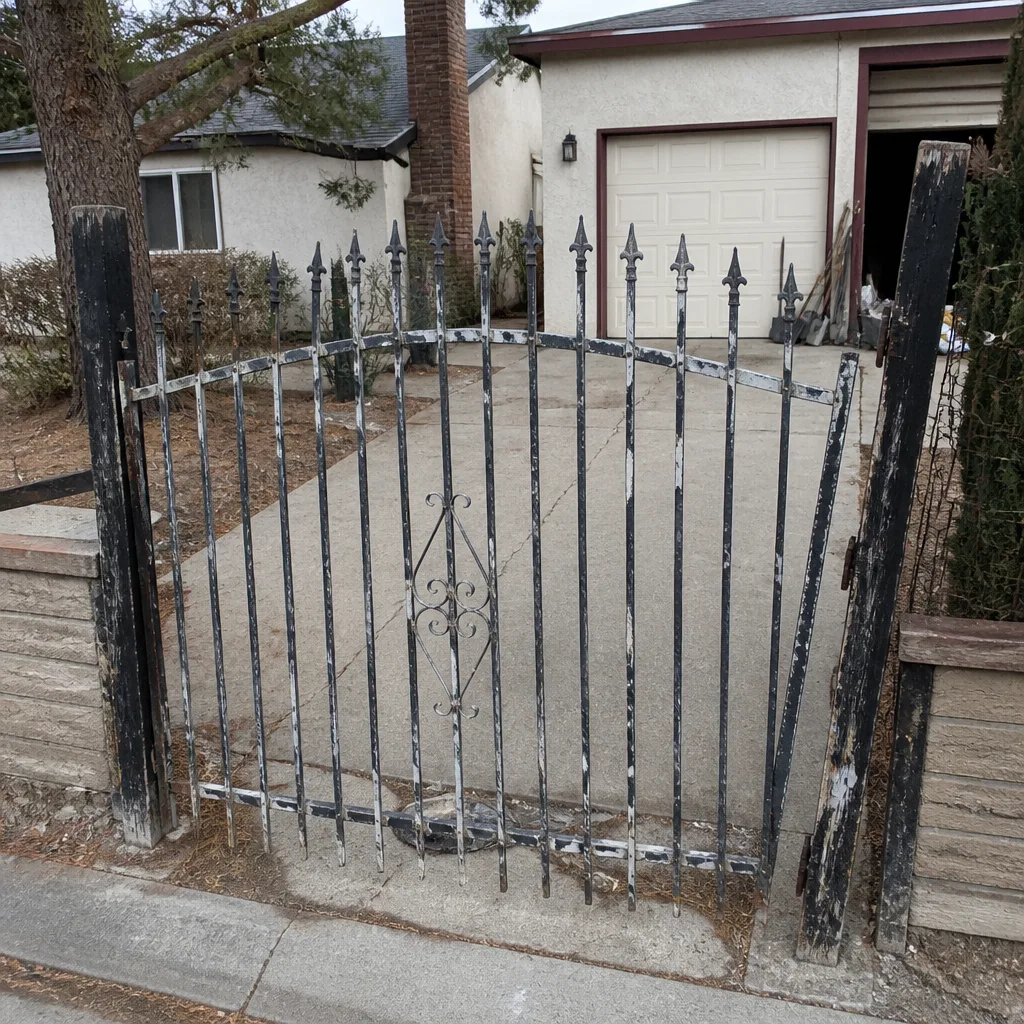 Before
 After
 Before
 After
When to Call a Professional
Call a professional when any sign involves springs, cables, sagging frames, or the electrical components of the operator. These are genuinely dangerous systems – a counterbalance spring under tension or a live control box can hurt an untrained person badly, and no homeowner guide should walk you through working on them. It’s also time to call if the gate reverses without obstruction, won’t open or close consistently, or has visible wiring damage.
While you’re arranging the visit, don’t cycle the gate more than necessary to test it. Ironworks Gate Co. Whitney offers free estimates in Whitney and a free second opinion on any written estimate you’ve received elsewhere. Call (855) 928-1304 – a live person answers 24 hours a day.
Frequently Asked Questions
A gate that reverses without obstruction or a visible sag at the hinge is the most serious warning sign, because both point to safety components failing under load. Stop using the gate and call a trained technician. Reversing gates can trap a person or vehicle, and a sagging gate can drop if a hinge fails. Call (855) 928-1304 – a live person will answer and help schedule a visit.
An intermittent gate failure is more dangerous than a consistent one because it’s unpredictable – the gate works one cycle and fails the next, which is exactly when someone assumes it will work. Consistent failures are annoying; intermittent ones are the ones that catch a child, a pet, or a vehicle mid-cycle. Those should be treated with higher urgency, not lower. Call (855) 928-1304 to get one scheduled.
Yes, you can do a five-minute visual check without any tools, covering hinge pin rust, post stability, bottom rail condition, safety sensor cleanliness, and cable or chain slack. Anything that looks bent, sagging, slack, or frayed should be left to a trained technician. A free estimate from Ironworks Gate Co. Whitney is available if you’re unsure – call (855) 928-1304.
Yes. A gate that only fails when it’s hot is telling you a component – usually a battery, relay, control board, or terminal – is at the edge of its tolerance. Whitney’s summer afternoons push those parts past spec. When the part fails fully, it will fail on a mild day too. Call (855) 928-1304 for a free estimate before it stops working for good.
Gate repair in Whitney typically runs $80 to $1,400 depending on the part and how far the wear has progressed – a sensor realignment at the low end, a control board or gearbox service in the middle, and a post reinforcement or operator replacement at the top. Every price is quoted and agreed before any work starts. Call (855) 928-1304 for an exact quote – estimates are free.
A seasonal tune-up covers the mechanical and electrical checks that catch the warning signs in this guide before they escalate – hinge and track inspection, safety sensor alignment, operator diagnostics, and a lubrication and adjustment pass. It’s worth it in Whitney because our climate accelerates gate wear through the year. Ironworks Gate Co. Whitney offers an $89 Seasonal Tune-Up. Call (855) 928-1304 to schedule one.
The Bottom Line
Every emergency gate repair was preceded by a warning sign someone noticed and didn’t act on. The signs on the ranked list here stay cheap to fix in the top half and get expensive fast in the bottom half. In Whitney’s climate, gates wear faster than they would in a milder city, so a five-minute visual check twice a year catches most of what we’re called out for. If you remember one thing from this guide, remember that an intermittent gate is a stop-and-fix problem, not a wait-and-watch problem. For the underlying parts, tools, and repairs, see our Ironworks Gate Co. Whitney home page.
For a closer look at how we approach warning signs year-round, our gate repair in Whitney service page covers what a real inspection and repair visit looks like. If the gate has reached the end of its service life, our gate installation in Whitney page explains what a proper replacement includes. And when the operator – not the gate – is the source of the warning signs, our gate motor and opener in Whitney page covers the LiftMaster, Elite, DoorKing, and Mighty Mule service we do most often.
Call (855) 928-1304 for a free estimate. A live person answers 24 hours a day, seven days a week, and every estimate is settled before a single bolt is turned. Every completed job is backed by our written 90-Day Done Right Promise. Current standing offers include $50 Off Any Repair Over $250, a Free Second Opinion on Any Written Estimate, an $89 Seasonal Tune-Up, and a 5% Senior and Veteran discount, always.
Written by the team at Ironworks Gate Co. Whitney.