
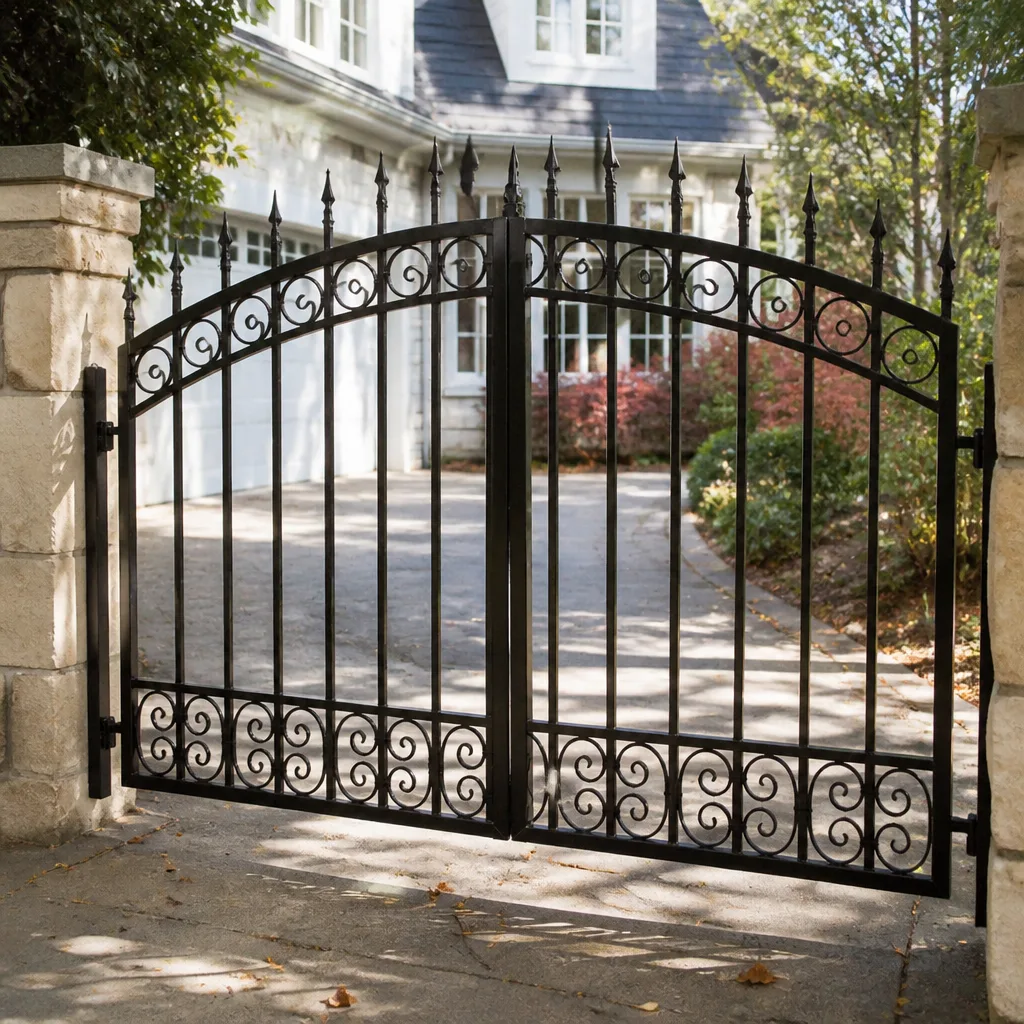
 Wrought iron
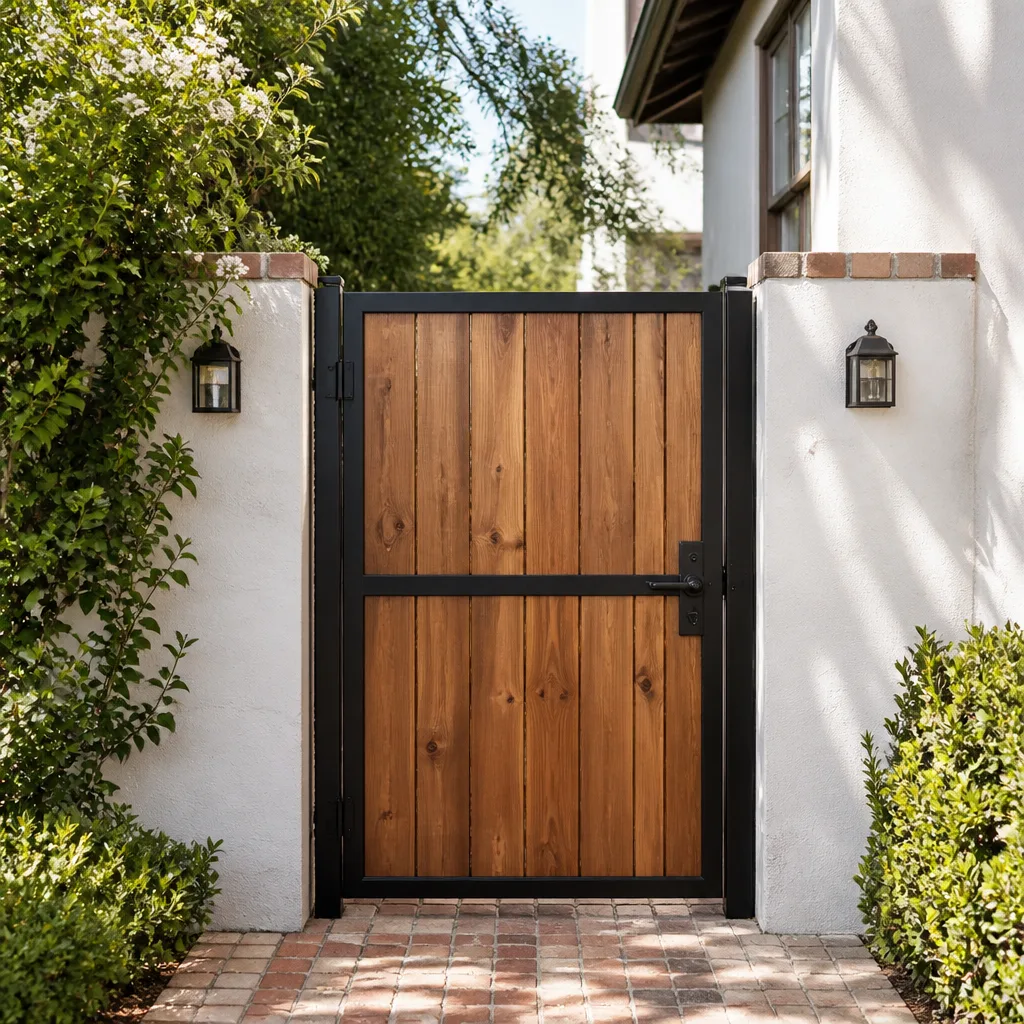 Wood & steel frame
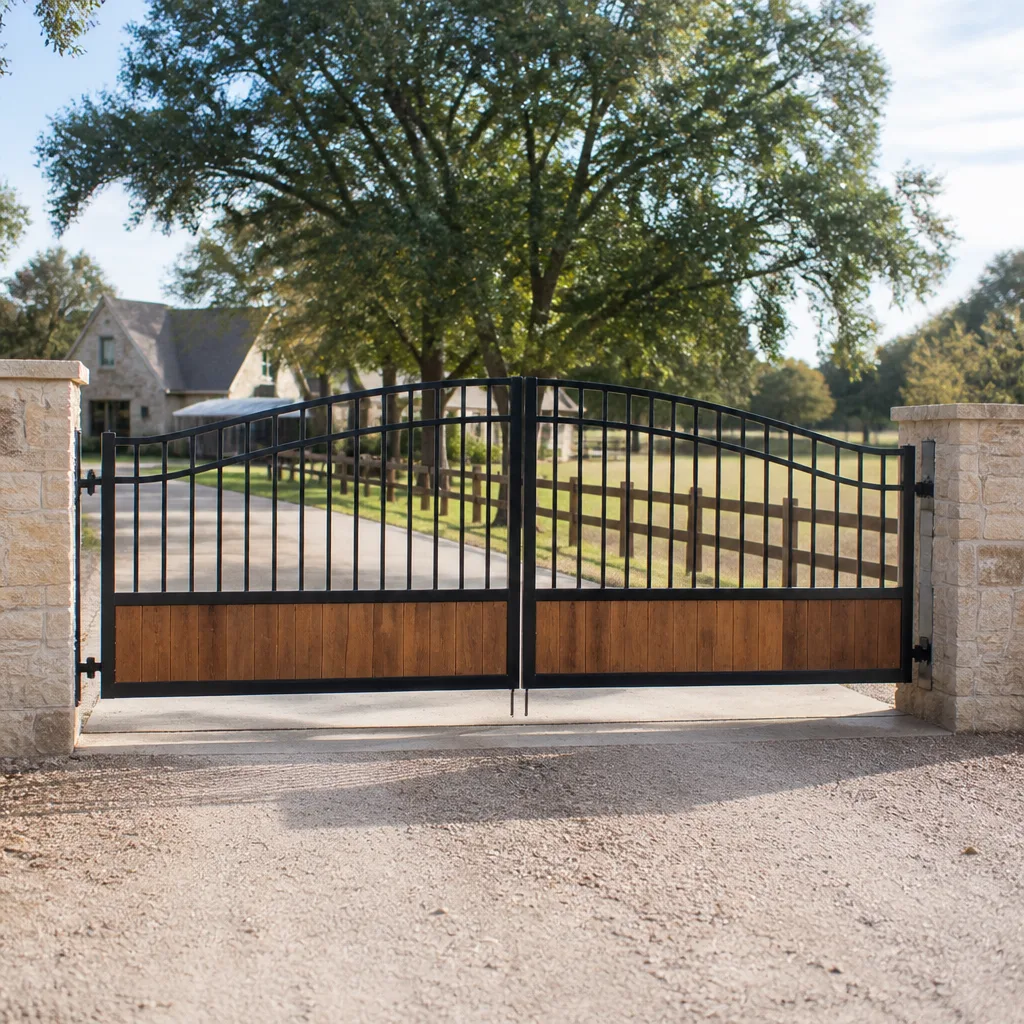 Farm & ranch
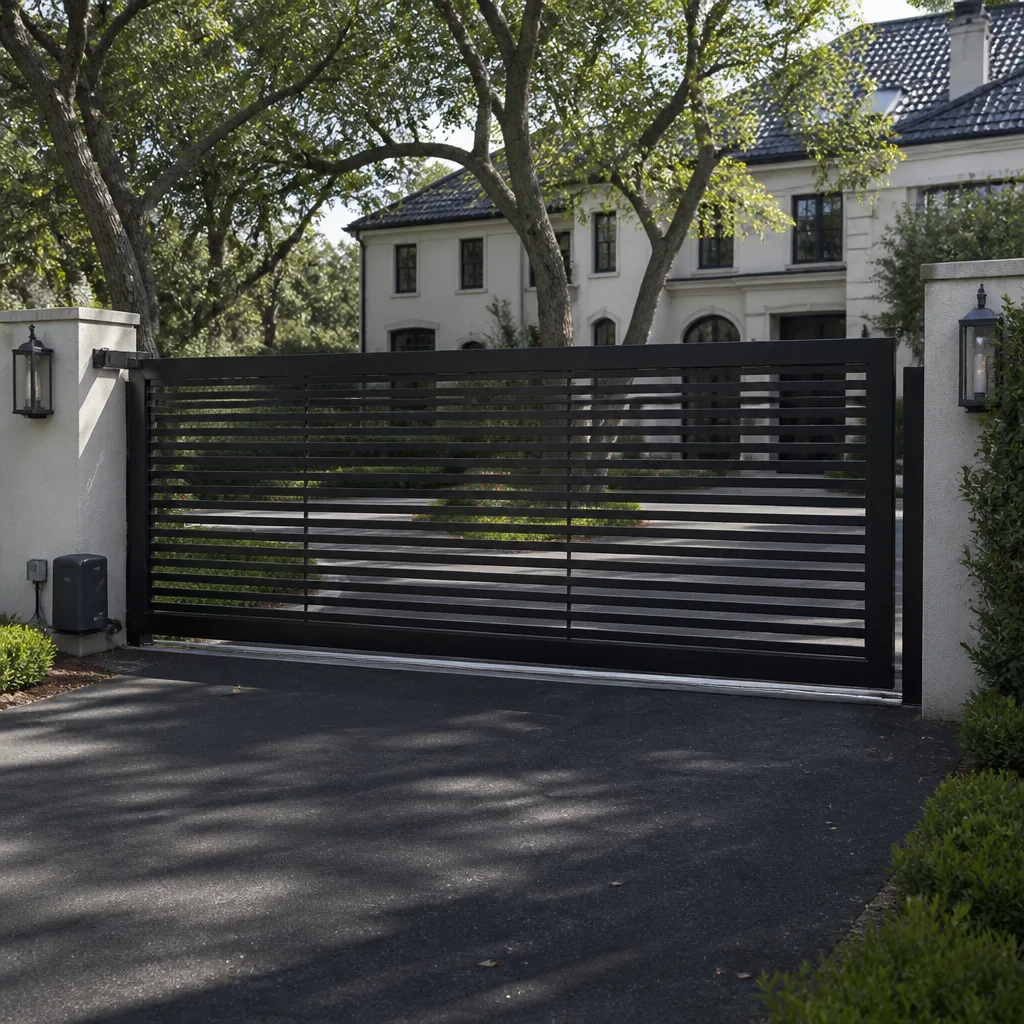 Sliding driveway gates
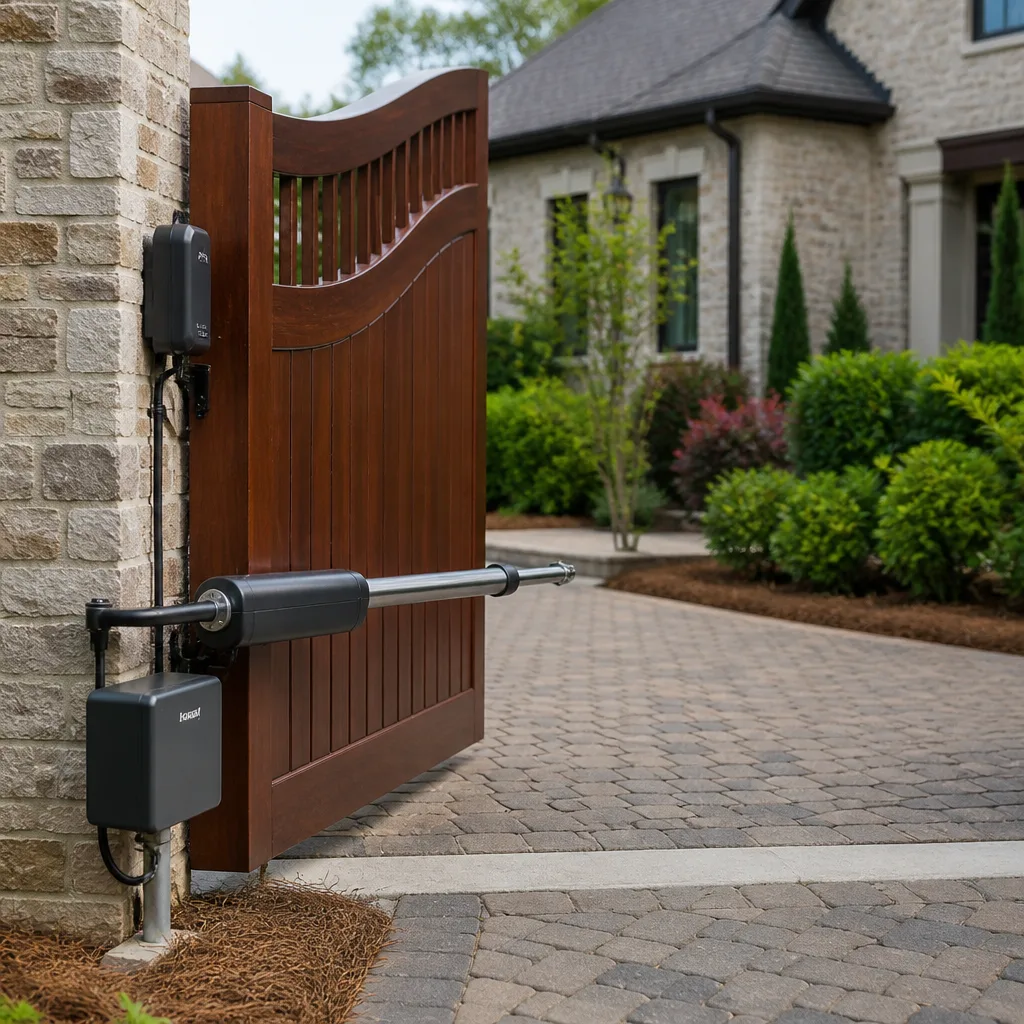 LiftMaster operators
Free on-site gate assessment - hinges, posts, and your LiftMaster or Nice gate operator checked before anything is quoted
The assessment is free and the quote is the invoice.
Get your free estimateStyles & brands we work with
- Wrought iron
- Wood & steel frame
- Farm & ranch
- Sliding driveway gates
- LiftMaster operators
See the difference
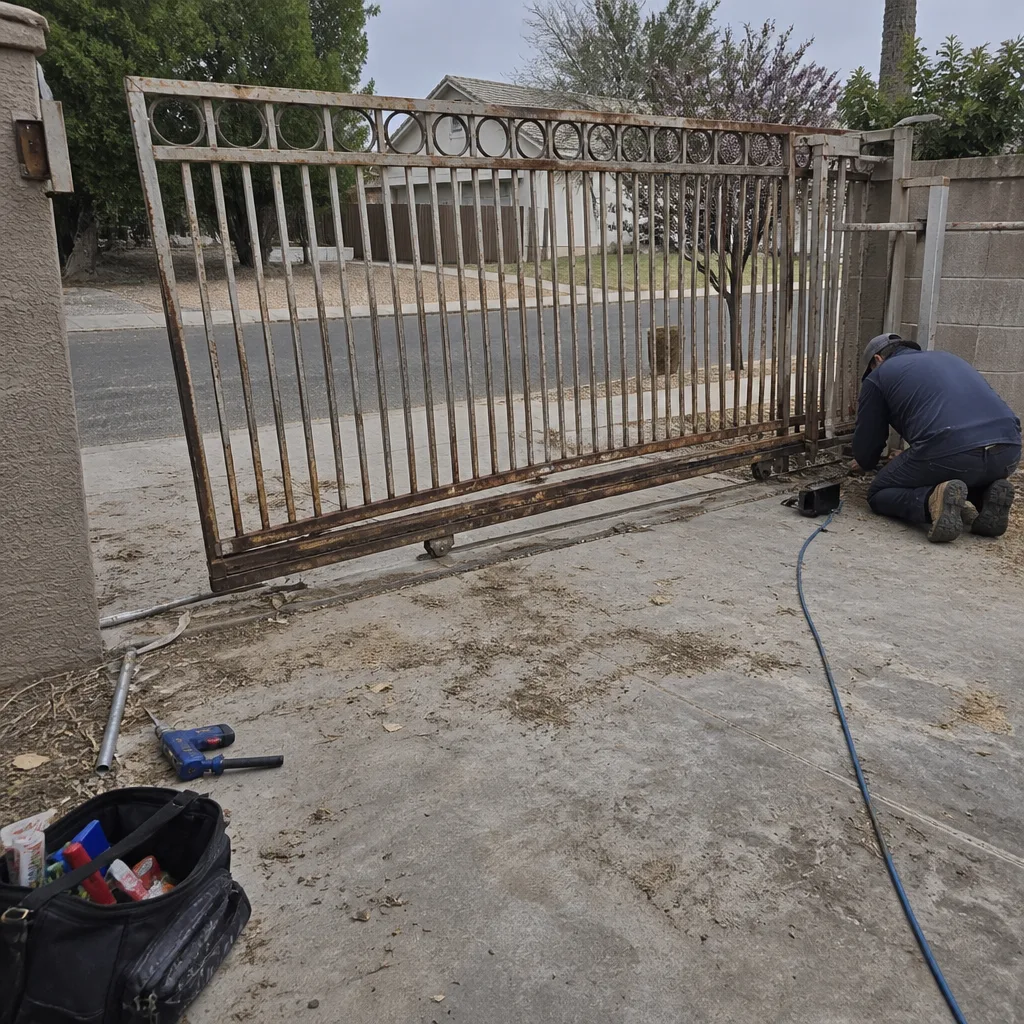 Before
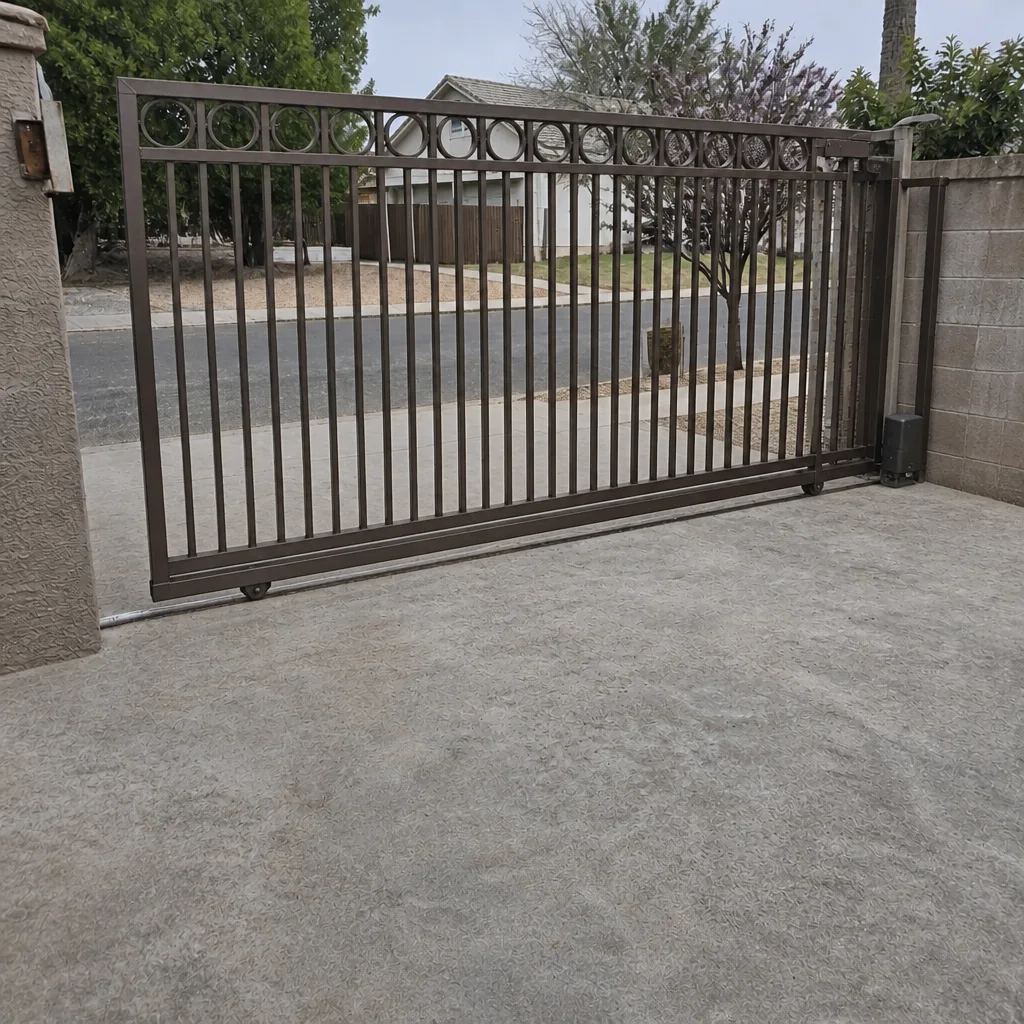 After
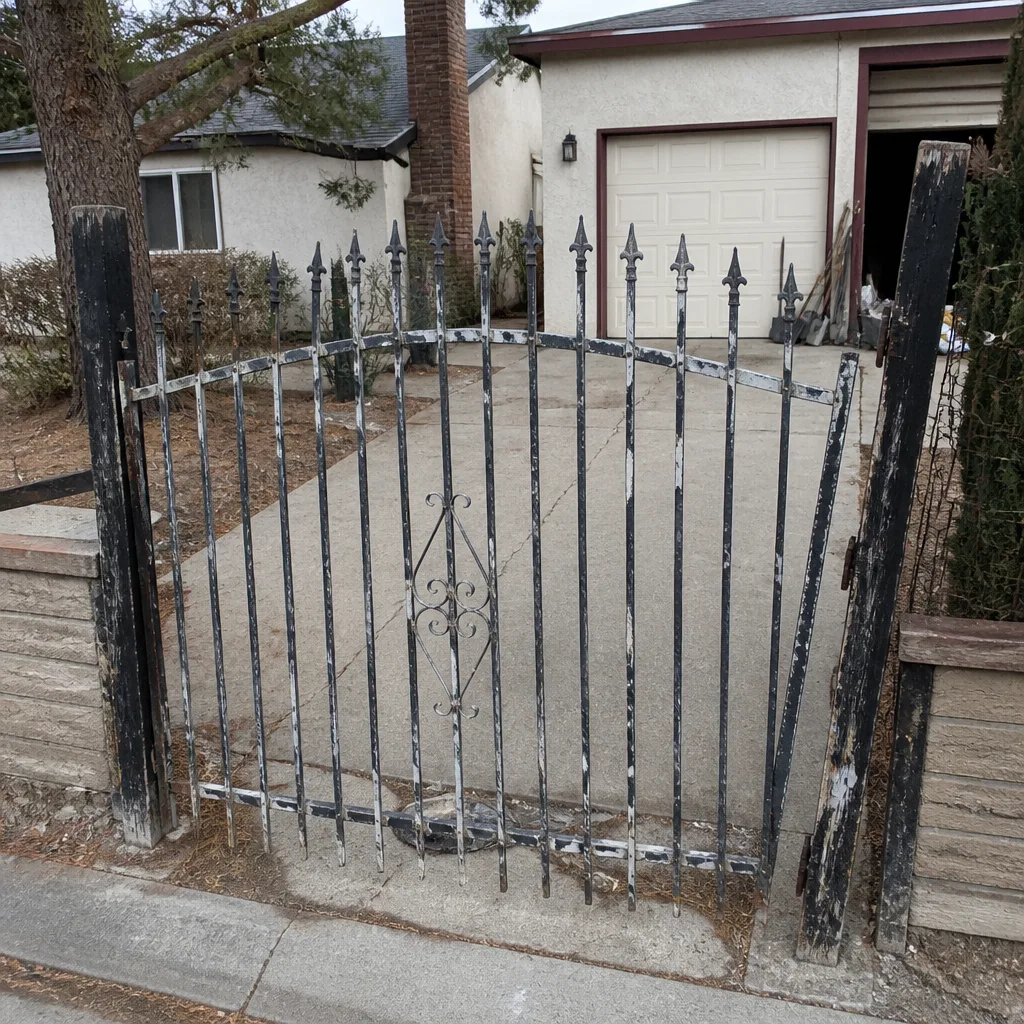 Before
 After
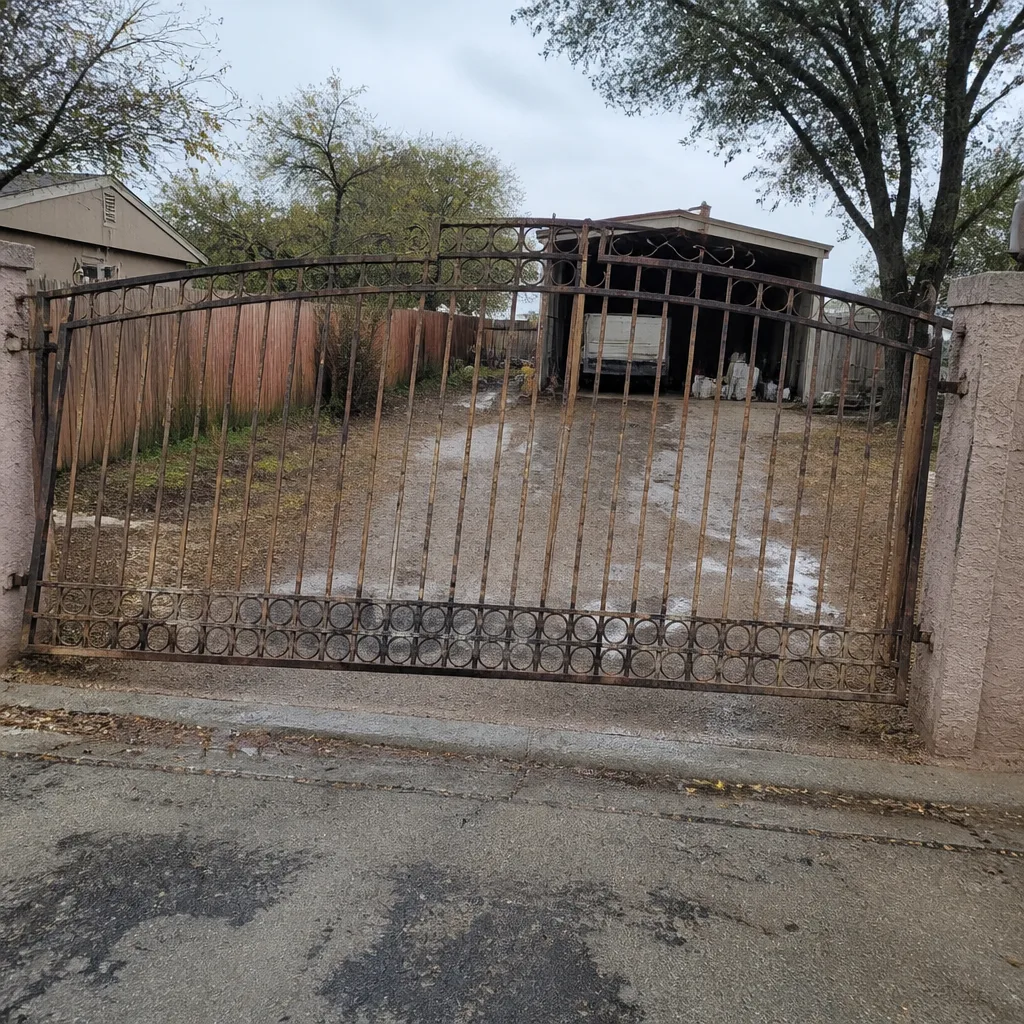 Before
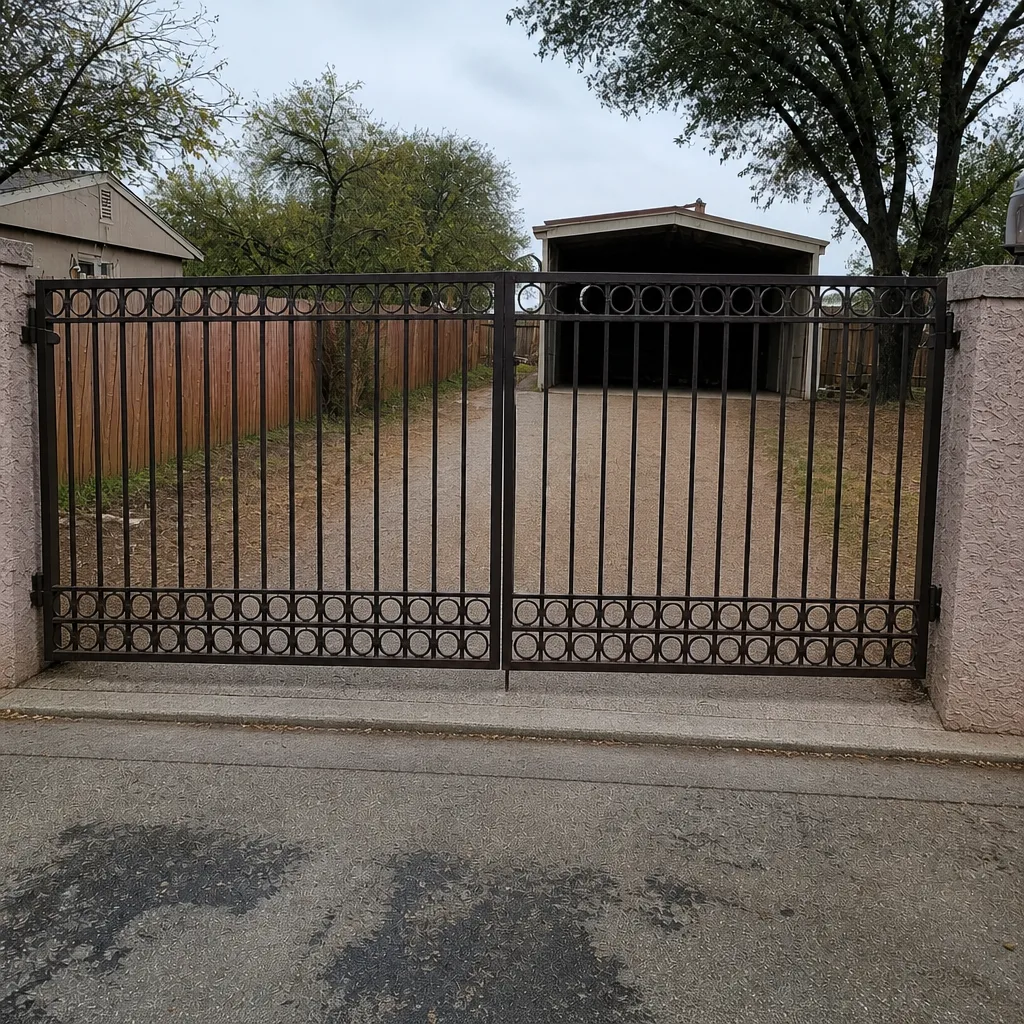 After
How Gate Access Control Systems Work in Whitney, NV (and Why Yours Stops Halfway)
A gate access control system works as a chain of five stages: the entry device (keypad, fob, or intercom) sends a request, the control board approves it, the operator motor opens the gate, the detection layer (buried loop or photo-eye) confirms nothing is in the path, and the safety reversal keeps the gate from closing on a person or vehicle. A gate that opens partway and stops in Whitney almost always fails at the detection layer, not the entry device. The keypad usually did its job. What gave out is a loop detector or photo-eye that’s lost its tuning to heat, ground movement, or water in the asphalt. Call (855) 928-1304 if you want a straight answer on which layer is failing.
Our technicians have up to 13 years of experience tracing exactly that kind of fault, and Ironworks Gate Co. Whitney carries training on nine gate-automation brands – LiftMaster, FAAC, BFT, Linear, Viking, Ghost Controls, DoorKing, Elite, and Mighty Mule – so the person who shows up already knows the control board pinout for what’s on the driveway.
The five-layer signal chain, and what breaks at each layer
Almost every “the gate isn’t working” call can be sorted into one of five places along the chain. Knowing which layer you’re standing in saves time and money, because the fix at the credential layer looks nothing like the fix at the detection layer.
- Credential device. Keypad, RFID fob reader, or intercom. Common failures: dead backup battery, water in the keypad housing, a fob reader that’s lost its memory after a power surge. If the keypad beeps and the gate does nothing, the credential layer is suspect.
- Control board. The brain. It takes the request from the credential and tells the operator to open. Common failures: a blown terminal, a board corrupted by a lightning-adjacent surge, DIP switches knocked out of position. LiftMaster and DoorKing boards tend to be the most forgiving in our heat; older standalone boards less so.
- Motor / operator. The arm or worm drive that moves the gate. Common failures: worn gearbox, limit switches out of adjustment, a motor overheated from running against an obstruction that shouldn’t be there.
- Detection layer. The buried loop detector in the driveway, or the photo-eye pair mounted on opposite posts. Common failures: loop wire insulation degraded by heat, photo-eye misalignment from post heave, monsoon water shorting the loop. This is where most Whitney calls land.
- Safety reversal. The last check before the gate closes. If it’s not tuned, the gate can close on a vehicle. It must be tested at the board, not just by waving your hand at the photo-eye.
Each layer depends on the ones before it. A perfect keypad won’t fix a board that’s given up. A new board won’t fix a loop detector that’s sending a false “obstruction” signal every time the driveway warms up. That’s why the right repair often surprises homeowners who came out to check the keypad.
Why Whitney gates stop halfway when the keypad works fine
Whitney’s summers run above 110°F, and that heat does quiet damage to the thin wire buried under asphalt driveways. Loop detector wire is insulated to survive a lot, but it wasn’t designed for twenty summers of asphalt radiating heat back into it. Over time the insulation goes brittle, cracks, and moisture finds its way in. Once that happens, the loop reports an obstruction that isn’t there. The gate opens, the board reads “something’s in the path,” and it stops or reverses.
The homeowner sees a gate that stopped, and the keypad takes the blame. In our experience, it’s almost never the keypad on a driveway older than ten years. It’s the loop, or the photo-eye that the afternoon heat has pushed out of alignment.
The tract homes across Whitney were built from the 1980s through the 2000s with builder-grade ornamental gates, and many driveways still have the original loop wire under the concrete or asphalt. On the streets off Warm Springs Road, gate posts often sit in caliche-hard soil that cracks and settles after monsoon rains. When a post shifts, the photo-eye on one side no longer points at the reflector on the other, and the gate reads an obstruction every time it tries to close.
This is exactly why access control work in Whitney is tuning work, not just installation work. The board, the loop, and the entry device all have to be calibrated to each other. A board that opens the gate correctly in January can fail in July because the loop’s resistance has drifted a few ohms in the heat.
Standalone keypad, cloud-connected system, or RFID fob?
The right choice depends on how many people need to come through the gate and how often those people change – not just the budget line.
| System type | Best for | Typical install range in Whitney |
|---|---|---|
| Standalone keypad (LiftMaster, Elite) | One household, no regular visitors, no contractor traffic | $350 – $650 installed |
| RFID fob system | Household plus regular visitors, landscapers, or adult children with cars | $550 – $950 installed |
| Cloud-connected (LiftMaster myQ, DoorKing) | Homeowners who want to grant and revoke access from a phone | $750 – $1,400 installed |
A standalone keypad is the simplest thing that works. You pick a code, you change it when you need to, and there’s nothing to log into. RFID is easier for the people who come through daily – one tap of a fob beats re-entering a code in the sun. The cloud-connected systems like LiftMaster myQ and DoorKing make sense when you’re granting temporary access and want a record of who came through and when, which is the case for a fair number of our Whitney customers who have a second home or regular contractor visits.
None of this matters if the detection layer underneath it is failing. A new cloud system wired to a tired loop will report phantom obstructions the same as the old keypad did. We diagnose the chain first, then recommend the credential layer that fits.
What “tuned to each other” actually means
Here’s the first-hand detail that explainers skip: most gate failures we see in Whitney aren’t broken components, they’re components that were installed at different times and never adjusted to work together. A board replaced in 2019, a loop that’s been there since 2003, a photo-eye that got bumped by a lawnmower last spring – each works fine on its own and fails as a team.
On a service call, tuning means checking loop sensitivity against what the site actually needs, testing the safety reversal at the board with a physical obstruction, confirming photo-eye alignment after the post is level, and verifying the operator’s limit switches still match the gate’s travel. It’s the kind of work that separates a gate that works once from one that works every day for years. It’s also the kind of work that a one-truck outfit without brand training will skip. Our teams are trained on the nine major brands precisely because each board has different tuning menus and different fault codes, and knowing LiftMaster’s doesn’t help you diagnose a FAAC.
Common local scenarios we see across Whitney
- The heat-time stop. Gate works at 7 a.m., stops halfway by 2 p.m. Loop detector drift from heat. Tuned or replaced at the loop, not the keypad.
- The monsoon wobble. Gate drags and the latch misses after the first big rain. Post heave in caliche soil has put the photo-eye out of line and shifted the hinge side. Post reset plus realignment.
- The phantom vehicle. Gate opens for the homeowner then reverses with nothing in the driveway. A loop with a shorted segment reporting a ghost. Trace the loop, find the leak, repair the wire.
- The power-surge board. After a monsoon lightning storm, the keypad powers on but the board doesn’t respond. Board replacement, brand-matched.
- The new-code problem. Homeowner changed the code on the keypad but the board won’t accept the new one. Usually a control board memory issue, not a keypad issue.
If you want the full picture of what we cover on the diagnostics and repair side, our Gate Access Control page lays out the service, and the Gate Access Control in Whitney page has the local version.
A diagnostic checklist you can run before calling
These five checks take five minutes and give us a head start on the phone:
- Test the credential device. Enter the code (or tap the fob). Does the keypad beep or the reader light up? If not, the problem is at the credential layer or the power feed to it.
- Check the control board indicator lights. Open the operator housing (if it’s easy to reach safely) and look at the board. A steady power LED means the board is alive. A blinking fault LED is telling you something specific – write down the blink pattern if you can.
- Manually trip the photo-eye. Wave your hand through the beam between the two photo-eye heads. If the gate reverses or the board LED changes, the beam is working. If nothing happens, the beam or its wiring is suspect.
- Walk the loop. With the gate open, stand in the middle of the driveway loop area. Does the board LED flicker? If it does, the loop is sending a false signal.
- Feel the operator housing. If it’s hot to the touch after a short run, the motor is strained, which usually points back to a gate that’s binding at the hinge or a board applying too much current.
Please don’t put your hand near the gate arm or the hinge while the gate is powered. Gate operators can cause serious injury, and the safety reverse on an untuned system may not work the way you think it does. Leave the mechanical and electrical work to a trained technician – we’ll tell you honestly whether it needs a service call.
FAQs
Because the keypad is working fine – the failure is almost always at the detection layer, usually a loop detector or photo-eye that’s lost its tuning. In Whitney, the most common cause is heat-degraded loop wire under the driveway reporting a false obstruction, or a photo-eye knocked out of alignment by a shifted post after monsoon rains. Call (855) 928-1304 and we’ll help you narrow it down before anyone gets in a truck.
Most gate access control repairs in Whitney run $180 to $480, depending on what’s actually broken. A keypad swap sits at the low end; a loop detector replacement or a control board swap sits higher. A new access system install starts around $350 and goes up from there depending on type (see the table above). Call (855) 928-1304 for a no-pressure upfront estimate before a bolt is turned.
Usually yes, on the first visit. If the keypad beeps when you punch a code, the keypad is doing its job and the fault is downstream. If the board’s power LED is dark after a known-good power feed, the board is gone. Our technicians are trained on the nine major gate-automation brands (LiftMaster, DoorKing, FAAC and the rest) so they arrive knowing the specific fault codes and pinout for whatever’s on your driveway. That’s the main reason most jobs get settled in one visit.
A cloud-connected system (LiftMaster myQ, DoorKing) lets you grant and revoke access from a phone and keeps a log of who came through. A regular standalone keypad just checks a code at the gate and opens – no app, no log, no cloud. The right choice usually comes down to how many people need access and how often that list changes, not just budget. Call (855) 928-1304 and we’ll walk through which fits your driveway.
If you’d rather have it looked at
If you’d rather have it looked at than troubleshoot it yourself, Ironworks Gate Co. Whitney offers a no-pressure assessment in Whitney – call (855) 928-1304 for a free estimate. We carry the 90-Day Done Right Promise in writing, answer the phone with a live person 24 hours a day, and stand behind the work every time. Most access control calls get sorted in one visit. That’s the plan.
Written by the team at Ironworks Gate Co. Whitney, serving Whitney, NV.