

 Wrought iron
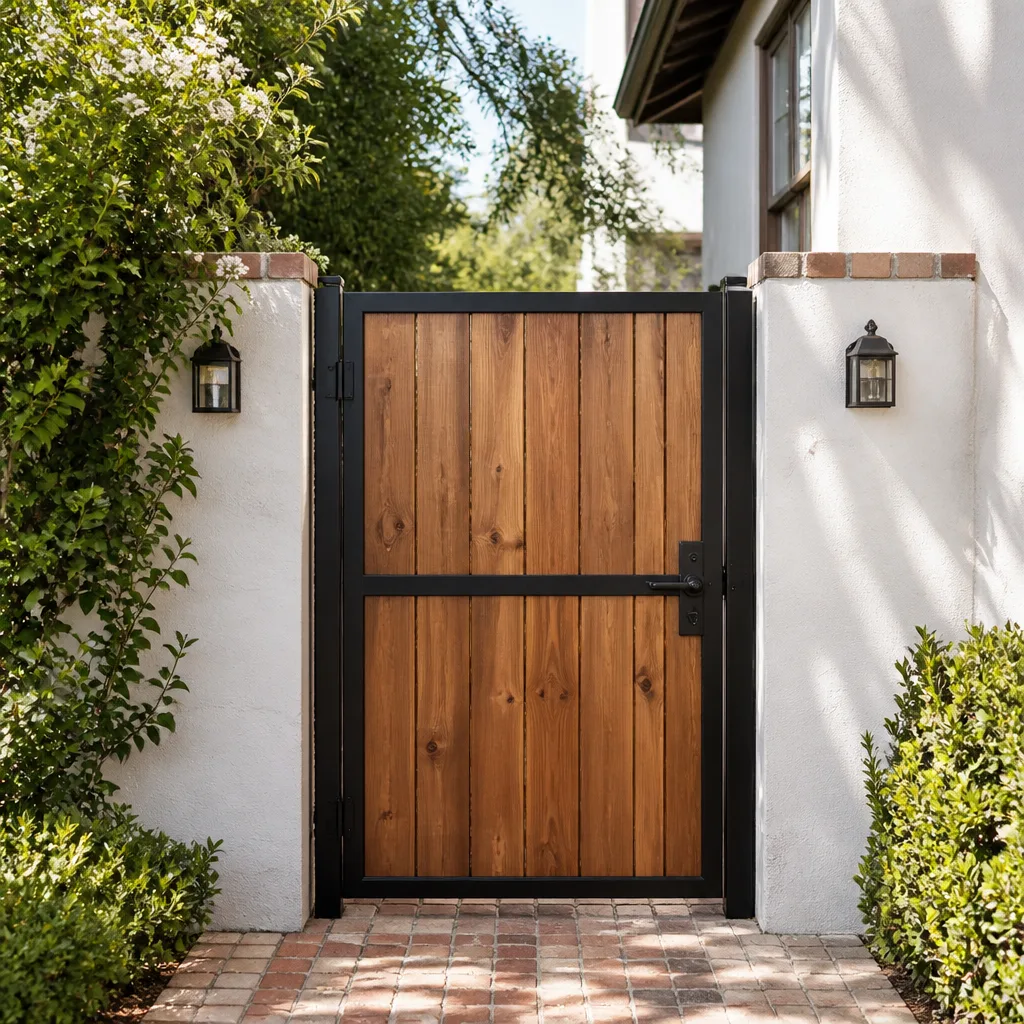 Wood & steel frame
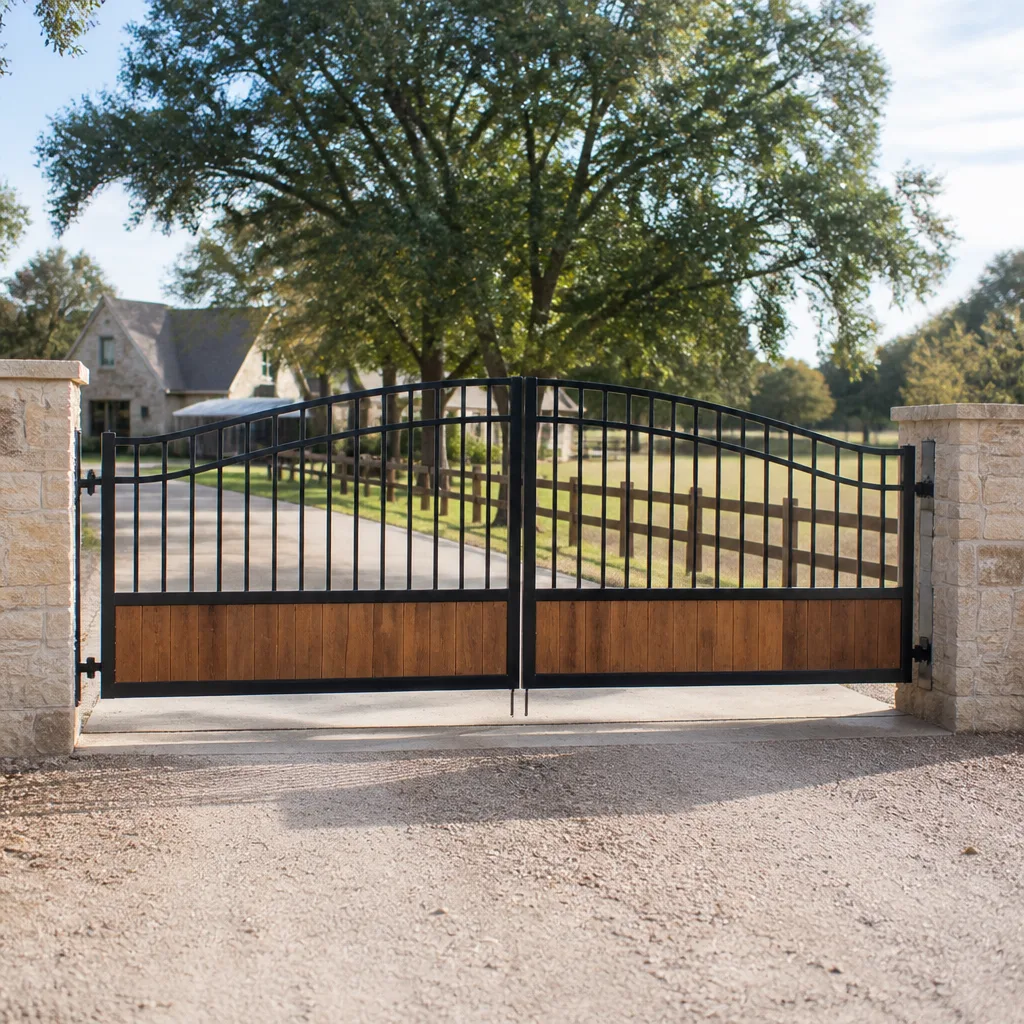 Farm & ranch
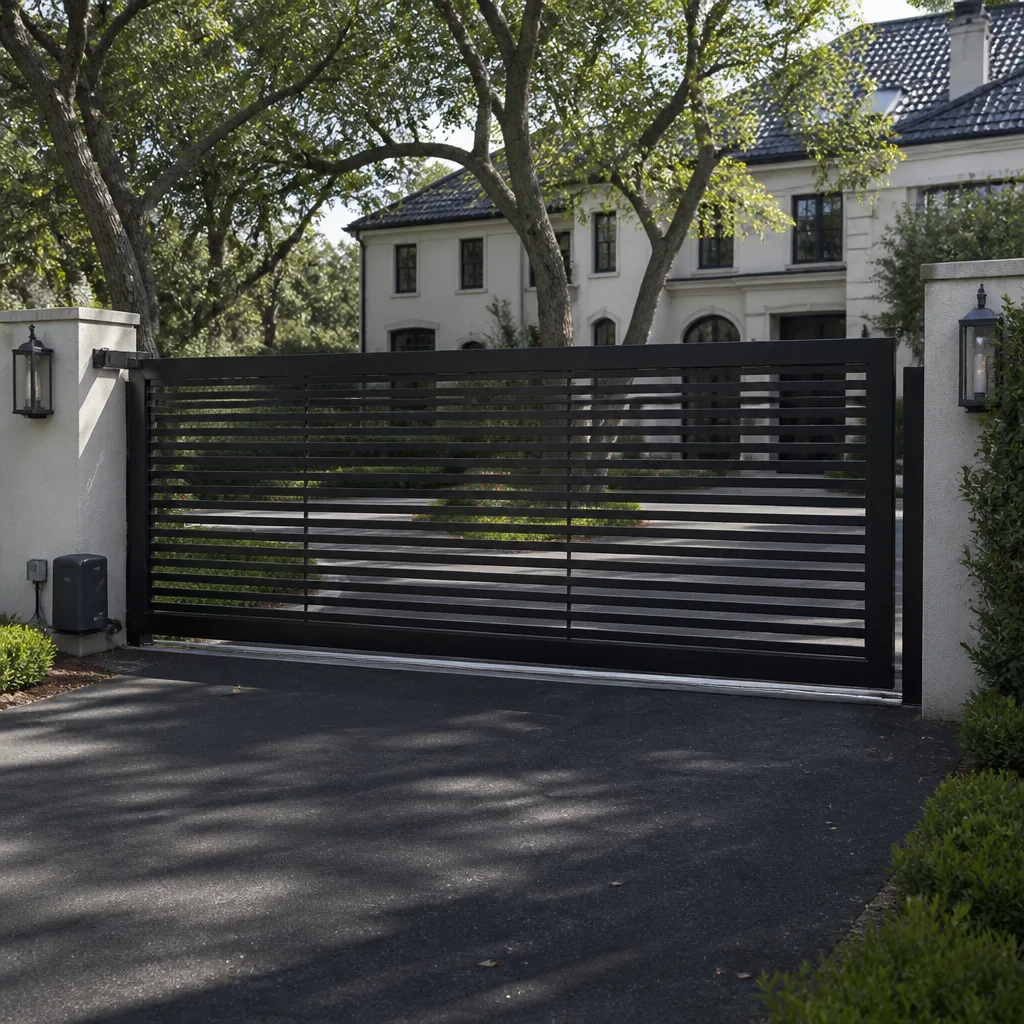 Sliding driveway gates
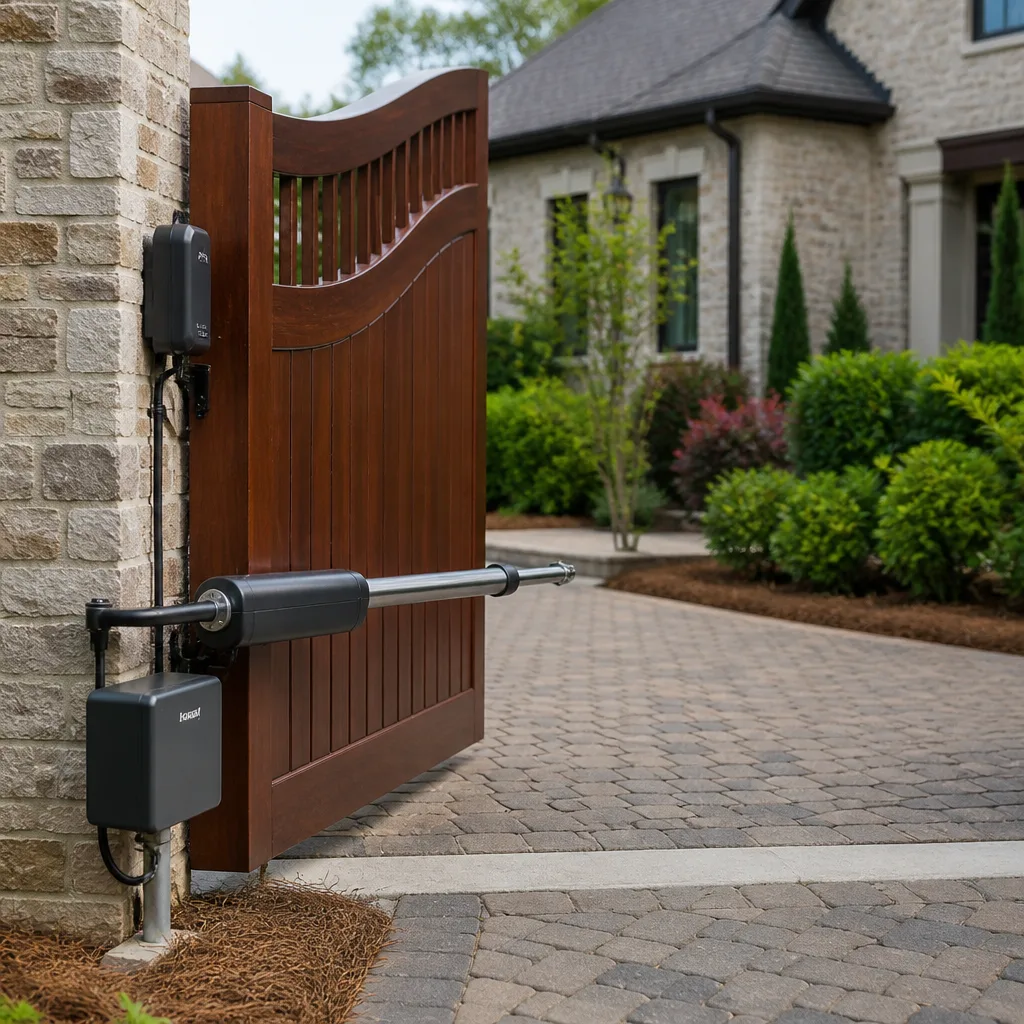 LiftMaster operators
Free on-site gate assessment - hinges, posts, and your LiftMaster or Nice gate operator checked before anything is quoted
The assessment is free and the quote is the invoice.
Get your free estimateLinear Hinge & Roller Replacement: The Whitney Owner’s Guide
We replace failed Linear hinges and rollers with model-matched parts, and in Whitney most of these swaps run $140 to $310 installed, parts and labor together. Many we can complete the same day you call. Linear doesn’t build one hinge. It builds several across its gate operator and slide-gate hardware lines, and the hinge that fits an older residential model often won’t close up cleanly on a newer one. The roller question is easier: guide rollers wear far faster than hinges, and in Whitney’s dust and summer heat they’re usually the first thing to go.
Owners almost never wake up knowing a hinge failed. They hear it first. A gate starts dragging at one end, or a roller squeals through the last two feet of travel, or the top rail sags a quarter inch and the latch stops catching. By the time a hinge cracks outright, the wear has usually been talking for weeks. If your Linear gate has started to sound different, you’re in the right place.
Key Takeaways
- Linear-compatible hinge and roller replacement in Whitney typically runs $140 to $310 installed, quoted before we touch a bolt.
- Guide rollers fail before hinges in our climate, mostly from grit and heat cycling.
- We’re an independent service provider, not affiliated with Linear, and we say so plainly.
- Every job is backed by our written 90-Day Done Right Promise.
Which Linear Models This Applies To
Linear’s residential and light-commercial gate hardware spans a few distinct families, and the hinge and roller spec changes between them. The older swing-gate operators in the Linear line use a heavier hinge plate with a different bolt spacing than the newer slide-gate hardware. Guide rollers vary too: post-mounted rollers run a different wheel diameter and axle length than the bracket-mounted style used on some slide configurations. That’s not a detail you can eyeball from a photo on a phone.
The reliable way to identify your part is a two-step check. First, find the model label on the operator housing itself, not on the arm or the control box. Second, measure the existing hinge: bolt-hole center-to-center distance, plate thickness, and the pin diameter. Write those numbers down. A part that’s a millimeter off on pin diameter will fit today and rattle loose within a season. On older Linear gates we’ve seen in Whitney, the original hinge may have been swapped by a previous owner for a generic replacement, which means the label and the part on the gate no longer match. Measure what’s actually bolted on, not what the manual says should be there.
On the OEM-versus-aftermarket call: for Linear hardware, a quality aftermarket hinge in the correct spec is a fine choice and often a sensible one, provided the metallurgy is right and the pin is hardened. What we avoid is the cheap cast hinge with soft pins that egg out the holes inside a year. That’s not a brand loyalty question, it’s a metal question. We’ll tell you honestly which way we’d go on your specific gate.
How to Read Your Linear Label
- Operator housing label: gives you the model family. This is the starting point.
- Hinge bolt spacing: center-to-center, measured with a tape, in inches.
- Pin diameter: calipers are ideal, but a snug drill bit shank will get you close.
- Roller wheel diameter and axle length: if you’re replacing rollers, measure both.
Styles & brands we work with
- Wrought iron
- Wood & steel frame
- Farm & ranch
- Sliding driveway gates
- LiftMaster operators
Signs Your Linear Hinge & Roller Replacement Is Failing
Hinges and rollers don’t fail silently. They give you plenty of notice if you know what you’re hearing. Here are the five symptoms we find most often on Linear gates around Whitney, and what each one is actually telling you.
- The gate drags or drops at the latch end. A worn hinge pin lets the gate sag a fraction of an inch, and that fraction is enough to make the latch miss. If you’re lifting the gate slightly to close it, the hinge is the usual culprit.
- A squeal or grind through part of the travel. That’s almost always a roller with a flat spot or a dry bearing. The noise shows up at the same point every cycle because that’s where the damaged section of the wheel contacts the track.
- Visible play when you push the gate by hand. Grab the gate near a hinge and rock it. Any perceptible wobble means the pin or the hinge plate holes have worn. Left alone, this hammers the mounting bolts loose next.
- Rust streaks or powdering at the hinge. In Whitney, our dry summers followed by winter moisture cycles push unprotected steel toward corrosion. Surface rust is cosmetic; flaking metal at the pin is structural.
- The operator strains or reverses mid-travel. A binding hinge or seized roller raises the force the motor needs to move the gate, and many Linear operators will reverse on a force trip rather than force through it. This one is worth calling about promptly, since the motor is working harder than it should every single cycle.
See the difference
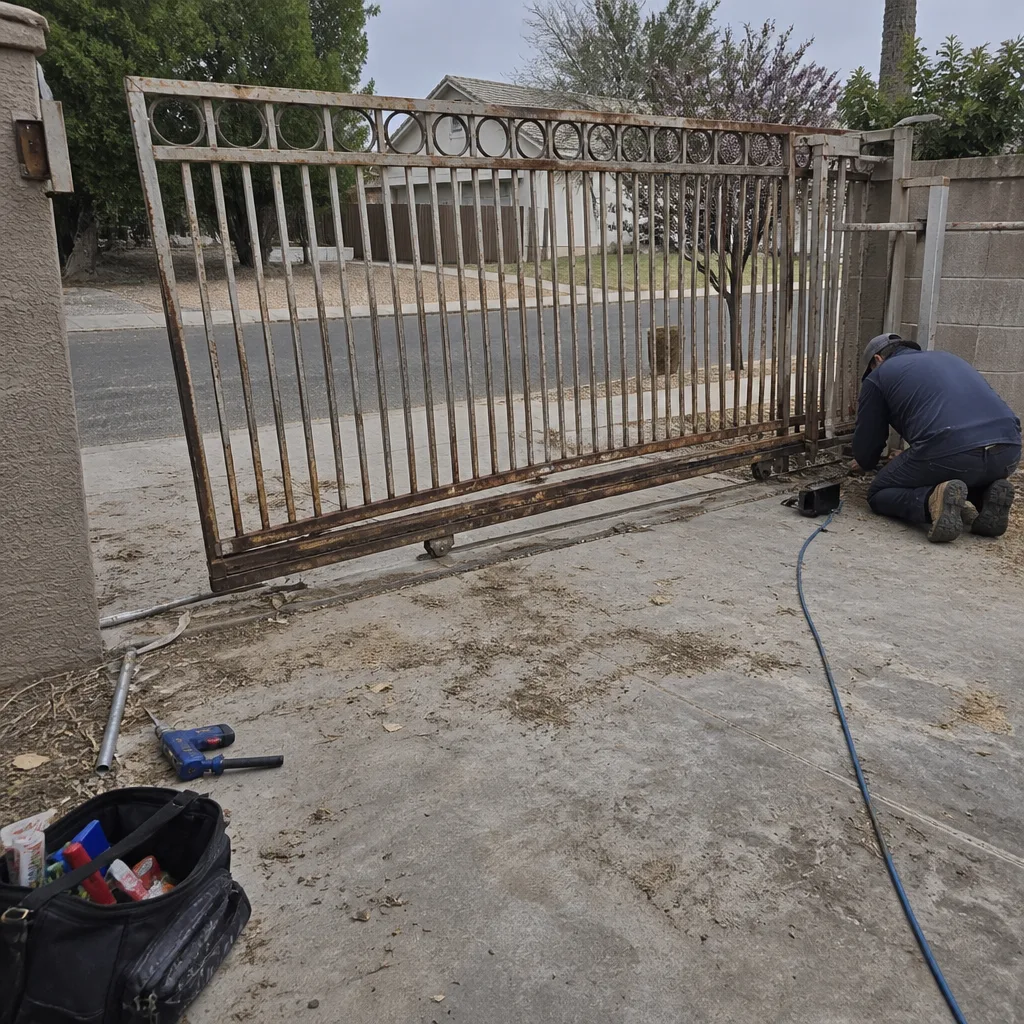 Before
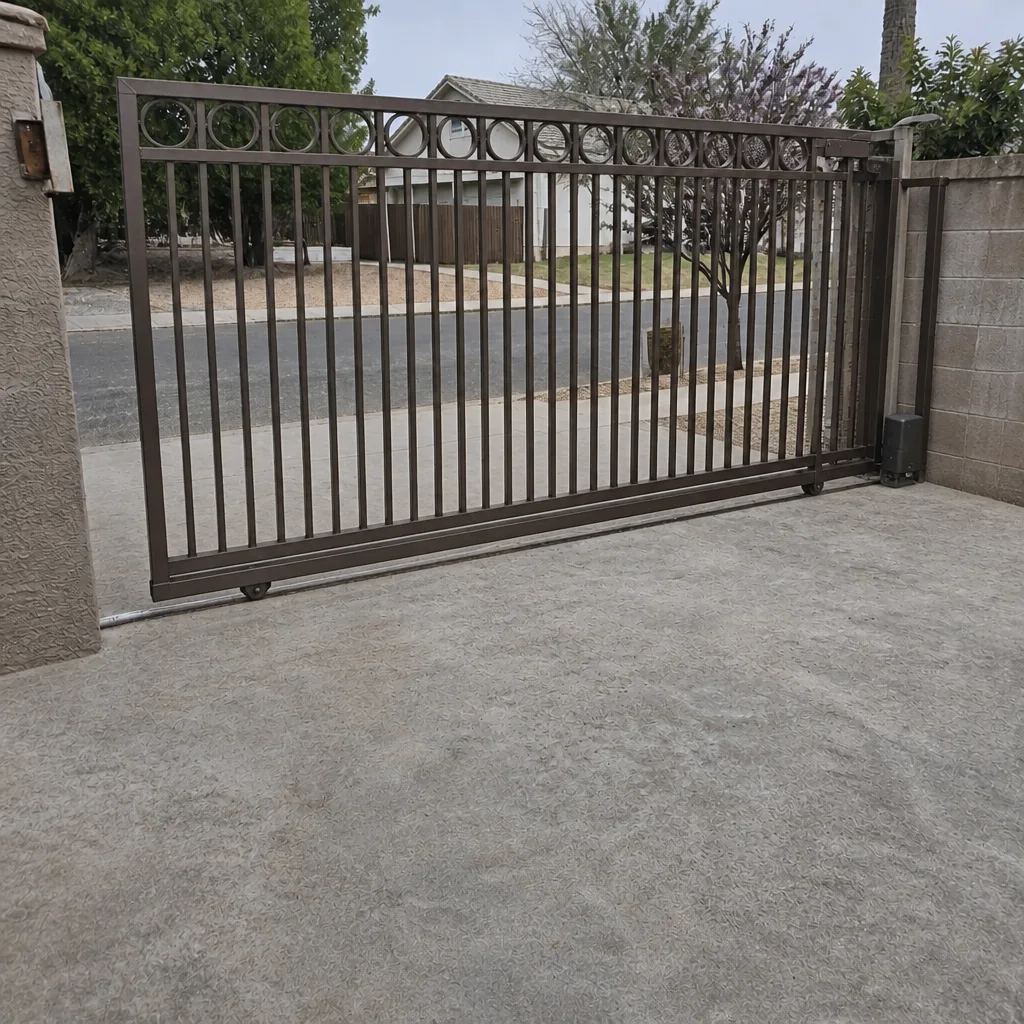 After
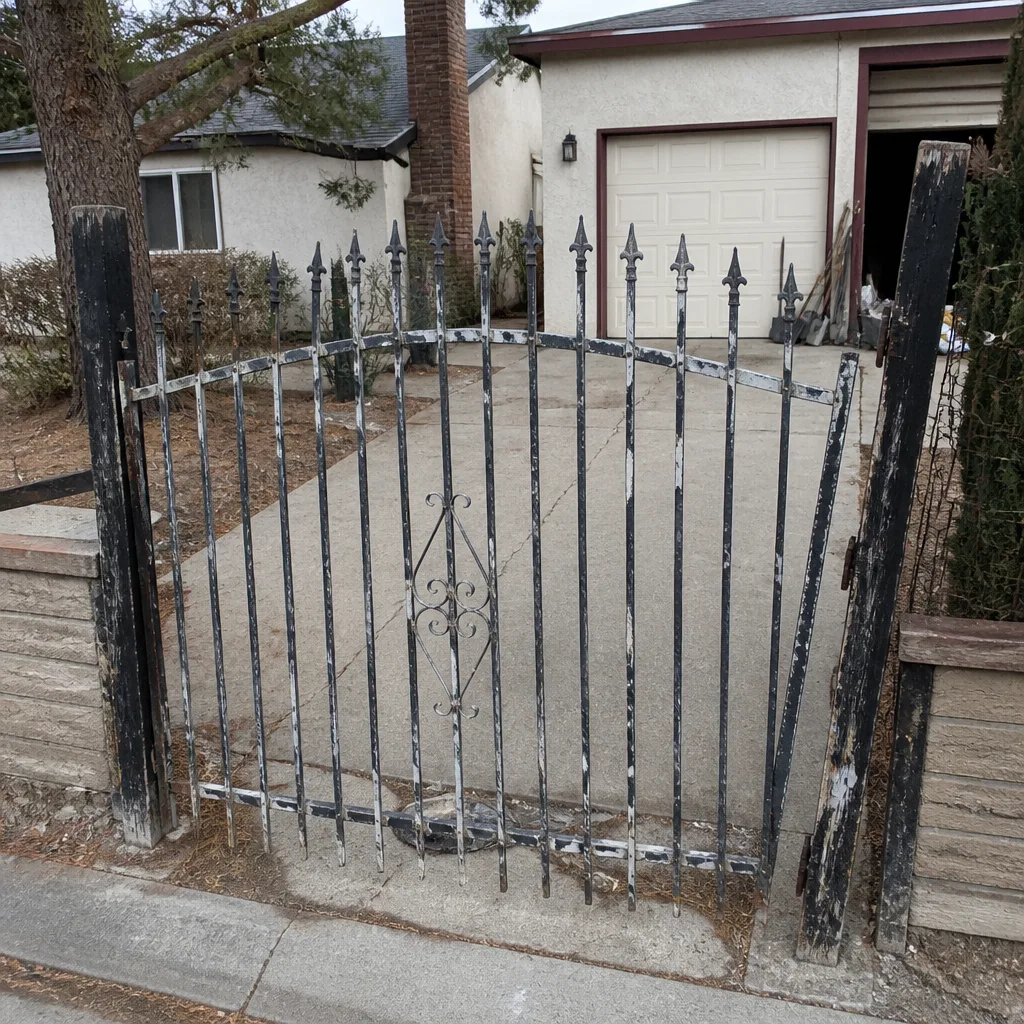 Before
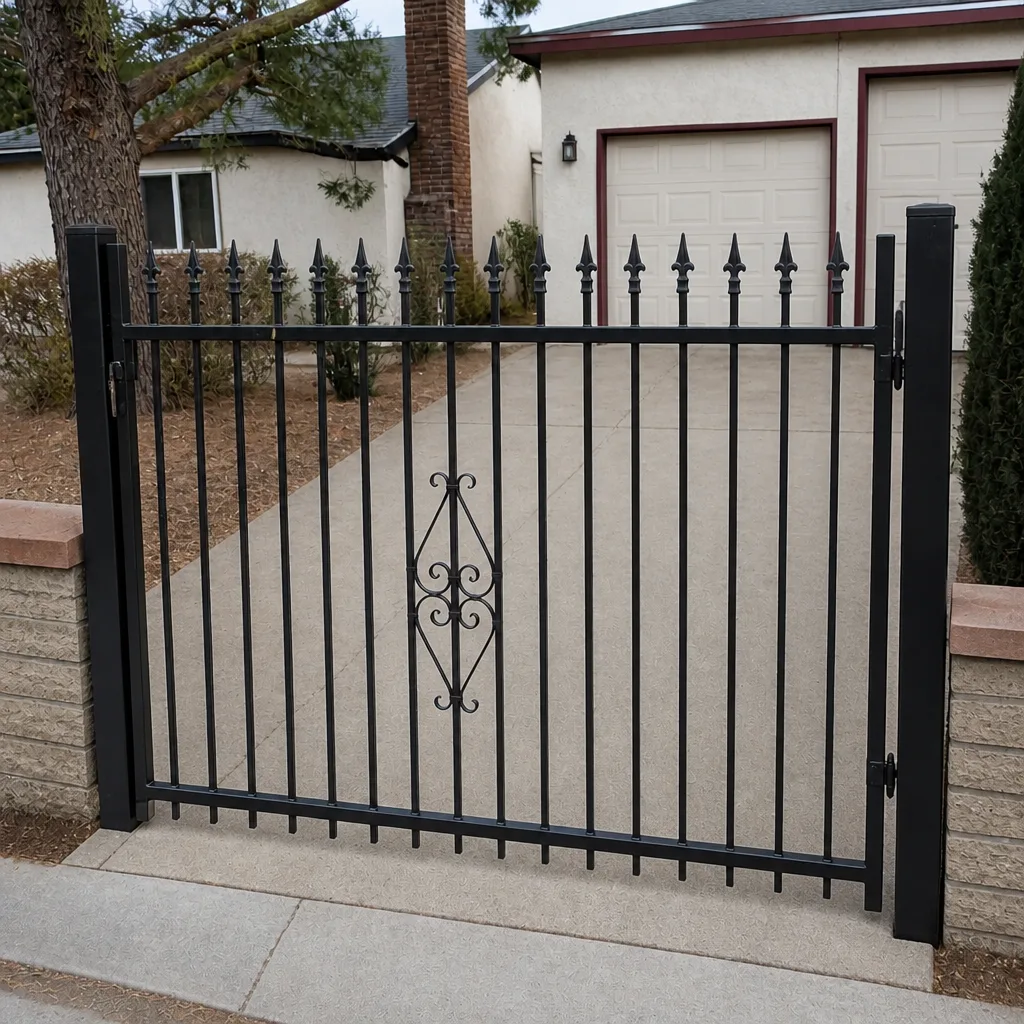 After
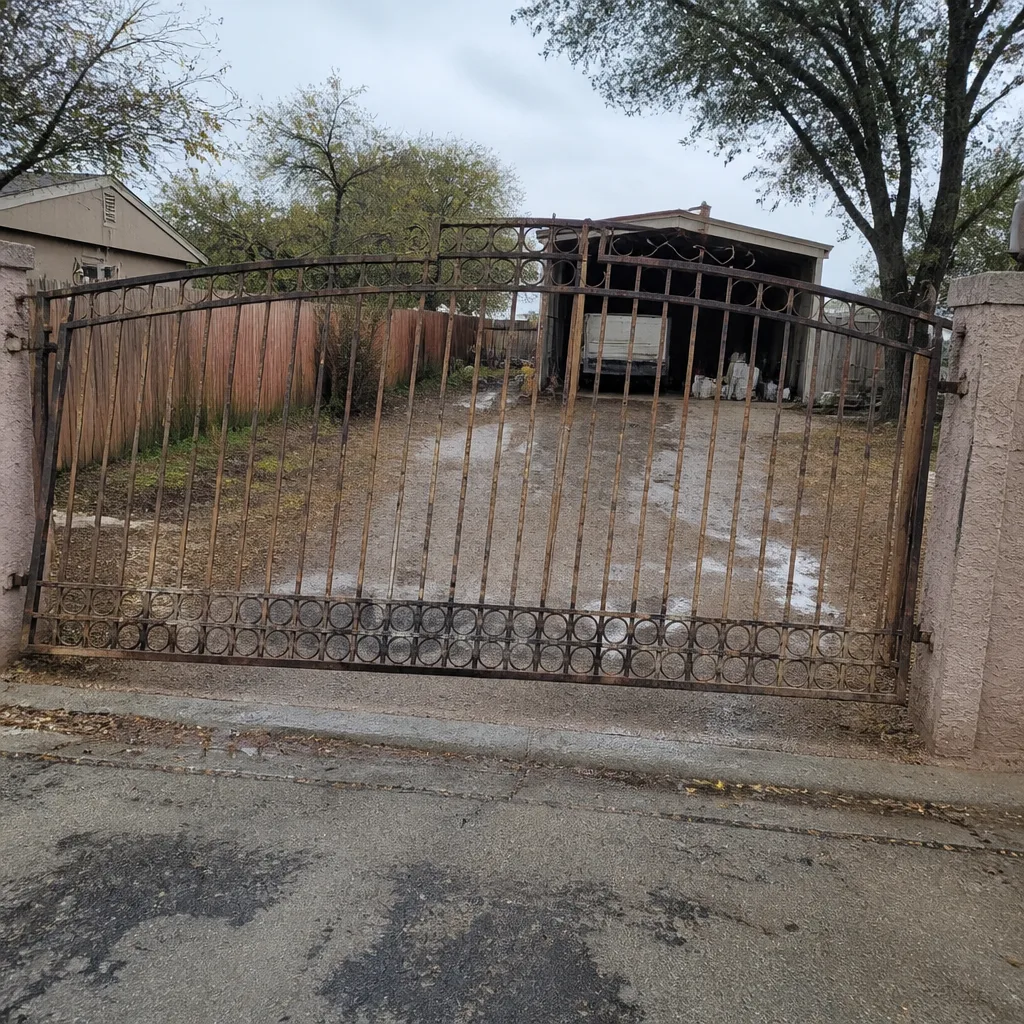 Before
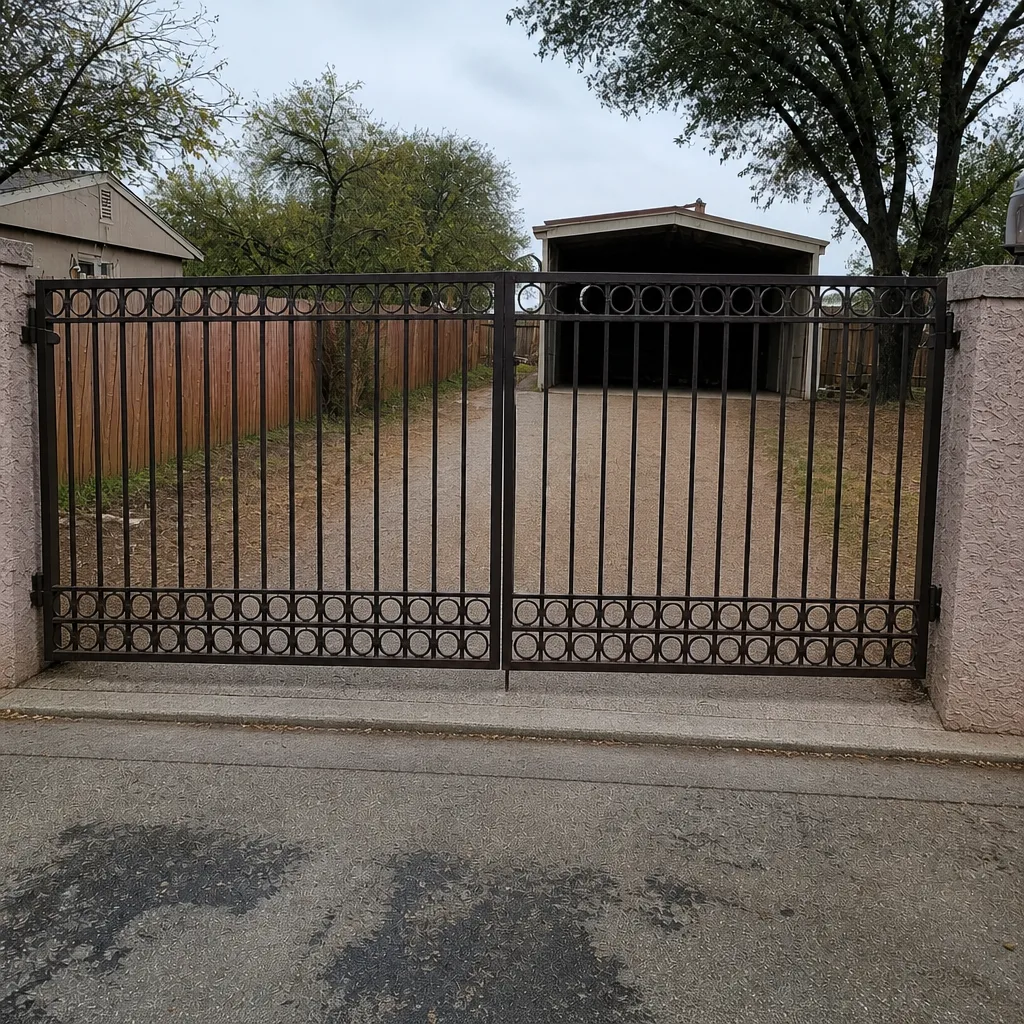 After
Replacement Cost & What’s Included
Installed hinge and roller replacement on a Linear gate in Whitney runs $140 to $310, and sometimes higher if the gate needs more than a straight swap. Our technicians have up to 13 years of experience, and we quote the price upfront before a single bolt is turned. What you’re quoted is what you pay.
| What drives the price | Typical range |
|---|---|
| Single hinge replacement, parts and labor | $85 – $150 |
| Full hinge set on one gate leaf | $180 – $310 |
| Guide roller replacement (per roller) | $45 – $95 |
| Hinge set plus rollers, one leaf | $210 – $340 |
What’s included: the model-matched part, removal of the old hardware, alignment check on the gate, and a test cycle to confirm the latch and the operator’s force settings are where they should be. If we find a hinge that tells us the gate frame itself has moved, we’ll say so before we do anything. Every job carries our written 90-Day Done Right Promise. If it isn’t right, we come back and make it right, no arguing. Ask about our $50 Off Any Repair Over $250 and the standing 5% Senior and Veteran discount.
DIY or Call Us?
Some checks are safe to do yourself. Walk the gate through its full travel by hand with the operator disengaged (every Linear operator has a manual release), listen for the squeal, watch for the sag, and rock the gate at each hinge. That tells you what’s wrong without putting a tool to it. Measuring the hinge for parts matching is also fine.
Where DIY goes wrong: gate hinges sit under real load. A gate leaf can weigh well over a hundred pounds, and pulling the last hinge bolt without supporting the leaf can drop the gate on you or bend the frame. Hinge pin punches can slip and take a knuckle. And if the gate is spring-assisted, that spring stores energy you can’t see, which is not the moment to improvise.
We’re happy to tell you over the phone whether your situation is a quick DIY check or a job that needs hands on it. Call (855) 928-1304, and a live person answers, day or night. Free estimates, no pressure.
FAQs
How long do Linear hinges and rollers last?
In Whitney, expect guide rollers to last roughly 3 to 6 years and hinges 8 to 15 years, depending on cycle count and how the gate was maintained. Gates that run several times a day and get no lubrication wear at the short end of that range. UV and temperature swings in the valley are hard on unprotected hardware, so the ones that last are the ones that get looked after.
Can a failing Linear hinge be repaired instead of replaced?
Sometimes yes, and we’ll tell you honestly if it’s worth it. A slightly worn pin can often be replaced on its own if the hinge plate holes are still round. Once the holes are egged out or the plate is cracked, replacement is the only fix that holds. Patching a worn hinge is a false economy on a gate you plan to keep. Call (855) 928-1304 and we’ll give you a straight answer.
How long does the swap take?
Most Linear hinge and roller swaps take one to two hours for a single gate leaf. A full set with rollers runs closer to three. Most jobs we complete in a single visit. If a hinge reveals that the gate frame itself has shifted, we’ll flag it before we continue, and we’ll quote any extra work before we start.
How do you source the right part for my Linear gate?
We match by model and by measurement, not by guesswork. That means checking your operator label and measuring your existing hinge or roller for bolt spacing, pin diameter, and wheel size. We source model-matched hardware, either OEM or a quality aftermarket equivalent in the correct spec, and we never claim to carry stock or parts on a truck. We order it, we bring the right part, and we fit it once.
Will replacing the hinge fix the operator reversing issue?
Often, yes. A binding hinge or seized roller is a common cause of a Linear operator hitting a force trip and reversing mid-travel. Once the gate swings free again, the operator usually settles back to normal. If the reversing continues after the hardware is replaced, that points to the operator itself, which we also service. Call (855) 928-1304 for a free estimate.
We’re an independent service provider. We’re not affiliated with Linear, but we’re trained and equipped on their hardware, along with LiftMaster, Mighty Mule, Ghost Controls, and six other gate-automation brands. One call, and the right fix gets made on the first visit.
Whitney homeowners call rather than click, and we’ve built our work around that. Ironworks Gate Co. Whitney connects homeowners with independent local professionals who do the work. When your Linear gate starts dragging, squealing, or reversing, call (855) 928-1304 for a free estimate. We will be there when we say, and we stand behind it in writing. Done right, backed in writing, every time.
Written by the team at Ironworks Gate Co. Whitney, serving Whitney and nearby areas.