
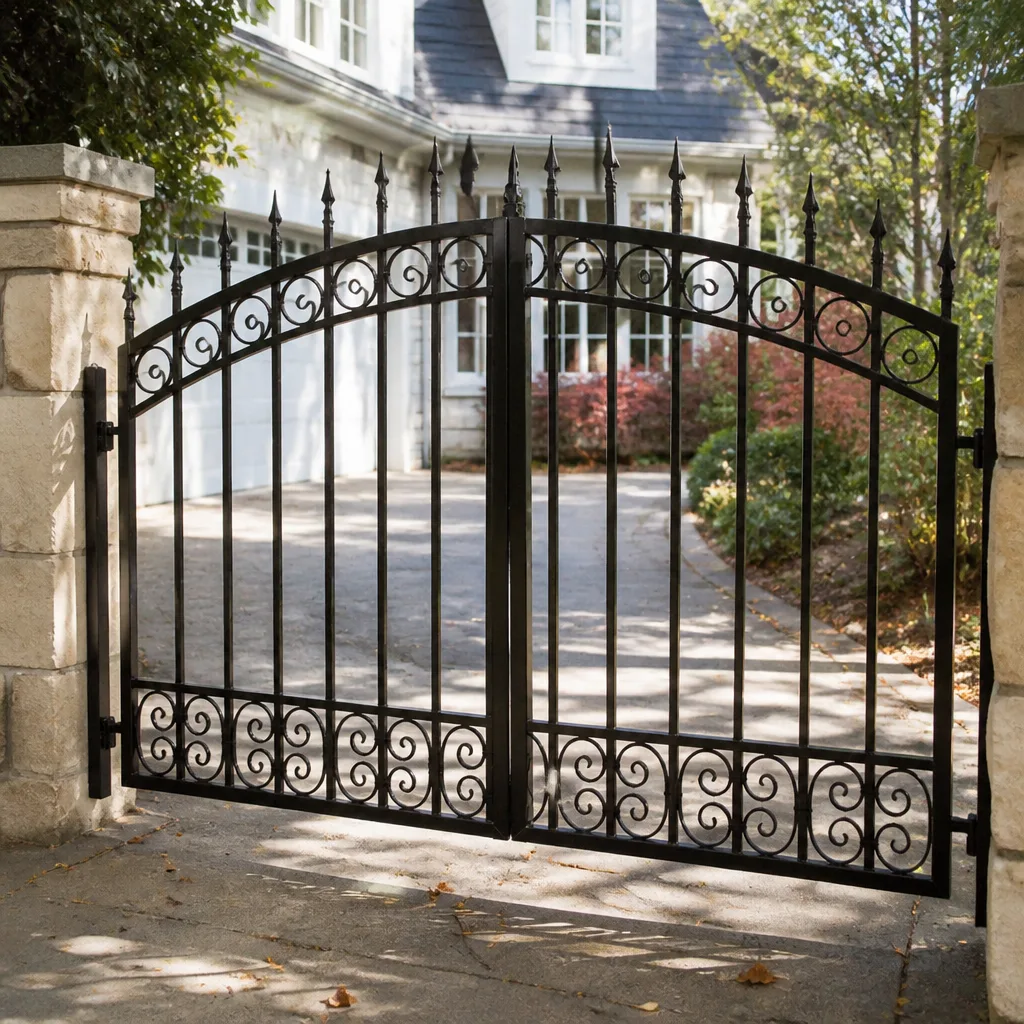
 Wrought iron
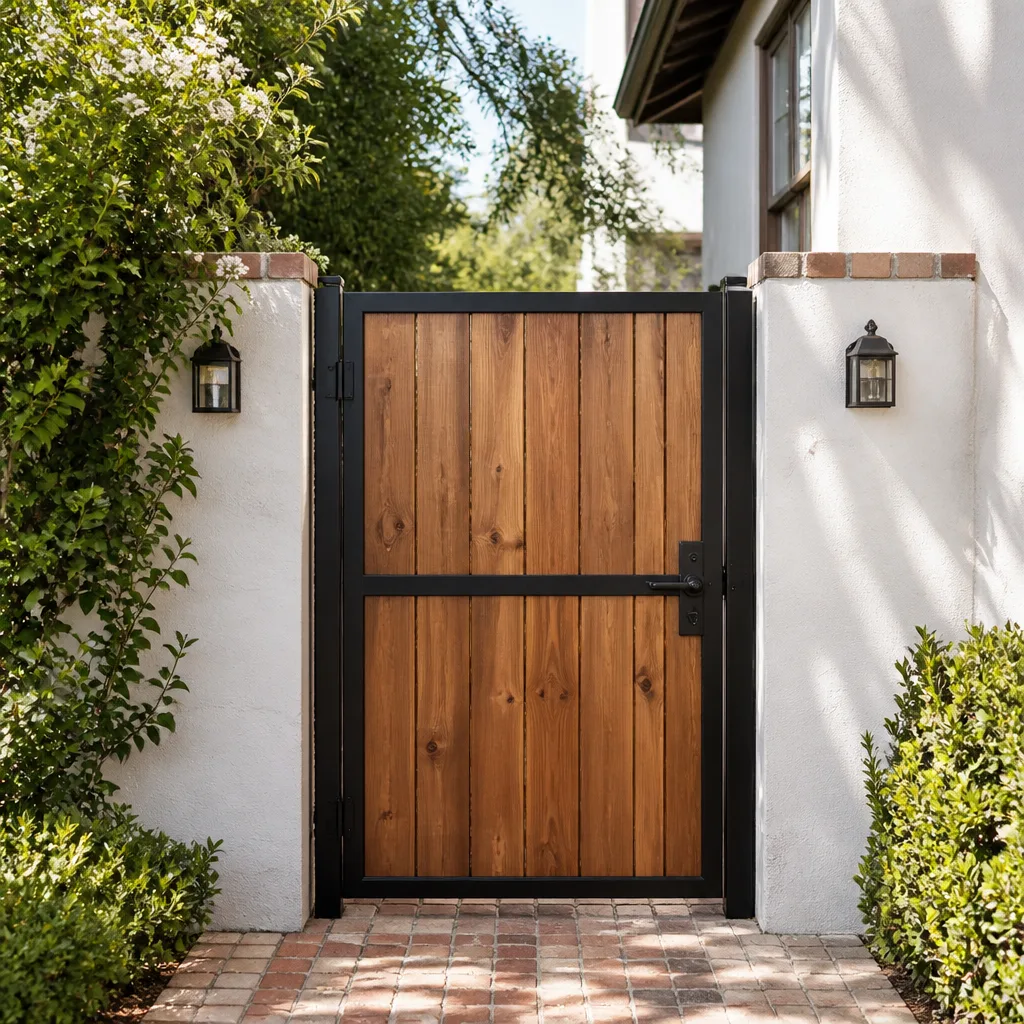 Wood & steel frame
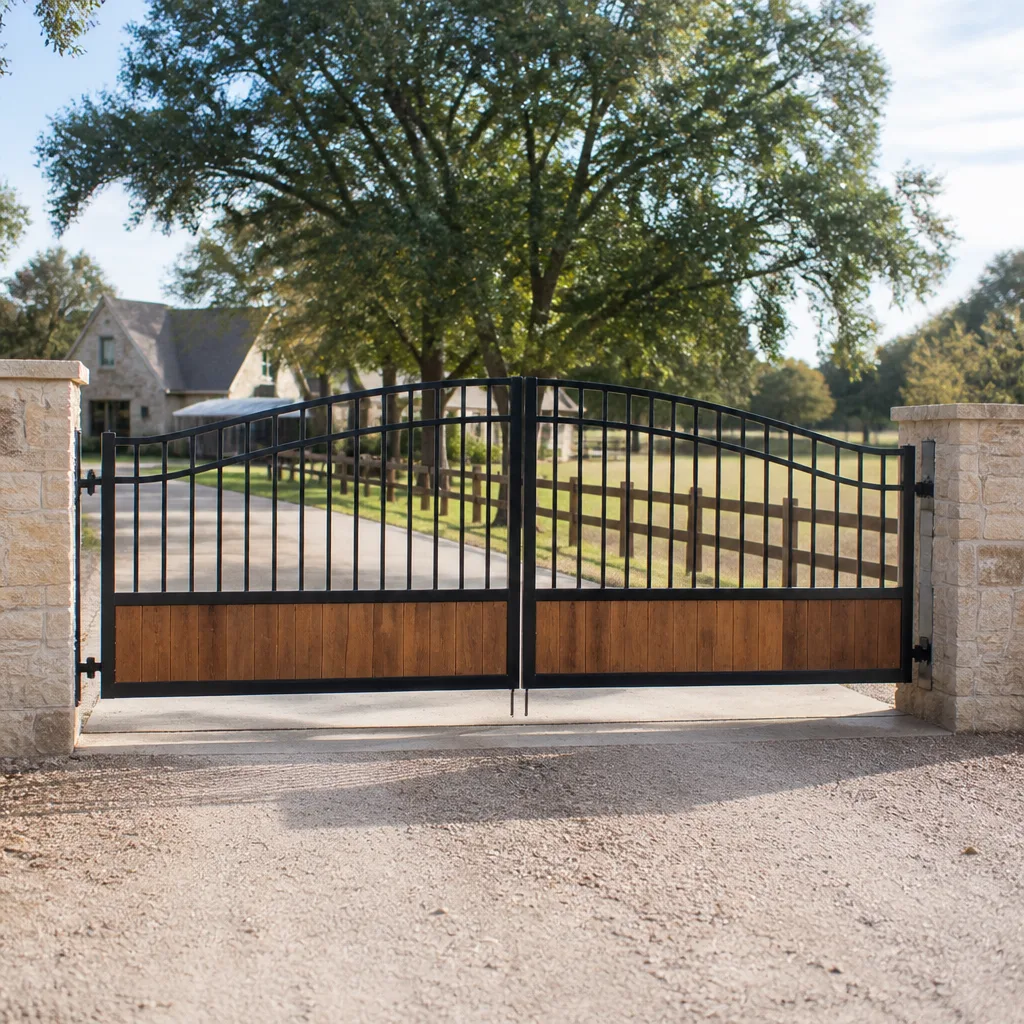 Farm & ranch
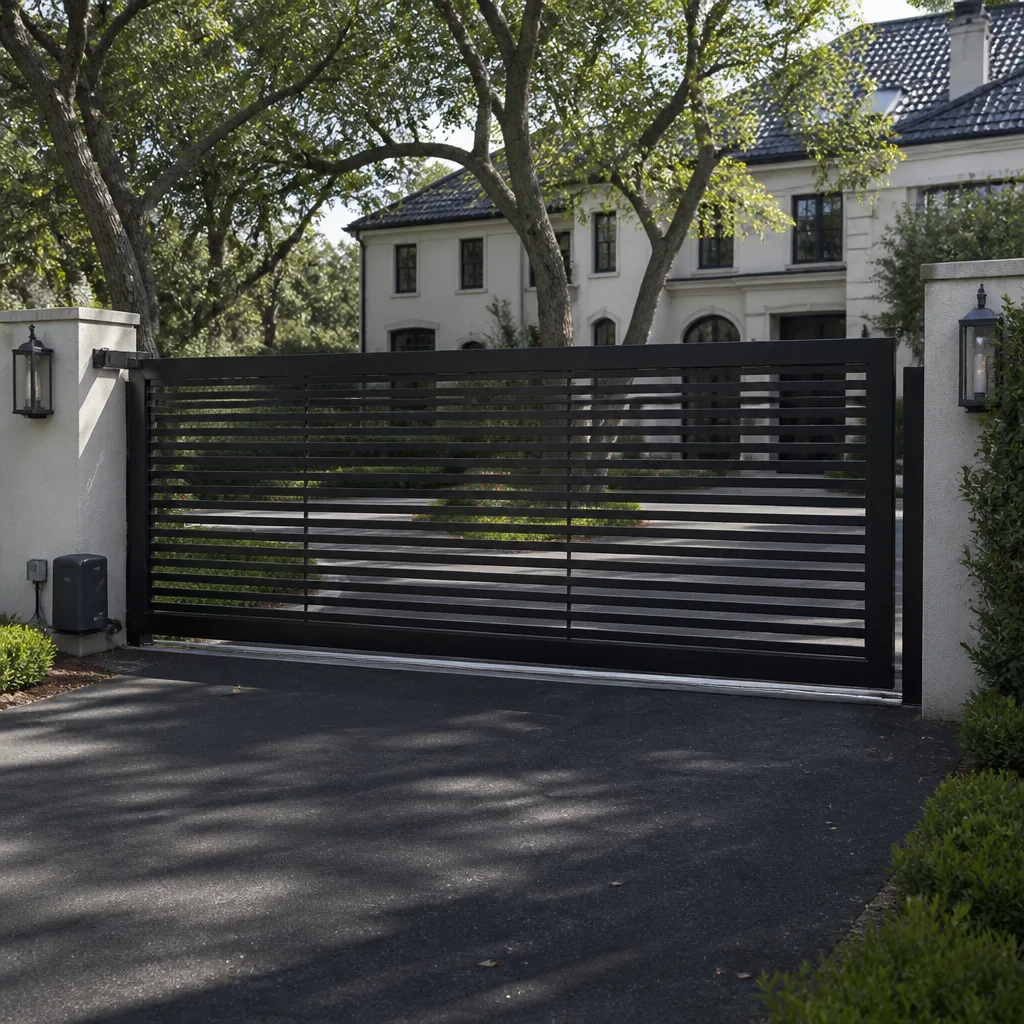 Sliding driveway gates
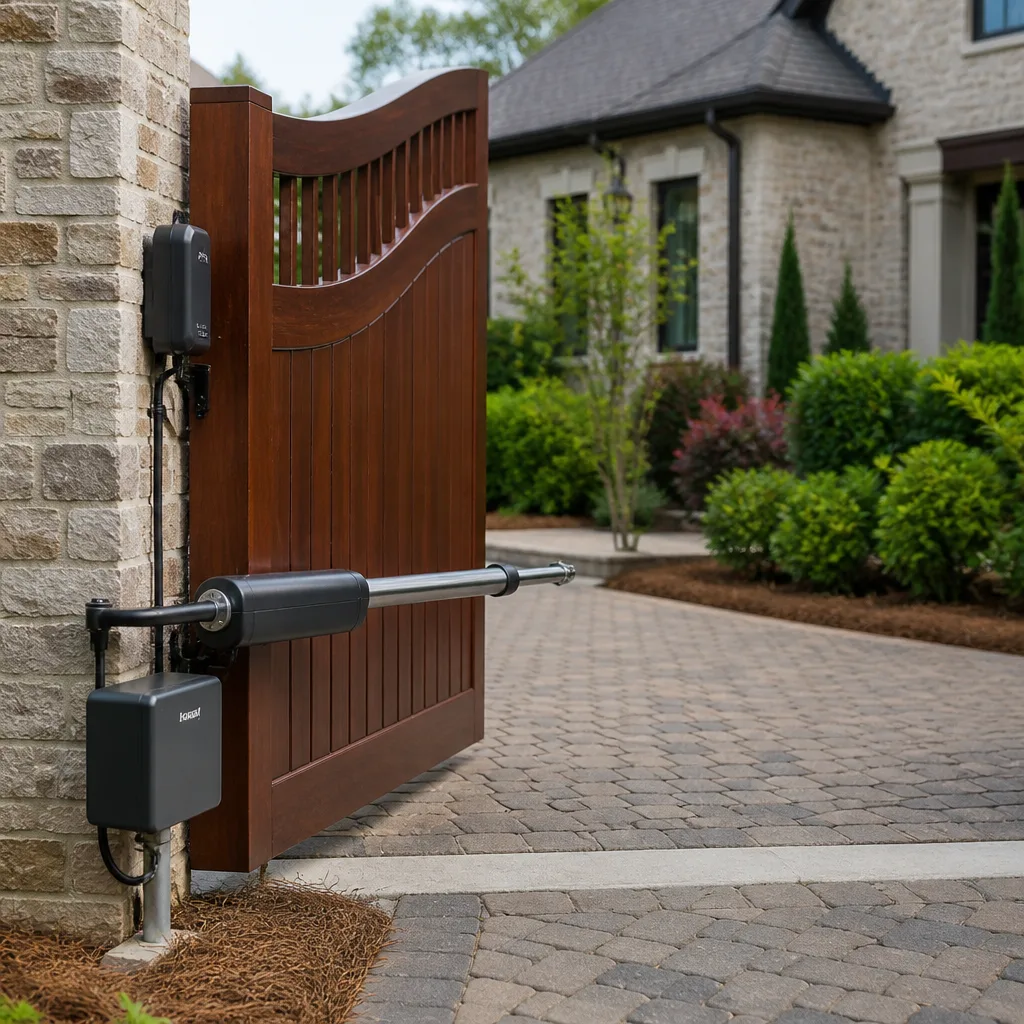 LiftMaster operators
Free on-site gate assessment - hinges, posts, and your LiftMaster or Nice gate operator checked before anything is quoted
The assessment is free and the quote is the invoice.
Get your free estimateStyles & brands we work with
- Wrought iron
- Wood & steel frame
- Farm & ranch
- Sliding driveway gates
- LiftMaster operators
See the difference
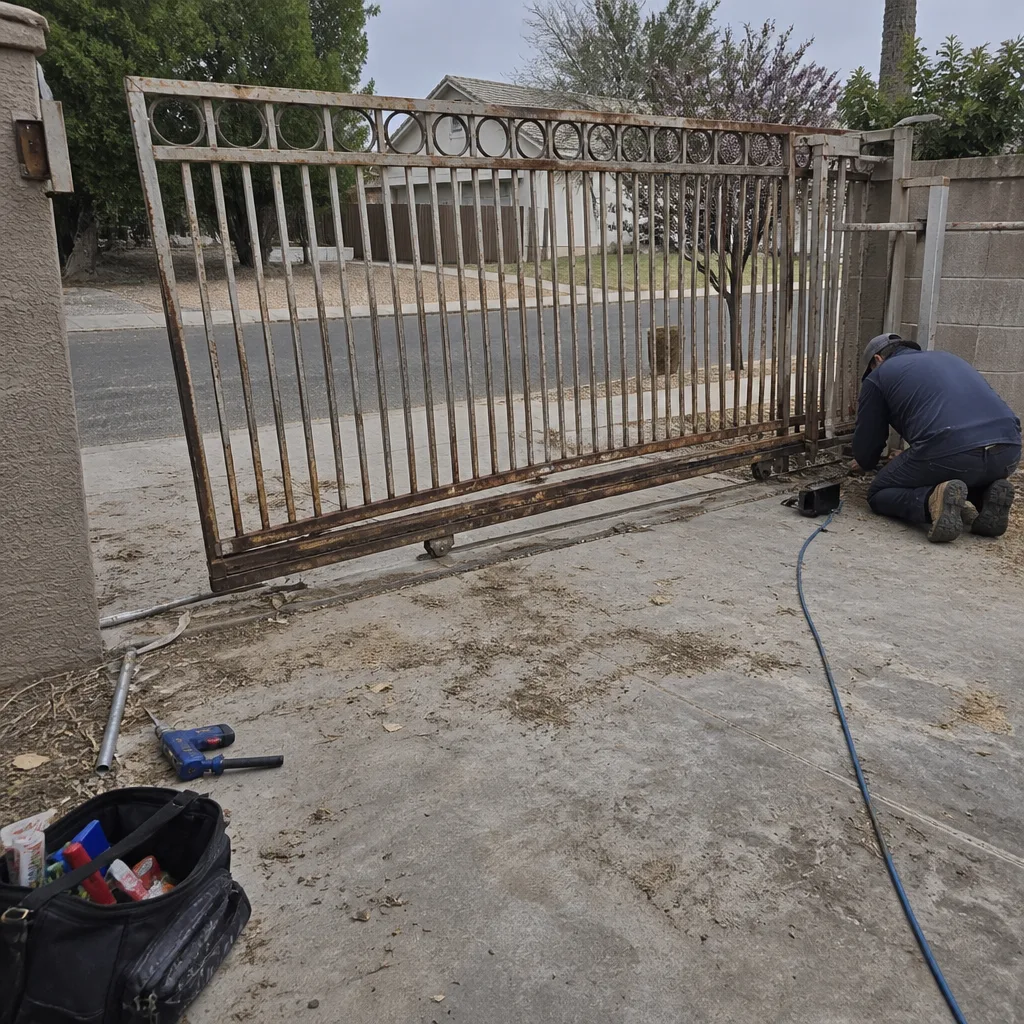 Before
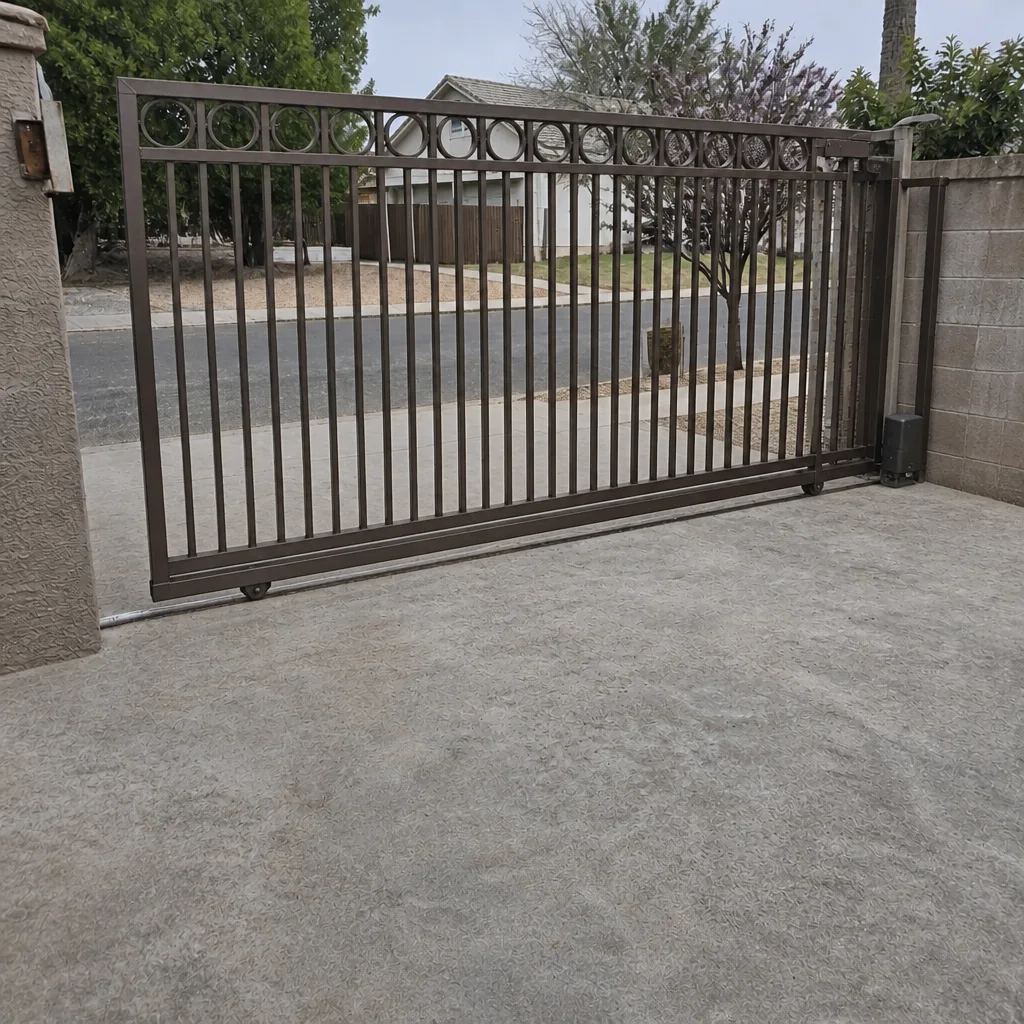 After
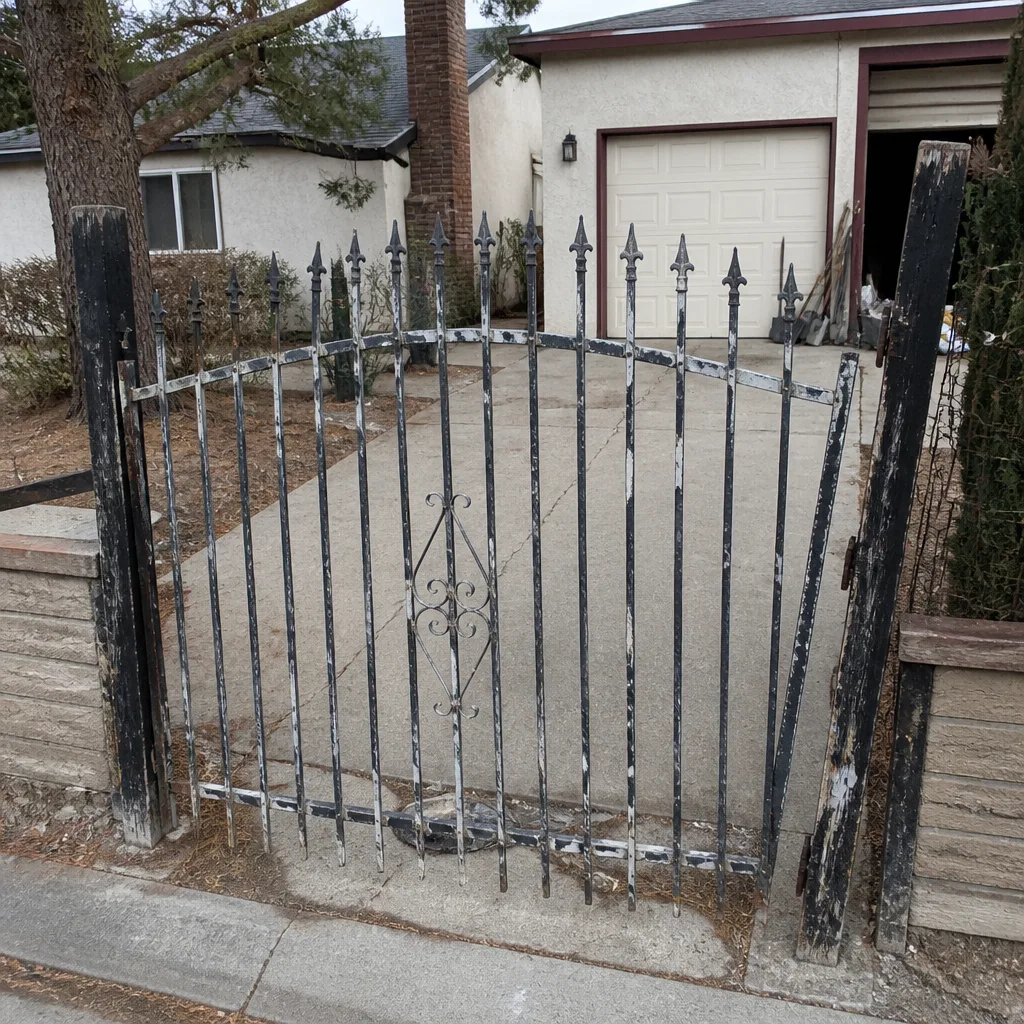 Before
 After
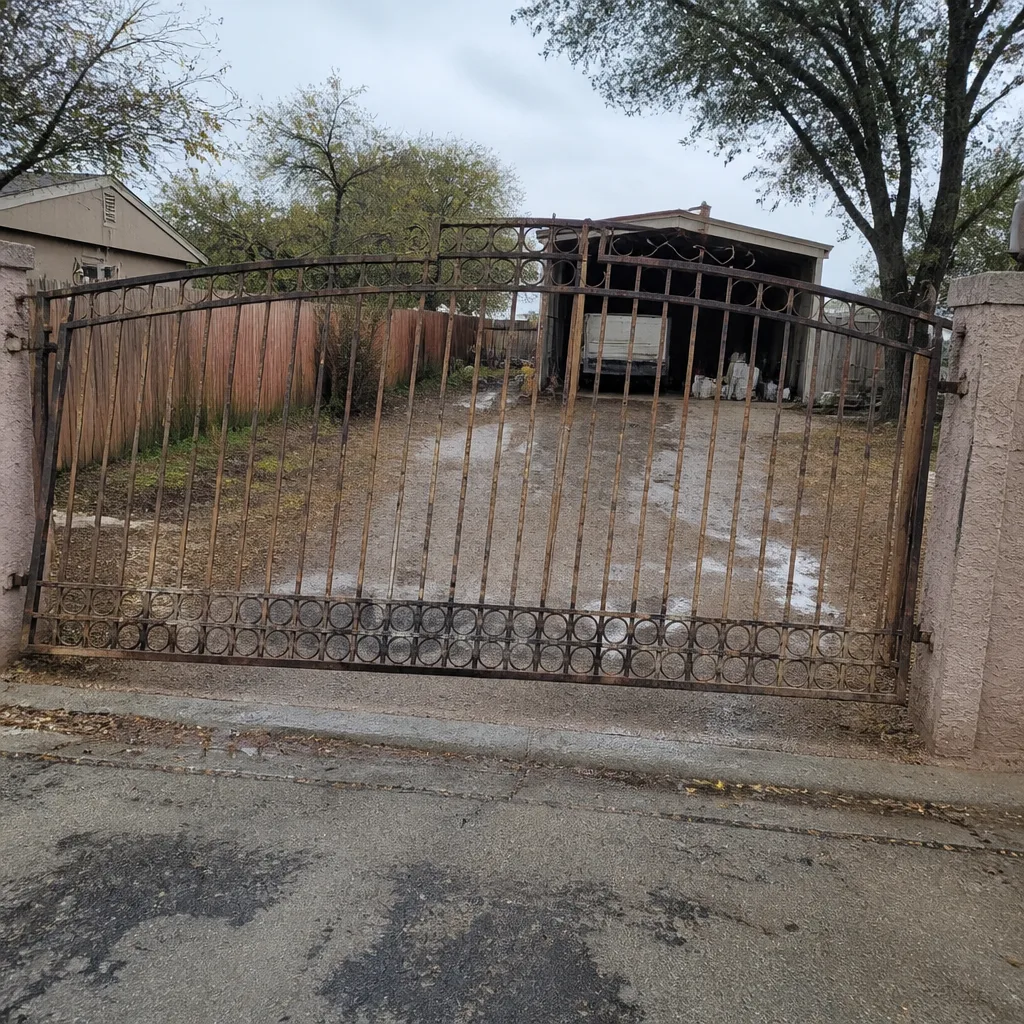 Before
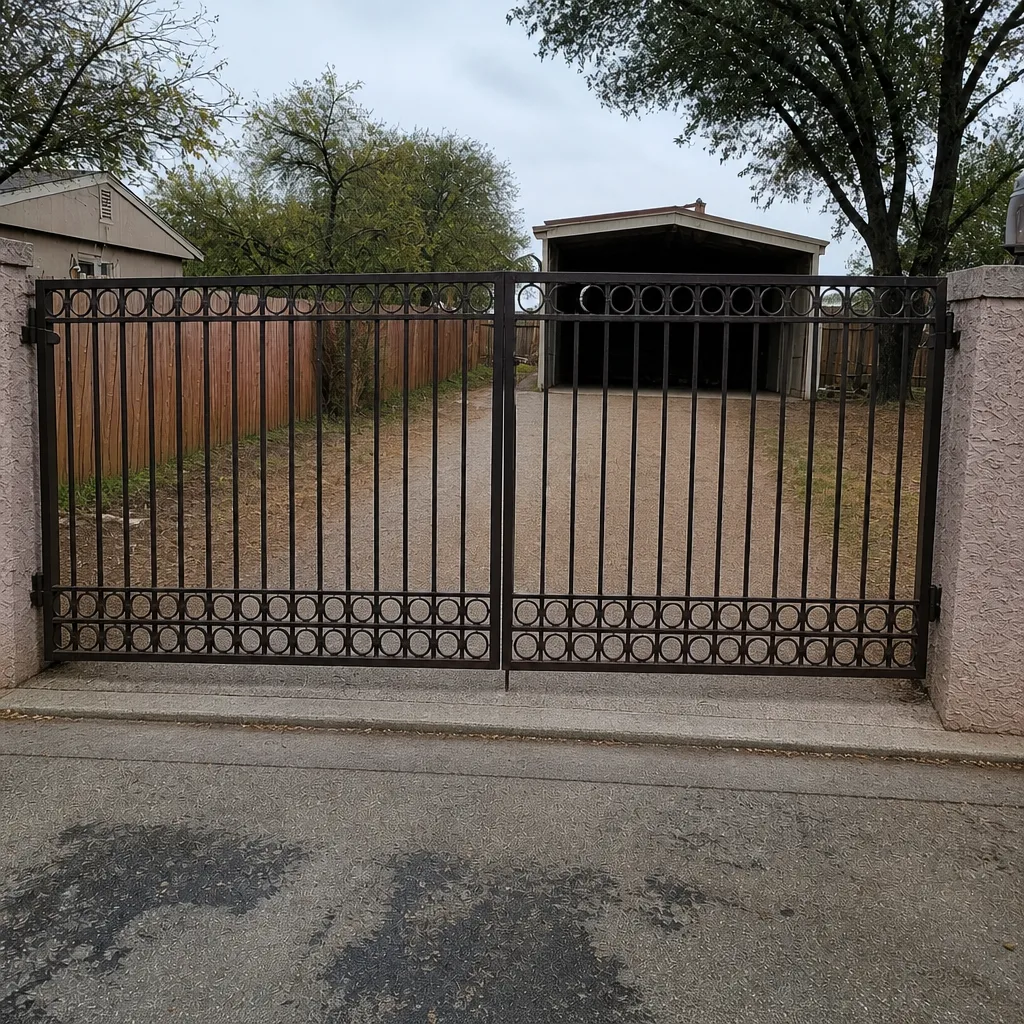 After
Solar Gate Opener vs Electric in Whitney, NV: Pick Electric Unless Trenching Buries the Budget
Choose a hardwired electric opener unless the run from your breaker panel to the gate is longer than about 50 feet, crosses a concrete apron, or your HOA won’t allow conduit on the block wall. In those cases a solar opener wins on total cost. The reason is simple: in Whitney, trenching 40 to 80 feet of caliche-hard soil and cutting a driveway apron for 120V power often costs $1,800 to $4,500 before you buy the opener. That number decides the comparison more than any spec sheet. For a straight answer on your specific driveway, call (855) 928-1304 for a free estimate.
Key Takeaways
- Electric openers cost less over time and have no battery to replace, but the trench-and-conduit work is the hidden bill.
- Solar openers avoid trenching entirely and suit desert sun, but budget lithium batteries degrade fast above 110°F.
- Most residential solar openers are rated for 20 to 40 cycles a day – fine for one household, tight once you add a second vehicle or a delivery code.
- Ironworks Gate Co. Whitney services both solar-optimized Ghost Controls systems and hardwired LiftMaster and FAAC, so the recommendation follows your actual layout.
Why this question comes up so often in Whitney
Most comparisons of solar versus electric assume a brand new gate on a clean lot. That isn’t what we usually find here. Whitney’s tract homes went up mostly between the 1980s and 2000s with builder-grade ornamental gates, block walls, and small lots. The original gate hardware is often still bolted on. When a homeowner decides to automate, the panel is on the far side of a finished yard and a poured driveway apron sits between the two.
Running 120V from that panel means a trench. And in the neighborhoods off Warm Springs Road, the ground is caliche-hard soil that has been baking and settling since those homes were built. A run that sounds easy on paper turns into a real excavation. That is the honest reason solar gets asked about so much in Whitney.
What does the trench actually cost in Whitney?
Before you compare motors, price the wire. Here are the ranges we see most often on a Whitney driveway gate job:
| Line item | Typical Whitney range |
|---|---|
| Trench + conduit, 40-80 ft through caliche soil | $1,200 – $3,000 |
| Cutting and patching a concrete driveway apron | $600 – $1,500 |
| Licensed electrical hookup at the panel | $400 – $900 |
| Hardwired opener + install (LiftMaster, FAAC) | $1,400 – $3,200 |
| Solar opener + install (Ghost Controls) | $1,100 – $2,600 |
The numbers are the point. A short 40-foot run through soft soil might land near the low end and a hardwired system stays the better long-term value. A long run through a concrete apron can add $3,000 or more, and that’s when solar starts to make obvious sense. The breakeven sits somewhere around 50 feet with an apron in the way. Past that, you’re paying for copper and concrete instead of a panel and battery.
Does Whitney’s desert sun actually help a solar gate?
Whitney gets roughly 294 sunny days a year. That makes panel output excellent and solar charging reliable most of the year. The panel is rarely the problem.
The battery is what fails. Summer heat above 110°F degrades the lithium cells in budget solar kits faster than the marketing suggests. After two or three summers, a cheap kit that charged fine on day one needs a replacement battery. That replacement is a real line item, and it’s the piece most comparisons leave out. Good-sized cells and a correctly angled panel last noticeably longer, which is why the kit you buy matters as much as the opener it runs.
We service the solar-optimized side of this every week, and the honest advice is the same either way: buy the battery capacity you’ll need in year five, not the minimum that works on install day. Our technicians have up to 13 years of experience on both sides of this decision.
The duty-cycle ceiling nobody mentions
Most residential solar openers are rated for 20 to 40 cycles a day. That’s plenty for a single household on a normal routine: out in the morning, home in the evening, the dog let out. It works.
Then the family adds a second vehicle. Then a delivery access code. Then the landscaper gets a clicker. The cycle count creeps up, and a solar system that was fine in March starts dragging in August when the battery is hot and low. That’s the common upgrade path we see in Whitney: a homeowner who chose solar honestly for a low-traffic gate, then had to add panels or a bigger battery when usage grew. The hardwired electric opener simply has no cycle ceiling to hit as long as the motor is spec’d right.
The monsoon gap a generic comparison never covers
Whitney’s late-summer monsoon brings stretches of overcast days right when the air is most humid. That’s a double hit for a solar gate. Charging drops during the clouds, and the humidity drives water into gate posts and hinges, which is exactly when a dragging gate wants to be opened and closed more, not less. If someone ends up overriding the motor manually because the battery is low, they’re out in the weather working the gate by hand.
Hardwired electric doesn’t care about cloud cover. That single fact is often what tips a Whitney homeowner from solar to a wire run, especially on a gate that’s already a little stiff from twenty years of sun.
Which one should you choose?
Choose hardwired electric if:
- The panel is within about 50 feet of the gate and there’s no concrete to cut.
- You want more than 40 cycles a day, or you plan to add vehicles and access codes.
- You’d rather not think about a battery replacement in three to five years.
Choose solar if:
- The run is long, or a concrete apron sits in the way and trenching gets expensive.
- Your HOA won’t allow conduit running along the block wall cap.
- Your usage is genuinely low – one household, a handful of cycles a day.
This is why Ironworks Gate Co. Whitney services both Ghost Controls solar systems and hardwired LiftMaster and FAAC. The recommendation should follow your panel-to-gate distance and how you actually use the gate, not what’s easiest to sell. Whatever gets installed, our written Gate Motor & Opener work is covered by the 90-Day Done Right Promise: if it isn’t right, we come back and make it right. The Gate Motor & Opener in Whitney page covers the automation side in more depth, and our home page lays out the full scope.
How we’d approach your Whitney gate
- Walk the panel-to-gate path in person and measure the actual run, including any concrete in the way.
- Check your HOA rules on conduit and panel placement before quoting a hardwired system.
- Estimate the full trench-and-conduit cost so the solar comparison is apples to apples.
- Match the opener to your real daily cycle count, not the ideal one.
- Settle an upfront price before a single bolt is turned.
A safety word first: the electrical hookup at the breaker panel and any trenching near buried lines are jobs for a trained, licensed professional. Cable and conduit work at the panel carries live-voltage risk, and a misjudged trench can hit a gas or water line. Don’t take that on yourself. We handle the gate and coordinate the power side safely.
Three local scenarios we see again and again
The Warm Springs Road tract home. Gate post sitting in caliche soil that heaves after monsoon rains, panel on the opposite side of a poured apron. Trenching pushes past the opener’s price, so solar wins on total cost, and we spec a Ghost Controls system with generous battery capacity for the 110°F summers.
The short-run stucco home. Panel just 30 feet from the gate with soft soil between them. No concrete, no wall conduit problem. Hardwired electric is the better value and lasts longer, so that’s what we recommend, even though solar is the trendier pick.
The growing household. Homeowner installed solar two years ago for a low-traffic gate, then added a second car and a delivery code. The 20-to-40-cycle ceiling shows up as a dragging gate in August. We either add battery capacity or convert to hardwired, depending on the run.
Every one of these starts with the same free second opinion on any written estimate you’ve already been given. If a contractor quoted you solar without measuring your trench, that estimate is missing the number that matters.
FAQs
Electric is usually better in Whitney when the panel is within about 50 feet and there’s no concrete to cut, because there’s no battery to replace and no cycle ceiling. Solar is better when the trench run is long or crosses a driveway apron, since it avoids $1,800 to $4,500 in excavation and conduit.
A solar opener and install typically runs $1,100 to $2,600 in Whitney, while trenching 40 to 80 feet of caliche soil plus conduit runs $1,200 to $3,000 before the opener itself, and cutting a concrete apron can add $600 to $1,500. Past roughly 50 feet with an apron in the way, solar usually wins on total cost. Call (855) 928-1304 for a free estimate on your driveway.
Most residential solar openers are rated for 20 to 40 cycles a day, which suits one household but gets tight once you add a second vehicle or a delivery access code. If your household opens the gate more than that, a hardwired electric opener is the safer choice. Call (855) 928-1304 and we’ll match the motor to your real usage.
Summer heat above 110°F does degrade the lithium battery in budget solar kits, and the battery usually fails before the panel does. Whitney’s 294 sunny days keep panel output strong, but oversized battery capacity matters more than a bigger panel. Call (855) 928-1304 for a no-pressure assessment of which system fits your gate.
Get a straight answer before you commit
If you’d rather have it looked at, Ironworks Gate Co. Whitney offers a no-pressure assessment in Whitney. We’ll measure your panel-to-gate run, check your HOA rules, and tell you honestly whether solar or electric makes more sense. Call (855) 928-1304 for a free estimate. We answer the phone with a live person, 24 hours a day.
Written by the team at Ironworks Gate Co. Whitney, serving Whitney, NV.