
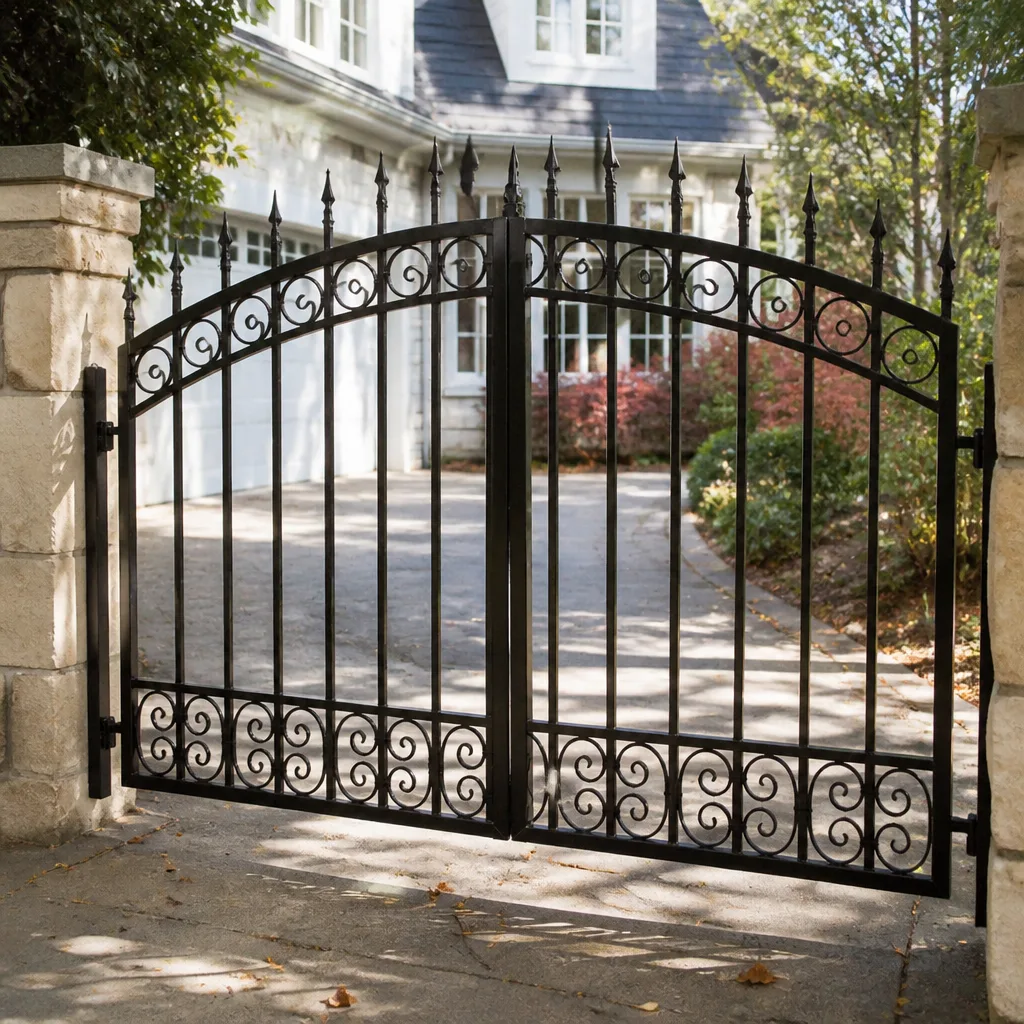
 Wrought iron
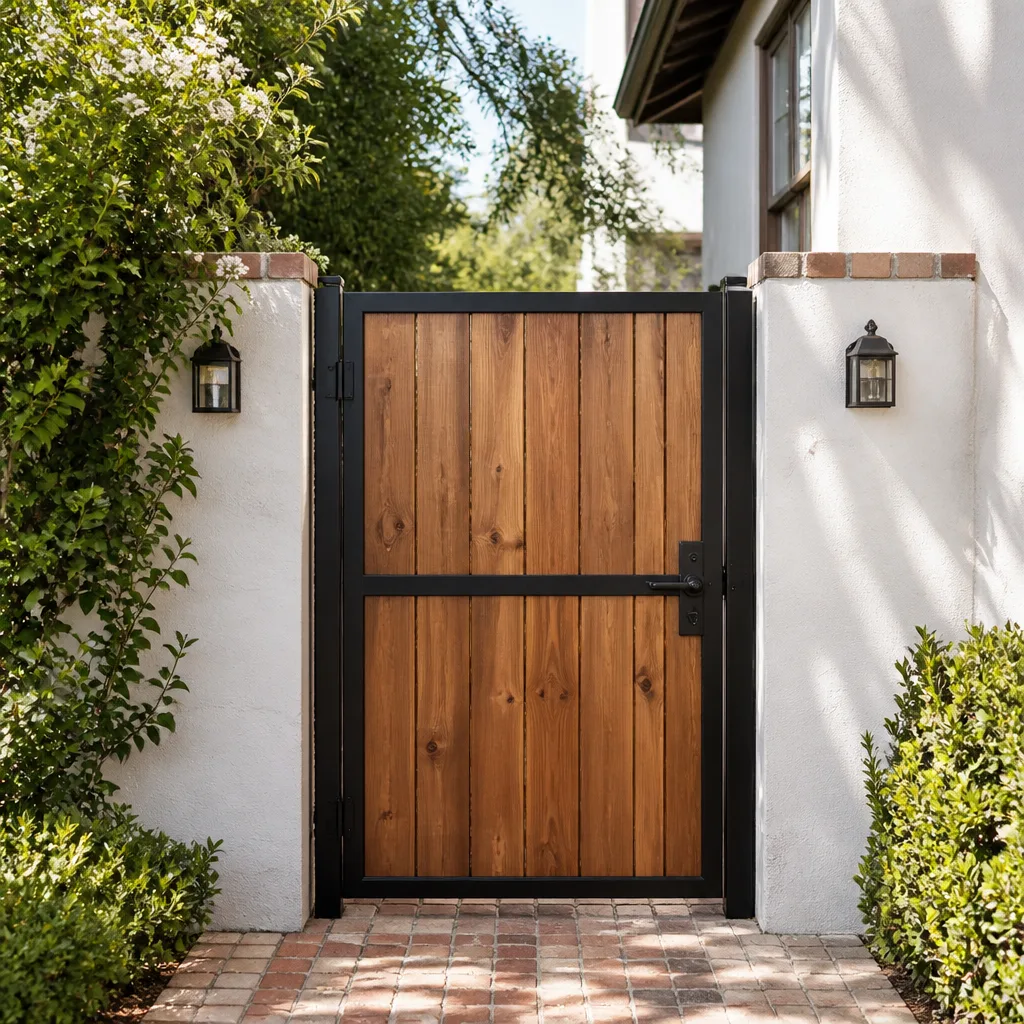 Wood & steel frame
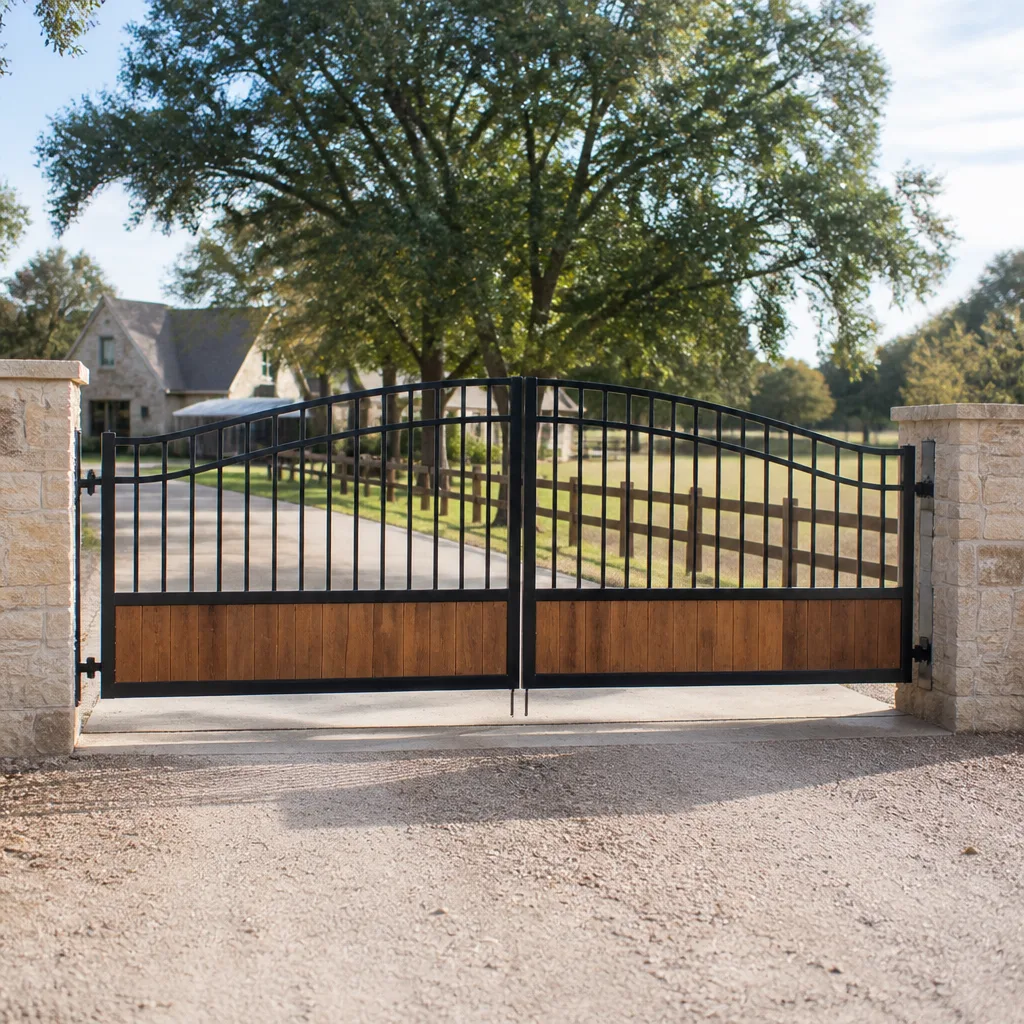 Farm & ranch
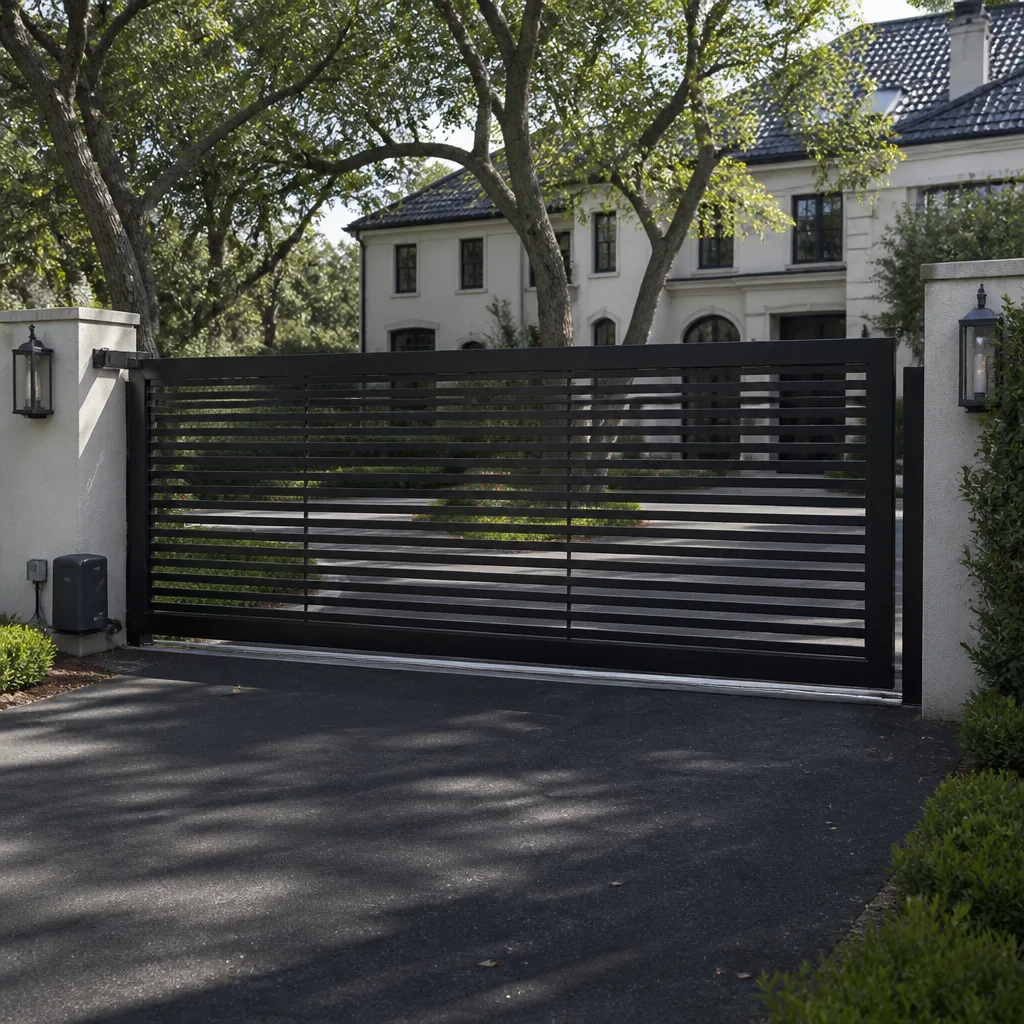 Sliding driveway gates
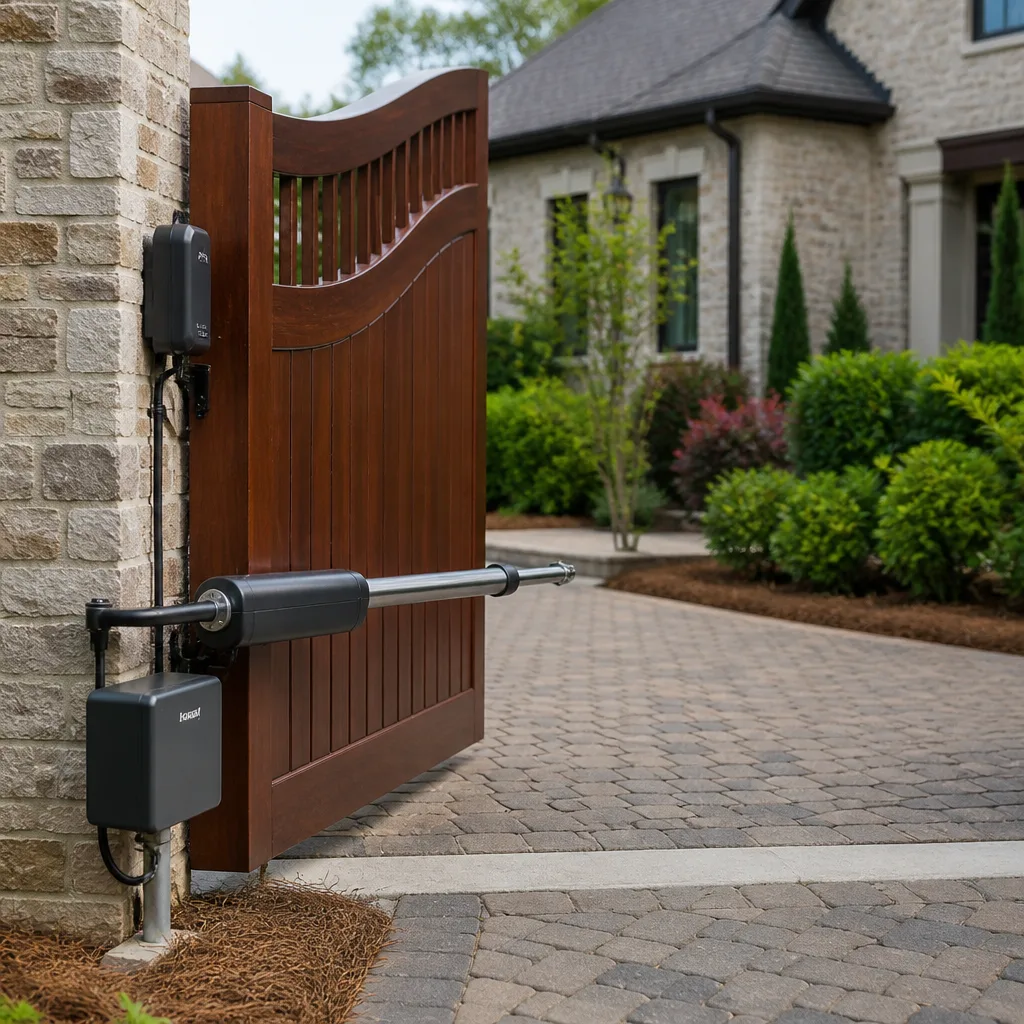 LiftMaster operators
Free on-site gate assessment - hinges, posts, and your LiftMaster or Nice gate operator checked before anything is quoted
The assessment is free and the quote is the invoice.
Get your free estimateStyles & brands we work with
- Wrought iron
- Wood & steel frame
- Farm & ranch
- Sliding driveway gates
- LiftMaster operators
See the difference
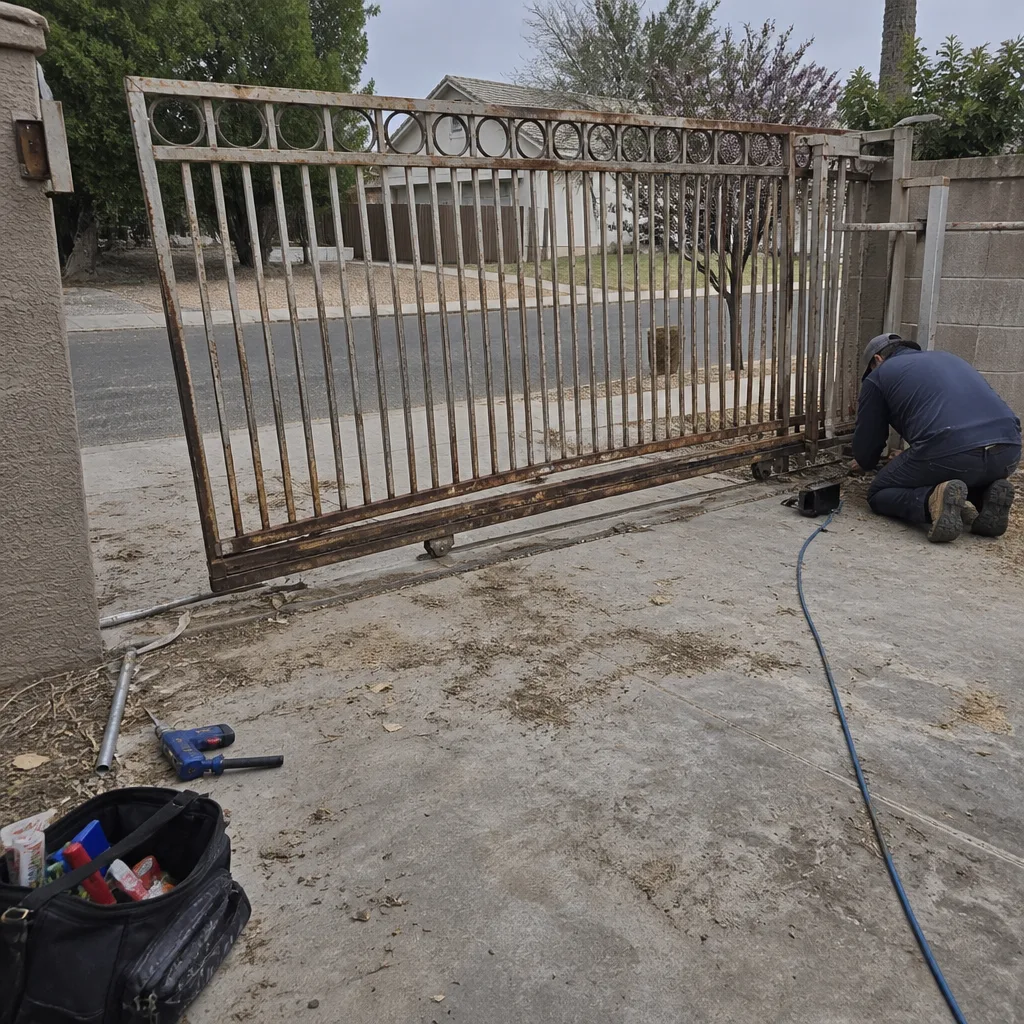 Before
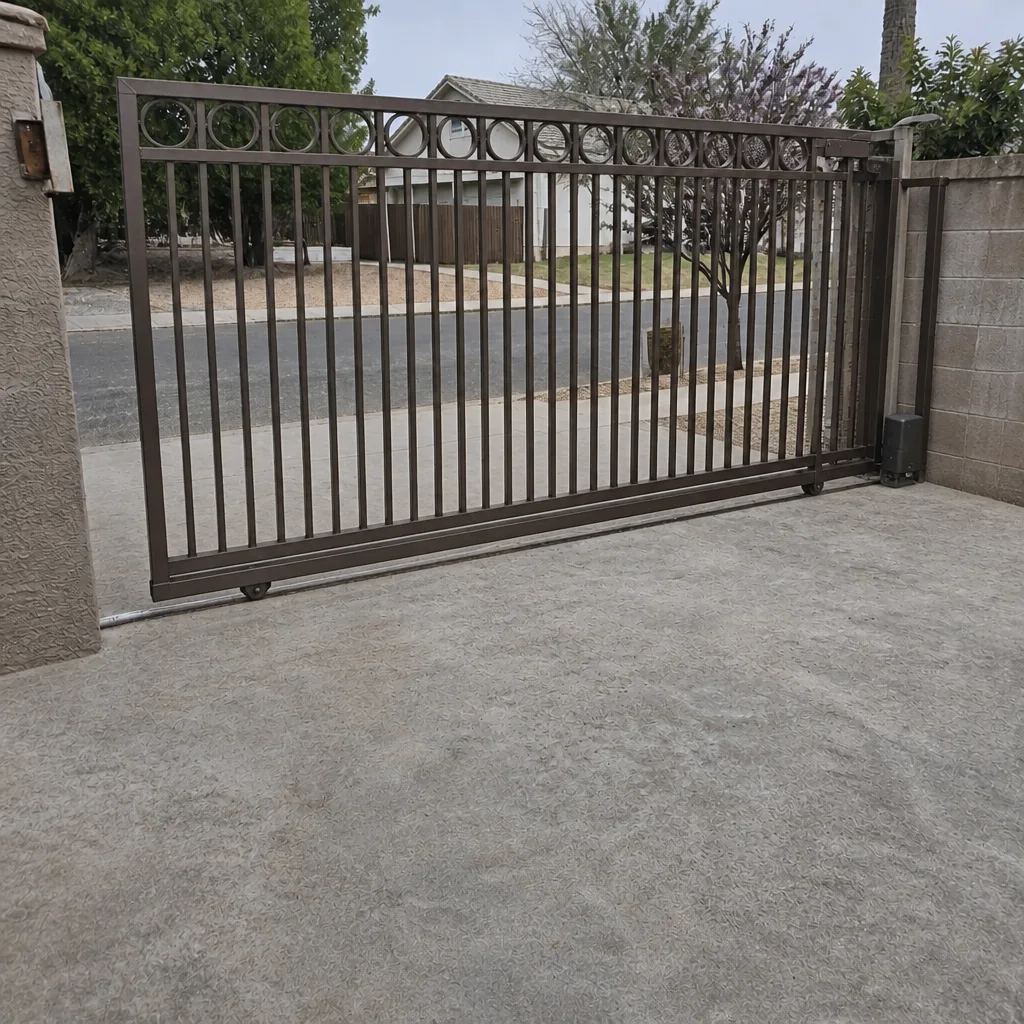 After
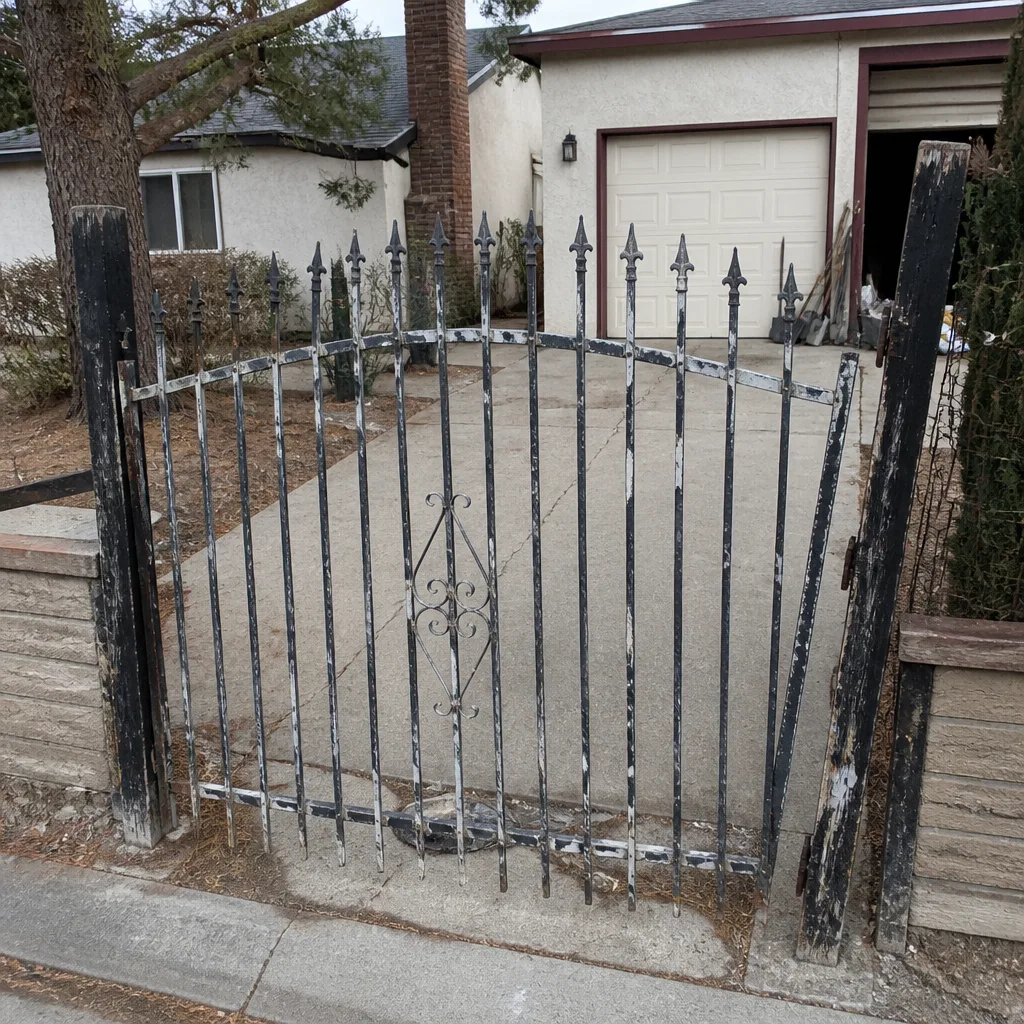 Before
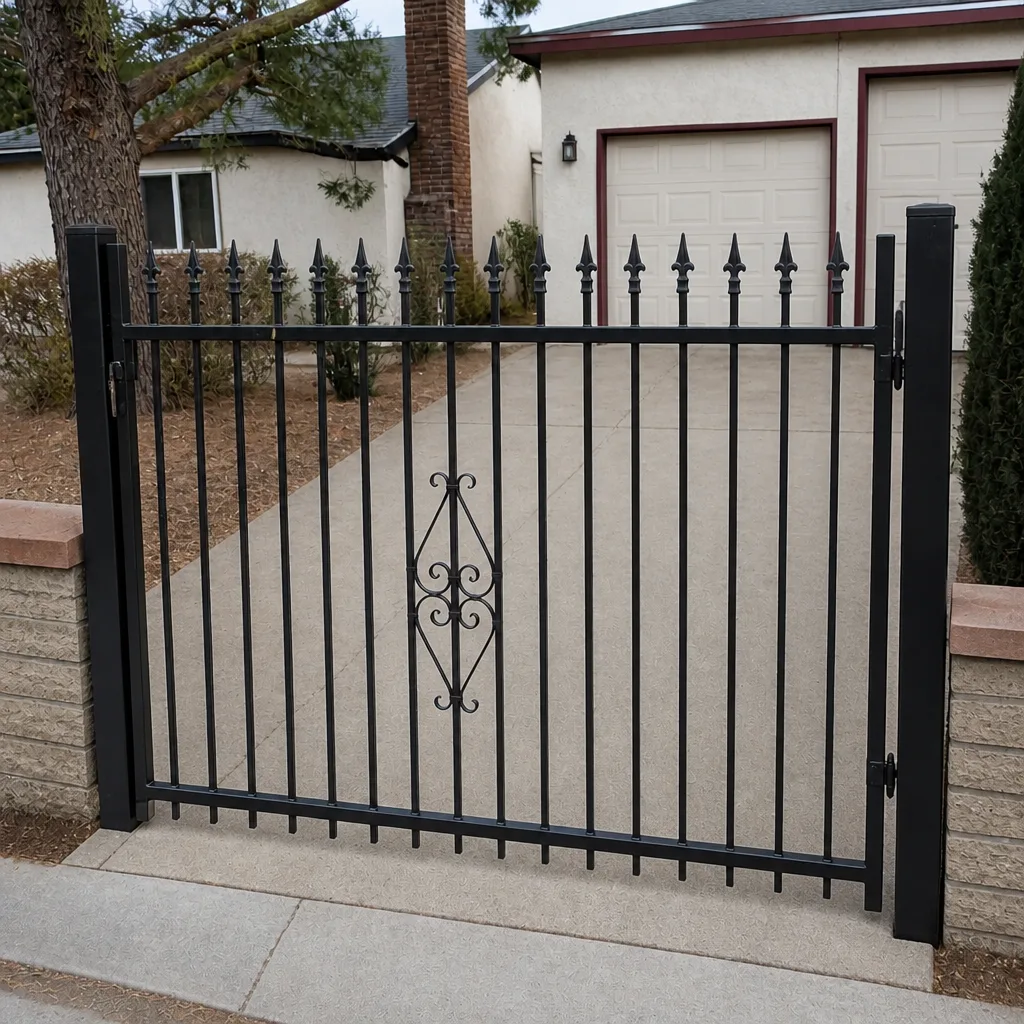 After
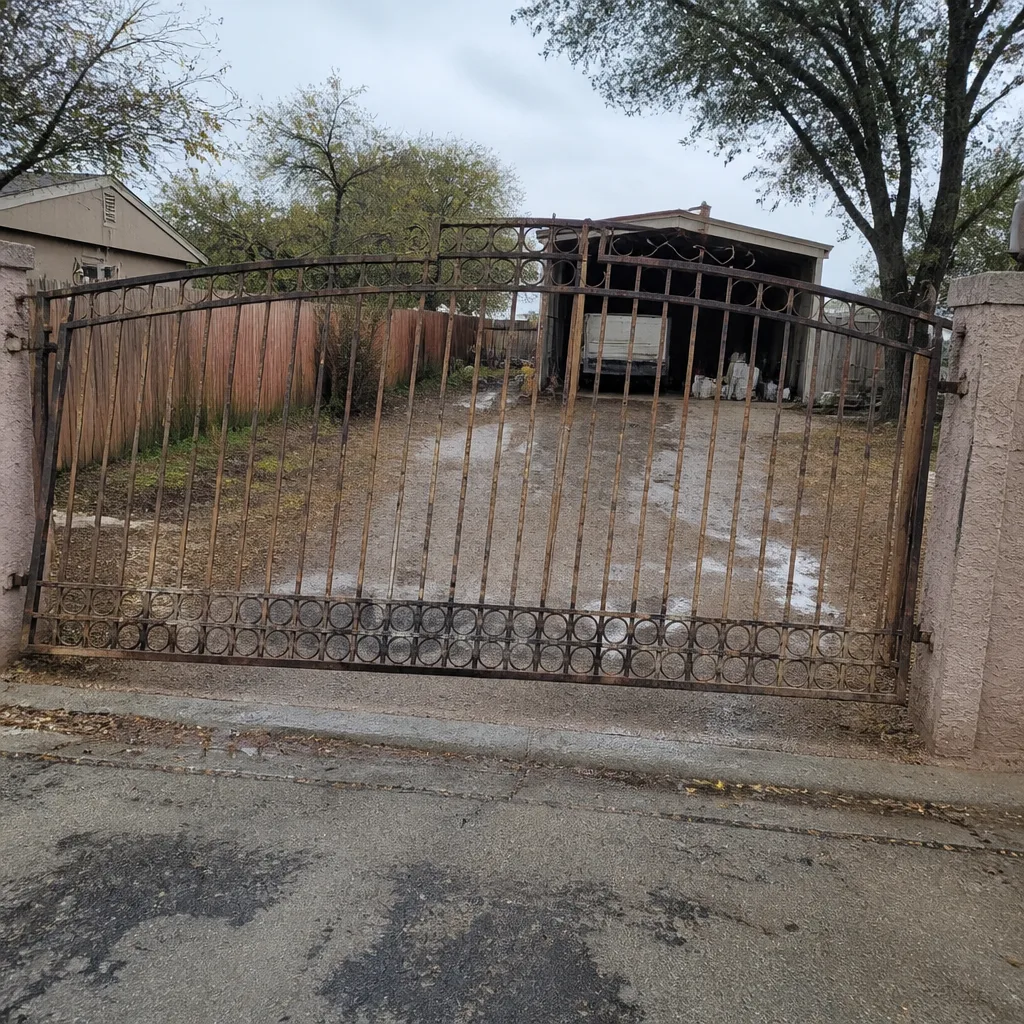 Before
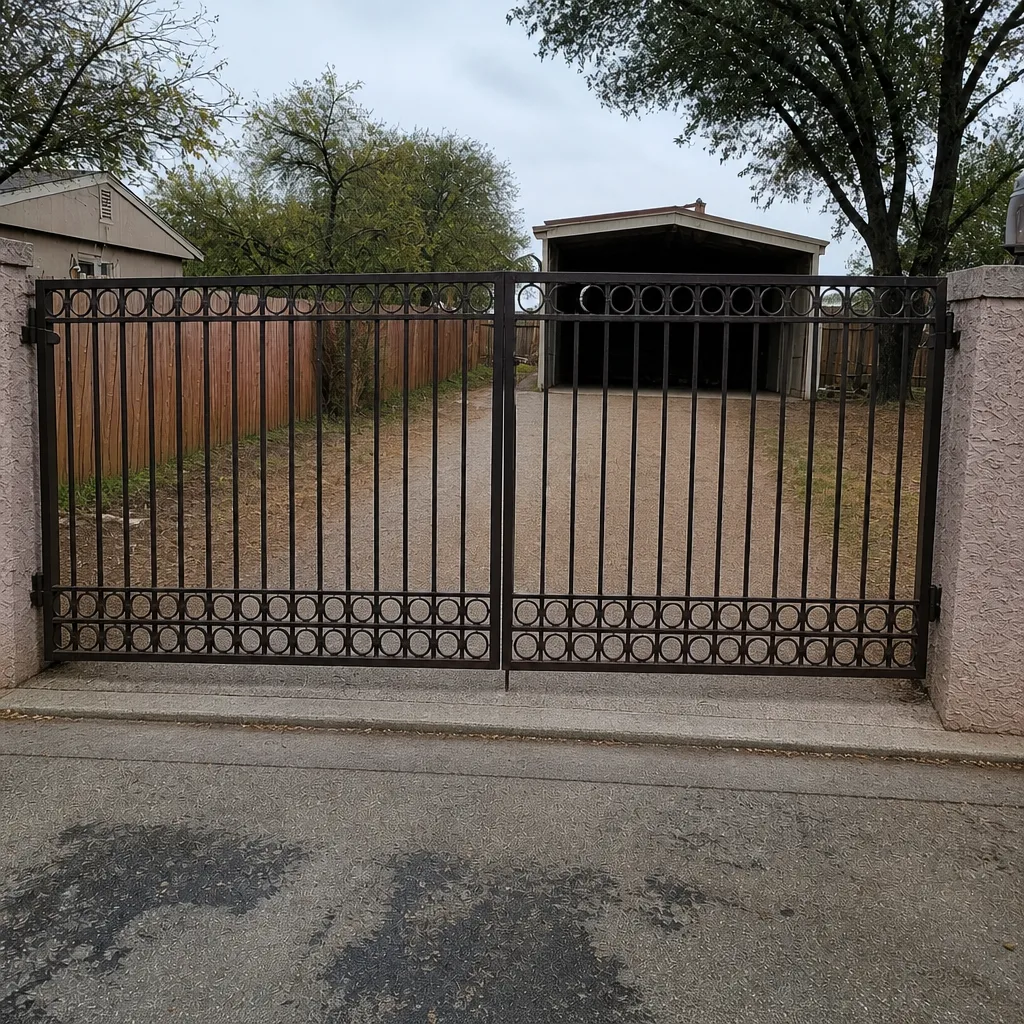 After
How Does an Automatic Gate Opener Work? A Whitney, NV Homeowner’s Guide
An automatic gate opener works by using a motor to drive the gate along a track or arm, while a control board manages the timing, a pair of limit switches tells the motor when to stop, and safety sensors cut the cycle if something is in the way. The short answer for Whitney homeowners: it’s seven components working together, and five of them are sensitive to the 100°F-plus heat or the monsoon moisture this valley throws at them every year. When a gate stops mid-cycle off Warm Springs Road, it’s usually not the motor. It’s a sensor or a limit switch the homeowner never knew was there.
If your gate is already acting up and you’d rather have someone look at it, call (855) 928-1304. Otherwise, read on. Knowing what’s inside the box on your wall will save you money the next time it talks back.
Key Takeaways
- A swing or slide gate opener has seven functional parts: motor, drive, control board, limit switches, safety sensors, power supply, and access input.
- In Whitney’s heat, control board capacitors and backup batteries are the first to fail.
- Post heave from caliche soil is the number one reason safety sensor beams misalign.
- The safety sensor is the most misunderstood component on the gate.
- Different brands (DoorKing, LiftMaster, Elite) use different board architectures, which is why brand-trained service matters.
What’s Actually Inside the Box? The Seven Components
Every residential gate opener, whether it swings or slides, comes down to the same seven pieces. Knowing what each one does makes it much easier to understand why a gate quits working in August.
- The motor. A gear motor that turns electrical power into the physical push or pull. On most Whitney driveways this is a 1/2 to 1 horsepower unit, sized to the gate’s weight.
- The drive mechanism. On a swing gate, an arm connects the motor to the gate leaf. On a slide gate, a rack-and-pinion gear runs the gate along the ground track.
- The control board. The small circuit board that sequences everything. It receives a signal, starts the motor, watches the safety sensors, and stops the cycle at the right spot.
- The limit switches. Physical or magnetic switches that tell the control board “fully open” and “fully closed.” Without them, the motor would keep pushing until something broke.
- The safety sensors. A photoelectric beam across the gate opening. If something breaks the beam, the gate reverses or stops.
- The power supply and battery backup. A transformer steps down your household current, and a sealed backup battery keeps the gate working for a few cycles during an outage.
- The access control input. Your keypad, remote, intercom, or loop detector. It sends the “open” command to the control board.
That’s the whole system. Simple in principle. The trouble is that five of those seven components have a specific vulnerability to Whitney conditions, and most homeowners never learn about it until the gate stops mid-afternoon in July.
Where Whitney Heat and Monsoon Water Attack the System
Walk down almost any street off Warm Springs Road and you’ll see the same pattern: block walls, stucco, and gates that were hung during the build years of the 1980s through the 2000s. Those gates have been baking in 110°F-plus summers and getting hit by monsoon runoff ever since.
Here’s how the seven components break down in that environment:
- Control board capacitors are the most heat-sensitive part in the box. Summer after summer of 100°F-plus afternoons dries them out, and the board starts dropping commands or stalling partway through the cycle.
- Backup batteries discharge faster in high heat. A battery that would last four years in a milder climate often needs replacing in two here.
- Safety sensor alignment goes sideways because the post underneath it moves. Caliche-hard soil is stable until a monsoon cracks it, and a footing that shifts even a few millimeters tilts the sensor mount enough to throw the beam off target.
- Limit switches lose their reference when the gate frame sags. Heat expands the metal, monsoon water cools it fast, and over a few seasons the frame warps just enough that the switch trips at the wrong spot.
- Power supply connections corrode where monsoon moisture gets into an exposed junction box or a poorly sealed motor housing.
What makes this useful is the diagnostic logic. When a Whitney gate stops mid-cycle, we look at the sensor and the limit switches before the motor, because those are what the climate attacks first. If you want to know what actually goes wrong under the motor cover, our Gate Motor & Opener page goes deeper on brand-specific repair.
The Safety Sensor: The Most Misunderstood Part on the Gate
Almost every homeowner we meet assumes the safety sensor is a simple beam that just needs cleaning or bumping back into place. That’s half right, and the wrong half is what causes repeat service calls.
The sensor is a beam between two eyes, one mounted on each gate post. When the beam is unbroken, the gate cycles normally. When it’s broken, the gate reverses or won’t move at all. Here’s the part most people miss: the beam has to be perfectly aligned, and in Whitney the post it’s mounted on has a habit of shifting. A caliche footing that cracks after monsoon runoff tilts the mount by a couple of millimeters. That’s enough to misalign the beam. The gate reads “obstruction” when nothing is there, and it stops short of closing.
Homeowners then try to force the gate, or unplug the sensor to make it work. Both approaches are unsafe. The sensor is a life-safety device. It’s exactly the piece you don’t want to disable, because it’s what stops a gate from closing on a child, a pet, or a car. If your sensor is out of alignment, the right fix is to re-align the mount and correct the footing underneath it, not to bypass it.
Different brands design their sensor systems differently. DoorKing often uses monitored sensors that report obstruction faults to the board. LiftMaster sensors frequently include a self-diagnostic feature that pulses a code on the unit. Elite systems vary in sensitivity by model. That’s exactly why a technician trained on only one brand can misread the cause entirely.
Swing vs. Slide: How They Work Differently
Both types are common on Whitney’s single-family stucco lots. The way each one moves is different, and the failure patterns are different too.
| Feature | Swing Operator | Slide Operator |
|---|---|---|
| Drive mechanism | Articulated arm connecting motor to gate leaf | Rack-and-pinion along the ground or top of gate |
| Typical install | Side-yard and driveway gates with limited run room | Long driveways where gate rolls parallel to a fence |
| Common Whitney failure | Arm wear at the pivot, hinge rust | Track debris after monsoon, foot heave |
| Sensor layout | One beam across the opening | Beam plus loop detector under pavement |
| Limit type | Magnetic on the arm | Mechanical or magnetic on the track |
The swing operator is the more forgiving of the two. It has fewer mechanical parts exposed to the ground, which means less post-heave trouble. The slide operator rides a track that collects caliche dust and monsoon grit, so it needs cleaning and a visual inspection every season. If water gets under the track and stays there, you get wobble, drag, and eventually a motor that overheats trying to move a gate that won’t roll.
Both types need no-hassle upfront pricing before work starts, and that’s how we do it. We’ll tell you the price range before a single bolt is turned.
Why Brand Matters When Something Fails
There are nine major gate-automation brands installed on Whitney driveways, and they don’t all speak the same language. Limit switches on a LiftMaster look nothing like limit switches on a Mighty Mule. Control board fault codes differ from brand to brand and often from model to model within a brand.
That matters because a technician trained on only one brand will read a fault code through that brand’s lens, and misdiagnose the fault. A board that fires an “obstruction” error on a DoorKing might have a sensor alignment problem, while the same code on another brand might mean a limit-switch failure. Getting the diagnosis right on the first visit is what saves homeowners from second and third service calls.
Ironworks Gate Co. Whitney is trained and equipped on all nine major brands: LiftMaster, FAAC, BFT, Linear, Viking, Ghost Controls, DoorKing, Elite, and Mighty Mule. Most jobs are completed in a single visit because the right part and the right diagnosis both show up the first time. And every job is backed by the 90-Day Done Right Promise: if it isn’t right, we come back and make it right.
How the Opener Knows When to Stop: A Step-by-Step
The cycle looks simple, but a lot happens in about 12 seconds:
- Access signal arrives. You press the remote or keypad, and the signal goes to the control board.
- Board checks safety sensors. If the beam is unbroken, the board proceeds. If it’s broken, the gate stays put.
- Motor starts. The board energizes the motor, and the drive mechanism begins moving the gate.
- Gate moves until the limit switch trips. At the designated endpoint, the limit switch tells the board to cut power.
- Board logs the cycle. A modern board stores the event so a technician can read it later.
- Battery backup kicks in during an outage. The gate will still cycle a few times on stored battery power.
Five of those steps depend on a component that Whitney climate has a specific way of damaging. If a step fails, the fix isn’t always the motor. Most of the time it’s the sensor, the limit switch, or the capacitor on the board.
FAQs
Limit switches on the operator tell the control board when the gate has reached the fully open or fully closed position, and the board cuts power to the motor at that moment. When a Whitney gate overshoots or stops halfway, the limit switches have usually lost their reference because the gate frame has sagged in the heat or after monsoon runoff.
Summer heat is the most common reason a Whitney gate stops mid-cycle, because control board capacitors dry out and lose capacity after years of 100°F-plus afternoons. A dying backup battery can produce the same symptom. Call (855) 928-1304 for a diagnosis, and we’ll tell you which part is failing before any work begins.
No. The safety sensors are a life-safety device and disabling them is dangerous. If your sensors keep tripping, the beam is misaligned, usually because a Whitney post has shifted a few millimeters in caliche soil after monsoon runoff. The right fix is realignment, not bypass. Call us and we’ll take a look.
Yes, and that’s why brand-trained service matters. DoorKing, LiftMaster, Elite, and Mighty Mule all use different control board architectures and limit-switch designs, so a fault code on one brand can mean something completely different on another. Our technicians are trained on all nine major brands, so the diagnosis lands on the first visit.
Have It Looked At by People Who Know the Whitney Climate
If your gate is doing something it shouldn’t, or you’d rather have it inspected before the next heat wave, Ironworks Gate Co. Whitney offers a no-pressure assessment. We’ll tell you what’s working, what isn’t, and what it costs before we touch a bolt. Call (855) 928-1304 for a free estimate. Our technicians have up to 13 years of experience, and every job carries the 90-Day Done Right Promise in writing. You can also see what we handle on the home page, or read more about the Gate Motor & Opener in Whitney service.
Written by the team at Ironworks Gate Co. Whitney, serving Whitney, NV.