
Last updated November 17, 2026
 Wrought iron
 Wood & steel frame
 Farm & ranch
 Sliding driveway gates
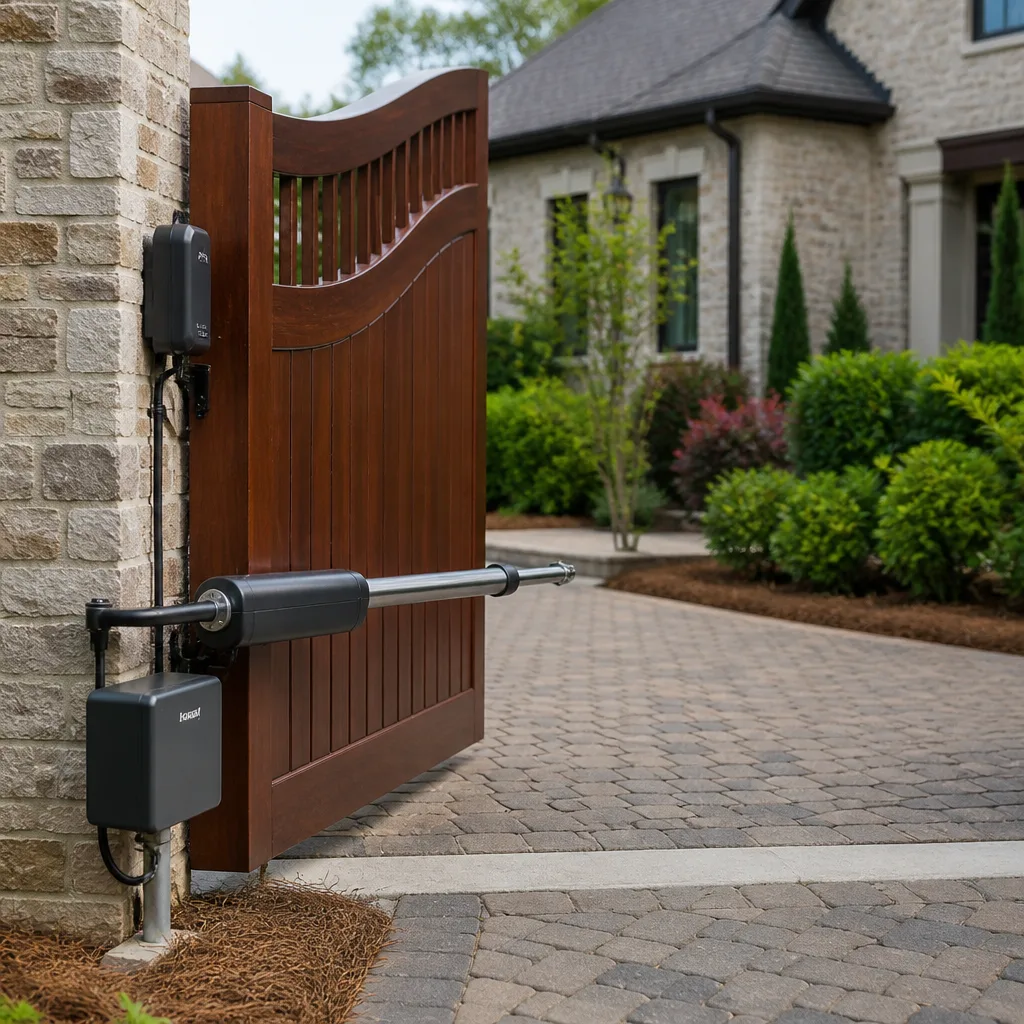 LiftMaster operators
Free on-site gate assessment - hinges, posts, and your LiftMaster or Nice gate operator checked before anything is quoted
The assessment is free and the quote is the invoice.
Get your free estimateGate Parts & Welding Warning Signs Every Homeowner Should Know
A gate that swings with a low, dull knock at the end of travel instead of the firm stop it used to have is not wearing in. It is telling you that a hinge plate weld has begun to separate, and that knock is the sound of metal moving that shouldn’t move. Steel talks. Most homeowners just haven’t been taught the language. This guide teaches you to read the metal: what to look for in the paint, what to listen for in the swing, and what to feel along a weld seam. It is written from Whitney, where the desert climate speeds up some of these failures and slows others. By the end you’ll know which signals mean watch it and which mean stop using the gate today.
Quick Answer
The main warning signs of gate structural trouble are paint bubbling or rust weeping at a weld seam, visible hairline cracks at hinge plates, a gate that has drifted from its original swing arc, a latch that no longer lines up, and new sounds (a knock, rattle, click, or grind) during movement. Any crack at a hinge or post weld, or any gate that moves when you push it by hand, means stop using it and call a professional. Cosmetic rust and stiff hinges are usually watch-and-service items, not emergencies.
Styles & brands we work with
- Wrought iron
- Wood & steel frame
- Farm & ranch
- Sliding driveway gates
- LiftMaster operators
Table of Contents
- Visual signals: what the paint and rust are telling you
- Operational signals: swing arc, latch alignment, and vibration
- Sound signals: knocks, rattles, clicks, and grinds
- The touch test: reading weld seams by hand
- Urgency tiers: watch it, service it, or stop using the gate
- How weld repair works and when replacement makes more sense
- Why Whitney gates fail where they do
- The parts that fail first (and what they cost to fix)
Visual Signals: What the Paint and Rust Are Telling You
Paint is a gate’s early warning system. When a weld is sound, the coating bonds to clean, continuous metal and stays put for years. When a weld is failing underneath, moisture gets into the seam and the paint above it lets go. Look for three things along every weld seam on your gate.
- Paint bubbling at the seam. Small blisters along a weld line usually mean trapped moisture has gotten under the coating. The weld itself may still be holding, but the seam is no longer sealed, and rust is working in the gap.
- Rust weeping from a joint. A thin brown streak running down from a weld, hinge mount, or post connection is a stronger signal. Rust weeping means water is passing through the joint, which often points to a weld that never fully penetrated the metal in the first place.
- Crack lines at hinge plates. Hairline cracks radiating from a hinge weld or a post base plate are the most serious visual sign. A crack in a cyclic-stress weld grows every time the gate opens and closes. It does not heal and it does not stall.
One practical habit: walk your gate line once a month with a phone light held at a low angle. Raking light, rather than direct light, throws shadows into hairline cracks and lifting paint edges that disappear in ordinary daylight. In our experience, the gates that fail suddenly in Whitney are almost never the ones someone was looking at. If you’d rather have trained eyes on it, our gate repair in Whitney service starts with exactly this inspection.
Operational Signals: Swing Arc, Latch Alignment, and Vibration
A gate that has changed how it moves is telling you something structural has shifted. The gate leaf itself doesn’t simply warp for no reason. When the swing arc changes, the leaf is hanging differently, and the cause is almost always a hinge, a post footing, or a weld at the gate frame that has begun to move.
Here is how to check the operational signals yourself, safely, with the opener disengaged and the gate under hand control only:
- Watch the swing arc. Open the gate slowly by hand and look for the bottom edge drifting off level or the leaf dragging closer to the ground at the far end. A gate that used to clear the driveway cleanly and now almost touches is sagging at the hinge side.
- Test the latch. Close the gate and see whether the latch catches the same way it always has. A latch that suddenly needs a lift, a shove, or a second try means the leaf has dropped, which points back to the hinge or the post connection.
- Push and watch for vibration. With the gate half open, push it gently sideways at the far edge. Rigid is what you want. If the leaf twists or vibrates more than you remember, a weld joint has loosened or a stress crack has opened.
- Check the top rail line. Sight along the top rail from the hinge end. Any bend, dip, or kink in that line is the gate frame reporting a problem you’ll find at the bottom.
Latch misalignment plus a changed swing arc is the classic pair, and it is the combination most often mistaken for “the opener needs adjusting.” If your opener is straining against a gate that has dropped, the full picture belongs with our gate motor & opener in Whitney service, which checks the mechanics before touching the automation.
Sound Signals: Knocks, Rattles, Clicks, and Grinds
Every gate has a sound. The trick is knowing whether the sound you’re hearing now is the same one from last year. Once you’ve learned your gate’s normal rhythm, a change is one of the most reliable early warnings you’ll get.
- A dull knock at the end of travel. This is a hinge plate weld beginning to separate. The knock is metal hitting metal where the joint should be rigid. A gate that used to stop firm and now thumps at full close is telling you the weld is going.
- A rattle during movement. A loose weld or a fastener that has backed off will rattle as the gate cycles. Rattles usually start small and grow.
- A sharp click at a single point in the swing. That click, especially at one spot each cycle, often means a stress fracture opening and closing as the gate flexes.
- Grinding or a scraping growl. Grinding means a hinge is pulling away from its mount or a hinge pin is wearing into the plate. Grinding is metal being consumed. It gets worse fast.
You don’t need equipment to catch this. Stand beside the gate, not in front of it, and listen through one full open-and-close cycle with the opener engaged. Then repeat it by hand. New noises rarely announce themselves during a quick trip to the mailbox. They show up when you actually stop and listen. On a Whitney driveway gate, a grinding sound that started within the last month or two is often a hinge that has worked loose from the post, and once that hinge lets go the whole leaf can drop.
The Touch Test: Reading Weld Seams by Hand
Sound and sight will catch most problems, but a careful hand along the weld seams catches what the eye misses. The touch test is simple and safe as long as you do it with the gate disengaged from the opener and held still. Never run your hand along a gate that is cycling, and never reach into a hinge gap.
Here’s how the touch test works:
- Feel for raised edges. A sound weld sits flush or gently crowned. A raised lip or step along a weld seam means the weld may not have penetrated fully, and the seam is a place where moisture will collect.
- Feel for soft spots under the paint. If paint yields slightly under finger pressure, rust is working underneath. A soft spot is not cosmetic. It’s the seam giving way.
- Feel for movement between parts. Grip the gate near a hinge and the post at the same spot, and gently rock. Any movement between two pieces that should be welded or bolted rigid is a weld or fastener problem.
- Check the post base and hinge welds specifically. These carry the most stress on any swing gate, so they fail first.
This is where an experienced hand matters most. A trained technician can run a seam in a few seconds and tell the difference between a weld that’s holding and one that’s about to release. Our technicians have up to 13 years of experience, and much of that experience is exactly this. Two people can run the touch test on a gate with one of them holding it still; or you can call us and we’ll do it with the right tools and a written report.
Urgency Tiers: Watch It, Service It, or Stop Using the Gate
Not every warning sign is an emergency, and not every warning sign can wait. Here is how we sort a gate inspection into three tiers. When in doubt, treat it as the more urgent tier.
Tier 1 – Watch it
- Surface rust on the paint without a streak from a seam
- A hinge that feels stiff but doesn’t grind
- Paint bubbling away from the weld seams, no soft spots
- A slight change in the gate’s sound that doesn’t repeat at one spot
Watch items get eyes on them monthly. If any of them progress to the next tier, stop watching and call.
Tier 2 – Service it soon
- Rust weeping from a weld or joint
- A latch that no longer lines up on its own
- A gate that has clearly changed its swing arc
- A rattle or knock under normal movement
- Grinding from a hinge
These are the calls we complete the most, and they’re the calls where a repair stays a repair. Left alone, a weeping seam or a grinding hinge moves to Tier 3 within months.
Tier 3 – Stop using the gate today
- Any visible crack at a hinge plate, a post weld, or a gate frame corner
- Any movement between parts that should be rigid when you push by hand
- A gate that has dropped enough to drag the ground
- Any gate near an active driveway where a leaf could swing loose
- Rusted or damaged safety edges and reversing sensors on an automated gate
Tier 3 is not a wait-and-see list. A gate hanging over a driveway with vehicle traffic is a hazard to anything under it, and a gate with a failing weld can drop its leaf without warning. A trained professional should inspect the gate before it runs again.
How Weld Repair Works and When Replacement Makes More Sense
Weld repair is often smaller than homeowners expect. A failing hinge weld, a weeping seam, or a cracked frame joint can usually be cut clean, ground back, and re-welded properly in a single visit. Done right, the weld is stronger than it was originally, because we prep and penetrate the metal instead of laying a cosmetic bead over the surface.
Replacement makes more sense when:
- The gate frame has multiple cracked welds across separate corners, which usually points to a frame that was too light for the gate’s size and duty
- The post footing has settled enough that the hinge side is out of position, and correcting it means resetting the post
- The metal has rusted through at a hinge or corner, not just at the surface
- The gate style is beyond repair and the owner wants something different anyway
For a new gate, or a full refit down to the hinges, our gate installation in Whitney service is quoted after a free measure, with the price settled in writing before any work starts. If you’re not sure which path your gate needs, the free second opinion on any written estimate tells you straight. The most important habit here is not choosing repair or replacement yourself. Get the gate looked at by someone who welds and who reads automation. The two settings are connected.
Why Whitney Gates Fail Where They Do
Whitney’s climate writes its own version of this problem. The desert swing between intense summer heat and cold winter nights stresses welds on a cycle, because steel expands and contracts differently from the paint and from any moisture trapped in a seam. Over a few seasons, that daily movement finds the weakest weld on the gate. The desert doesn’t create cracks. It finds them faster.
Where does this show up most in Whitney? Two places stand out on the gates we see:
- Hinge-plate welds on the sun-facing side. The face that takes the most direct sun expands furthest each day. Hinge welds on that side often develop the first hairline cracks on the frame.
- Post base welds where rainwater and irrigation runoff collect. Whitney lots frequently have irrigation spray that lands near gate posts, and moisture that pools at the base accelerates rust weeping and paint bubbling from the ground up.
Any automated gate near a home driveway in Whitney should be inspected after the first big temperature swing of spring. That’s the month the cracks show up. A seasonal tune-up in early spring catches them while they’re still in Tier 1. Our $89 seasonal tune-up is designed to do exactly that, and it’s a sensible gatekeeping habit if the gate sees daily traffic. Our team at Ironworks Gate Co. Whitney home handles this every spring.
The Parts That Fail First (and What They Cost to Fix)
Gate repairs fail in a fairly predictable order on a swing gate. Knowing the order helps you spot a problem before it spreads. Here is what we see, roughly in the order these parts reach the end of their service life.
| Part | Typical failure sign | Typical repair range |
|---|---|---|
| Hinge weld | Knock at end of travel, hinge separates from post | $180 – $420 |
| Hinge (hardware) | Grinding, gate drops at one edge | $120 – $300 |
| Latch and strike | Latch needs a lift or shove to catch | $90 – $220 |
| Post weld or base plate | Wobble at post, crack at base | $250 – $600 |
| Weld repair (frame) | Crack at frame corner, rattle | $220 – $500 |
| Safety edge / reversing sensor | Gate stops at odd points, alarm | $150 – $400 |
The price is quoted and agreed before any work starts. No surprises on the bill. On the parts side, we stock what we can and source the rest. Gates running on Viking, Ghost Controls, and DoorKing automation are routine for us, and so are the hinge and latch parts that pair with those systems.
Common Mistakes to Avoid
- Assuming the opener is at fault. A gate that has dropped or a latch that has drifted is almost always a weld or hinge problem, not a motor problem. Replacing the motor first wastes the money and hides the real issue.
- Painting over a bubbling seam. A fresh coat of paint seals the symptom, not the moisture. It traps water in the weld so rust progresses faster. Prep and weld, then paint.
- Ignoring a knock at the end of travel. That knock is one of the earliest signals a hinge weld is separating. It’s cheaper to fix when it starts than when the leaf drops.
- Adjusting the opener to force a buckled gate closed. Forcing a sagging gate to close with motor pressure wears out the automation and can crack the frame.
- Skipping the touch test after a Whitney summer. The expansion cycle is hardest on welds. A five-minute touch test in late summer catches the cracks before winter.
- Letting a gate run with a broken safety edge. A non-reversing automated gate over a driveway is a hazard to vehicles and people. If the safety edge or reversing sensor has failed, stop the gate.
- Waiting for the gate to fully fail. A cracked weld at a hinge plate means a gate that could drop without warning. Treat it as a stop-using condition, not a someday.
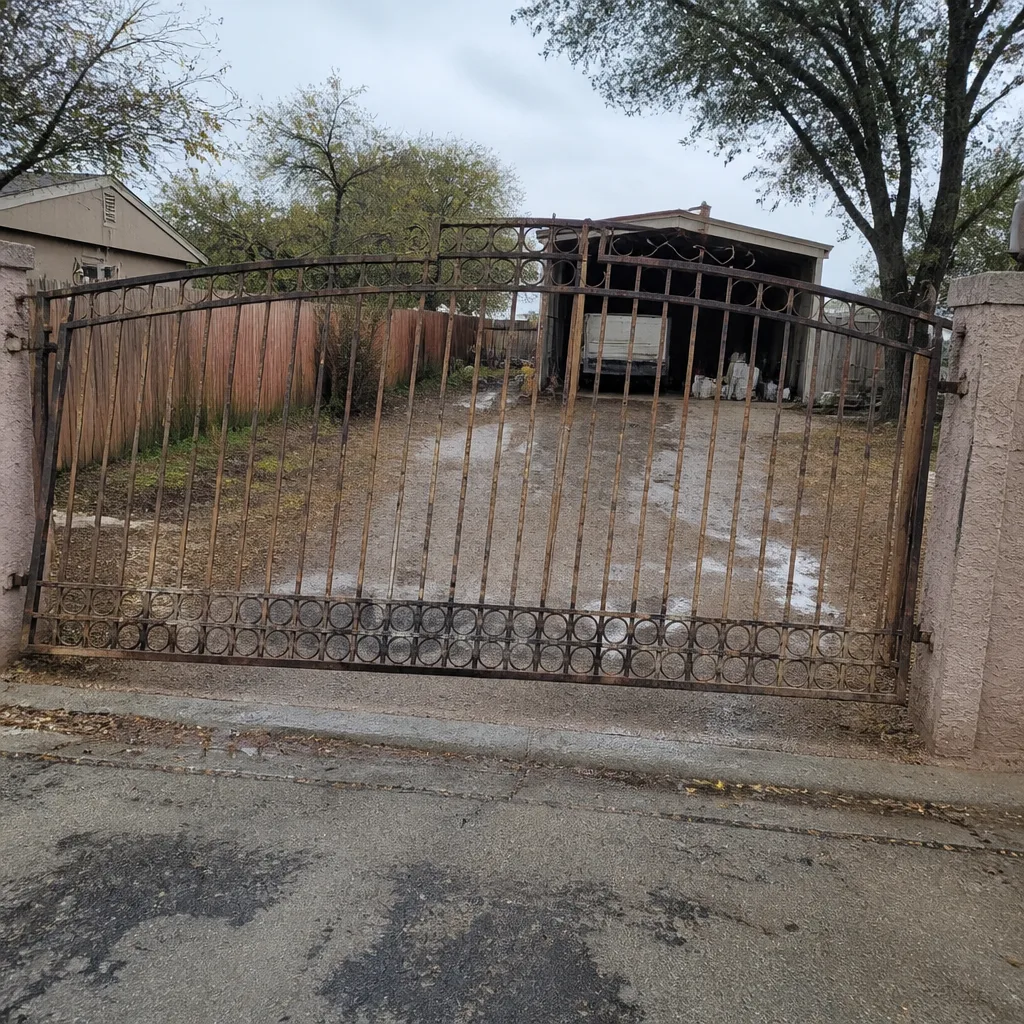
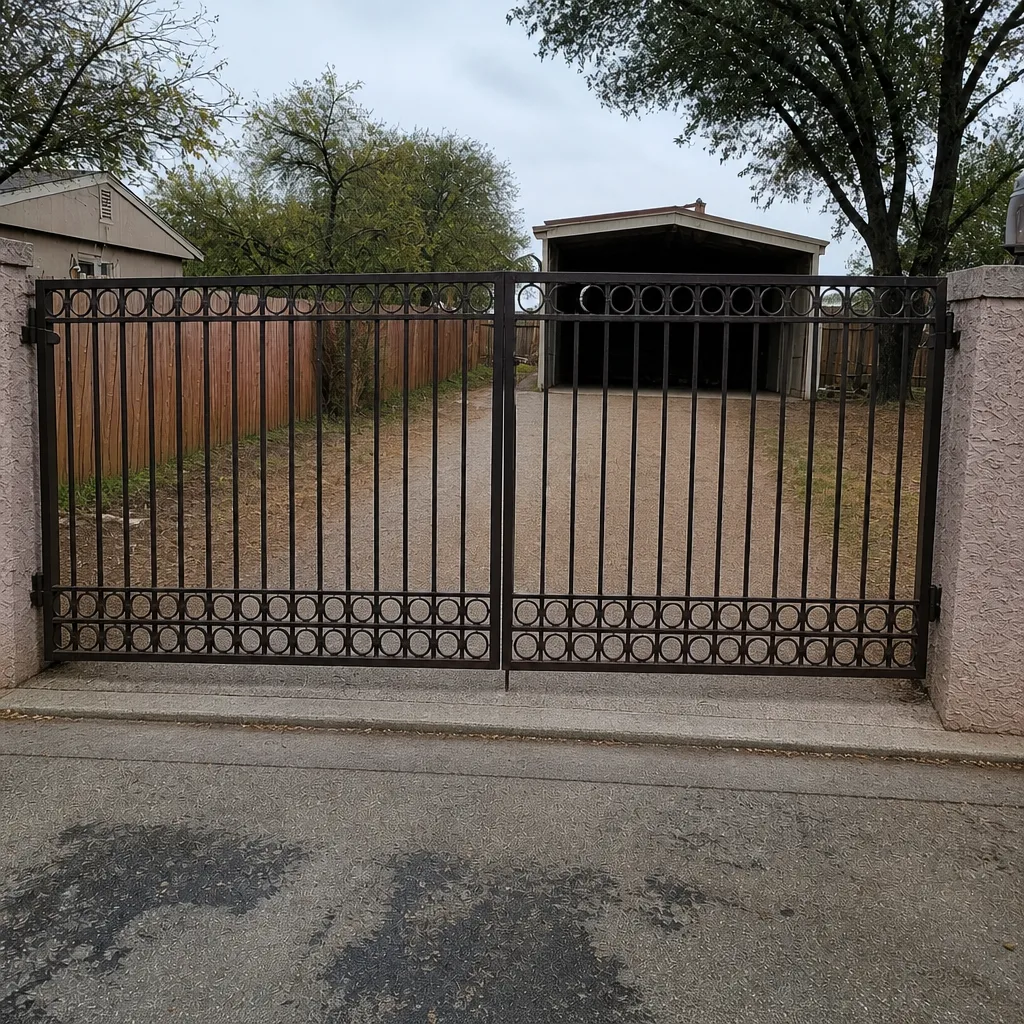
See the difference
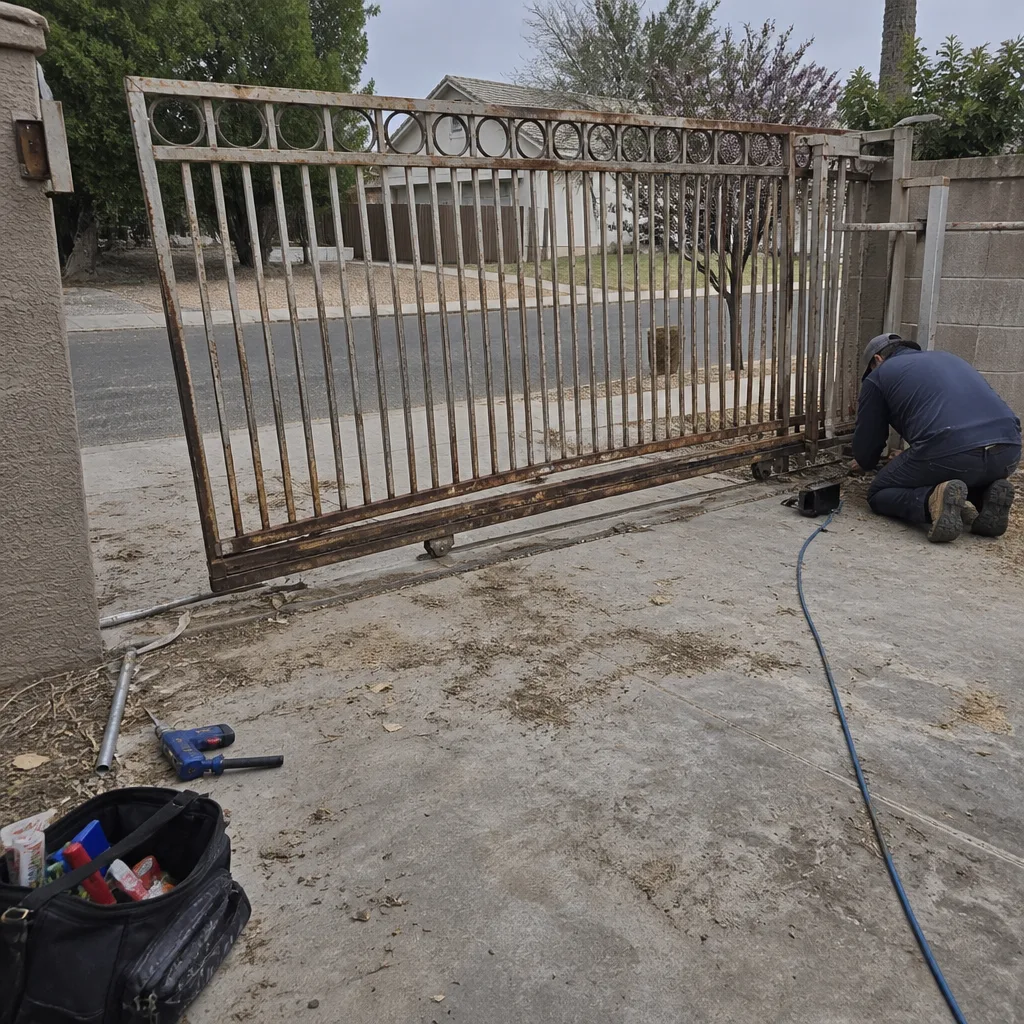 Before
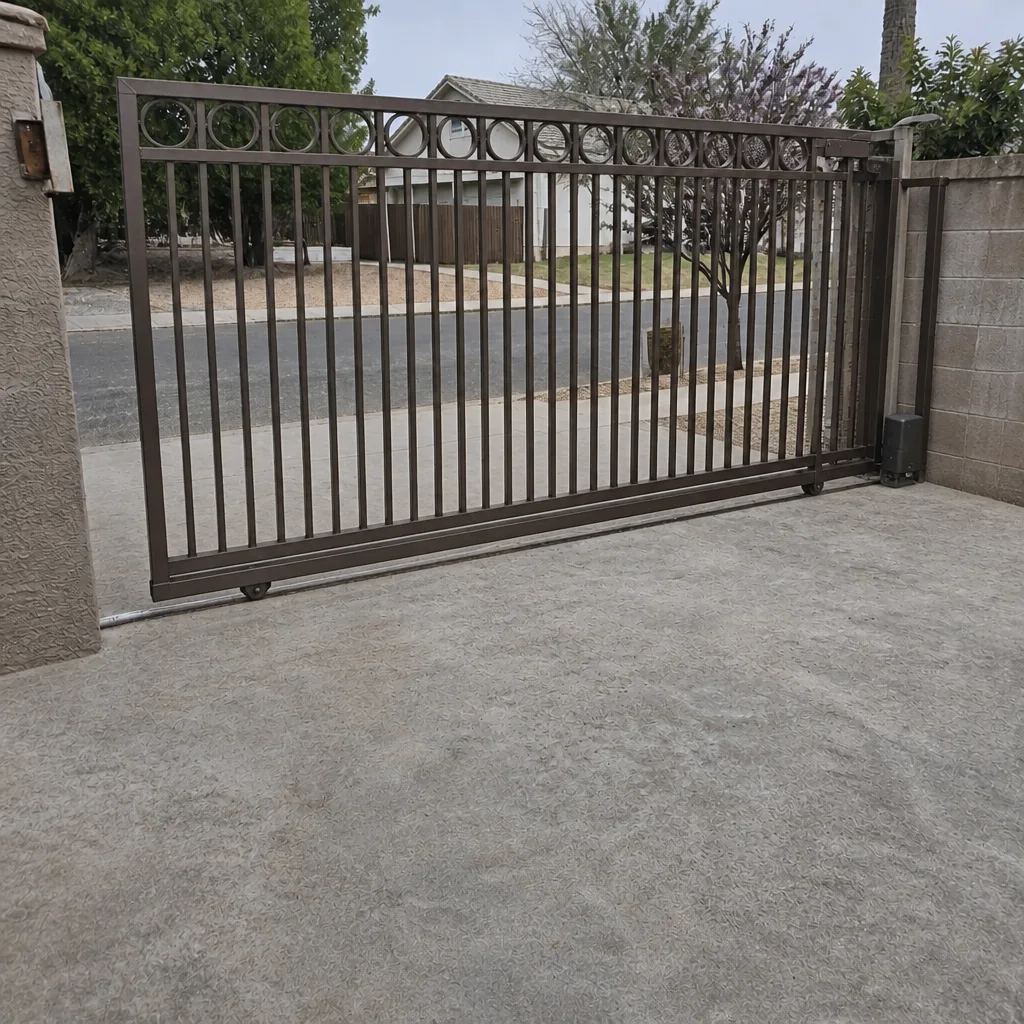 After
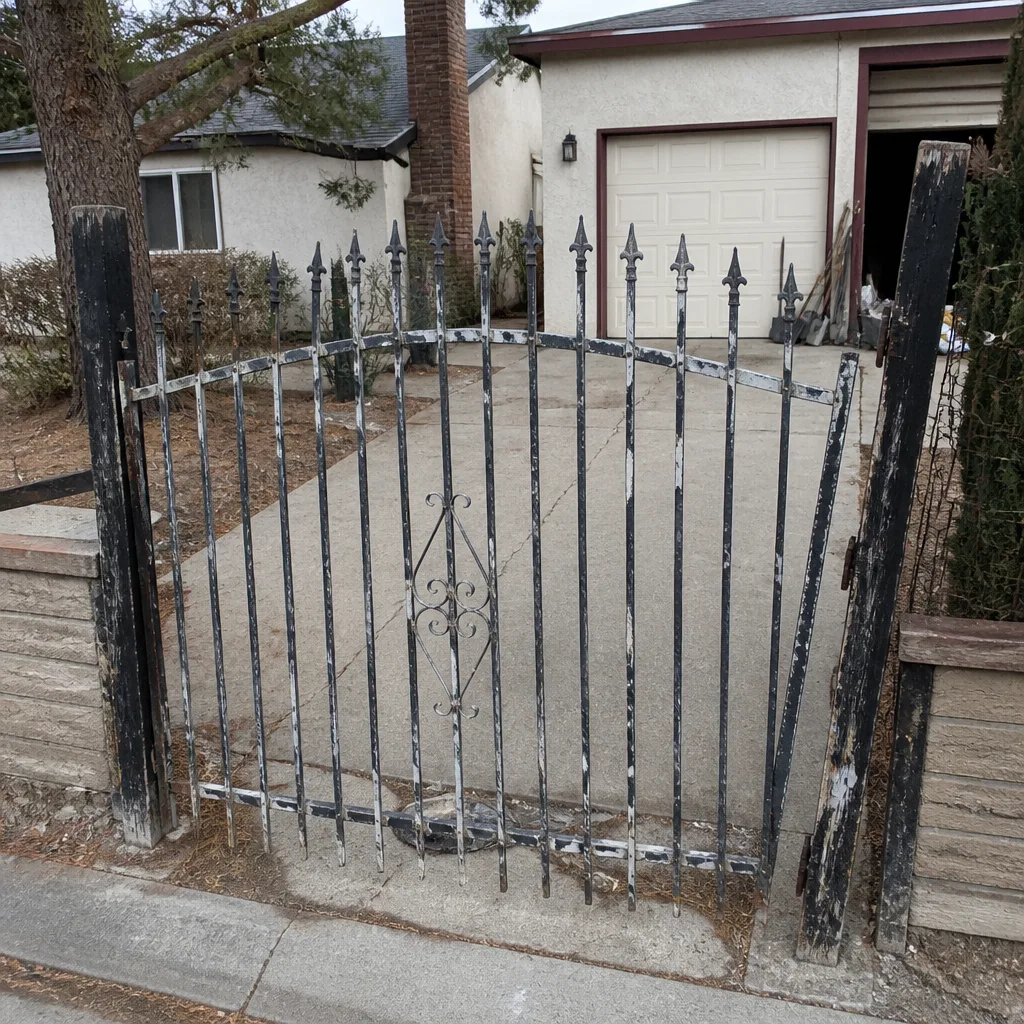 Before
 After
 Before
 After
When to Call a Professional
Call a professional the same day for any Tier 3 signal: a crack at a hinge, a post weld, or a frame corner, movement between parts when you push by hand, a gate that has dropped enough to drag, or a broken safety edge on an automated gate. Weld repair done properly belongs with a trained welder, since the wrong bead on a stress joint can fail faster than the original weld. The same holds for anything involving the opener and its wiring. Don’t try to loosen or re-tension a gate spring or opener mount yourself. On an automated gate over a driveway, a dropped leaf or a gate that runs through a reversing sensor can cause serious injury. When in doubt, stop the gate and call. Ironworks Gate Co. Whitney offers free estimates in Whitney. Call (855) 928-1304.
Frequently Asked Questions
Paint bubbling or rust weeping at the weld seam is usually the first warning sign, and a knock at the end of travel follows. Run a hand along the seam and look for raised edges, soft spots under the paint, or movement between parts. If you find any of those, stop using the gate and call for an inspection.
Most single cracked welds at a hinge or frame joint can be repaired, and the repaired weld is often stronger than the original. Replacement makes more sense when the frame has multiple cracks at different corners or the metal has rusted through. Call (855) 928-1304 for a free estimate in Whitney.
A latch that suddenly needs a lift or a shove means the gate leaf has dropped at the hinge. That’s a structural signal, not a latch problem. It usually means a hinge weld or a hinge has begun to fail, and left alone it moves the gate toward a Tier 3 condition. Call (855) 928-1304 to have it checked.
Weld repair in Whitney typically runs $220 to $500 for a frame weld and $180 to $420 for a hinge weld, depending on access and prep. We quote the price and agree on it before any work starts. Call (855) 928-1304 for an exact quote; estimates are free.
Irrigation runoff and rain that collects near the gate post is the main cause. The moisture sits against the base weld and paint, and rust weeping starts from the ground up. Check the post base after every heavy rain and run the touch test there first.
You can safely do the touch test and listen for new sounds with the opener disengaged and the gate held still, but you shouldn’t try to weld, adjust springs, or open the opener wiring yourself. Those belong with a trained professional. Call (855) 928-1304 to have one of our technicians run a full inspection.
The Bottom Line
Gates rarely fail without warning. The signals show up early: paint bubbling along a weld seam, rust weeping from a joint, a hairline crack at a hinge plate, a latch that doesn’t line up, and a knock or grind you didn’t hear last year. Read the metal monthly, use the touch test, and treat any crack or movement at a hinge or post as a stop-using condition. In Whitney, add a touch test after the first warm spell of spring. The difference between a weld repair and a full replacement comes down to how early you catch the signal.
If your gate is giving you any of the signals in this guide, call us for a free estimate. Ironworks Gate Co. Whitney handles the full scope, from hinge and weld repair to gate installation and the automation that keeps the gate moving. A live person answers the phone 24 hours a day. Call (855) 928-1304. Every job is backed in writing by our 90-Day Done Right Promise, and we’ll be there when we say.
Written by the team at Ironworks Gate Co. Whitney.