
Last updated November 17, 2026
 Wrought iron
 Wood & steel frame
 Farm & ranch
 Sliding driveway gates
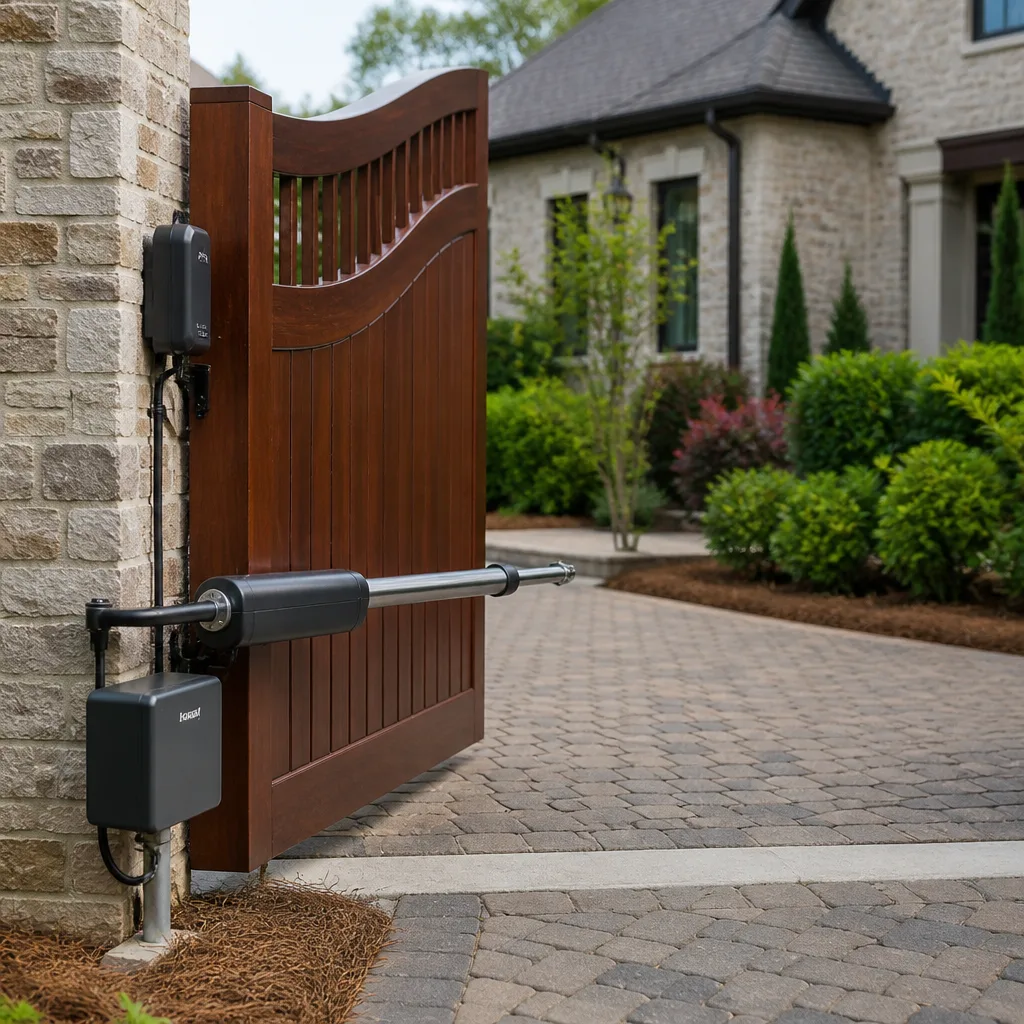 LiftMaster operators
Free on-site gate assessment - hinges, posts, and your LiftMaster or Nice gate operator checked before anything is quoted
The assessment is free and the quote is the invoice.
Get your free estimateGate Parts & Welding Troubleshooting: Common Problems and How to Fix Them
Replacing the hinges on a sagging gate without first checking whether the post has moved is the single most common wasted repair in residential gate work. The new hinges sag within a year for the same reason the old ones did, and the homeowner is out the money twice. In our experience across Whitney, the part that looks broken is rarely the part that caused the problem. This guide teaches the diagnostic sequence we use: start at the post and work outward. You’ll learn how to tell weld failure from fatigue from impact damage, which fixes are safe as temporary measures, and what to document before you call anyone.
Quick Answer
Most gate problems that look like hardware failures are actually structural: a post that has shifted, concrete that has cracked, or soil that has settled underneath. Diagnose from the ground up (post, then frame, then hinges, then latch) before replacing any part. Welds, frame twists, and load-bearing joints should always be repaired by a trained welder, never patched with hardware or a temporary fix.
Styles & brands we work with
- Wrought iron
- Wood & steel frame
- Farm & ranch
- Sliding driveway gates
- LiftMaster operators
Table of Contents
- The Root-Cause Diagnostic Sequence: Start at the Post
- Weld Failure vs. Metal Fatigue vs. Impact Damage
- Common Misdiagnoses That Cost Homeowners Money
- Temporary Fixes vs. Permanent Repairs: The Safety Line
- Hinges, Latches, and the Frame Twist Nobody Sees
- What to Document Before You Call
- Why Whitney Conditions Accelerate Gate Wear
The Root-Cause Diagnostic Sequence: Start at the Post
A gate is a lever, and the post is the fulcrum. When the post moves even a quarter inch, the far edge of a twelve-foot gate can drop an inch or more. That is why a gate that drags on the ground is almost never a hinge problem. The hinge is doing exactly what it was asked to do; the post underneath it has tilted, settled, or cracked its concrete footing. Replacing hinges on a moving post just resets the clock on the same failure.
Here is the sequence we run on every diagnosis in Whitney, and it works in the same order whether the gate is a light ornamental swing gate or a heavy sliding estate gate:
- Check the post for movement. Push firmly against the top of the post in both directions. Any rock, wobble, or give means the post is the problem, not the hardware bolted to it.
- Inspect the concrete footing. Look for cracks radiating from the base, a gap between the post and the concrete collar, or soil that has pulled away. Cracking here points to footing failure, not hinge wear.
- Check for soil settlement and drainage. Gates set in soil that stays wet after rain will shift seasonally. If the gate only drags after wet weather, suspect the ground before the metal.
- Inspect the frame for square. Measure corner to corner on both diagonals. If the two measurements differ by more than about a quarter inch on a standard gate, the frame has twisted.
- Only now check hinges, rollers, and latches. Hardware problems are real, but they sit at the end of the sequence because they’re the least common root cause.
Running this order saves money. A homeowner who replaces hinges first and finds the gate still dragging has spent money on parts and labor for nothing. A homeowner who checks the post first either finds the real problem or rules it out in minutes.
Weld Failure vs. Metal Fatigue vs. Impact Damage
Three different problems produce joints that look broken, and each one needs a different repair. Getting the diagnosis wrong means the repair either fails early or costs more than it should. Here’s how we tell them apart.
Weld failure shows up as a crack at the weld toe, where the bead meets the base metal, often with rust bleeding out of the crack line. It usually appears at high-stress joints: hinge plates, gussets, and frame corners. A true weld failure often traces back to the original weld being undersized or the gate being loaded beyond what the joint could carry. It gets re-welded, and the joint gets reinforced.
Metal fatigue looks different. You’ll see hairline cracks running along the tube or plate itself, not just at the weld, and often a slight bow or bend in the member. Fatigue comes from years of flexing: a gate that’s been pushed, slammed, or run into the stop thousands of times. A fatigue crack needs more than a weld bead over the top; the fatigued section has to be removed or reinforced, or the crack walks right back through the new weld.
Impact damage is the easiest to identify if you know the gate’s history. It shows up as a fresh bend, a dented tube, a sheared hinge pin, or a joint pulled apart with no rust in the break. If a car, a lawn crew, or a delivery truck clipped the gate, the metal tells you. Impact repairs focus on straightening and re-aligning before any welding happens.
In Whitney, we see all three, and the tell is usually in the rust pattern and the bend. Fresh break with no rust means impact. Rust bleeding from a crack at the weld toe means weld failure. A hairline crack with a gradual bow means fatigue. Each one is a different repair.
Common Misdiagnoses That Cost Homeowners Money
Two misdiagnoses show up more than any others, and both are expensive because they send the homeowner down the wrong repair path.
The gate that “needs new hardware” but actually needs a hinge weld re-done. When a hinge plate starts to pull away from the frame, the gate sags, the hinge seems loose, and the natural move is to buy a new hinge. But the hinge isn’t the problem; the weld holding it to the frame has failed. Bolting a new hinge over a failed weld, or worse, bolting through the frame tube, weakens the whole joint. The right repair is to clean out the old weld, re-weld the hinge plate to sound metal, and reinforce the joint if the frame has fatigued around it.
The latch that seems bent but is actually a frame twist. A gate that won’t latch cleanly often gets a new latch, and the new latch doesn’t line up either. That’s because the gate frame has twisted, usually a consequence of post movement or fatigue. The latch was never bent; it’s sitting on a frame that’s out of square, so the two halves no longer meet. Replacing the latch on a twisted frame just moves the misalignment. The real fix is correcting the frame and addressing whatever moved underneath it.
We’ve seen both in Whitney, and the pattern is always the same: the visible symptom is a small part, and the real cause is a structural one. Before buying any part, check the post, check the frame for square, and only then look at the hardware. If the gate is heavy and has been in place for many years, structural causes are more likely, not less.
Temporary Fixes vs. Permanent Repairs: The Safety Line
Some temporary fixes are genuinely useful, and some are dangerous. The line is straightforward: anything load-bearing has to be a permanent, properly welded repair. A gate is a heavy moving object, and a joint that fails while someone is walking under it can cause serious injury.
Temporary measures that are acceptable, to get you safely through until a technician arrives:
- Wiring or bracing a non-load-bearing accessory (a handle, a sign, a decorative panel) so it doesn’t rattle or fall.
- Clearing a gate’s swing path of debris when the gate is dragging, so it opens and closes fully until the underlying cause is repaired.
- Operating the gate manually and securely latched if a motor or opener has failed, provided the gate itself is structurally sound.
Temporary measures that are not acceptable on a load-bearing weld or structural joint:
- Bolting a hinge plate over a cracked weld, or drilling into a tube frame to “secure” a failed joint. This weakens the frame and the bolts can shear under load.
- Patching a crack in a load-bearing member with caulk, epoxy, or a metal strap. These do not carry the load and can fail without warning.
- Bracing a post that is visibly leaning against a wall or a tree and calling it fixed. The post is still moving; the brace just hides it until something gives.
- Using a come-along or a jack to force a twisted gate back into shape and then leaving it. The frame is still stressed and will return to the twist, usually worse.
Welding a load-bearing joint requires training, proper equipment, and an understanding of how the gate carries load. If a weld has failed on a hinge, a post, or a frame member, that’s a job for a trained welder. Get it done right the first time.
Hinges, Latches, and the Frame Twist Nobody Sees
Hinges and latches get all the blame. In practice, most of the hardware problems we diagnose in Whitney trace back to frame twist, and frame twist usually traces back to post movement or metal fatigue. Here is how to check a frame for twist yourself, before you spend money on hardware:
- Close and latch the gate if it will latch.
- Measure from the top hinge pivot to the bottom hinge pivot on the post side.
- Measure the matching distance on the gate frame side.
- Measure diagonally: from the top hinge corner to the opposite bottom corner, and from the top latch corner to the opposite bottom hinge corner.
- Compare the diagonals. If they’re off by more than about a quarter inch, the frame is out of square, and hardware replacement won’t fix it.
If the frame is square and the post is solid, then the hinge or latch really is the problem, and a hardware replacement makes sense. If the frame is out of square, or the post is moving, the repair needs to go after the cause first. Straightening a twisted steel frame properly requires heat, controlled force, and knowledge of how the metal will move; it’s not a job for a hammer and a come-along in the driveway.
This is where a trained specialist saves money. The wrong repair on a twisted frame can shear weld joints, crack tube walls, and turn a repairable gate into a replacement. We’ve seen that outcome more than once in Whitney, and it’s always more expensive than the correct repair would have been.
What to Document Before You Call
A technician arriving with the right materials and the right diagnosis on the first visit saves you time and money. A few minutes of documentation before you call makes that possible. Here’s what to gather.
- Photos from all angles. Full gate front and back, a close-up of each hinge, the latch, the post at the base, and the footing. Include a photo of any crack, rust bleed, or bend you can see.
- A short video of the gate in motion. Open and close it by hand. Show where it drags, catches, or wobbles. Video catches motion problems that still photos miss.
- Measurements. Gate width and height, the distance from the ground to the bottom rail at each end (to show how much it’s dragging), and the diagonal measurements from the frame-square test.
- History. Any impact (car, truck, lawn crew), any recent heavy weather, any change in how the gate behaves after rain, any part that was replaced before and when.
- The gate’s setup. Manual or automated, swing or slide, and if automated, the brand of the opener. Gate automation brands like DoorKing, Elite, and Mighty Mule each have their own parts and behavior, so the brand matters.
With this in hand, a technician can often arrive with the right parts and a plan. Without it, the first visit is partly diagnostic. Either way, we settle the price before a single bolt is turned, so you know the cost before work begins.
Why Whitney Conditions Accelerate Gate Wear
Gate problems are not just about age. The conditions a gate lives in matter, and Whitney has its own set of pressures that show up in repair patterns.
Our summer heat swings metal through daily expansion and contraction. A gate that was hung with tight tolerances can bind in the afternoon and free up again overnight. Welds at rigid joints see that cycle thousands of times a year, and that’s how fatigue cracks start. We see fatigue-related cracks in welded frames here more often than in cooler climates, and we check for them as a matter of routine.
Winter and spring rains and the occasional hard freeze matter too. Soil that drains poorly stays wet and soft, and posts set in that ground can shift seasonally. A gate that drags only after wet weather is a strong signal to check post movement and footing before hardware. In neighborhoods where lots sit on graded soil or have had irrigation added, that seasonal shift is common.
And it’s worth mentioning automation. When an opener does the pushing and pulling, the gate’s structural problems get amplified. A sagging gate that a person would push through gets forced by a motor, and that force shows up at the hinges and welds. If your opener is a Ghost Controls or Elite unit and it’s been straining, look at the structure first. If the gate is sound, a gate motor & opener service in Whitney can be dialed in to match the gate’s actual weight and swing.
Common Mistakes to Avoid
- Replacing hinges on a moving post. The single most common wasted repair. New hinges on a post that has shifted will sag within a year for the same reason the old ones did. Check the post first.
- Bolting over a failed weld. Drilling into a tube frame to reattach a hinge plate weakens the frame and creates a shear point. The failed weld needs to be cleaned out and properly re-welded.
- Replacing a latch on a twisted frame. A new latch on an out-of-square gate won’t line up either. Square the frame first, then fit the latch.
- Forcing a gate with a come-along and leaving it. The frame is still stressed and will twist back, often worse. Proper straightening on steel needs heat and controlled force.
- Patching a load-bearing crack with epoxy or a strap. These do not carry the load and can fail suddenly under the weight of a moving gate. This is a safety line, not a shortcut.
- Ignoring soil and drainage. In Whitney, a gate that only drags after rain is often a post or footing issue. Fixing the ground problem is cheaper than replacing parts that were never the cause.
- Buying hardware before checking the frame for square. The diagonal measurement takes two minutes and rules out the most expensive misdiagnosis. Do it before you spend a dollar on parts.
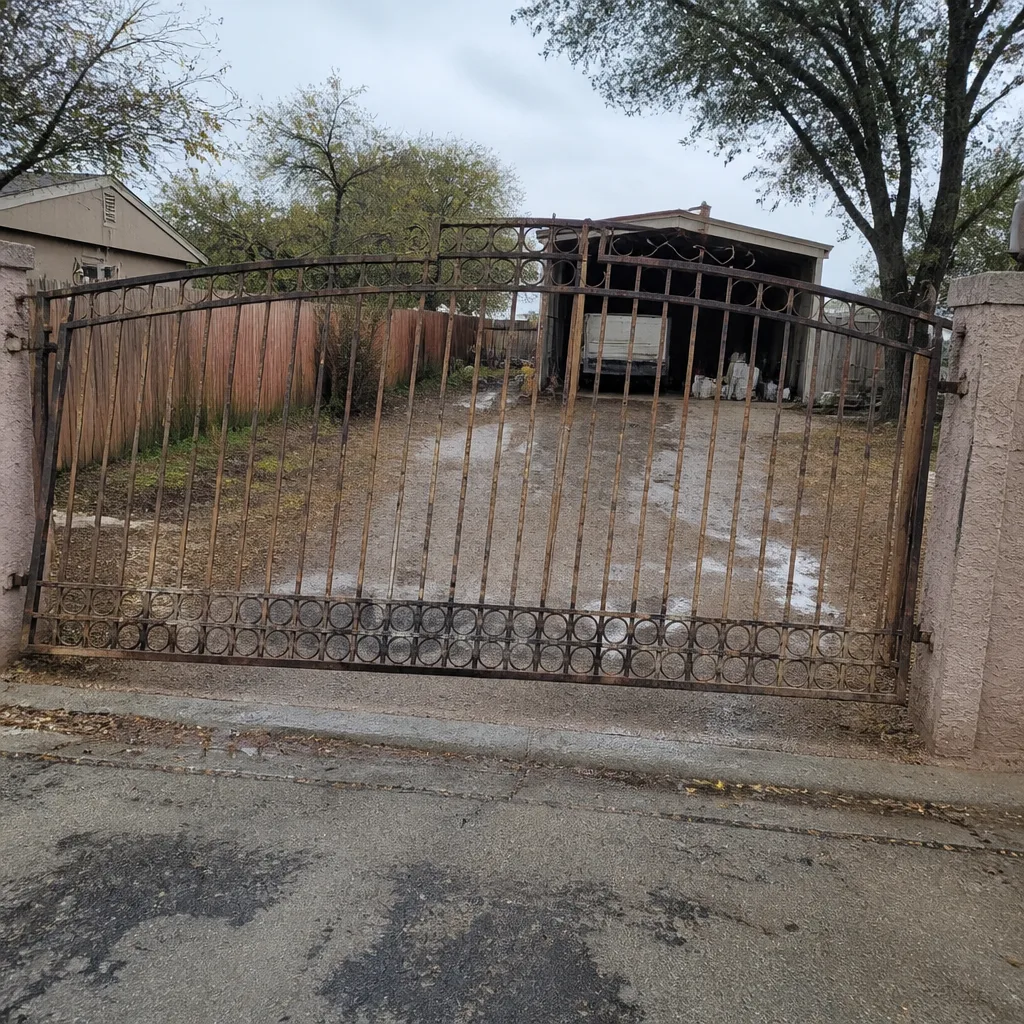
See the difference
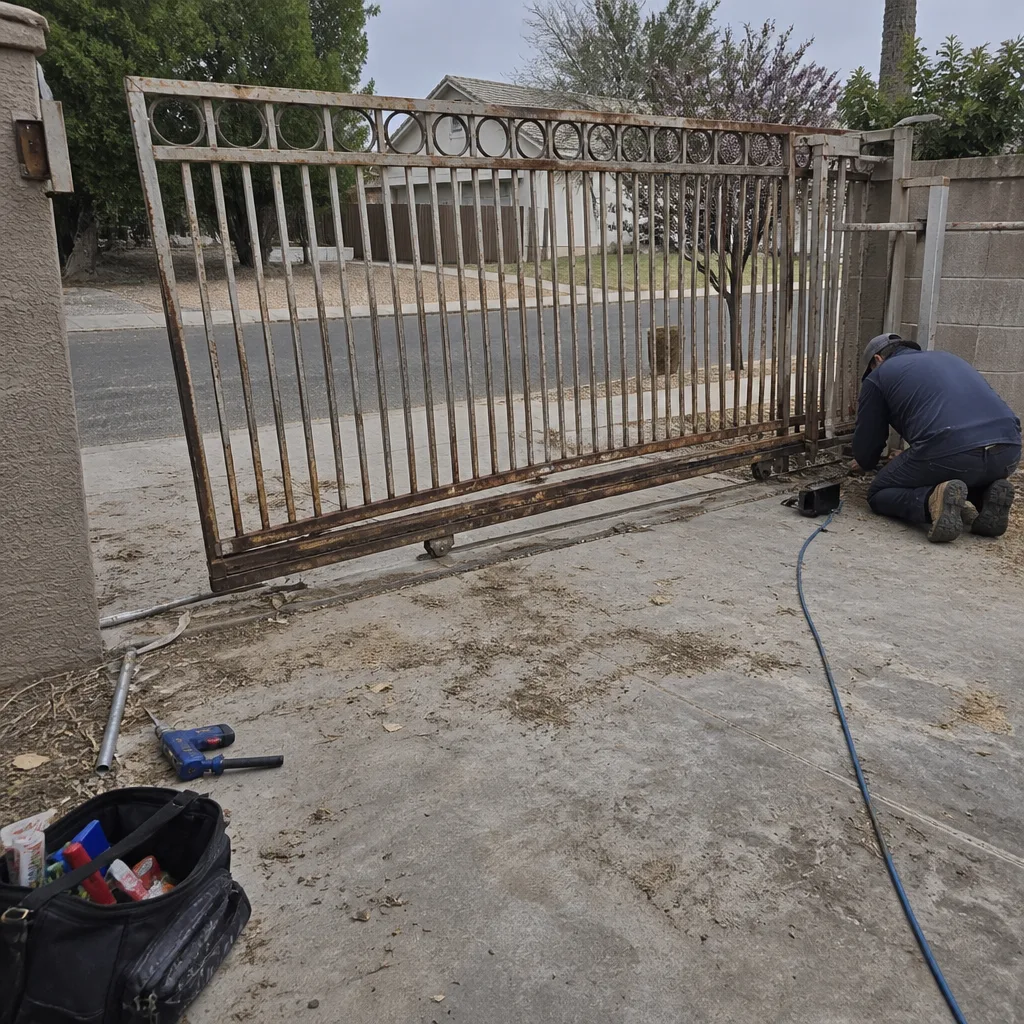 Before
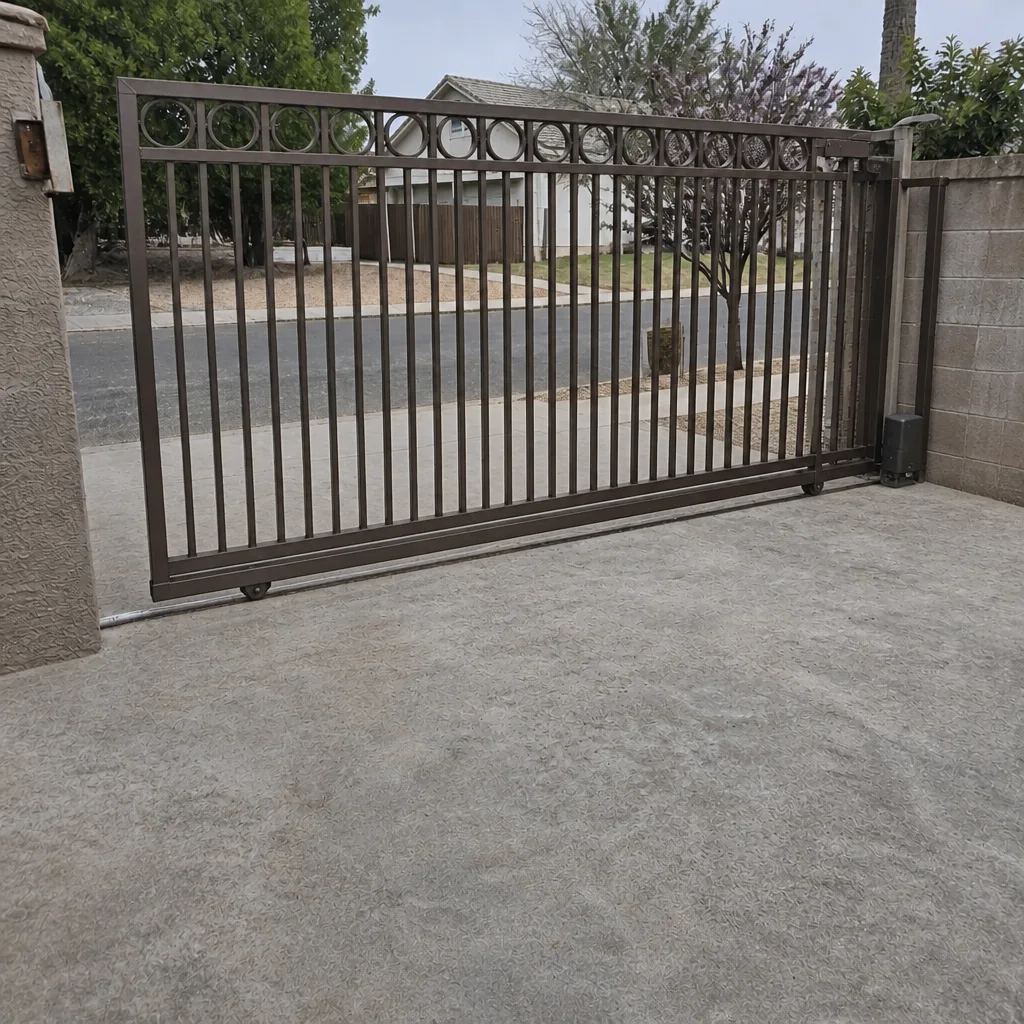 After
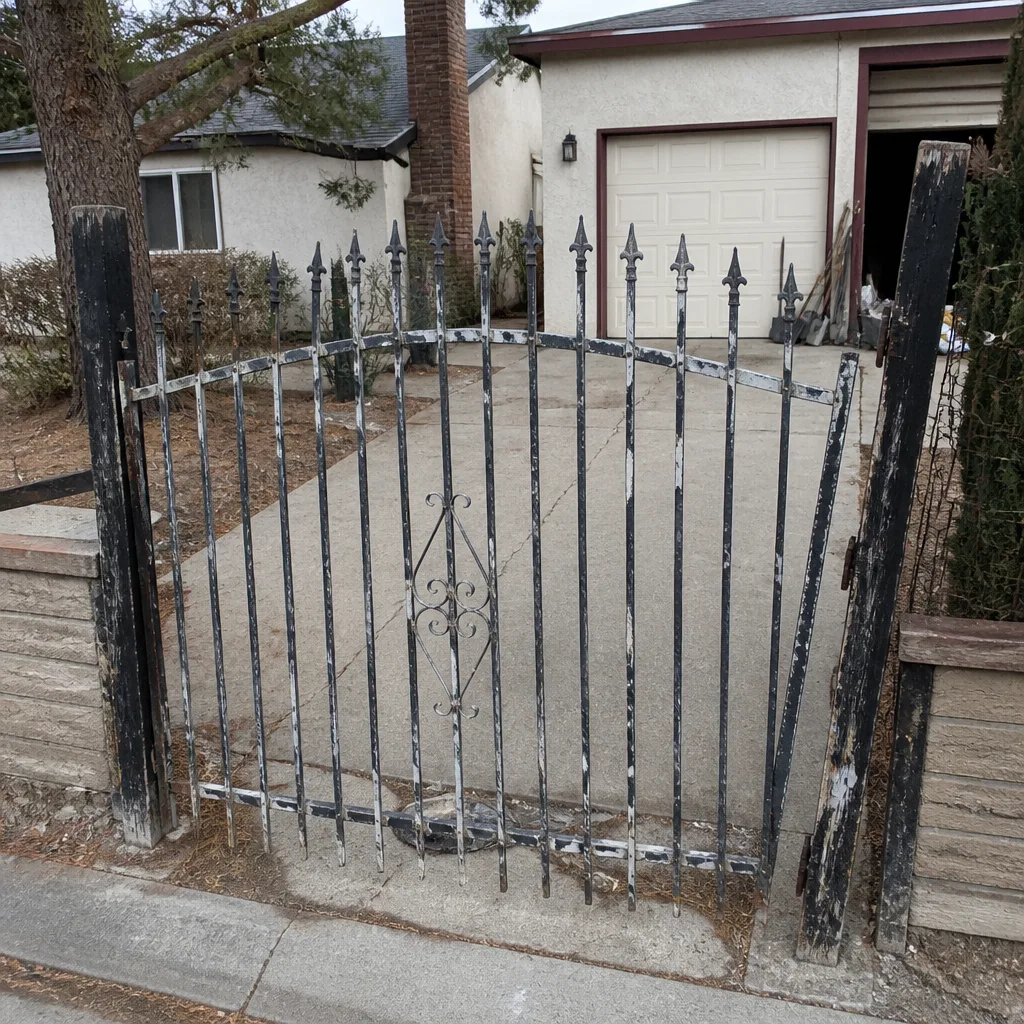 Before
 After
 Before
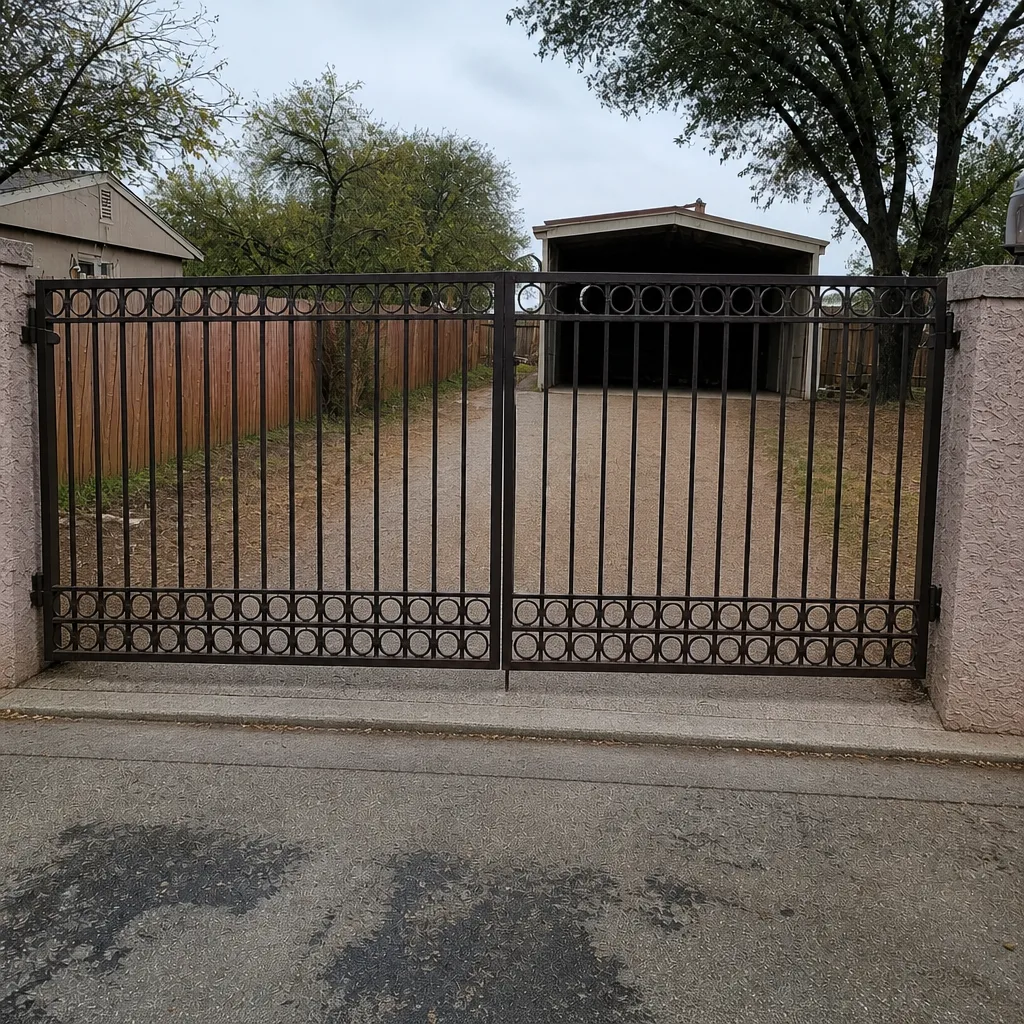 After
When to Call a Professional
Call a specialist if any load-bearing weld has failed; if the post has moved, tilted, or cracked its footing; if the frame is out of square by more than a quarter inch; or if the gate is forced by a motor and has started straining. Welding structural joints on a heavy gate, correcting a twisted steel frame, and diagnosing post movement are all jobs for someone with welding training and the right equipment. A temporary fix can get you safely through, but the structural repair belongs with a trained professional. For a gate that also needs automation checked, a gate repair in Whitney visit can cover both at once. Ironworks Gate Co. Whitney offers free estimates in Whitney. Call (855) 928-1304 and we’ll come out, diagnose it in the right order, and settle the price before any work starts. Every job is backed in writing by our 90-Day Done Right Promise.
If the diagnostic sequence above points to a gate that’s beyond repair, or if you’re planning a new gate for your property, a gate installation in Whitney is a different scope of work, and it’s scheduled, measured, and priced upfront rather than done same-day.
Frequently Asked Questions
Post movement. In our experience, a sagging gate is usually the result of the post tilting, settling, or cracked concrete under it, not hinge wear. Check the post for movement and the footing for cracks before replacing any hardware. Call (855) 928-1304 for an exact diagnosis and quote, estimates are free.
A bad weld cracks at the weld toe with rust bleeding out of the crack line, usually at high-stress joints like hinge plates and corners. Metal fatigue shows as hairline cracks along the tube or plate itself, often with a gradual bend, caused by years of flexing. Impact damage is different again: a fresh bend or sheared joint with no rust in the break. Each needs a different repair. Call (855) 928-1304 if you’re not sure which one you have.
Only on non-load-bearing parts, and only to get you safely through until a technician arrives. Bracing or bolting over a load-bearing weld or a structural joint is not acceptable, because the brace doesn’t carry the load and can fail without warning. If a weld on a hinge, post, or frame member has failed, get it welded properly. Call (855) 928-1304 for an evaluation and a free estimate.
That pattern points to the ground, not the metal. Soil settlement and drainage are common in Whitney, and posts set in soft or wet ground shift seasonally. The fix is usually a footing or post correction, not new hardware. Call (855) 928-1304 and we’ll look at the post and footing first.
Most twisted steel frames can be straightened and re-welded by a trained specialist. Correction requires heat, controlled force, and knowledge of how the metal moves, so it’s not a job for a hammer in the driveway. A frame out of square by more than about a quarter inch should be professionally corrected. Call (855) 928-1304 for a free estimate.
Photos from all angles (hinges, latch, post base, footing, any cracks), a short video of the gate opening and closing by hand, the gate’s width and height, the diagonal measurements for square, the gate’s history of impact or weather issues, and the automation brand if it’s powered. DoorKing, Elite, and Ghost Controls openers each behave differently and have different parts. Call (855) 928-1304 to book a visit.
The Bottom Line
A gate problem is usually not the part you can see. Post movement, footing failure, and soil shift explain most structural complaints, and they sit underneath the hardware that gets blamed. Diagnose in the right order: post first, then footing, then frame square, then hinges and latches. Tell a failed weld from fatigue from impact damage before choosing a repair. Keep temporary fixes off any load-bearing joint, and document the problem before you call. At Ironworks Gate Co. Whitney home, we run that sequence on every visit, settle the price upfront, and back the work in writing with our 90-Day Done Right Promise. Our technicians have up to 13 years of experience and are trained on nine gate-automation brands. Call (855) 928-1304 for a free estimate in Whitney today.
Written by the team at Ironworks Gate Co. Whitney.