
Last updated November 17, 2026
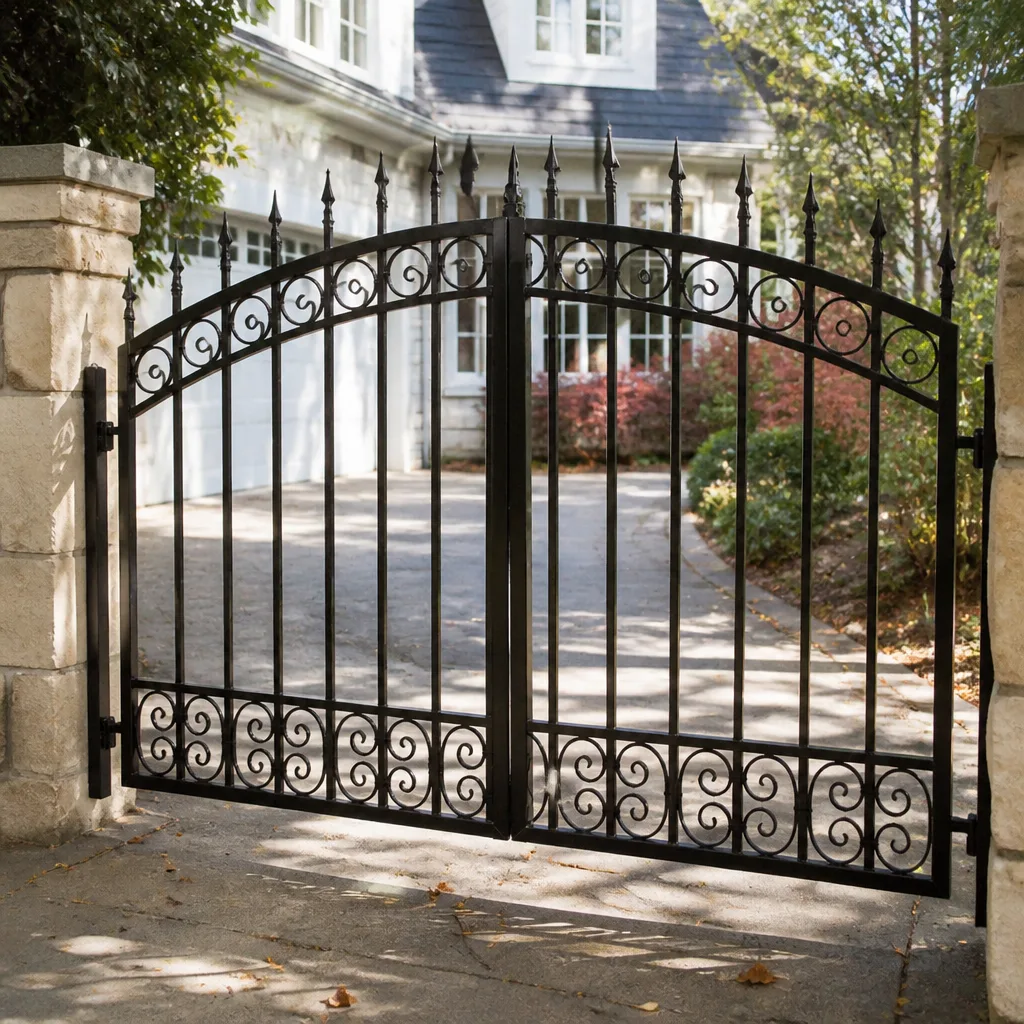 Wrought iron
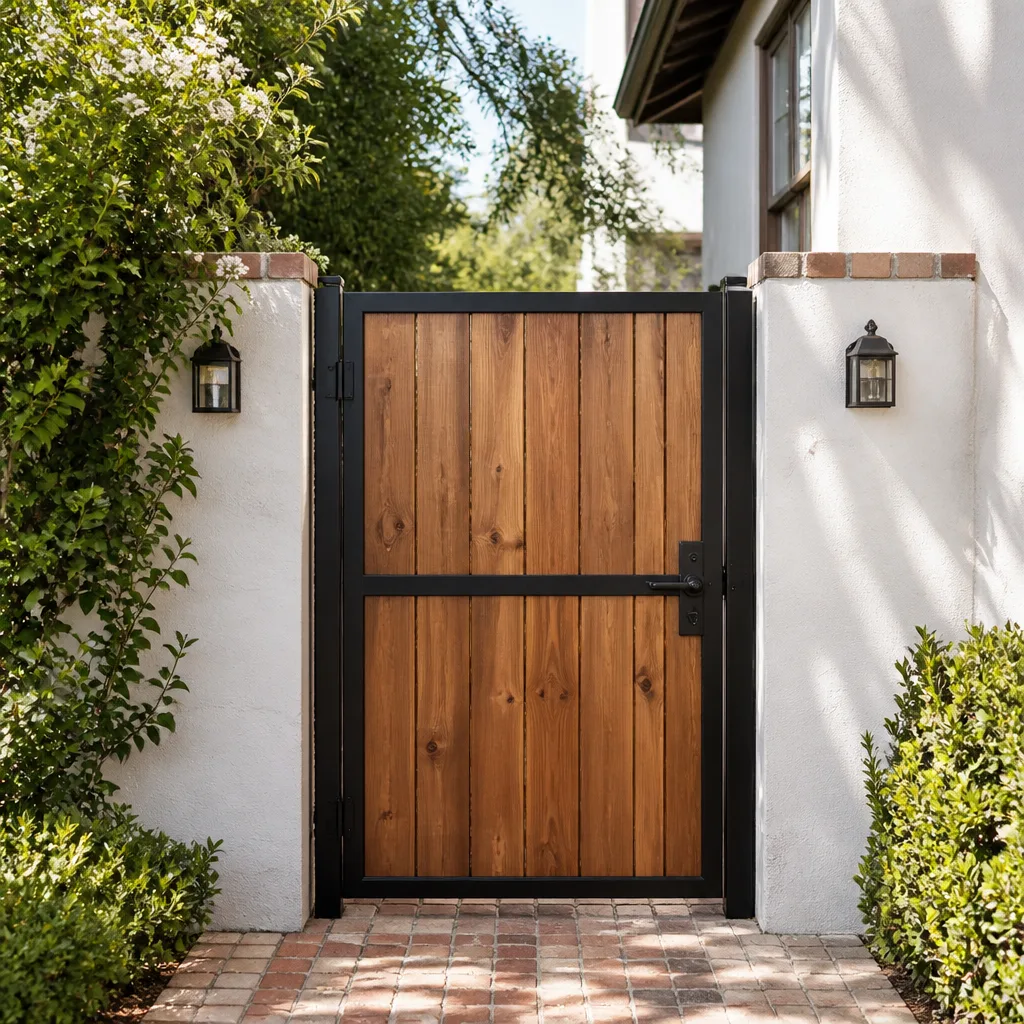 Wood & steel frame
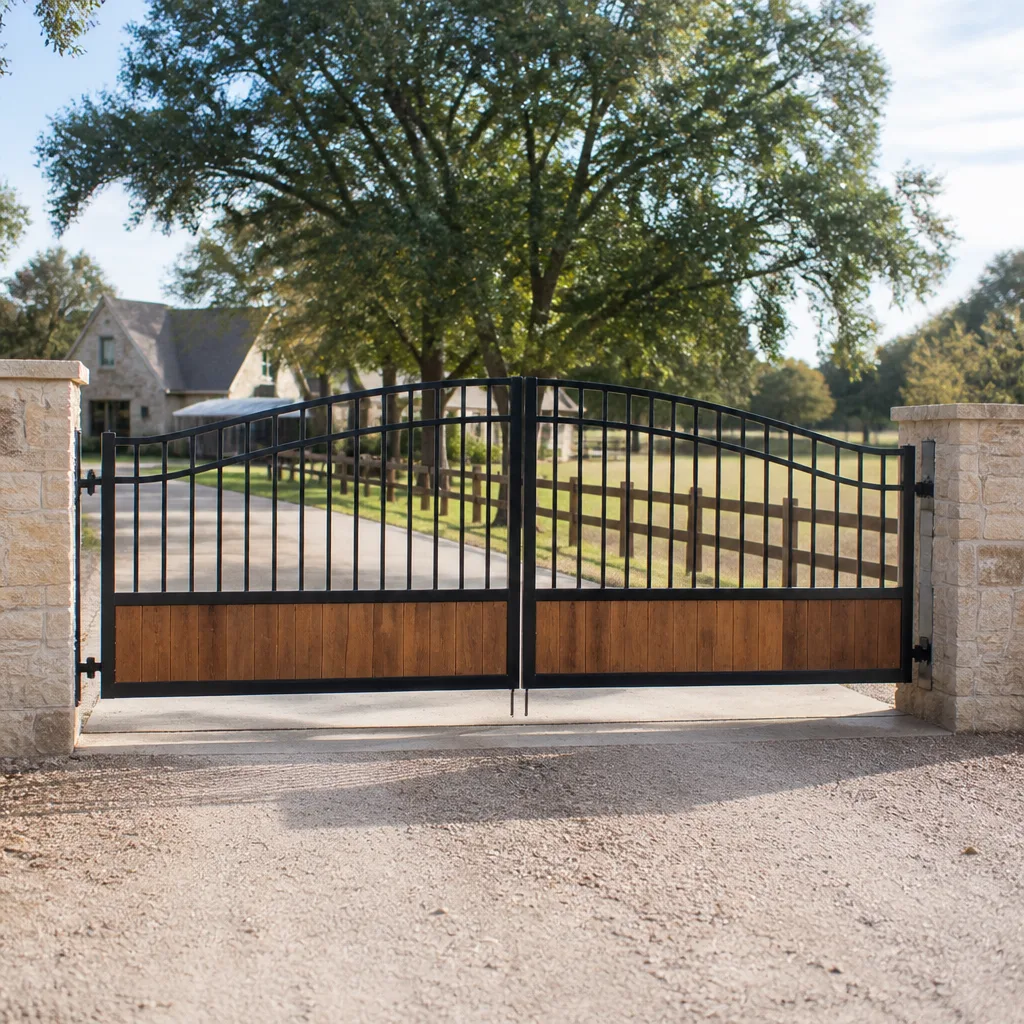 Farm & ranch
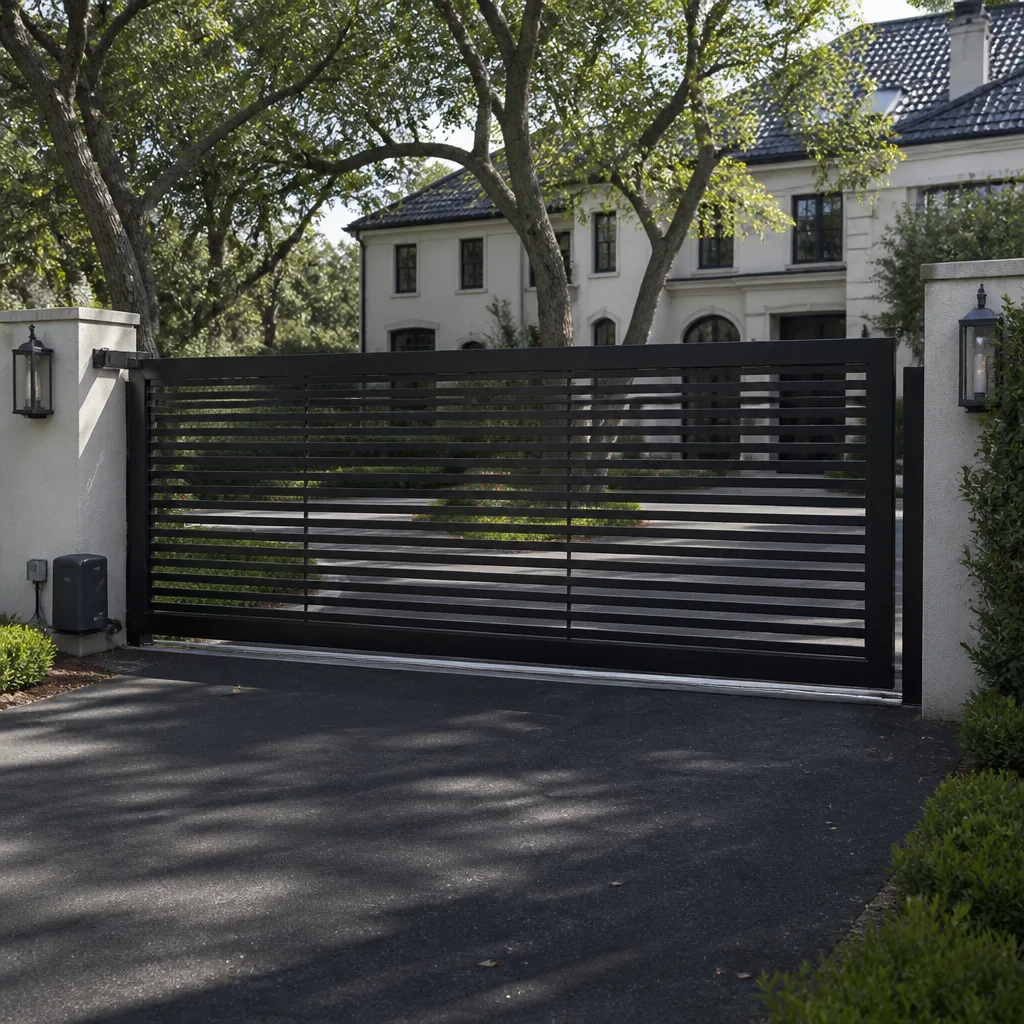 Sliding driveway gates
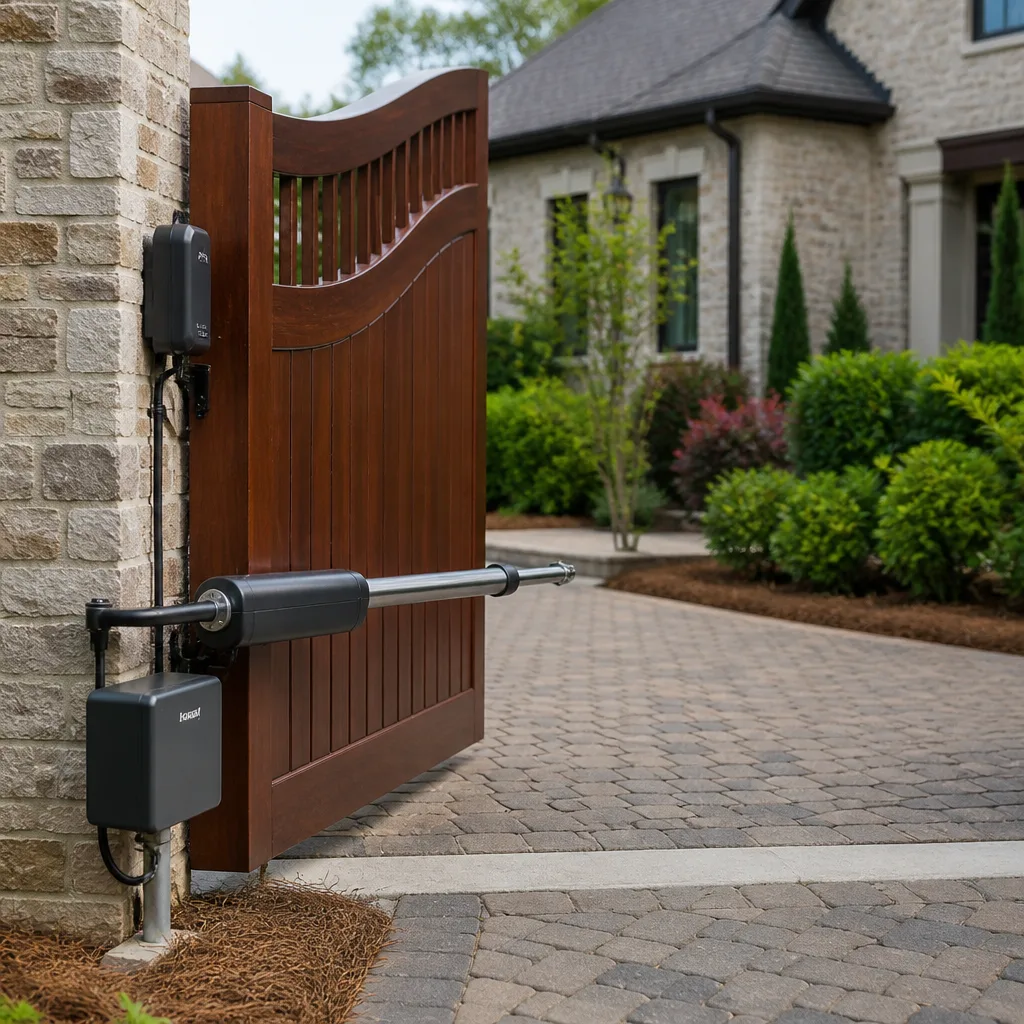 LiftMaster operators
Free on-site gate assessment - hinges, posts, and your LiftMaster or Nice gate operator checked before anything is quoted
The assessment is free and the quote is the invoice.
Get your free estimateGate Repair Troubleshooting: Common Problems and How to Fix Them
If your gate has needed the same repair more than once, the problem was never fixed. It was just reset. We see this constantly in Whitney: a gate that drags every spring, a motor that trips its breaker a few times a year, a latch that “fixes itself” after a good shove. The symptom you can see and the cause that’s actually failing usually live in different places. This guide teaches you to trace a problem backward from the failure point to its true origin in the structural, mechanical, or electrical system, so you stop paying for the same repair twice. You’ll learn to read the fault, tell a motor problem from a geometry problem, and know when to stop and call.
Quick Answer
Most gate problems trace back to one of three systems: structural (posts, hinges, welds), mechanical (rollers, tracks, latches, the gate leaf itself), or electrical (motor, wiring, control board, safety sensors). The visible symptom rarely reveals which one failed, so effective troubleshooting means working backward from the symptom to the stressed system. A dragging gate, for example, is almost always a structural or mechanical fault that is quietly overloading the motor, not a motor fault at all.
Styles & brands we work with
- Wrought iron
- Wood & steel frame
- Farm & ranch
- Sliding driveway gates
- LiftMaster operators
Table of Contents
- The Three-System Framework
- Tracing the Fault: Working Backward from the Symptom
- How to Tell an Opener Fault from a Gate Geometry Fault
- Error Codes and Behaviors by Brand
- The Second Failure: What Breaks When You Wait
- Whitney Conditions That Speed Up Gate Wear
- Common Mistakes to Avoid
- When to Call a Professional
The Three-System Framework
Every gate is three systems stacked on top of each other, and they share the load. The structural system is the posts, hinges, frame, and welds: the skeleton that holds the weight. The mechanical system is the rollers, tracks, latches, and the gate leaf itself: the moving parts that transfer force. The electrical system is the motor or opener, the wiring, the control board, and the safety sensors: the muscle that drives it all. When one system weakens, the other two absorb the stress. That’s why a failing hinge eventually kills a motor, and why a misadjusted sensor can make a perfectly sound gate refuse to close.
Here’s what we mean in practice. A post that settles a quarter inch out of plumb shifts the gate’s swing, which drags a roller, which forces the motor to push harder, which overheats the control board. Four failures, one origin. Homeowners feel only the last one: the motor that won’t run. If you can hold all three systems in your head at once, you stop chasing symptoms.
- Structural: posts, hinges, welds, frame integrity. Problems here are slow and cumulative.
- Mechanical: rollers, tracks, latches, the leaf’s alignment and weight. Problems here are visible and audible.
- Electrical: motor, wiring, control board, sensors, keypad, access control. Problems here are intermittent and code-driven.
The rule that follows from this: when the electrical system fails, ask what’s stressing it before you replace it. A motor that fails twice in a year is telling you the gate is fighting the frame. Our Gate Motor & Opener in Whitney service exists specifically for that electrical layer, but we rarely touch the motor without checking the other two.
Tracing the Fault: Working Backward from the Symptom
Instead of starting at the motor and guessing, start at the visible failure and walk it back through the systems. This cause-and-effect fault tree is the single most useful troubleshooting tool we use in the field, and it’s the backbone of any honest diagnosis.
- Observe the symptom precisely. Is the gate dragging, refusing to close, grinding, stopping halfway, or failing to latch? Each one points at a different system.
- Test the gate by hand. With the motor disengaged (use the manual release), push the gate through its full swing. If it binds, drags, or rocks in the post, the fault is structural or mechanical, not electrical.
- Check the structural anchor points. Look at the posts for lean, the hinges for play, and the welds for hairline cracks. In Whitney’s heat and dry soil, a post can shift seasonally without any obvious damage.
- Inspect the mechanical path. Rollers that no longer turn, tracks with debris or deformation, and latches that strike off-center all add friction the motor must overcome.
- Only then look at the electrical layer. With a free-moving gate, a motor that still fails is genuinely an electrical fault: wiring, sensor, control board, or motor itself.
Follow that order and you’ll find that a large share of “motor failures” are actually geometry failures wearing an electrical costume. That single insight saves homeowners repeated service calls.
How to Tell an Opener Fault from a Gate Geometry Fault
You can make this distinction without any tools, using only your hands and ears. The test takes two minutes and it’s the question that should come before any part gets replaced.
Disengage the motor with the manual release, then swing the gate by hand. A gate with a geometry fault will bind, rub, rock, or drift when you let go. You’ll feel a hard spot, hear a scrape, or watch it settle into a leaning post. A gate with an opener fault swings freely and smoothly by hand, yet still stumbles when the motor takes over, because the motor, wiring, sensor, or board is the actual problem.
There’s a second tell: timing and noise. A geometry fault usually gets worse gradually over weeks and groans or grinds at the same point in the swing. An opener fault tends to be intermittent or sudden, and often leaves an error code on the control board. If the gate is free by hand but dead by motor, you’re looking at the electrical layer. If it fights you by hand, you’re looking at the frame. In our experience around Whitney, geometry faults outnumber true motor faults by a wide margin, which is why diagnosing the opener last, not first, is the correct order.
Error Codes and Behaviors by Brand
Modern openers tell you a lot if you know how to listen. The exact blink pattern or display code varies, but the categories of failure are consistent across the major brands we service. Here’s how the behaviors usually read.
- Linear units often behave like a safety-sensor fault first: the gate opens but won’t close, or reverses immediately, until the photo-eye path is cleared and realigned. Persistent reverse-on-contact points to a sensor or board issue rather than the motor.
- Viking operators frequently show a stall or obstruction fault when the gate meets resistance. That fault is almost always mechanical drag, not a weak motor, so check rollers and hinges before touching the unit.
- Ghost Controls systems lean heavily on their safety-edge and sensor inputs. A gate that stops and reverses mid-travel is usually reporting a blocked or misaligned edge, not a failed actuator.
- DoorKing commercial-grade boards display explicit fault codes for limit, obstruction, and sensor states. Those codes are precise and worth reading closely, because they name the system that failed.
Whatever the brand, the diagnostic principle holds: a code names a symptom, not always the root. An obstruction fault can mean a true obstruction, a dragging gate, or a sensor that’s simply dirty. We’re equipped to service Linear, Viking, Ghost Controls, and DoorKing among the nine automation brands we work on, so the correct fix happens on the first visit. For the deeper repair side of this, see Gate Repair in Whitney.
The Second Failure: What Breaks When You Wait
Here’s the concept that explains most repeat repairs. A primary failure, left alone for more than about 30 days, quietly damages a second component. You pay for the first fix, the gate seems fine, and then the second failure surfaces weeks later. The customer believes the repair failed. In reality, the original problem caused a new one that was always going to appear.
The most common chain runs from a dragging gate to a burnt motor. A binding hinge makes the motor work harder every cycle; within a month or two the extra load can overheat the control board or shorten the motor’s life. Another chain runs from a misaligned post to a cracked weld, or from a sticking roller to a bent track. In Whitney, where gates cycle hard through hot summers and cool desert nights, that wear window is tighter than many homeowners expect.
The lesson: repair the root early, because waiting almost never saves money. It moves the cost from one part to two. A gate that’s “still working, mostly” is usually generating its next failure in the background. If you notice a symptom that’s persisted for a few weeks, that’s your signal to get it looked at before the second failure sets in. Our Ironworks Gate Co. Whitney home page lays out the full scope of what we cover.
Whitney Conditions That Speed Up Gate Wear
Gates in Whitney live in a specific environment, and it changes what fails and when. The dry desert soil shifts with seasonal moisture, so posts settle and lean more than they would in a wetter climate. The summer heat works on metal and motors alike: steel expands, grease thins, and control boards run hotter than their ratings assume. Fine dust finds every roller, track, and hinge pin, turning what would be a slow wear item into a fast one.
What that means for troubleshooting: in Whitney, structural and mechanical faults show up earlier and more often than electrical ones. A gate that’s two or three years old here can have the hinge wear of a much older gate elsewhere. So when you work backward from a symptom, weight your suspicion toward the frame and the moving parts first. Cleaning and lubricating the mechanical path on a seasonal schedule, and confirming posts stay plumb, does more for gate life in Whitney than any motor upgrade. If you’re weighing a replacement rather than a repair, Gate Installation in Whitney covers what a properly specified gate looks like for this climate.
Common Mistakes to Avoid
- Replacing the motor first. When a gate drags, the motor is usually the victim, not the cause. Swap it without fixing the binding and the new unit inherits the same overload.
- Forcing a stuck gate. Shoving a binding gate past its hard spot bends tracks and stresses welds. Find the bind by hand before you test the motor.
- Ignoring a leaning post. A post out of plumb throws off the whole swing. In Whitney’s shifting soil this happens gradually, so a seasonal plumb check matters.
- Over-greasing or never greasing. Too much grease traps desert dust into an abrasive paste; too little lets metal grind. Light, regular lubrication beats a heavy annual coat.
- Bypassing safety sensors to “test” things. Defeating a photo-eye may let the gate close once, but it hides the real fault and creates a genuine hazard. Trace the sensor, don’t disable it.
- Letting a symptom run for a month. The second-failure window is real. A small binding left alone becomes a motor or board replacement.
- Assuming an error code names the bad part. Codes report symptoms. An obstruction fault can be a dirty sensor or a dragging gate. Read it as a starting point, not a verdict.
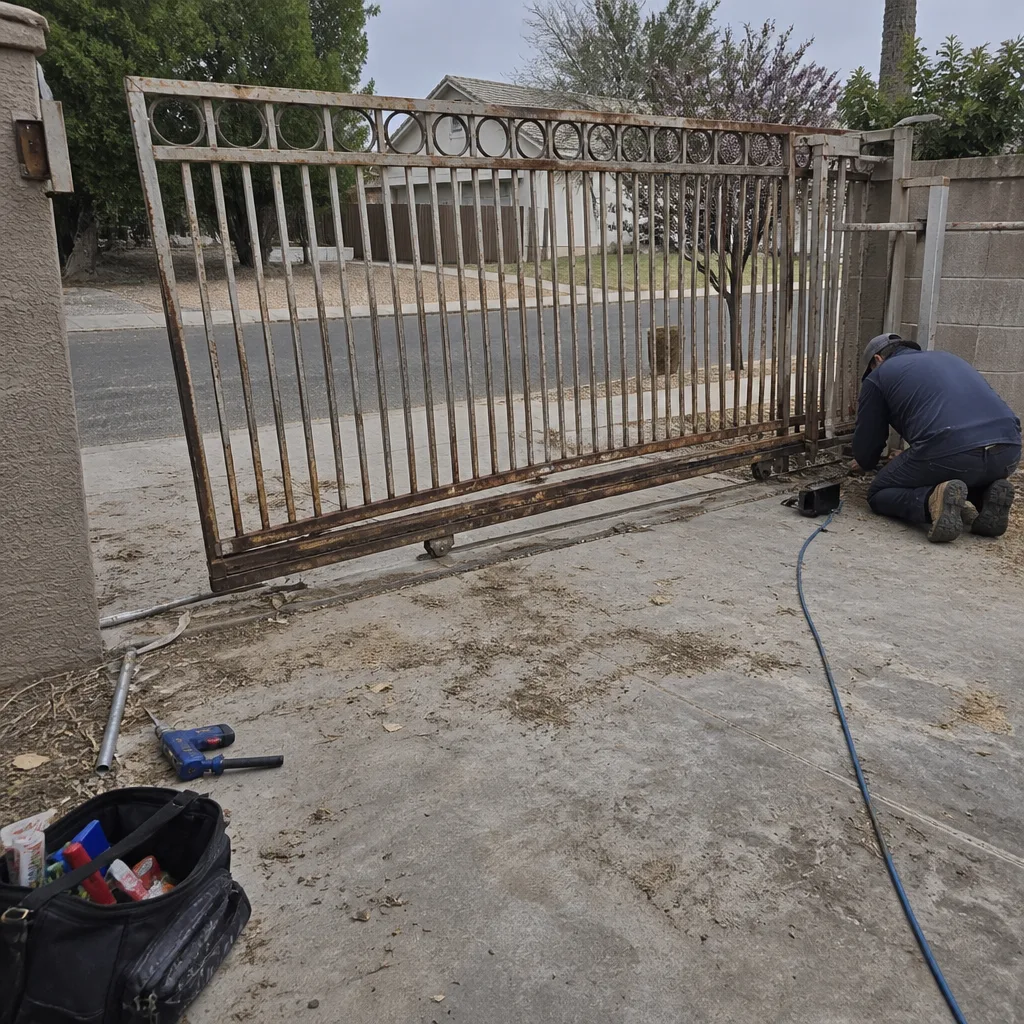
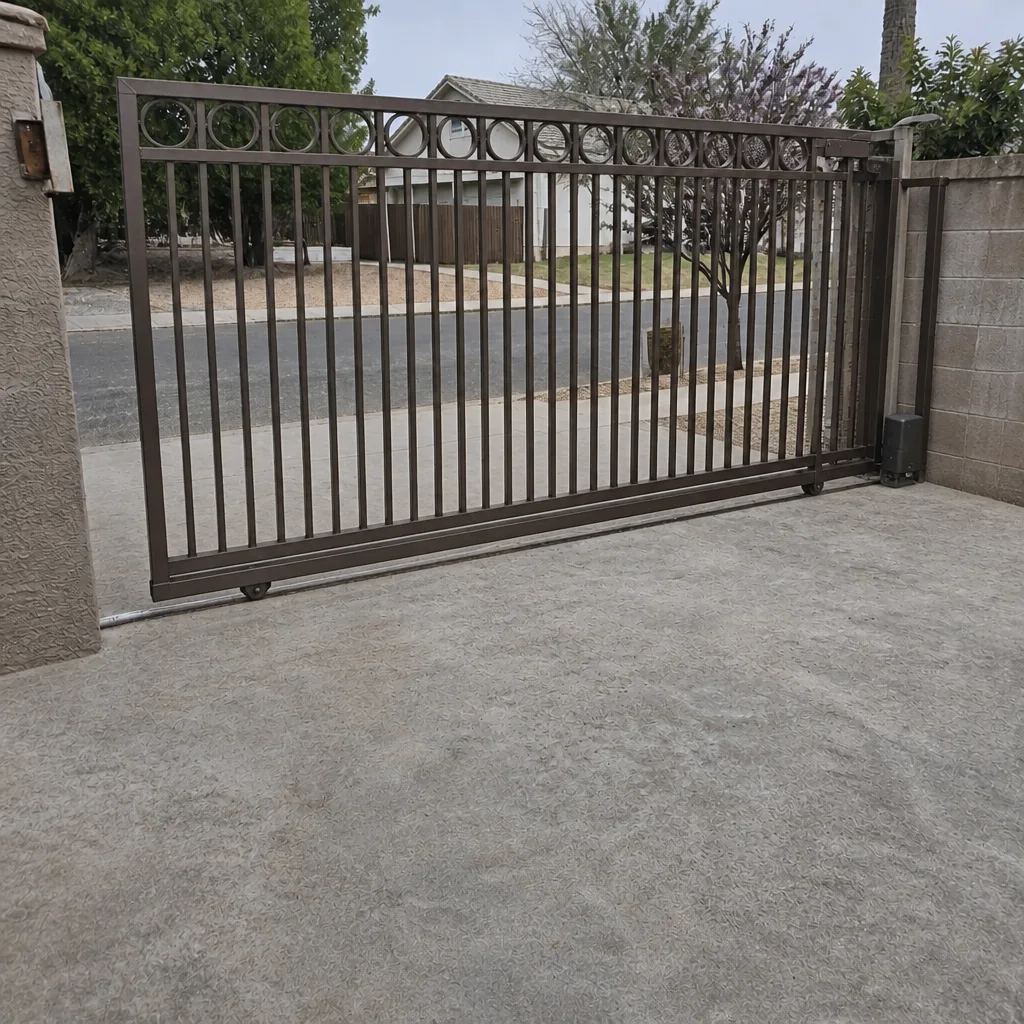
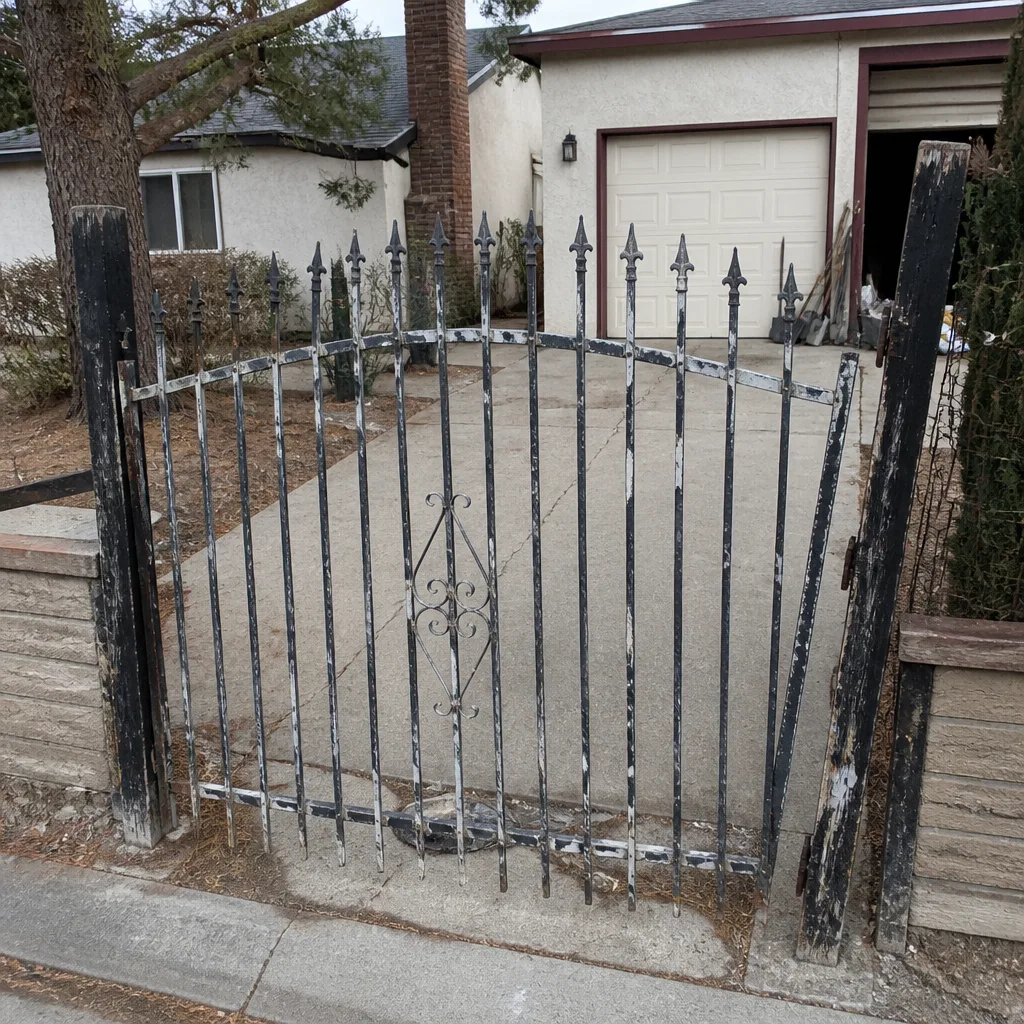
See the difference
 Before
 After
 Before
 After
 Before
 After
When to Call a Professional
Some faults are worth tracing yourself, and some are not. Call a professional when the gate involves high-tension springs or counterweights, when the motor or control board shows signs of heat or burning, when a safety edge or photo-eye keeps faulting after a clean realignment, or when a post or weld has visibly failed. These carry real injury risk and, done wrong, turn a repair into a replacement. We handle the full scope from hinges and welds to keypads and automation, so the diagnosis and the fix happen together. Ironworks Gate Co. Whitney offers free estimates in Whitney. Call (855) 928-1304, and a live person answers day or night.
Frequently Asked Questions
Because the repair treated the symptom, not the cause. If a motor keeps failing or a hinge keeps loosening, the root is elsewhere: a leaning post, a binding roller, or a misaligned frame that keeps stressing the part you keep fixing. Trace it backward through the three systems before replacing anything again. Call (855) 928-1304 for an exact diagnosis, and estimates are free.
Disengage the motor and push the gate by hand. If it binds, drags, or rocks, the fault is in the gate’s geometry or frame, not the opener. If it swings freely but still fails under motor power, the opener, wiring, or sensors are the likely cause. That two-minute test saves a lot of unnecessary motor replacements.
Nine times out of ten it’s a safety-sensor fault: a misaligned or dirty photo-eye, or a safety edge reporting a false obstruction. Clear and realign the sensor path first. If the fault persists after cleaning, the sensor or its wiring needs attention. Our team services Linear, Viking, Ghost Controls, and DoorKing safety systems and can sort it out quickly.
Roughly 30 days is the window before a primary failure starts damaging a second component. A dragging gate left a month can overheat a motor or board; a leaning post can crack a weld. Waiting rarely saves money. It usually moves the cost from one part to two.
Yes, if a symptom has persisted for a few weeks. A gate that “mostly works” is often generating its next failure quietly. In Whitney’s heat and dust, wear moves faster than most homeowners expect. A free second opinion on any written estimate is a low-cost way to catch it early.
We’re trained and equipped on nine major gate-automation brands, including LiftMaster, FAAC, BFT, Linear, Viking, Ghost Controls, DoorKing, Elite, and Mighty Mule. That coverage means the correct fix happens on the first visit, whatever is on your driveway. Call (855) 928-1304 to confirm your unit, and estimates are free.
The Bottom Line
Most gate problems are misdiagnosed because homeowners start at the motor. Start at the symptom instead: test the gate by hand, check the frame and moving parts, and treat the electrical layer last. Hold the structural, mechanical, and electrical systems in your head together, because a failure in one always stresses the others. Repair the root within that 30-day window and you avoid the second failure that makes people think a repair “didn’t take.” Done right, a gate closes like the day it was hung, and it stays that way. If the diagnosis points past what you want to tackle, that’s the call to make.
Ironworks Gate Co. Whitney has spent decades making gates close the way they should, backing every job with a written 90-Day Done Right Promise and a live person on the phone around the clock. Call (855) 928-1304 for a free estimate and a square deal: the price settled before a bolt is turned, and no surprises on the bill.
Written by the team at Ironworks Gate Co. Whitney.